
![]()
"You gotta believe!"
"No compromise with the main purpose, no peace till victory, no pact with unrepentant wrong."
"Luck is the residue of design."
Categories
Baseball 2002-03 (566)
Baseball 2004 (372) Baseball 2005 (291) Baseball 2006 (361) Baseball 2007 (261) Baseball 2008 (260) Baseball 2009 (167) Baseball 2010 (102) Baseball 2011 (50) Baseball 2012-13 (36) Baseball Columns (91) Baseball Studies (104) Basketball (86) Blog 2002-05 (372) Blog 2006-13 (227) Business (88) Enemies of Science (13) Football (97) History (94) Hurricane Katrina (34) Kiner's Korner (6) Law 2002-04 (229) Law 2005 (106) Law 2006-08 (186) Law 2009-13 (65) Other Sports (35) Patriot Games (10) Politics 2002-03 (492) Politics 2004 (446) Politics 2005 (129) Politics 2006 (125) Politics 2007 (84) Politics 2008 (490) Politics 2009 (223) Politics 2010 (103) Politics 2011 (39) Politics 2012 (109) Politics 2013 (16) Politics 2014 (0) Politics 2016 (1) Pop Culture (336) Religion (62) Science (81) War 2002-03 (550) War 2004 (194) War 2005 (116) War 2006 (122) War 2007-12 (240) Contact
Digits Counter: visit number
Sponsors
Boston Red Sox Tickets
Fenway Ticket King Check out this great site for baseball apparel, including authentic jerseys and more. Stat Reports
2011 Established Win Shares Report: AL East
2011 Established Win Shares Report: AL West 2011 Established Win Shares Report: AL Central 2011 Established Win Shares Report: NL East 2011 Established Win Shares Report: NL West 2011 Established Win Shares Report: NL Central History of Shooting in the NBA Federal Budget 1947-2008 Greatest Hits
My September 11 Story (9/14/01)
Baseball Blog Posts
Baseball's Most Impressive Records
Changing Pitcher Workloads 1920-2004 A History of Team Defense, 1871-2011 2003 Red Sox and the All-Time Great Slugging Teams All-Time Great OBP Teams Barry Bonds' Unique Aging Pattern Hall of Fame Outfielders, 1920s-1930s Grover Cleveland Alexander vs. Bob Gibson The All-Time Greatest Stretch Runs 1928 AL Pennant Race 1993-94 Expos Revisited Relief Pitchers After Catastrophic Postseason Losses A Brief History of Lefthanded Pitching Bill James, Sabermetrics, Conservatives, and Bloggers Non-Baseball Blog Posts
The Horrible 2008 Farm Bill
Federalism's Edge The Star Wars Prequels As They Should Have Been Obama Administration Survival Guide Sun Tzu and the Art of Judicial Nominations Bush, Kerry, Dean and the Importance of Principled Positions The Integrity Gap: Barack Obama The Integrity Gap: Sarah Palin Why You Can't Negotiate About Terrorism The One Essential Requirement For Military Intervention America's Credibility On Federalizing The Minimum Wage Bruce Springsteen & the Right Cross-Blog Iraq Debate (Feb 2003) The Goalposts: Defining Victory in Iraq (June 2004) A Close Look At The Commerce Department's Budget How a Social Moderate Could Win The 2008 GOP Nomination George W. Bush: Reform Conservative or Neoliberal? State of Rock & Pop 2009-2010 Writings Elsewhere
The Economic Case Against The DH (Grantland 7/12/11)
NY GOP: Gang That Can't Vote Straight (NY Post 9/17/10) The Path to Cooperstown: The Third Basemen (Hardball Times 4/8/10) The Path to Cooperstown: The Catchers, Part II (Hardball Times 2/10/09) The Path to Cooperstown: The Catchers, Part I (Hardball Times 1/30/09) The Path to Cooperstown: Tim Raines and the Tablesetters (Hardball Times 12/27/07) 2008 Hall of Fame Roundtable: Yes on Gossage, No on Dawson (Armchair GM, 12/12/07) The Path to Cooperstown Through the Middle Infield (Hardball Times 1/9/07) Scandalology (Weekly Standard 2/1/06) Rice, Belle, and Dawson in Context (Hardball Times 1/31/06) Blogometer Interview (National Journal 1/26/06) Casey's Yankees Revisited: Pitching, Defense, And Balls in Play (Baseball Primer 3/26/03) The Simple Solution to Economic Disparities in Baseball (Baseball Primer 3/5/02) Search
CrankLinks
Baseball Blogs
David Pinto's Baseball Musings (Instapundit of the baseball bloggers)
Baseball Primer (Sabermetric community's town square) The Hardball Times (Group site featuring leading baseball bloggers) Always Amazin' (Professional Daily Mets Blog) Matthew Cerrone's MetsBlog Amazin' Avenue (Mets Blog) John Sickels' Minor League Ball Geoff Young's Ducksnorts Rich Lederer's Baseball Analysts Aaron's Baseball Blog (General interest; Twins Fan) Braves Journal (RIP Mac Thomason) Joe Posnanski (KC Royals Sportswriter) ProJo SoxBlog (Featuring Art Martone - Red Sox Beat Writers) Voros McCracken Al's Ramblings (Brew Crew Fan) Athletics Nation Only Baseball Matters (John Perricone, SF Giants Fan) U.S.S. Mariner (Derek Zumsteg & Friends) Rays Index (TB Fans) Boy of Summer Mets Geek (Mets Group Blog) The Eddie Kranepool Society (Mets Blog) Bob Sikes, Getting Paid to Watch Ducksnorts (Geoffrey Young on the Padres) LoHud Yankees Blog (Hated Yankees) Alex Belth's Bronx Banter (Hated Yankees Blog) Baseball Links
BaseballReference.com
Baseball Prospectus (Includes premium content that's worth the cost) Retrosheet - Box Scores & Daily Standings back to 1900 Bill James Online ($) Hardball Times Stats Page Hardball Times 2004 Stats Page (Includes 2004 Win Shares) 2003 Win Shares 2002 Win Shares Minor League Team Pages (Links to Current Minor League Stats) Baseball Cube (Career Minor League Stats) Bill Simmons, the Boston Sports Guy, on ESPN Page 2 Click here for WhatIfSports!(Warning, this site may be addictive!) The Hall of Fame SABR (Society for American Baseball Research) TangoTiger's Baseball Stat Analysis Page Pinto's Day by Day Batter Comparisons Pinto's Day by Day Pitcher Comparisons Partly Baseball/Other Sports Blogs
Matt Welch's Warblog (Libertarian Politics, Sabermetrics, Angels Blogging and Rock n' Roll)
Dr. Manhattan's Blissful Knowledge (Very Sporadic Blogging on Politics, Israel, and the Hated Yankees) Ricky West's Toys in the Attic (Formerly North Georgia Dogma - Mostly politics, some baseball & other sports) Lyford's Lyflines (Red Sox & politics) The Yin Blog: Law Professor Tung Yin (Mostly law, politics & pop culture, some baseball) Eric McErlain's Off Wing Opinion (Mostly sports, lotsa hockey, some politics) Blog Maverick (Dallas Mavericks Owner Mark Cuban's Blog) AlleyOop.com (John Hollinger's Basketball Prospectus Site) Football Outsiders.com The War
First, Blog All The Lawyers
Instapundit (Ping! Ping! Ping! Fastest Blog In The Free World!)
The Volokh Conspiracy - UCLA Law Professor Eugene Volokh, Family and Friends Howard Bashman's How Appealing - Blog devoted to appellate courts Wall Street Journal Law Blog Overlawyered - Tales of Runaway Litigation The Buck Stops Here - Attorney Stuart Buck Pejman NRO Bench Memos Ann Althouse, Wisconsin Law Professor Patterico (LA Prosecutor) Sports Law Blog All The Right Blogs
RedState
The New Ledger The Corner on NRO Jim Geraghty's Campaign Spot at NRO HotAir: Allahpundit and Ed Morrissey James Taranto's Best of the Web Today (WSJ) Tom Maguire's Just One Minute Ace of Spades HQ Jonathan Last Michael Barone RealClear Politics' RCP Blog Go Read Lileks (The Bleat) VodkaPundit Powerline Q and O (Neolibertarians) Wizbang! Dr. Weevil: Pedant and Pundit Meryl Yourish (Pro-Israel, Anti-Evil) Dustbury, Oklahoma Libertarian Samizdata (In England, but not in Europe) Signifying Nothing (Chris Lawrence & Brock Sides) Spaceblogger Rand Simberg Funnyblogs, Gossip and Navel-Gazing
Kausfiles (The Sultan of Snark)
Protein Wisdom WuzzaDem IMAO Aussie Tim Blair Dave Barry's Blog Josh Reads The Comics Politics
National Review Online (NRO)
The Weekly Standard (Neocon Central) Mark Steyn Online, Everywhere, All The Time ("if we members of the vast right-wing conspiracy don't get back to our daily routine of obsessive Clinton-bashing, then the terrorists will have won.") City Journal (NY From The Right) Other Links
The White House
United States Supreme Court US Senate Roll Call Votes Voice of America News MEMRI.org (Translations From The Arab World) Iranmania: News From Iran Iranian Student Democracy Movement Basketball-Reference.com Pro-Football-Reference.com IMDb (Internet Movie Database) Encyclopedia of Arda (Exhaustive Online Guide To Tolkein's Middle-Earth) Friday Bruce Fix (Excellent Weekly Bruce Springsteen Blog) Backstreets (Official Unofficial Bruce Springsteen Fan Club Site) The Saw Doctors (Irish Rock Band Extraordinaire) Selected Columns
Baseball's Underappreciated Great Teams, 1970s-90s (Projo 2/28/03)
Baseball's Underappreciated Great Teams, 1950s-1960s (Projo 2/14/03) Baseball's Underappreciated Great Teams, 1900s-1940s (Projo 1/23/03) 2003 Hall of Fame Ballot (Projo 1/10/03) Fernandomania! (Projo 10/25/02) Lessons From The 2002 World Series Teams (Projo 10/21/02) 1916-17 Giants (Projo 10/4/02) 1914-15 Giants (Projo 9/20/02) 2002: The Year Of The Bullpen (Projo 9/6/02) Baseball Mom (Projo 8/25/02) Gay Ballplayers And Steroids In Baseball (Projo 5/31/02) Jose Canseco and the Dick Allen Problem (Projo 5/14/02) The Path To 300 Wins (Projo 4/23/02) Hating Barry Bonds, Scoring Rey Ordonez and the 1962 MVP Race (Projo 8/31/01) The Best-Hitting Catchers Ever (Projo 8/10/01) The 2001 Mariners at the Midpoint (Projo 7/20/01) The End of an Era at Shea (Boston Sports Guy 5/15/01) Ichiro the Throwback (Boston Sports Guy 5/2/01) Clemente and Musial (Boston Sports Guy 4/8/01) Remembering Eddie Mathews (Boston Sports Guy 3/2/01) In Defense of the Bandwagon (Boston Sports Guy 2/3/01) Hall of Fame: Blyleven, Morris, Kaat, John, & Tiant (Boston Sports Guy 1/11/01) Hall of Fame: Gossage, Sutter & Other Relievers (Boston Sports Guy 1/14/01) Hall of Fame: Murphy, Rice and Puckett (Boston Sports Guy 12/29/00) Hall of Fame: Whitaker, Concepcion and Parker (Boston Sports Guy 12/22/00) Hall of Fame: Carter, Parrish, Hernandez, Mattingly and Garvey (Boston Sports Guy 12/15/00) Subway Series Diary Part II (Boston Sports Guy 12/7/00) Subway Series Diary Part I (Boston Sports Guy 11/31/00) Hall of Fame: Perez, Rice and Carter (Boston Sports Guy 8/11/00) Hall of Fame: Bid McPhee (Boston Sports Guy 8/11/00) Remembering 1986 (Boston Sports Guy 7/13/00) Shoeless Joe and Charlie Hustle (Boston Sports Guy 6/16/00) Frank Sullivan (Boston Sports Guy 5/10/00) Down With The One-Out Specialists (Boston Sports Guy 5/5/00) Reference Desk
George Orwell on Politics and the English Language
Steven Den Beste's Strategic Overview of the War on Terror Bill James' Lessons From The Baseball Abstracts What is 'Sabermetrics'? What are Established Win Shares Levels? What are Defense-Independent Pitching Stats? What are Translated Pitching Stats? What is 'The Ewing Theory'? What, really, are the big and small markets for baseball? What is a 'Chickenhawk'? Calendar
Archives
May 2013
April 2013 March 2013 February 2013 January 2013 December 2012 November 2012 October 2012 September 2012 August 2012 July 2012 June 2012 May 2012 April 2012 March 2012 February 2012 January 2012 December 2011 November 2011 October 2011 September 2011 August 2011 July 2011 June 2011 May 2011 April 2011 March 2011 February 2011 January 2011 December 2010 November 2010 October 2010 September 2010 August 2010 July 2010 June 2010 May 2010 April 2010 March 2010 February 2010 January 2010 December 2009 November 2009 October 2009 September 2009 August 2009 July 2009 June 2009 May 2009 April 2009 March 2009 February 2009 January 2009 December 2008 November 2008 October 2008 September 2008 August 2008 July 2008 June 2008 May 2008 April 2008 March 2008 February 2008 January 2008 December 2007 November 2007 October 2007 September 2007 August 2007 July 2007 June 2007 May 2007 April 2007 March 2007 February 2007 January 2007 December 2006 November 2006 October 2006 September 2006 August 2006 July 2006 June 2006 May 2006 April 2006 March 2006 February 2006 January 2006 December 2005 November 2005 October 2005 September 2005 August 2005 July 2005 June 2005 May 2005 April 2005 March 2005 February 2005 January 2005 December 2004 November 2004 October 2004 September 2004 August 2004 July 2004 June 2004 May 2004 April 2004 March 2004 February 2004 January 2004 December 2003 November 2003 October 2003 September 2003 August 2003 July 2003 June 2003 May 2003 April 2003 March 2003 February 2003 January 2003 December 2002 November 2002 October 2002 September 2002 August 2002 July 2002 June 2002 May 2002 April 2002 March 2002 February 2002 January 2002 November 2001 October 2001 September 2001 August 2001 July 2001 June 2001 May 2001 April 2001 March 2001 February 2001 January 2001 December 2000 November 2000 October 2000 September 2000 August 2000 July 2000 June 2000 May 2000 February 2000 October 1999 July 1999 January 1999 December 1998 November 1998 September 1998 July 1998 December 1990
Affiliation
Credits
|
"Now, it's time for the happy recap." - Bob Murphy
Baseball Columns Archives
December 17, 2003
BASEBALL: Gibson and Alexander
This is a column I started three years ago, and just recently wrapped up. Gibson and Alexander, Alexander and Gibson. Let's hit the books and take a look back . . . Who was a better pitcher – who did more to help his teams win – Pack Robert "Bob" Gibson, or Grover Cleveland "Pete" Alexander? In the popular imagination, the answer is easy. Gibson was voted to the All-Century team. Lefty Grove, Christy Mathewson and Alexander were the only three 20th Century pitchers to win 300 games and win more than 64% of their decisions (Roger Clemens has since joined them); in the balloting, Gibson (with 251 career wins and a .591 career winning percentage) drew more votes than all three combined. It’s not just the public at large; when the Society for American Baseball Research (SABR) named its top 100 players of the century, Gibson was 17th, Alexander 25th. What got me thinking particularly about the comparison between the two was Sports Illustrated; SI’s state-by-state list of the top athletes of the 20th Century placed Gibson directly above Alexander among athletes from Nebraska. Besides both being from Nebraska, both men were late bloomers; Gibson arrived in the majors at age 23, but struggled with his control and didn't have his first good year until age 26, and didn’t really blossom until they expanded the strike zone the following year. Alexander didn't even enter professional baseball until age 22 (in 1909) and had his career set back when he was nearly killed after being struck in the head by a thrown ball while running the bases in July of 1909. When he did arrive in the majors two years later he immediately led the league in wins and set a rookie strikeout record that lasted 73 years. Stylistically, they were complete opposites. Gibson was a classic power pitcher, with a high leg kick and over-the-top delivery; his favorite pitches were High and Inside, Higher and Further Inside, and Right Down Your Throat. Alexander was a sidearmer who threw so many tailing sinkers that he was known as "Old Low and Away." Incidentally, it was probably the sidearm delivery that allowed both Alexander and Walter Johnson to throw so many more innings than their contemporaries. Many pitchers, like Christy Mathewson, threw straight overhand by the early 1900s; Alexander and Johnson were among the exceptions. (Johnson once complained that his shoulder hurt just watching Smokey Joe Wood’s overhand delivery). There are more than a few reasons to narrow the statistical gap between the two; but as I discuss below, I can't shake the feeling that Gibson's higher standing is mostly a matter of good press notices. But Alexander was the better pitcher. Let's look at the record: Read More » 1. THE RAW NUMBERS Did Gibson leave behind a clearly superior record? Let’s look at the numbers as they appear in the books:
Well, Gibson did strike more people out; in fact, he retired as the second man to strike out 3000. But to match Alexander’s record, Gibson would have had to pitch five more seasons and go 24-7 with a 1.52 ERA each of those five years. What about their prime years? Surely Gibson, remembered today as an overpowering force, was the greater pitcher in his prime? Let’s look at Gibson’s best five-year run, from age 30 (1966) to 34 (1970):
Brilliant, by any standard. But compare to Alexander from age 28 (1915) to age 33 (1920); I’m combining his 1918 and 1919 totals because Alexander, right at the zenith of his powers, was drafted and went off to fight World War I in 1918, after appearing in only 3 games:
Wow. Alexander’s numbers read like Sandy Koufax on andro. And in between, unlike some baseball players who went to war, Alexander saw real combat on the front lines as an artillery soldier. 2. THE LEADERBOARDS Who was more dominant? Gibson won two Cy Young awards; Alexander pitched against Cy Young, but had there been an award then he would have easily won at least four (1915-17 and 1920), and possibly a fifth at age 40 in 1927 (or maybe not; Alexander finished behind six other starting pitchers in the MVP voting). Look at the top five pitching categories, Wins, Winning Percentage, ERA, Innings, and Strikeouts. In his 5-year peak, Gibson racked up just 3 league leads in those categories, the sum total for his career; Alexander, between 1915 and 1920, notched 18. In his career? 25, second only to Walter Johnson. And those weren’t close races; Alexander led the league in Wins by margins of 8, 8 and 6 in consecutive years, and in innings by margins of 35, 61, and 46. Five pitchers on the 1915 Phillies threw over 170 innings; the second-lowest ERA was 2.36, but Alexander alone lowered the team ERA to 2.17. Gibson’s calling card, his 1.12 ERA in 1968, doesn’t exactly dwarf Alexander’s 1.22 mark in 72 more innings in his best year, and while Alexander had four other full years in the ones, Gibson only once had an ERA less than double the 1968 mark. Alexander, of course, was the dominant force in major league baseball in 1915-17, topping even Walter Johnson, and easily the best pitcher in the game in 1920. Had it not been for the war, he would likely have matched teammate Hippo Vaughn as the NL’s best hurler the two years in between. In the National League between 1962 and 1966, there was Koufax and there was everyone else; from 1971 on, it was Seaver and everyone else. And Seaver was probably better than Gibson in 1969-70. And Gibson was hurt in 1967. That really leaves only the one year when Gibson was the undisputed best pitcher in the National League. 3. THE TRANSLATED RECORDS There being really no way to twist the numbers themselves to make Gibson look better, it becomes necessary to evaluate those numbers in the context each man pitched in. I’ve run translated records before, and I’ll run them here. (I explain the details here). It’s not the most sophisticated measurement, but in short, the method tells us one thing: when external factors are removed, what was a pitcher’s performance relative to others in his league? Here’s the career numbers I got, after running the translations one season at a time:
As you can see, adjusting for the surroundings hurts both pitchers, Alexander more than Gibson; both men pitched in pitcher’s eras, and both alternated between good and bad run support. Both were probably hurt by their parks overall, although Gibson was helped a great deal in his best years. Here, let’s run the same peak-seasons comparison as before: Gibson
Alexander
What you see here is that Alexander was a better pitcher, but not by a huge margin in quality; the real difference, even adjusted for the difference in eras, was in their workloads. And he was more consistent. As I discuss in more detail in the link on the method, I used the 1986 NL as the baseline, so these are good approximations of what their performance was equivalent to on an average team in a neutral park in the mid-80s. The fact that Alexander still registers as a 300-320 inning a year guy by mid-80s standards tells you how dominant he was in that category in his era. The odd thing is Gibson’s 1968 W-L record; although 22-9 is a fine record, common sense tells you that you need some bad luck to lose 9 games with a 1.12 ERA. Gibson threw 13 shutouts that season (second on the all-time list; Alexander threw 16 in 1916), which means that he was 9-9 with an ERA still in the ones when not throwing a shutout. But his team was a pennant winning team in a pitcher’s park; the Translated Record system reduces his winning percentage to reflect an above average offense. Hard to say this is anything but arbitrary bad luck – which tends to mostly even out over a career but can vary a lot from year to year – but it’s awfully hard to reconcile a disappointing record in Gibson’s very best season with the popular image of Gibson as the ultimate "gamer," a guy with an almost mystical ability to win close games. Baseball Prospectus.com just came out with their own translated pitcher records, using a similar methodology to mine (so far as I can tell) but translating into present-day rather than mid-80s numbers. More on that later; the BP analysis gives the following career totals:
and totals for the five-season peaks:
Same general conclusion. Win Shares, you say? Bill James gives Alexander his due in the new Historical Abstract, ranking him 3d to Gibson's 8th (in the original historical book he had Alexander 9th in peak value to Gibson's 11th, and 5th in career value to Gibson's 9th among righthanded starters). The Win Shares method puts Alexander 4th among pitchers at 476 (behind only Cy Young, Walter Johnson and Kid Nichols), and Gibson 28th at 317 (the book has him tied with Greg Maddux, but that was two years ago). 4. WHAT ABOUT THE POSTSEASON? The heart of Gibson’s case, and it is an impressive one, is his record in the World Series: 7-2 with a 1.89 ERA and eight complete games in nine starts. Gibson started three games in the 1964 World Series, losing Game Two 8-3 (Gibson allowed 4 runs in 8 innings before his bullpen imploded), but rebounding to win Game Five 5-2 in 10 innings (the two runs were unearned, and Gibson struck out 13), and clinging on to win Game Seven 7-5 despite allowing two runs in the ninth. In 1967, returning to action after a broken leg, he was more impressive: 10 K in a 2-1 complete game victory in Game One, a 6-0 shutout in Game 4, and a complete game 7-2 victory with 10 K as Jim Lonborg got pounded on two days’ rest in Game Seven. Yaz, fresh off the Triple Crown and an incredible stretch run, was held to just 3 for 11 against Gibson; the rest of the “Impossible Dream” Sox were 11 for 80. In 1968, Gibson was utterly dominant in his first two starts -- a 5-hit 4-0 complete game shutout in Game 1, and a 10-1 blowout in Game 4 (Gibson had a 6-run lead when he took the mound in the fourth inning). The series, and the season, came down to one game -- and Gibson looked like the same old Gibson for six innings, but allowed 3 key runs in the seventh and lost 4-1. It wasn't all Gibson's fault -- Jim Northrup's 2-run triple broke the game open, and some sources lay most of the blame for that on poor outfield play by Curt Flood. But the game underlined the fact that Gibson, a great pitcher who was usually good in the clutch, was not invincible. Alexander’s first two Series visits were nearly as impressive. In 1915, Alexander's Phillies faced off against an incredibly deep 101-win Red Sox team at the height of the Sox dynasty: besides the outfield of Tris Speaker, Harry Hooper and Duffy Lewis, the pitching staff included Babe Ruth, Smokey Joe Wood, Carl Mays and Dutch Leonard, the latter a year removed from setting the ERA record. And those weren't even the aces of the staff; the Sox didn't use Ruth, Wood or Mays (except a pinch hit appearance for Ruth, in which Alexander got the Babe to ground out) the whole series. Alexander went the distance in Game One, allowing just a single run on the way to a 3-1 victory when the Phillies scored two in the bottom of the 8th. In Game Three he went the distance again on two days' rest, allowing just 6 hits but losing a 2-1 heartbreaker to Leonard when Lewis singled home Hooper in the bottom of the 9th; Leonard had retired the last 20 in a row. The Phillies lost the series in five games, and there was some controversy over whether Alexander was unavailable (i.e., hung over) to start Game Five, when Erskine Mayer and Eppa Rixey combined to blow a 4-run first inning lead. Bill James reviewed the controversy in The Baseball Book 1990 and left the answer unclear (he thought it odd that Alexander told the manager that his arm was stiff). Alexander would have been coming back on one day's rest after a complete game, and even if they'd held the lead, he would have most likely been expected to start either Game Six or Game Seven; even by 1915 standards, that's asking a lot. On the whole, he acquitted himself quite well. In 1926, well past his prime at age 39, Alexander was the hero of the Series with a performance that entered the annals of baseball legend. Facing the Ruth/Gehrig Yankees, Alex threw a complete game 4-hitter in Game Two, allowing just two early runs in a game the Cards blew open in the 7th for a 6-2 win; he got stronger as the afternoon went on, retiring the last 21 batters he faced. Five days later he did it again, staving off elimination on the road with a 10-2 complete game victory in Game Six (again, the game was close until a 5-run seventh). The next day - hung over or not, although his teammates swore he was sober and just tired - Alexander came out of the bullpen in the bottom of the seventh, with a 1-run lead, the bases loaded and two out, and struck out Tony Lazzeri (on a low and away pitch, of course) to squash the Yankee threat. Alexander then retired the side in the 8th and the first two batters in the ninth before walking Ruth, only to have the Babe foolishly try to steal second with Bob Muesel coming up and Gehrig on deck, leading to the most damaging caught stealing in Series history. Unfortunately for Alexander, like his contemporary Walter Johnson, he didn’t get as many shots as Gibson at postseason glory in his prime, and Alexander came back for one more turn in 1928 at the age of 41. If you can imagine Bob Gibson, who was bombed to the tune of a 5.04 ERA at age 39, coming out of retirement at age 40 to face the 1976 Reds in the World Series, you get an idea of how well Alexander pitched against the 1928 Yankees: Ruth and Gehrig ate him alive to the tune of 11 earned runs in 5 innings. Those two by themselves went 16 for 26 with 4 doubles, 7 homers, 7 walks, 14 runs and 13 RBI in 4 games in that Series, and Alexander took his share of the abuse (it was Alexander's misfortune to face Babe Ruth's teams in all three of his postseason excursions; Alex had held the Babe to 0-for-8 with 2 walks in 1915 and 1926). This ruined Alexander’s lifetime Series record, but in this particular comparison, I don't see how that can be unduly held against him. If you count his first two appearances in the Series, Alexander's postseason record is nearly as impressive as Gibson's: 3-1, a 1.42 ERA, complete games in all four starts, a 27-8 strikeout/walk ratio, and just over 6 hits allowed per 9 innings. So, Alexander was a real good money pitcher, and Gibson a great one. What does that all mean? There have been an awful lot of statistical studies done in attempts to determine whether there is such a thing as clutch hitting. The usual answer is either (1) ain’t no such thing or (2) if there is, there’s no evidence to prove it. The latter is the more sensible answer, since there’s always the chance that we have looked in the wrong place. Bill James did a study in the Baseball Book 1992 (at page 201) in which he determined that veteran players, generally, had just a slight advantage over otherwise similar young players in certain types of clutch situations. For all the work done in this area, there has been (as far as I've seen) precious little really systematic attention paid to clutch pitching – whether the evidence, broadly speaking, supports the idea that some pitchers are better than others at pitching in big games or tough game situations. Intuitively, it seems possible for pitchers to have a greater ability to "turn it up," since pitchers can vary their arsenal and often have to pace themselves if they are in midseason or midgame, although I understand that some studies have suggested that "pitching to the score" (i.e., changing a pitcher's approach based on the game situation) may be a myth. Where this relates to Bob Gibson is this: how much credit do we give him for raising his level of performance in big games? Because that's the only way to really toss out the numerical advantages for Alexander. Given that Alexander's postseason performances were outstanding, however, I can't give Gibson enough credit to swing the analysis his way. 5. WHAT ABOUT THE COMPETITION? COULD THESE GUYS SURVIVE TODAY? Some people would write off the exploits of pre-1947 stars like Alexander, reasoning that competition before the color line was broken must have been watered down; if that's your attitude, then this argument isn't even worth having. I don’t think you can really prove very well how strong the competition in any given era was, or at least it’s nearly impossible to quantify it. The game, in Alexander’s day, drew from a smaller group of potential players due to discrimination, yes – but except for 1914-15 there were fewer big league teams, 16 compared to 20 or 24 for most of Gibson’s career. And in those days, baseball was it; even guys like Jim Thorpe, Greasy Neale, and George Halas tried to make a living in the game because you couldn’t make decent money playing every other sport. If the conditions were like that in Gibson’s day, he would have been pitching against Jim Brown and Wilt Chamberlain. In any event, Alexander’s teams were trying to do the same thing that Gibson’s were - win the pennant and the World Series – and the big question is how much each guy did to help his team to that goal. Inter-league levels of competition is another story. Because the available evidence does suggest that Gibson played in the NL at a time when it was the dominant league, featuring many more of the game’s biggest stars, winning the All-Star Game on a regular basis, and winning the World Series 6 times in 9 tries between 1963 and 1971. By contrast, Alexander pitched in the NL at a time when it was decidedly the weak sister of the AL. AL teams won every World Series between 1910 and 1920 but two: the "Miracle" of 1914 and the fix of 1919. (The 1919 Reds, you may remember, had a better regular season record than the White Sox, but the Sox were overwhelming favorites anyway due in large part to the lopsided World Serieses of the previous several years.) Taking them out of their contexts . . . each pitcher, of course, would face a very different game today. Gibson had the advantage of mammoth ballparks, centerfield bleachers full of white shirts, a high mound, and did his best work in a part of the strike zone that was only just recently resettled after a 30-year occupation by the hitters. As for Alexander, he had his best years before the advent of the lively ball, the breaking of the color line, night baseball, etc. But I have to think that Alexander would be at least as suited to the modern game as Gibson, given that his sinker and pinpoint control would leave him far less vulnerable to today's patience-and-power offenses (think Kevin Brown). There is, however, the issue of the spitter, which was outlawed after 1920. Alexander was 34 at that point, and maybe he threw it and maybe he didn't; he wasn't one of the veteran pitchers who was allowed to keep throwing it. (Then again, I remember reading that his manager and first baseman Fred Luderus was famous for licking the baseball, such that an opposing team once retaliated by putting a substance on the ball that caused his tongue to swell up). But check out Alexander's strikeout rate, which was first or second in the league six times between 1911 and 1920, and which dropped almost in half immediately thereafter, generally staying below the league average the rest of his career. It's a fair inference that Alexander's devastating sinker was at least partially a phenomenon of the dirty, wet, dinged-up baseballs he used. 6. SO WHY DOES EVERYBODY LIKE GIBSON BETTER? Well, the postseason is a huge part of it; the whole nation was watching those games on television, and they became a critical part of the game’s lore. The idea that Gibson was unbeatable is big games led people naturally to assume that he was just unbeatable, at least when he needed to be. The fact that he had his best serieses against teams from New York and Boston just underlined that. Then there’s the 1.12 ERA; having a single, impressive "record" or a signature skill does a lot for a player after he retires, and can make the difference between being Hank Aaron or Roger Maris and being Stan Musial or Frank Robinson, who are far less well-remembered than they should be even though Robinson's still managing. That one ERA gives some statistical ammo to the people who use Gibson’s postseason performance as the platform for arguing that he was an absolutely unbeatable pitcher, capable of raising his game as far as the situation demanded. There's also the fact that Gibson pitched more recently – there are scores of fans out there, as well as writers and broadcasters, who saw him pitch; Alexander’s been dead for 50 years, so his image is vague at best even in the minds of people who think about baseball all day. Then there’s Tim McCarver, Gibson’s catcher in his best years, who has a huge megaphone as a New York and national broadcaster. McCarver may have once been identified with Steve Carlton, but he obviously thought of Carlton as his student; Gibson he treats with reverence. If I hear him tell that story about how Johnny Keane wouldn’t take Gibson out of the seventh game of the 1964 World Series because he "had a commitment to his heart" one more time, I’m gonna gag. Gibson also scared people; as my older brother likes to point out, Alexander was like Greg Maddux in that he could shut you out, shut you out again and still leave you feeling like you didn't hit him just because you were having an off day, not because Alex was pitching. Gibson retired as the #2 man all time in strikeouts. Alexander's reputation has also been sullied by his alcoholism, epilepsy and "shell shock" (what's known today as Post-Traumatic Stress Disorder), the combination of which rendered him a pathetic figure by the end of his life. Finally . . . well, it’s partially Ronald Reagan’s fault. You may remember that shortly after Alexander died, Hollywood rushed out a movie of his life called "The Winning Team," starring Reagan as Alexander and Doris Day as his wife. It was just awful. The movie had a few dramatic high points, but they made little enough attempt to capture the real Alexander. And Reagan – put aside your politics for a minute and just think acting – gave what had to be the worst performance of his acting career: adept at playing the genial Everyman and the B-movie hero, Reagan was completely out of his league trying to portray a morose, moody alcoholic. Only Reagan’s political career kept the movie from disappearing into complete obscurity, but the butchering of Alexander’s life story left him less well known today than Crash Davis and Moonlight Graham. CONCLUSION: WHO WAS BETTER? Well, if you’ve read this far, you can tell that I’m partial to Alexander in this debate; I think he’s really gotten shafted in the discussion of the all-time great pitchers, not least because his service to his country cost him his shot at 400 wins. Gibson was really a great one, and my in-depth look at his numbers definitely left me more impressed than before. Things like the color line and other factors relating to the strength of competition also speak in Gibsion's favor. But at the end of the day, Alexander was more dominant in his prime, and more durable over the course of his career. Based on the evidence I've laid out above, yes, reasonable people could disagree. But I'd put my money on Old Pete. « Close It
May 10, 2003
BLOG: Happy Anniversary To Me
This week was so busy, I forgot to celebrate a milestone that passed on Monday: my three-year anniversary as an internet columnist. Here's my first piece, from May 5, 2000, on a proposed baseball rule change. Of course, back then, I had never heard of a blog (and people like Glenn Reynolds were still completely unknown), although my columns were running on the Boston Sports Guy website, which really did all the things you would expect from a blog - a daily battery of links accompanied by snide commentary, a breezy, first-person interactive dialogue with the readers - and wound up making Bill Simmons, the site's proprietor since the mid-90s, into one of the earliest internet-only celebrities. My location and format have changed since then (although I've owned the www.baseballcrank.com domain for almost the whole 3 years), moving to the outskirts of Big Media (the Providence Journal) and back. If you're new to the site, check out the "Baseball Columns" category - while some of the stuff is dated and I'm far from getting all the old stuff loaded, there are a number of pieces there that I'd humbly submit are still worth reading.
February 28, 2003
BASEBALL: Baseball's Underappreciated Great Teams, 1970-99
Originally posted on Projo.com The 1970s: 1974 Los Angeles Dodgers The Dodger infield of Steve Garvey, Davey Lopes, Bill Russell and Ron Cey became household names in 1974, but for me at least, the team was long identified with the squad that lost consecutive World Serieses to the Yankees -- Tommy Lasorda's team, with Reggie Smith and Dusty Baker in the outfield. But the 1974 team was the best Dodger team in the franchise's tenure in Los Angeles, and would probably be remembered as such if they hadn't lost to the Mustache Gang in the World Series. Read More » After a two-year collapse following the 1966 retirement of Sandy Koufax, the Dodgers of the late 60s and early 70s were mostly a good team; although perennially stuck behind the Big Red Machine, they finished second five times and third once between 1970 and 1976. The Dodgers tried a lot of different things -- for example, importing veteran sluggers Dick Allen and Frank Robinson. But at the core was the rebuilding of the infield. Garvey broke in as a third baseman, playing semiregularly after 1971, and moved to first base to make room for Cey (after Wes Parker's sudden retirement in 1972) in 1973. Russell replaced Maury Wills at short in 1972. In 1974, Garvey became an everyday fixture at first, moving Bill Buckner to the outfield and relegating Manny Mota to pinch hitting duties. The 1973 team was already a good one, winning 95 games. Garvey began a series of nearly identical productive seasons in 1974 -- .312 average, 21 HR, 111 RBI, 200 hits. He was named the NL MVP. In addition, two acquisitions radically changed the face of the Dodgers in 1974, albeit only for a year. They traded long-time centerfielder Willie Davis to the Expos for workhorse reliever Mike Marshall, and brought in Jimmy Wynn from Houston to play center. The two acquisitions could hardly have worked better; in fact, they were probably the Dodgers' two best players, the MVP voters notwithstanding. Marshall's season, netting him the Cy Young Award, was historic, and the records he set are among baseball's most impressive. I separate "impressive" records from "unbreakable" ones, since all the most unbreakable records are ones that were set under different playing conditions. Cy Young threw 751 complete games in his career, which at the modern league leader's pace would take 100 years; single-season records for starting pitchers, set by underhand throwers in the 1880s (when the mound was 50 feet and anywhere from 5 to 9 balls were needed for a walk) will never be approached. Marshall's records of throwing 106 games and 208.1 innings in relief in a season are likewise the product of vanished conditions, although we may will see a lefthanded specialist challenge the 100-games mark in the next decade or so, 1 or 2 batters at a time. But what makes the records impressive is how far they stand out even from his own time. There have been only seven 90-game seasons -- three by Marshall and three by Kent Tekulve -- and the nearest is 12 games off Marshall's pace. The innings record is more impressive - like Babe Ruth in 1920, Marshall not only shattered the previous record (179 innings), it was a record he himself had set the prior year. And he pitched well: a 2.42 ERA, just 9 home runs allowed in over 200 IP, an almost 3-to-1 K/BB ratio. (For good measure, Marshall added 12 appearances in the postseason, including 9 innings of relief in appearing in all 5 World Series games). The impact of a quality reliever taking over such a gigantic workload -- the work of three men, really, at least by the standards of today's game -- is hard to measure comprehensively, given the number of ways this affects the pitching staff. But between Marshall and Charlie Hough (who tossed 96 innings in 49 relief appearances), the Dodgers were able to paper over some weak links in the rotation, notably Doug Rau, who posted a 3.72 ERA (a subpar performance in that pitcher's era and park) and completed just 3 of his 35 starts, averaging less than 6 innings a start -- an unheard-of ratio in those days. Sore-armed Tommy John also staggered to a 13-3 record in 22 starts before his season ended early, while finishing just 5 of them; John pitched well, but probably benefited from not finishing his own games. John's injury, of course, would make baseball history with the famous surgery; staff ace Andy Messersmith (20-6, 2.59 ERA in 1974) would make another kind of history when an arbitrator awarded him free agency following the 1975 season, and fifth starter Al Downing (later replaced in the rotation by Geoff Zahn) would enter the history books in April of 1974 when he surrendered Hank Aaron's 715th home run (if you look at the footage of the homer, you can see Dodger left fielder Bill Buckner, in one of the two most memorable moments of his career, scaling the fence to try to take it away). As for Wynn, finally free of the Astrodome only to land in yet another pitcher's paradise, he proved to be the critical element of a truly fearsome offense. Looking at the numbers, they may not look like much by modern standards, but consider that the Dodgers outscored the average team in the league by 18%, and then factor in the fact that 25% fewer runs were scored in Dodger home games than Dodger road games in 1974; on the road, the Dodgers scored 5.47 runs/game, 31.8% above the league average. A typical league leading offense will outscore the league average by 15% or so; the 1927 Yankees outscored the average AL team by 28% (the 1976 Reds were over 30%). I don't really think the park was quite that hostile, but comparing this offense to some of the all-time great offensive teams is perfectly fair. Wynn was the best of the bunch, hitting 32 homers and drawing 108 walks, leading to a .271/.497/.387 batting line and 108 RBI. Everyone in the lineup had an on base percentage of .334 or better (the league average was .325), including right fielder Willie Crawford at .376 and backup catcher Joe Ferguson at .380. Everyone but Russell also bested the league slugging average. Buckner, then young (24) and fleet-footed (his ankles hadn't given out yet) batted .314 and stole 31 bases in 44 tries; Lopes also added 59 steals. The pennant race wasn't close for the season's first half; the Dodgers blasted out of the gate at a 37-14 (.725) clip, and led by 8 games on June 1. The Reds cut the margin to 2.5 games in mid-August, going 35-15 from July 7 to August 28, but dropped back a bit with an early September slump, including the Dodgers taking 2 of 3 in a series in Cincinnati in which Garvey went 6 for 13 with a double, homer and 3 RBI and Sutton pitched a key 3-1 victory. The Reds then won 7 of 8 to cut the lead to 1.5 games on September 14, including consecutive victories in LA, but Sutton pitched a six-hitter the next day, Garvey doubled and homered, and Wynn hit a grand slam off Pedro Borbon in the 7th (followed by Garvey's homer) to put the game away 7-1. A week later the Dodger lead was 4.5 games and the race was over. The postseason started well enough, as the Dodgers rolled over the Pirates 3 games to 1, the sole loss the result of a 5-run first inning against Rau. Garvey batted .389 in the LCS, kicking off a career of spectacular postseason batting. But the World Series, with four 3-2 games and a 5-2 game in five matchups, just didn't break the Dodgers' way (except for the famous pickoff of A's pinch runner Herb Washington by Marshall). In the deciding Game 5, Joe Rudi homered off Marshall in the bottom of the 7th, and the series was effectively put to bed when Buckner, in a baserunning blunder that was much celebrated at the time, was thrown out at third base leading off the top of the 8th (the ball got past Bill North but was corralled by Reggie Jackson, who threw a strike to cutoff man Dick Green, who threw Buckner out at third). The Dodgers would be back a few years later after Walter Alston retired and Wynn and Marshall broke down, but this team never got the ultimate glory it deserved. The 1980s: 1988 New York Mets Like the 1974 Dodgers, these Mets are hardly forgotten, but rather have been persistently overshadowed -- overshadowed by the 1986 team, overshadowed in the regular season by the A's, overshadowed in the postseason and in the award voting by Hershiser's Dodgers. But this was a distinct team from the 1986 team, and a powerful one. The Mets' rise from the obscurity of the 1977-83 period to the dominating force of the 1986 team needs no introduction. This was followed by 1987 . . . there's probably no season of baseball I remember better than the 1987 Mets; I was 15 and hanging on every single pitch. It was agony watching such a superior team have the same things continually unravel. To make a long story short, the Mets in 1987 had seven very good starting pitchers (Gooden, Darling, Fernandez, Ojeda, Aguilera, Cone and Leach), and it wasn't enough; they still wound up giving nearly 30 starts to pitchers who were ineffective, sometimes spectacularly so, and even tried to coax Tom Seaver out of retirement. The team scored a league-leading 5.08 R/G, a staggering figure for a team playing in Shea Stadium, and still they fell 3 games short of the division title. The 1988 roster had turned over a good deal from 1986. World Series MVP Ray Knight was let go after 1986, giving Howard Johnson the full time third base job. The aging Jesse Orosco (so we thought at the time) was dealt to the Dodgers for prospects after 1987, handing over the lefthanded closer job to young fireballer Randy Myers. Kevin Mitchell was shipped to San Diego after 1986 for Kevin McReynolds. Weak-hitting shortstop Rafael Santana was let go, to be replaced in 1988 by rookie Kevin Elster. And in April 1987, the Mets traded two minor players -- backup catcher Ed Hearn and minor league veteran pitcher Rick Anderson -- to the Royals for a seven-year minor league vet named David Cone. For the Mets, Cone's emergence was the biggest story of 1988. In 1987, Cone started 13 times, which included a visibly nervous Cone getting pounded in his first two outings (Davey Johnson then settled him down by starting Cone in the Jimmy Fund in-season exhibition against the Red Sox) and getting hammered again in his first start off the DL after getting his right pinky finger crushed against the bat by a pitch while bunting. In his other ten starts, Cone's ERA was below 3.00. In 1988, he lived up to that promise after sliding into the rotation when an April injury finished Rick Aguilera's season (the Mets would move Aguilera to the bullpen the following year before dealing him to Minnesota in the Frank Viola deal). At the time, I thought Cone had been robbed in the Cy Young voting by Hershiser, since Cone had a better W-L record (20-3 vs. 23-8) and a lower ERA (2.22 to 2.26), but Hershiser did throw 36 extra innings, had a lot less offensive support, and unlike Cone (who was tagged for 8 unearned runs in one inning that summer), and unlike Cone, Hershiser wasn't tagged for an unusual number of unearned runs (Cone allowed 10, including 5 in his last 3 starts while Hershiser was rolling up his consecutive shutout streak). It's still a close call, but the voters got it right. Myers was another revelation, putting permanently aside his minor league reputation as a guy who couldn't find the plate. Myers' numbers look impressive enough -- 1.72 ERA, 69K and 62 baserunners in 68 IP. But during the season they looked even better; at the end of September, Myers' ERA was 1.35 and he had been taken deep only twice all year, but he got tagged for a pair of home runs in the next to last game of the season. Randall K would go on to an illustrious career in places like Cincinnati, Chicago and Baltimore, saving 347 major league games, although ironically enough, the two older pitchers he replaced in his first two stops -- Orosco and John Franco -- are still pitching five years after Myers threw his last pitch. Beyond Myers, the bullpen was as solid as the rotation, with Roger McDowell and Terry Leach combining with Myers to carry nearly the entire relief load and posting ERAs below 2.70. Leach, a 34-year-old minor league veteran submariner who'd been known to throw complete game shutouts for the Mets in games started on a half hour's notice, went 7-2 (all in relief this time), raising his record to 18-3 over a two year period and 24-9 for his career. On offense, 1988 saw a changing of the guard. Gary Carter had cracked 20 home runs and driven in 83 runs in 1987, but it was his first real off year in a decade; in 1988, at age 34, Carter started hot in April to get to 299 career homers, then went homerless for three months waiting for number 300. He finished at .242/.358/301, a non-factor in the offense, and was mercifully removed from the cleanup slot as the season progressed. Keith Hernandez, also 34, also began an abrupt decline, missing almost 70 games with hamstring problems and dropping him to .276 with a .333 OBP. Like Carter, Hernandez would never regain the form that made him an MVP candidate just two years earlier. 25-year-old Lenny Dykstra had an off year, and 29-year-old platoon second baseman Tim Teufel came back to earth after slugging .545 in the lively ball air of 1987. Elster hit no better than Santana, batting .214. Pinch hitter Lee Mazzilli hit .147. None of it mattered. The unquestioned star of this team was Darryl Strawberry, and Darryl had probably his best season in 1988 at age 26, scoring and driving in 101 runs apiece, slamming 39 homers, and finishing at .269/.545/.366, stealing 29 bases while grounding into just 6 double plays for good measure. The Straw Man led the league in homers by 9 and was one of just three NL players (along with Will Clark and Andy Van Slyke) to both drive in and score 100 runs. In Strawberry's case, it's obvious that he was robbed in the MVP voting; Kirk Gibson's 25 homers and 76 RBI don't stack up. Granted, Gibson was a better percentage base thief (4 CS to Straw's 14) and had a slightly higher OBP (.377 to .369), but Strawberry's 62-point advantage in slugging easily overcomes that, and if Strawberry was an underachieving fielder, at least he could throw, which Gibson couldn't. Instead, the MVP voters focused on Gibson's intense emotional leadership -- notably a celebrated spring training incident when he blew up at Orosco for playing the kind of practical joke that had been common in the looser Mets clubhouse -- and probably held against Strawberry the perception that the Mets had sleepwalked through the summer, since Darryl was always the poster boy for sleepy ballplayers. The Mets buried the competition early, and then coasted for much of the summer. The Mets started 30-11 (.731); Gooden was 8-0 already, Cone was 6-0. By June 6, they stood 38-17 (.690), 7 games ahead of the revived Pirates and 8.5 ahead of the defending champion Cardinals. But from May 23 to August 21, this was a .500 team, 41-41. The Cardinals fell by the wayside, but the Pirates closed to just 3.5 games back. The Mets had backed their way into a close pennant race. Gooden had gone 6-6 in the interim, and Cone had also won just 6 games in the intervening 82. The two lefthanders, Ojeda and Fernandez, stood 15-22 through August 22. Then they woke up, and proceeded to tear the division to ribbons with a 29-8 surge in which they allowed just 2.78 runs/game (while scoring 5 a game). Cone won his last 8 starts to improbably finish 20-3. Fernandez went 5-0 down the stretch, and Gooden won 4 straight decisions before dropping his last two starts (at the time I was indignant that Davey Johnson started a lineup full of scrubs behind Gooden on September 23, with Dr. K needing 2 wins in 2 starts for his second 20-win season; Johnson benched Strawberry, McReynolds, Hernandez and Carter and let Gooden lose a 2-1 complete game defeat). Besides Darryl, the Mets got a big year from McReynolds, who set a record (since broken) by stealing 21 bases without being caught once, and slugged .496 on the way to 99 RBI; McReynolds (like Hernandez and Carter in 1986 and Gooden and Carter in 1985) split much of the MVP vote with Strawberry (there's a reason no Met has ever won the award). 25-year-old Dave Magadan stepped in seamlessly for Hernandez, posting his customary .393 on base percentage. And 32-year-old Mookie Wilson, the last holdover (other than the returning Mazzilli) from the dark days of the Joe Torre years, had his best season, batting .296/.431/.345 in a part-time role. Wally Backman also played well, to the tune of a .388 OBP. Two events of September overshadowed the rest of the team. One was Bob Ojeda's accident. Ojeda has had an incredible array of freak accidents and injuries, ranging from a rare blood disease in his Red Sox years that caused fainting spells to head injuries suffered in the fatal 1993 boat crash that claimed the lives of Indians teammates Steve Olin and Tim Crews. In 1988, it was a gardening mishap; through September 11, Ojeda was pitching exceptionally well -- a 2.88 ERA and a 133-33 K/BB ratio, allowing about a baserunner an inning while surrendering just 6 home runs in nearly 200 innings, and having thrown shutouts in two of his last three starts -- when he cut the tip off the middle finger of his pitching hand with a hedge trimmer. Ojeda had recovered from arm trouble that limited him to 10 appearances in 1987, but the hedge trimming accident finished his season, and while he would pitch effectively again he never regained his pinpoint control. The other September sensation was 20-year-old Gregg Jefferies. Jefferies had been Baseball America's Minor League Player of the Year -- a highly prestigious award that usually led to major league stardom -- two years running as a teenager in 1986 and 1987, batting around .360 with power as a switch-hitting, base-stealing shortstop blessed with a compact, textbook-perfect swing from both sides of the plate. He was known for his father's extensive grooming efforts -- Jefferies had his own training regimen, which famously included swinging a bat underwater -- and his arrogance, such as his boast that he would break Pete Rose's hit record (he ultimately fell some 2,500 hits short). Jefferies hit Shea in late August like a bomb going off. Arriving August 28, a week into the hot streak that would put paid to the division, Jefferies was immediately inserted in the starting lineup, batting second and playing third base (which forced Howard Johnson, now an established star after his 30/30 season in 1987, to play out of position at shortstop) with Dwight Gooden on the mound. Jefferies singled and doubled as the Mets lost 7-4. The next day, Davey Johnson asked Cone to take the mound with an appalling defensive infield of Jefferies at second, HoJo at short and Magadan at third; Cone somehow managed to toss a 1-hit shutout, and Jefferies doubled, tripled and homered. (Johnson wasn't totally oblivious to defense; two days later he pulled Jefferies for a defensive sub after Leach replaced no-ground-balls Sid Fernandez in the second inning). After a 4-hit game on September 12, Jefferies' line for his first 13 games on the roster looked like this: 12 games, 48 at bats, 24 hits, 7 doubles, 2 triples, 5 home runs, 13 runs, 10 RBI, one steal, .500 batting average, 1.042 slugging, .520 OBP. Jefferies cooled off after that, but finished at .321/.596/.364 in over 100 at bats. Given the threat Jefferies posed to the team's incumbent infielders, particularly Backman, Teufel and Johnson, Jefferies' veteran teammates decided to alternately torture and ignore him, including repeatedly sawing his custom-made bats in half; the result was not good for team 'chemistry,' whatever the importance of that may be. Jefferies, like Jeff Kent after him, was uptight and humorless, and responded poorly to these slights and gags, and unlike Kirk Gibson, nobody gave him an award for the response. I do hold the Mets organization partly responsible for Jefferies' ultimate failure to develop as a hitter, though less due to the hazing than due to the failure to fix a position for him. In the short run, sticking a 20-year-old rookie with a gigantic ego into the lineup had other problems. Davey asked him to bunt in one LCS game, only to discover -- on national television -- that a guy who had been his team's best hitter his entire life had no idea how to lay a bunt down (Johnson had made the same mistake with Strawberry in the heat of the pennant race three years earlier and gave up on asking him to bunt after that). Still, the Mets had manhandled the Dodgers in the regular season, winning 10 of 11 matchups, and after Carter broke Hershiser's scoreless innings streak in Game One of the LCS -- leading to a 3-run ninth and a thrilling 3-2 victory reminiscent of where the team had left off in the postseason two years earlier -- it looked like it would be easy. Unfortunately, the Mets couldn't keep their mouths shut. Cone wrote a boastful piece in the NY papers and promptly got shelled in Game Two; Strawberry started griping about his contract; McReynolds said that if the Mets won, he'd go to the World Series and if they lost, he'd be back in Arkansas in time for duck hunting season, so as far as he was concerned he would win either way. The Mets won a rain-soaked Game Three 8-4; as in Game One, they'd bested Hershiser by tearing up Dodgers' closer Jay Howell. Gibson pulled up lame, and was hobbled for the rest of the LCS, although he'd hit two more home runs in the series. Then, two things happened to turn the series. One was that Gooden, leading 4-2 in the ninth inning of Game 4 at home -- a situation where no manager, today, would have his starter on the mound, but it was a different era then -- was tagged by Mike Scioscia for a game-tying two-run homer. Second, Howell got suspended for putting pine tar on the brim of his cap, leading to suspicions of doctoring the ball. The Mets had been torturing Howell, but Tommy Lasorda now went to Hershiser to close out Game 4 (his third appearance in five days). The Dodgers won Game Five, Cone rebounded to shut them down in Game 6, and then in Game Seven the wheels came off: Ron Darling, the team's money pitcher the prior three years, came out with nothing, and errors by Backman and Jefferies contributed to a 6-0 hole after two. Gooden, Leach and Aguilera held the line valiantly after that -- both Leach and Myers were unscored-upon in that series -- but with Hershiser staked to a 6 run lead, it was over. The Mets' fall, like their rise, is too long a tale for this column, but 1988 was the last time that a championship was this close for this team, and the promised showdown with the 104-win A's never materialized. (Oakland found the first of its own postseason nightmares against those Dodgers). You can pick a number of dates when the worm turned against the Mets, but most fans would pick 1988 NLCS Game Four and Scioscia's home run. The 1990s: 1998 Houston Astros It's hard for any team from five years ago to be forgotten yet -- the two biggest stars of this Astros team are still in Houston, as are the team's ace pitcher and its closer -- but the 1998 Astros are certainly not likely to be mentioned in any history books. A consistently solid also-ran under Art Howe and Terry Collins, the Astros won their first division title in more than a decade when Larry Dierker took over the helm in 1997, led by a spectacular breakout season by Darryl Kile. Kile left as a free agent for an ill-fated tour in Colorado after the season, but the 1998 Astros would be the best of Dierker's four division champs in Houston. Like the two teams above, this team was an offensive monster stuck in a pitcher's park. One of the oddities, for the slow-moving 1990s, was that everybody in the starting lineup had double figures in stolen bases, highlighted by 50 steals for Craig Biggio. Jeff Bagwell, then 30 and the team's best hitter, had his usual Bagwell season, .304/.557/.424, scoring 124 runs and driving in 111. Biggio, age 32, had one of his best years, batting .325/.503/.403; with 50 steals and 51 doubles, Biggio was constantly in scoring position (to day nothing of 20 home runs). Yet, with all that baserunning and over 740 plate appearances, Biggio grounded into just 10 double plays and was caught stealing only 8 times. The third of the "Killer Bs" had his third and final star-quality season at age 29; Derrek Bell scored 111 runs and drove in 108, loading a .314 batting average with 41 doubles and 22 home runs. All up and down the lineup, this team hit gobs and gobs of doubles, with 5 players hitting 33 or more, plus the Bill Spiers/Sean Berry platoon at third combining for 44 and fourth outfielder Richard Hidalgo -- a deadly hitter crowded out of the lineup -- chipping in 15. Besides Bell, Hidalgo was blocked by Moises Alou, fresh from the fire sales in Montreal and Florida, who had a career year, .312/.582/.399, with 38 homers and 124 RBI; and newly-arrived Carl Everett, taking a brief break from controversy to hit .296 with power. Of the ten Astros to bat more than 200 times, only shortstop Ricky Guitierrez (.337) had an on base percentage below .355. Besides Hidalgo, mashers like Mitch Meluskey and Daryle Ward were likewise unable to crack this lineup. The pitching staff, until late July, was solid; with the departure of Kile, Shane Reynolds was surrounded with a maturing Mike Hampton, 25, and new arrivals Jose Lima (25) and Sean Bergman (28). Only fifth starter Pete Schourek, at 29 still trying to recapture his 18-7 season of three years earlier (the one time he lived up to his minor league promise), was a weak link. Billy Wagner and Doug Henry anchored a dependable (until the postseason) bullpen. So the Astros went for broke at the trading deadline, dealing blue-chip prospects Freddy Garcia, John Halama and Carlos Guillen for a few months' rental of a struggling Randy Johnson, 9-10 with a 4.33 ERA while brooding over his contract in Seattle. It was a classic now-or-never move; the price was steep, as became clear when Garcia emerged as a star and the others became productive contributors in Seattle. And the benefit was short-lived, as Johnson packed his bags for Arizona after the season. In one sense, the move paid off: Johnson pitched as well as a human being can pitch, 10-1 with a 1.28 ERA in 11 starts, striking out 116 while allowing just 57 hits and 4 home runs. In another sense, it didn't: the Astros were never really threatened in the regular season anyway, and Johnson lost both his starts (albeit well-pitched ones) in the NLDS against the Padres, in which nearly everything possible went wrong: Kevin Brown started a hot streak that carried into the World Series, Bagwell, Biggio and Billy Wagner continued their career-long futility in the postseason . . . it all fell apart. But if there's one common theme in the history of all the teams I've looked at, it's this: those shots at the brass ring can fade awfully fast. I'd make the Johnson deal again. « Close It
February 14, 2003
BASEBALL: Baseball's Underappreciated Great Teams, 1950-69
Originally posted on Projo.com 1950s: The 1954 Chicago White Sox There's a bit of a shortage of interesting teams in the 1950s, with the Hated Yankees sucking all the oxygen out of the decade (if I wanted to write about Yankee teams of that era I'd probably go with the 1958 World Champs, with Mickey and Whitey in their primes, Bob Turley winning the Cy Young Award and Ryne Duren in the bullpen). One good team that has disappeared entirely from memory is the 1950 Tigers, with George Kell, Jerry Priddy, and a dynamite outfield of Vic Wertz, Hoot Evers and Johnny Groth batting a combined .312/.511/.408 with 311 RBI. Another is the White Sox of 1951-54, of which this team was the last installment. What initially drew my attention to this team was an anomaly: this team had nine men named to the All-Star team, six of whom played in the game: starters Minnie Minoso in left field and Chico Carrasquel at short were apparently voted onto the team, second baseman Nellie Fox was used as a substitute, and three White Sox pitchers appeared - Sandy Consuegra, Virgil Trucks and Bob Keegan. The other three were catcher Sherm Lollar (Yogi played the whole game), first baseman Ferris Fain, and well-traveled third baseman George Kell. Read More » The White Sox of the late 1940s were a weak team, losing 101 games in 1948 and 94 in 1950. But 1951, under rookie manager Paul Richards, saw the Sox vault to their first pennant contention in years; the team went 26-4 from May 4 through June 7, and stood 53-35 (.602) as late as July 19, just percentage points from a tie with the first-place Red Sox and a game and a half ahead of the Indians and the 2-time defending World Champion Yankees. Two young players blossoming overnight were key: Nellie Fox (age 23) and pitching ace Billy Pierce, age 24. The team also had 30-year-old first baseman Eddie Robinson - productive in part of the 1950 season after coming from the Senators - for a full season, and Richards managed to squeeze an ERA title out of 27-year-old journeyman Saul Rogovin, who posted a 2.48 mark after coming from the Tigers in late May. But the biggest impact of all was the arrival of the 28-year-old Minoso a few weeks into the season. Until I read the Bill James New Historical Baseball Abstract in 2001, I'd never thought of Minoso as a Hall of Fame candidate, but James' argument on this score was very persuasive. Minoso's career in the majors basically starts in 1951, by which time he was already 28, and his production the rest of the way is equal to or better than many, many Hall of Famers; what kept his numbers low was the color line (Minoso played in the Negro Leagues until 1950). In his prime years, Minoso did it all: hit well over .300, draw walks, get hit by a ton of pitches (leading the league 10 times in 11 years), hit for power and rarely strike out . . . Minoso drove in 100 runs 4 times, scored 100 runs 4 times, led the league in steals his first three years in the league, led in doubles once and triples three times, and averaged 16 home runs a year from 1951 to 1961. Late in his career they started giving Gold Gloves, and he won 3 of them. He was an All-Star 7 times. In 1951, he was already in his prime, and had perhaps his best season in the majors as a rookie, batting .326/.500/.422, stealing 31 bases (Dom DiMaggio had led the league the year before with 15) and scoring 112 runs in 146 games. Anyway, the 1951 team collapsed down the stretch - the offense cratered (dropping from 5.16 runs/game to 3.86) and, besides Pierce and Rogovin, the rest of the pitching staff went in the tank. They ended with just 81 victories. This would set a pattern for Paul Richards' teams in Chicago. Two years later, in 1953, the Sox stood 75-48 (.609) on August 23, still 8 1/2 games behind the Yankees but on their way to a very strong second-place finish. They went 14-17 down the stretch, dropping off to third place. This time the offense and defense were about equally at fault. 1954 was the best of these teams, although the outcome would be more of the same. The Yankees started the season looking for their sixth consecutive World Championship (please tell me you wouldn't call this a "sex-peat"), but staggered to a 6-7 record in April; the White Sox grabbed the early lead, which they would hold into mid-June. The pennant race would slip away from both teams as the Indians went into overdrive, eventually winning 111 games, still the record for an AL team in a non-expansion year [ed. - d'oh! forgot the 2001 Mariners!], and the Yankees' 103 wins - the best by a Casey Stengel team - would net them second place. As late as August 28, the White Sox were in the same league with those two titans, with a record of 85-46 (.648), scoring 4.77 R/G and allowing 3.22, both figures better than the Indians to that point (the Yanks were a higher-scoring team with less impressive pitching that season). Once again, though, September would bring misery: the offense went into a deep freeze (3.24 R/G), the team went 11-14, and Richards didn't even stick around for the finale, quitting in mid-September to take over the Orioles. For the fourth year in a row, the White Sox would underachieve; from 1951-54, they won 9 fewer games than they should have, given their runs scored and allowed. Richards, a brilliant manager in some ways, had never managed to build a team that could win the close ones or hold up down the stretch run. The other weakness of this team was an ill-timed off-year from Pierce, one of the top starting pitchers of the Fifties. Excluding the 1954 season, Pierce's average record from 1951 to 1962 was 16-11, but he picked 1954 to go 9-10 with a 3.48 ERA. In a year when 111 wins were needed to take the pennant, that was bad timing (ironically, Pierce would go 14-15 when the Sox finally won the pennant in 1959). Ferris Fain also appears to have been injured, although veteran Phil Cavarretta filled his place nicely. Still, this was a powerful team. Minoso batted .320, cracked 66 extra base hits, scored 119 runs and drove in 116. Fox batted .319, struck out only 12 times all year and formed a top double play combination with Carrasquel. Sandy Consuegra, another journeyman who'd had little success before arriving in Chicago in 1953 and would have less after leaving town following 1955, went 16-3 and finished second in the ERA race. 37-year-old Virgil Trucks headed a staff of little-known pitchers (including a deep bullpen) on the way to a 3.05 team ERA. Neither Richards nor Minoso would ever win a pennant; both were gone when the White Sox took advantage of the Yankees' off-year to win the 1959 AL flag. The 1960s: 1964 Chicago White Sox The obvious candidate from the 1960s would be the 1961 Tigers, who won 101 games and scored more runs than the Maris-Mantle Yankees, when Norm Cash turned into Lou Gehrig for a year. But others have written about those Tigers. There's also the 1962 Reds, a team that won 98 games behind Frank Robinson's best season (he hit .342). One of the great pennant races of the 1960s was the 1964 AL race, which unfortunately was won by the Hated Yankees behind spectacular performances by Mickey and Whitey and rookie manager Yogi, thus burying the season in the long march of Yankee pennants that would come to an abrupt halt after this one, to say nothing of the spectacular and more notorious end to the NL race that season. Indeed, the Yankees got the glory then, too -- five Yankees were selected to the All-Star Game in 1964, as many as the Orioles and White Sox sent put together. It was a race of spurts. Few games were played in April in 1964; the season didn't open until April 13. I'm not sure why, but this may have had something to do with the availability of the new ballparks in Houston and Flushing (the World's Fair opened on April 22). Anyway, the Indians, of all teams, battered their way to the early lead, scoring 4.8 runs/game to start off 11-5, while everyone else but the White Sox languished around .500 or worse. Cleveland's hitters were mostly good players about to reach a premature end to their productive years (Leon Wagner, Dick Howser, Tito Francona), and the Indians would wind up with a losing record for the season, but that team was memorable for another reason: young (or at least unproven) pitching. 21-year-old "Sudden Sam" McDowell, ineffective in a limited role for 2 years, went 11-6 with a 2.70 ERA, and rookies Luis Tiant, Tommy John and Sonny Seibert all established themselves. Few, if any, teams have come up with four new pitchers that good in one year. Anyway, the White Sox had some youngsters of their own, notably third baseman Pete Ward (.282, 23 HR, 94 RBI in a run-starved environment -- a better year with the bat, under the circumstances, than your average Derek Jeter season) and 27-year-old rookie second baseman Don Buford, who would go on to be the left fielder for the Orioles juggernaut of the early 1970s. And they got hot, and then hotter, with the bats in May, scoring 4.7 runs/game through May 31, at which point the Sox were 24-11 (.685), a 111-win pace but just a half game ahead of the Orioles, who had played 7 more games already. Then, it was Baltimore's turn. The O's had the race by the horns after a 37-16 surge from May 8 to June 29 that put them 4.5 games ahead of the surging Yankees and 6 ahead of Chicago. Seven Baltimore pitchers had won between 4 and 7 games to this point, including 9 wins from two relievers, Dick Hall and Stu Miller; the team was playing at a 104-win pace. Then, the Yankees: a 42-20 run from June 3 to August 2. Jim Bouton won 7 games between June 30 and August 2, three of them shutouts; opposing teams scored just 16 runs in his 8 starts in that stretch. After Bouton's second victory in four games (both shutouts) on August 2, the Yankees had the lead by percentage points: Yankees (63-38) .623 Unfortunately for the Yanks, they then dropped 2 of 3 to the lowly Kansas City A's going into a stretch of 15 games with Baltimore and Chicago in 14 days. It went badly, a 5-10 record, followed by consecutive losses to the Red Sox. The Yankees lost 6 of 7 games started by veterans Whitey Ford and Ralph Terry during this 20-game swoon, and 3 of 4 started by Bouton. Plus, the back end of the rotation was in dire shape: through August 14, they'd lost their last 5 games started by Rollie Sheldon and Stan Williams. At the close of play on August 22 (the Yanks won the nightcap against the Red Sox in the 13th of 14 doubleheaders between June 10 and August 29), the standings looked like this: Orioles (76-47) .617 Each of the three teams had now played 124 games (Baltimore tied one). Check out their runs scored and allowed through August 22: Orioles: 4.20 R/G--3.48 RA/G And the rest of the way: Orioles: 4.05 R/G--3.46 RA/G All three teams' pitchers stepped up down the stretch run, the Yankees most of all, thanks to the gutsy decision to throw 22-year-old rookie Mel Stottlemyre out to face the White Sox on August 12; Stottlemyre went 9-3 with a 2.06 ERA the rest of the way. But the real story was that the Yankee hitters went to town in September, while the regulars on the other two teams ran out of gas. Why? Well, they had 7 games head-to-head in late August (Baltimore won 5), and Baltimore's best hitter, Boog Powell, fractured his wrist August 20 and missed 14 games. I'm also guessing here that Mantle and Maris were finally healthy in September; Mantle had been injured at the All-Star break. Mantle and Powell were by far the two most productive hitters in the AL that season. Otherwise, there's no obvious explanation other than the fact that the Yankees had more pennant race experience; none of the three teams had an unusual number of guys who didn't take any days off. The Yankees put the race away by going 22-6 in September, holding a 4-game lead on the White Sox in the loss column (and five on Baltimore) with 4 to play at the end of September. The final standings narrowed after that, but it was over. Books aplenty have been written about those Yankee teams; let's look at their worthy adversaries. The 1964-65 White Sox (the Sox won 95 games the following year) were the pinnacle of another generation of "Hitless Wonder" Chisox, although they may have been a better offensive team than they looked; Comiskey was fairly pitcher-friendly in those years. I asked in my latest Hall of Fame column who the best American League pitcher of the 1960s was, and I thought I'd check what Bill James' Win Shares system said. The answer: Hoyt Wilhelm, who by the mid-60s was past 40 and regularly pitching over 100 innings a year with an ERA in the ones. In 1964, the 40-year-old Wilhelm threw 131.1 innings (while allowing just 94 hits) over 73 games, posting a 1.99 ERA; he finished 12-9 with 27 saves, and was clearly the team's most valuable player. The rest of the staff was impressive as well: Gary Peters and Joe Horlen, both of whom emerged in 1963, would anchor the White Sox staff throughout the Sixties. In 1964, Peters, age 27, went 20-8 with a 2.50 ERA, while Horlen, age 26, was 13-9 with a 1.88 ERA. 27-year-old Juan Pizarro was also effective, 19-9 with a 2.56 ERA, although this would be Pizarro's last full, healthy year as a rotation starter. The bullpen was deep, with Eddie Fisher and veteran Don Mossi; Fisher would be pressed into the rotation the following year. The offense is less memorable, and some of the starters -- like JC Martin, Al Weis and Don Buford -- are better known for their roles on other teams (Martin and Weis were among the unlikeliest heroes of the 1969 Miracle Mets). The batting stars, as I mentioned above, were Ward, 26-year-old shortstop Ron Hansen (.261/.419/.347; Hansen would later win renown for turning an unassisted triple play), 28-year-old outfielder Floyd Robinson (.301/.408/.388 and two years removed from a 109-RBI fluke season), and midseason acquisition Moose Skowron (.293/.399/.337), who took over at first base. Al Lopez, the team's manager from 1957 to 1965, was retooling on the fly; Robinson had to be moved to left field when Dave Nicholson, who had swatted 22 homers the prior year while setting what was then the single season strikeout record (175 whiffs) proved completely incapable of making contact, striking out a staggering 126 times in 294 at bats. 41-year-old Minnie Minoso was also back for a return trip, but was basically out of gas; Minoso hit .226 as a pinch hitter, albeit with a .351 on base percentage. This was also a staggeringly effective defensive team. By my rough calculation -- (H-HR)/((IP)*3)+H-HR-K) -- the average of balls in play that became hits in the AL in 1964 was .263. The Yankees and Orioles were both very good defensive teams, with averages of .251 and .253, respectively. The White Sox? .241. Hoyt Wilhelm had something to do with that; traditionally, knuckleballers are the one group that has a pronounced tendency to buck the usual trend by which most pitchers allow a similar percentage of balls in play to become hits (the average against Wilhelm was .225). But the defense was solid and deep; center fielder Jim Landis won his fourth consecutive Gold Glove, keeping defensive wiz Ken Berry on the bench. The 1964 Orioles, skippered by another ex-Yankee (Hank Bauer, in his first year on the job after two seasons "managing" the Kansas City A's) must have been a fun team to watch. The team featured an acrobatic left side of the infield, with Brooks Robinson at third base and Luis Aparicio at short. Aparicio, age 30, had a fairly typical season, combining league-average hitting with 57 stolen bases and spectacular defense, while Robinson, at 27, had the best year of his career with the bat and won the MVP award. Robinson hit .317/.521/.368 and drove in 118 runs, which would be about the equivalent, in 2002 terms, of batting .343/.578/.386, with 140 RBI while being Brooks Robinson with the glove. First baseman Norm Siebern -- yet another ex-Yankee -- arrived from Kansas City with his ex-teammate Bauer, and while he came down fairly far from his outstanding 1962 season, Siebern's league-leading 106 walks gave him a .379 OBP, good for sixth in the league. In right field was a promising youngster, 25-year-old rookie Sam Bowens, who hit .263 with 22 homers and slugged .453 (unfortunately, Bowens would crash to .163 the next year and hit above .200 only once again in his career). The team's real hitting sensation was Boog Powell. Boog, only 22, was already in his third season, although by 1965 he would already have to be moved from left field to first base. You think Robinson's offensive numbers were impressive? Powell's .290/.606/.399, very big numbers even today, would translate into .310/.673/.418 -- Jim Thome numbers. Powell's injury may have cost the Orioles the pennant. And more young talent debuted for this team as well - a pair of 20-year-olds named Paul Blair and Lou Piniella each got a cup of coffee in 1964. Also on the bench was a future hitting guru, Charlie Lau. The pitching staff was a study in contrasts. Robin Roberts, at 37, was the resident veteran in the rotation; Roberts had been baseball's dominant pitcher from 1950-55, with an average season of 23-13 with a 2.93 ERA in 323 innings. While those numbers sound impressive enough, remember that he was pitching in a fairly good hitter's era, for teams that finished higher than fourth only once in that span, and that only three other major league pitchers -- Vern Bickford in 1950, Warren Spahn in 1951, and Bob Lemon in 1952 -- threw as many as 300 innings in a season over the six-year span when Roberts did it every year from age 23 to 28. From 1952-55 he led the league in innings, usually over Spahn, by 40, 81 (!), 53.1 and 48 innings, one of the most dominating workhorse performances in the game's history. And by baseball-reference.com's league/park adjusted "ERA+" measure, his ERAs, if translated into, say, the conditions Catfish Hunter pitched in at his peak, would be 2.12, 2.25, 2.02, 1.87, 2.10, and 2.36. But even Roberts, unsurprisingly, crashed and burned after 1955, posting an ERA below 4.00 only once between 1956 and 1961, culminating in a humiliating 1-10, 5.85 performance in 1961 that finally persuaded the Phillies to cut him (Roberts quipped at the time that NL hitters wept when they heard the news). The Orioles took a chance on him, though, and he returned to form, with ERAs of 2.78, 3.33 and 2.91 from '62-'64, by featuring his legendary control while cutting back on his penchant for the longball. There were other veterans in the bullpen: 38-year-old Harvey Haddix had been rescued from the Pirates after breaking down as a starting pitcher; relief ace Stu Miller, 36, was coming off a great 1963 season; and 33-year-old Dick Hall, a failed starter in Pittsburgh and Kansas City, had found his calling in the Baltimore bullpen in 1962 (Hall would also feature in Earl Weaver's pens in later years). All three had good years in 1964. Alongside Roberts, the rotation was young and younger: Steve Barber and Milt Pappas were veterans at 25; Barber had a poor year in 1964 and would be effectively finished after 1966, while Pappas, 16-7 with a 2.97 ERA, was the rotation's anchor. Dave McNally, in his second season at age 21, was a year away from stardom. But stardom was at hand -- fleetingly -- for 19-year-old Wally Bunker, who finished 19-5 with a 2.69 ERA. Of course, Bunker, like Barber, burned out swiftly; McNally, a major star until age 28, would do little thereafter; Jim Palmer would throw a shutout in the World Series at 20, hurt his arm and go unclaimed in the expansion draft three years later. It took the Orioles a while to learn not to overwork very young pitchers. The moment of glory arrived for Hank Bauer's Orioles in 1966, when Frank Robinson and Palmer would join the team and go all the way. COMING UP IN PART 3: THE 1970s, 1980s and 1990s. « Close It
January 23, 2003
BASEBALL: Baseball's Underappreciated Great Teams, 1900-1949
Originally posted on Projo.com Starting this week: a three-part history column. Let's take a look back at successful teams from each decade of the 20th century that have fallen away a bit from popular memory or haven't been given their due: The 1900s: The 1902 Pittsburgh Pirates 103-36 (.741), First place by 27.5 games, no postseason, 5.58 R/G (runs scored per game), 3.17 RA/G (runs allowed per game), league average 3.98/G. Histories of the game tend to leave off 19th century baseball with the 1897 pennant race and pick up 20th century baseball with Christy Mathewson throwing three shutouts in five days in the 1905 World Series, filling the interregnum with accounts of the crises and interlocking ownerships that led to the contraction of the National League from 12 teams to 8 after the 1899 season, the founding of the American League in 1901, the jumping of players like Nap Lajoie to the AL and the litigation that sprang up in their path, the refusal of John McGraw's Giants to play in a World Series in 1904, and the ultimate peace between the leagues under which the 1905 Series kicked off the new era. The game on the field underwent a number of dramatic changes in this era, with several developments, most notably the foul strike rule (in the 19th century, a foul ball was not a strike) leading the transition from baseball's highest-scoring era in the 1890s to its lowest in the following decade. Mathewson's throttling of Connie Mack's A's signaled the arrival of that era as well. Read More » But if the game was in transition, there was still some darn good baseball being played. The Hall of Fame recognized this a few years back when it inducted one of the biggest stars of the era, George Davis. The dominant team, led by the game's biggest star in the 1898-1904 era, was the Pirates, and perhaps their best team was the 1902 squad that finished 103-36, winning their second of three straight pennants by 27.5 games, the largest margin of victory in baseball history. They buried the competition early and never let up: the Pirates roared out of the gate to the tune of a 25-4 record and an 8 game lead on May 20. They were trashing their opponents, scoring 6.69 runs/game while allowing just 2.79 runs/game, a ridiculous margin; an 1890s offense with 1900s pitching. By June 13 they were 11 games out in front. They kept at it as well, adding 12 games to their lead after August 1, and outscoring their opponents 5.58 runs/game to 3.17 runs/game on the season. Nearly the entire roster was players in their prime, ages 24-30, with players heavily concentrated in the 27-29 bracket; the only exceptions were two grizzled veterans among the team's three catchers. The Pirates had three Hall of Famers -- Honus Wagner, age 28, who hit .330 and led the league in (among other things) slugging, runs scored, RBI, steals and doubles; outfielder and manager Fred Clarke, age 29, who hit .316 and finished second to Wagner in runs and third in slugging; and pitcher Jack Chesbro, age 28, a bogus Hall of Famer but a great pitcher at his peak (he would jump to the AL the following year and go on to win an AL-record 41 games for the Yankees in 1904), who went 28-6 with a 2.17 ERA. The Pirates' rotation featured four pitchers who won between 189 and 198 games and won at least 60% of their decisions in their careers (Chesbro, Sam Leever, Deacon Phillippe and Jesse Tannehill), all between the ages of 27 and 30 and with ERAs between 1.95 and 2.39, plus a spot starter who went 16-4. Pinpoint control artists Leever, Phillippe and Tannehill walked just 82 batters in 725 innings; the Pirates didn't lose a game Leever started until July 5. The lineup added outfielder Ginger Beaumont, age 25, a lifetime .311 hitter who had a career year, winning the batting title (.357) and finished third in the league in runs scored, and 24-year-old third baseman Tommy Leach, a versatile star who would play 19 years in the majors; Leach finished fourth in the league in runs, second in RBI, and led the league in triples and home runs. The really interesting and important development on this team was Fred Clarke's decision, at some point in 1902 or the beginning of 1903, to make Wagner -- now 28, a 6-year veteran and already the best player in the league -- into a shortstop. To this point in his career, Wagner had been a sort of everyday utility player, playing anywhere from 25 to 75 games a year at first, third, shortstop and the outfield. The exception was in 1900, his first on arriving in Pittsburgh with Clarke, Leach and Phillippe when the Louisville franchise was contracted; that season, he played almost exclusively in the outfield, hit a career-high .381, and led the league in nearly everything. I don't have the box scores, and Wagner's 44 games at short in 1902 may well have been scattered throughout the season. But when 1903 opened, Wagner was Pittsburgh's regular shortstop, appearing in 111 games at a position he would not relinquish until he was 43 years old. Wagner would go on to have his best seasons as a shortstop, including his best year at age 34. For many years, in fact, Wagner held the career record for games played at short. Wagner is what would have made this team so interesting to watch - he was then at the peak of his powers, the best hitter for average in baseball, the best hitter for power in baseball, the game's best base thief, tough as nails and unafraid of anyone, and the nicest guy in the game to boot. The decision to take this superstar and enhance his value even further by planting him at the game's key defensive position was a visionary move, and Wagner's willingness to make the move speaks well of his own character. Rob Neyer and Eddie Epstein, in their book Baseball Dynasties, discount the 1902 Pirates for the fact that the American League had apparently made a deliberate strategic decision to wreck the National League pennant race by raiding all the teams other than the Pirates. That may be true -- though, as I have noted, the team's winningest pitcher jumped to the AL after the season -- but the collection of talented players in the prime of long and successful careers on this team make it truly memorable as one of the monumental teams of the 20th century. The 1910s: The 1918 Chicago Cubs Baseball in the teens had a lot of problems, one of which was the imbalance of talent between the two leagues. Young players who reached stardom in the AL between 1910 and 1915 included Ty Cobb, Babe Ruth, Walter Johnson, Tris Speaker, Eddie Collins, Frank Baker, Smokey Joe Wood, and Shoeless Joe Jackson. A's, Red Sox and White Sox dynasties combined to make the World Series a joke; with the exception of a shocking sweep by the "Miracle Braves" in 1914, the overmatched NL representatives won just 13 World Series games between 1910 and 1918. With the collapse of the Giants in 1914, the NL pennant rotated among a series of 1-year wonders from six different franchises between 1914 and 1919, which didn't earn them a lot of respect at the time -- there's a reason the 1919 Reds were such underdogs in the World Series despite having a great regular season record -- and hasn't helped their memory since then. On top of that, the decade was riven by a third major league (the 1914-15 Federal League), a world war that intruded on the game in 1918, and of course the eventual fixing of the World Series in 1919. I've already written about the 1916-17 Giants (see here and here), and much more could be said about the contestants in the 1915 World Series, which matched a "changing of the guard" Red Sox team featuring Speaker, Wood and Ruth (among many other famous and talented players) against a Phillies team that mixed a hitter (Gavvy Cravath) who swatted 24 home runs with a pitcher (Grover Alexander) who allowed just 3 longballs in 376 innings. But I'd like to add a few words here about one of the most obscure pennant winning teams of all time, the 1918 Cubs. The Cubs of 1917 were not an impressive team; they finished 24 games out of first place and six games under .500. They even had a losing record at home, and finished the season in an 18-27 funk. The team's only star was Jim "Hippo" Vaughn, one of the NL's best pitchers at 23-13 with a 2.01 ERA. So you can imagine the excitement when the team announced, in the spring, the acquisition of Alexander, by far and away the dominant player in the National League the prior three seasons, in which he'd won more than 30 games with an ERA in the ones each year, leading the league in numerous key categories, usually by large margins. But there was a catch: although the Phillies, contenders in each of those three seasons, were in the midst of a fire sale that would leave the team with a losing record each of the next 13 straight seasons and 29 of the next 30 seasons, Alexander was available on the cheap only because he had a high number in the draft, and was likely to be sent to war. And so he was: Alexander was 2-1 with a 1.73 ERA in three complete game starts for the Cubs when he was shipped out to the front lines in France. Yet, while the Alexander acquisition got them nowhere, other offseason moves paid off better. 30-year-old Larry Doyle, the team's RBI leader in 1917 (with 61) but a leaden glove at second base, was dealt to the Braves with 31-year-old catcher Art Wilson, who had hit .213 the previous year (the Braves then moved Doyle back to the Giants, where he'd starred earlier) in exchange for 28-year-old starter Lefty Tyler, one of the heroes of the 1914 Miracle; Tyler responded with his best season, going 19-8 with a 2.00 ERA. In 1917, the Cubs had scored 3.58 runs/game and allowed 3.68 against a league average of 3.53, so as you can see, their improvement was substantial on both offense and defense, although more heavily in the pitching department. The 1918 team lead the NL in both runs scored and runs allowed. How? Partly, they just got good years from incumbent veterans like Vaughn (at 22-10, 1.74 ERA the NL's best pitcher), Fred Merkle (still just 29 a decade after his famous flub, Merkle batted .297 on the way to his fifth pennant with three franchises), and 28-year-old right fielder Max Flack, who improved from .248 to .257 and cut his strikeouts in half. Veteran acquisitions also helped: besides Tyler, the Cubs brought in 36-year-old center fielder Dode Paskert from the Phillies, and Paskert's .362 OBP was second on the team. Near season's end, 30-year-old Charlie Pick replaced light-hitting Charlie Deal as the everyday third baseman; Pick batted .326 with a .417 OBP in 29 games The crucial element, however, was the maturation of two young hitters, 24-year-old left fielder Les Mann, who finally lived up to his Federal League form of four years earlier by hitting .288, boosting his on base percentage by 30 points and staying healthy all year, and most critically, 22-year-old rookie shortstop Charlie Hollocher, who batted .316, good for second in the league in OBP and first in total bases. Hollocher had a 20-game hitting streak as the Cubs stretched their lead from 3 games to 8 in late July and early August; they clinched the pennant a week later. Hollocher was an error-prone fielder even by the standards of the day - 53 errors - and despite being ideally suited to the high-average 1920s, his career would fall apart when he abruptly left the Cubs on his way to his second straight .340 season in 1923 at age 27, complaining of a recurrent illness. (Hollocher killed himself with a shotgun at age 44; read his obituary here). In the World Series, of course, the Cubs would be throttled by the brilliant pitching of Babe Ruth and Carl Mays, despite some equally brilliant work by Vaughn and Tyler. Pick (.389), Merkle and Flack continued to hit well in the Series, but Hollocher and Paskert both batted .190, and the Red Sox added yet another championship banner to what looked, at the time, like an endless succession. Of course, the war-shortened 1918 schedule helped the Cubs - they played 74 home games and just 57 road games, although they were 35-20 (2 ties) on the road. And they may have benefited as well from some depletion of talent around the league. The following season, Paskert and Pick hit the wall, Tyler missed most of the season, Mann spent half the year in a .227 funk and was traded, and Hollocher and Merkle fell off; even with Vaughn repeating his success and Alexander winning the ERA title, the Cubs wouldn't finish within 12 games of first place again until 1926, when the last link to the 1918 team - Alexander - was released in mid-season. Still, in 1918 the Cubs had by far the best team in the National League, and if the best player in the league (Alexander) had been available to them, who knows how many more games they would have won -- assuming they would have acquired him at all, that is. Another example of a team for which, despite a big loss early on, almost everything went right for just one season. The baseball history books of my youth, when they discussed the Pirates of the 1920s, focused on the Waner brothers and the 1927 team they anchored, which was squashed in the World Series by the legendary Ruth/Gehrig Yankees. But before the Waners hit town, there was the mercurial Hazen Shirley "Kiki" Cuyler. This was his team, and a fearsome team it was. I'm tempted to say that the Pirates of 1925 -- team batting average .307, a starting lineup featuring five .320 hitters, two other .300 hitters and a .298 hitter -- prove that, at least in the high-average, low-walk, low-strikeout, relatively low-HR 1920s National League, you can, too, win championships by building around high-average hitters. But the fact is, except for the home run ball, this team -- in the image of Cuyler, its biggest star -- did it all. The Pirates led the league in batting average, slugging, OBP, doubles, triples, walks, steals, and stolen base percentage, in many cases by huge margins (the Pirates were fifth in the league in homers, with only Cuyler and shortstop Glenn Wright in double figures at 18 apiece, but homers were rare; Gabby Hartnett was second in the league with 24). For good measure, the Pirates allowed the league's third-fewest runs on the second-best team ERA. Cuyler is sometimes thought of as a borderline Hall of Famer, and maybe given the brevity and inconsistency of his career (he was benched for half of the 1927 season for not hustling) that's a fair characterization. But at his best, he was a major impact player, Ichiro with twice the power. Inserted in the Pittsburgh lineup partway through the 1924 season at age 25, he batted .354 with speed and power; he finished 8th in the NL MVP voting while playing in just 117 games, on the way to the Pirates' third straight third place finish behind the dominant Giants. In 1925, Cuyler had a real MVP-type season, although he (justly) finished second in the balloting to Rogers Hornsby, who batted .403, led the league in HR by 15, and drove in 152 runs. Cuyler just did it all: hit .357, slugged .598, a .423 OBP, 18 homers, 43 doubles, 26 triples (!!), a more-than-respectable 58 walks (remember, walks were scarce; the league leader had 86, and 66 was good for fourth place), and 41 steals in just 54 attempts (a 75.9% success rate compared to 56.5% for the league). He was even hit by 13 pitches, and had 21 assists in right field. By the end of the year, Cuyler's career averages were a .352 average, .562 slugging and .410 OBP. Around Cuyler were a battery of other hard-hitting athletic types. The two Hall of Famers in the lineup had fine years: 25 year old Pie Traynor, at third, had emerged as a star in 1923; in 1925 he batted .320 with 39 doubles and 14 triples. 35 year old center fielder Max Carey batted .343, was fourth in the league in walks, and stole 46 bases in 57 tries. Wright drove in 121 runs and added 60 more extra base hits of his own. Many of the hitters were young (6 regulars between 24 and 26); the only over-30 hitters were Carey and backup first baseman Stuffy McInnis, who hit .368. The pitching staff was older and less glamorous, even for a team with a five-man rotation in a hitters' park in a hitters' era. Vic Aldridge was a power pitcher -- top 5 in the league in most walks, most strikeouts, and fewest hits/IP -- but his numbers look like those you would expect today from a 40-year-old finesse pitcher: 213.1 IP, 218 hits, 74 walks, 88 K. Ray Kremer had a brilliant career, 143-85 record including averaging a 19-8 record and 2.99 ERA from 1924 to 1927, but at age 32 he was only in his second season. The best-known pitcher on the staff was Babe Adams, the hero of the 1909 World Series, but Adams was 43 and finished, to the tune of a 5.42 ERA in mostly long relief work. Although they were forced to rely on their pitching while the team was twice handcuffed by a 37-year-old Walter Johnson in the World Series, the Pirates' knack for hitting the ball with authority finally paid off handsomely in one of the wildest Game 7s in World Series history, played in a torrential downpour at Forbes Field without the benefit of lights. The Pirates mauled Johnson, battering out 15 hits, including 8 doubles and two triples (the 25 total bases absorbed by Johnson in going the distance is a World Series record unlikely to be broken), including the game-winner, a 2-run ground rule double by Cuyler into the darkness in right field with two outs in the bottom of the eighth (Goose Goslin said later that he never even saw where the ball went). The 1930s: The 1934 Detroit Tigers The media story of the 1934 season - the one passed down in the books - was the "Gashouse Gang" Cardinals, a voluble and mischievous group led by a brash 24-year-old 30-game winner, Dizzy Dean, and a feisty veteran player-manager, Frankie Frisch. The Gashouse Gang had just everything that media darlings would want: Dean, the lovable hick and pitching superstar; a brother act (Dean and brother 'Daffy'); Frisch, a veteran New Yorker who had been in many World Serieses; goofy nicknames (Ripper, Pepper, Ducky Wucky). You name it. Several members of the team stayed in baseball forever (Frisch hung on as a manager, broadcaster and the dominant force on the Hall of Fame Veterans committee; Dean became a broadcaster; shortstop Leo Durocher managed into the 1970s). And, they won the Series. But the Gashouse Gang was just a very good team, not a great one and not the beginning, nor really the end, of a dynasty. Their opponents in the World Series were another story. Because the 1934 Detroit Tigers were a juggernaut, and when they came back to win the World Series the next year, they looked for all the world like the coming power in the American League. The fact that many of the Tigers' stars were quiet men like Charlie Gehringer and Hank Greenberg -- and the team's unraveling in a disastrous Game 7 rout in the World Series -- shouldn't let the team's memory slip from view. Like the 1918 Cubs and the 1925 Pirates, these Tigers arose rapidly from a team that had not been a serious contender the pervious year; the 1933 team finished 25 games behind the first place Senators, with a losing record and a subpar offense. With the exception of the emergence of 23-year-old submariner Eldon Auker, who stepped up to replace fading star Firpo Marberry, the pitching staff didn't change much from the prior year; the team's other second year pitcher, 24-year-old Schoolboy Rowe, went 24-8, but he wasn't markedly more effective than in 1933, just in more innings. The other star, curveball specialist Tommy Bridges, had a better year in 1933. The Tigers improved from third in the league to second in ERA. Offensively, though, they became a monster overnight, scoring 235 more runs than in 1933 and posting one of the highest run totals of the 20th century. Fiery catcher Mickey Cochrane, as good in his prime as any catcher in major league history, arrived from Connie Mack's fire sale in Philadelphia, took over as manager, and posted his usual .428 on base percentage; he was named the league's MVP. Hank Greenberg, a 22-year-old rookie who played 117 games in 1933, became a fixture at first, cracking 63 doubles, 7 triples and 26 home runs. The Tigers learned an important lesson from the prior year's champs: get Goose Goslin. Over Goslin's 18-year career in the American League, the Yankees won 10 pennants and Mack's A's won three; the other five were won by teams with Goose Goslin in the outfield. Arriving from Washington in exchange for John Stone, six years his junior (the Senators had overloaded themselves with veterans the prior year), Goslin churned out his usual 100-RBI season, whacking 38 doubles along the way. In fact, 7 Tigers hit more than 30 doubles in 1934, and the two outfielders who spilt playing time in center field hit 38 between them. Charlie Gehringer, a star second baseman in his twenties, took his game to a new level in 1934 at age 31, batting .356 with 50 doubles, 99 walks, 134 runs and 127 RBI; he would continue to improve throughout his thirties. Gehringer was the one real surprise; the rest of the lineup was either the newly arrived veteran stars or young players coming into their own. As was much heralded at the time, the Tigers' starting infield drove in 462 runs in 1934; they also scored 445 runs. Even near the pinnacle of a hitters' era, these were eye-popping numbers. The team had more good young players on the way in 20-year-old masher Rudy York and Luke "Hot Potato" Hamlin, who would later win 20 games for Durocher's Dodgers. But a few things went wrong. First, after a bitter and hard-fought World Series featuring some surprisingly low-scoring games, the Tigers unraveled in Game 7, as 3 errors contributed to an 11-0 thrashing highlighted by a 7-run Cardinals third inning and Dean tossing a 6-hit shutout. Auker, Bridges and Rowe were among the six Tiger pitchers that day, the first five of them horribly ineffective. The team basically reprised its dominance in 1935, with nearly everyone having another good year (Greenberg started pulling those doubles over the fence and wound up driving in 170 runs), and this time they finished off the Cubs in October. The Tigers couldn't stay longer than that, though. Greenberg went down for the season after driving in 16 runs in 12 games. Cochrane was beaned in early 1936, nearly dying and effectively ending his playing and managing career while at the top of his game. Auker and Rowe had bad years, and the entire rest of the staff beyond them and Bridges went to pieces. Joe DiMaggio arrived in the Bronx, and the Yankees started a run of 409 wins in 4 seasons. In 1937, Goslin got old pretty much overnight and Rowe blew his arm out, although he would recover by 1940. Besides York, who made only a token appearance in 1934, the 1940 pennant winners featured only Greenberg, Gehringer, Bridges, Rowe, and outfielder Pete Fox from the 1934 team. But for two years, this was one of the all-time great teams. The 1940s: The 1948 Cleveland Indians Few teams have been more storied, at the time, than the 1948 Indians, baseball's first integrated World Champions and the last Cleveland team to win it all, and their memory was bandied about again in 2001 when shortstop and manager Lou Boudreau, the man completely identified with this team, died at age 84. But Boudreau was only one part of a most memorable team, and if you don't hear about these guys as much anymore, you should. The Indians won just 80 games in 1947, 17 behind the first place Yankees, with an apparently mediocre offense (actually, Cleveland Stadium in those days was a pretty severe pitchers' park) and only one pitcher (Bob Feller) winning more than 11 games or throwing more than 200 innings, and only second baseman Joe Gordon driving in or scoring more than 79 runs. Partly they were just unlucky, winning 8 fewer games than you would project (by Bill James' Pythagorean theory) for a team with their runs scored and allowed. The Indians' great leap forward in 1948 was a combination of new arrivals and career years. The returning veterans first (and in 1948, the veterans were also Veterans, with the exception of Boudreau, who'd managed the Indians without interruption since he was 24 in 1942). The Indians, like the 1934 Tigers, had a great infield; some said the greatest ever, although Bill James, ranking the best infields with his Win Shares system, found the Indians' to be far off the pace of the best ever because Eddie Robinson was a weak link at first base. Boudreau had a career year at age 30, hitting .355; he drew 98 walks and struck out just 9 times all season and went 4-4 with a pair of home runs in the 1-game playoff that sent Cleveland to the World Series for the first time in 28 years. Third baseman Ken Keltner, 31, best known for two diving stops that ended Joe D's 1941 hitting streak, had a year even further out of line with his career, smacking 31 homers (compared to 11 in 1947) and driving in 119 runs. Second baseman Joe Gordon, had his best year since he stole Ted Williams' MVP award in 1942; Gordon hit 32 homers and drove in 124 runs. All three were fine defensive players as well. 26-year-old left fielder Dale Mitchell was Boudreau's equal in making contact (17 whiffs that season and a career high of 21 in 7 seasons as a regular, although he is most famous for striking out looking in his last major league at bat to end Don Larsen's perfect game in 1956); Mitchell hit .336. On the pitching side, Feller had his first real off-year -- just 28, he was never the same pitcher after 1948, having given nearly half his prime years to the war -- but Bob Lemon, age 27, entered the rotation full-time for the first time and responded with a 2.82 ERA and the first of seven 20-win seasons in 9 years on his way to Cooperstown. Veteran Steve Gromek also stepped forward to lead a deep bullpen. Then there were the new arrivals. One of those signaled the new era: 24-year-old centerfielder and future Hall of Famer Larry Doby, who'd played briefly the previous year to become the American League's first black player. Doby was an instant star, hitting .301 with patience and line-drive power. One was a living reminder of the old era: Satchel Paige. Satchel Paige was, I have no doubt, one of the handful of the greatest pitchers ever; we'll never know, but he may have been the best. Paige may have been 41 or 43 in 1948, nobody seems to know for sure. He certainly had many miles on his legs and many innings on his arm, but Paige could still pitch; not only did he post a 2.48 ERA in 72.2 innings and throw two shutouts in 7 starts, but Paige even struck out 5.57 batters per 9 innings compared to a league average of 3.53. However old he was, in other words, Paige entered major league baseball as a power pitcher. (His strikeout rate would go even higher as he approached 50). The other sensational newcomer was the ERA champ (at 2.43), 27-year-old rookie knuckleballer Gene Bearden. Bearden finished 8th in the MVP voting, although behind teammates Boudreau (the MVP), Lemon and Gordon; he went 20-7, including a complete game victory over Denny Galehouse and the Red Sox in the decisive playoff game. Other acquisitions also contributed: left field was an effective platoon of Allie Clark and Thurman Tucker, newly arrived from the Yankees and White Sox, and relief ace Russ Christopher was picked up from the A's. The pennant race that season was scalding; on August 1, the Indians, Red Sox (the 1946 pennant winners) and Hated Yankees were all tied. For second place. In first, a game ahead, was the surprising Philadelphia A's, skippered by 85-year-old Connie Mack. The Mackmen were 65-43 (.601) and tied for first place as late as August 11 before collapsing down the stretch. The Indians' pitching was the hottest when it counted, 44-20 after the first of August, allowing just 3.03 R/G in that stretch. They leaned even more heavily on their staff as they moved to the other side of Boston in October, as the team batted .199 against the "Spahn and Sain and pray for rain" Braves and Feller got clocked in two starts. Bearden and Lemon came through in the clutch, though, 3-0 with a 1.00 ERA and a seventh game save (Bearden relieving Lemon) between them. Bearden and Keltner never had another good year; Gordon and Boudreau were done after 1949 (Boudreau stepped down as manager after 1950), and Paige left town after that season as well, and the Indians wound up finishing second to the Yankees nearly every year for the next decade, with the exception of another magical year in 1954. Glory, on a team level, is fleeting. « Close It
January 10, 2003
BASEBALL: 2003 Hall of Fame Ballot
Originally posted on Projo.com The 2003 Hall of Fame ballot included 16 returning candidates and 17 new candidates; only two (Eddie Murray and Gary Carter) were elected. Let's look at the guys who went in and the leading candidates who missed. 8 players garnered at least 40% of the vote; 75% is needed for election. 1. EDDIE MURRAY (85.3% of the vote) Murray, really, was a no-brainer. The easiest summary of his credentials is the fact that he's one of just 3 players (with Mays and Aaron) to get 3000 hits and 500 homers. Since that club will likely have some crashing in the future, it's useful to look beyond that. But anywhere you look, Murray is an easy guy to vote for. Top 5 in the MVP voting six times, including five in a row, plus 6th and 8th place finishes. Murray was MVP runnerup in back-to-back seasons. He drove in 84 or more runs 16 times in 17 years, the exception being the 1981 strike season when he led the league with 78 RBI in 99 games. Murray is 8th all time in total bases and RBI. Baseball-reference.com measures OPS+, a measure of how a player's on base plus slugging compares to a park-adjusted measure of the league. By that yardstick, Murray was at least 30 percent better than the average hitter in the league on 12 occasions, and at least 20% better his first 12 straight years in the league. "Steady Eddie" wasn't just a none-too-clever rhyme; Murray missed more than 11 games in a season only once in his first 18 seasons in the league, and that one time he still managed 578 plate appearances. He even managed to lead the major leagues in batting while playing in Dodger Stadium in 1990 (at age 34), although he was robbed of the batting title by a quirk of the rules: Murray hit .330 to Willie McGee's .324, but McGee was hitting .335 in over 500 at bats when he was traded from St. Louis to Oakland, so .335 got the title. The only blemish on Eddie's resume is his chilly relationship with writers, the guys who do the voting. But his numbers were too big for any but the most determined grudges to overcome. Murray deserved to be elected in a walk. Read More » 2. GARY CARTER (78%) Name ten better catchers than Gary Carter, and we've got an argument. But unless you count the Negro Leagues (Josh Gibson), you've really got to stretch to get there. I'll give you Bench, Berra, Cochrane, Campanella, and Dickey, and you can make a pretty convincing argument on Piazza (despite his defense) and Hartnett. That's 7. Fisk gets you 8, although the two are awfully close, and as I'll explain in more detail another day, I'd take Carter in their primes. To get 9 you need Pudge Rodriguez, and that's a big stretch give his durability and Carter's longer career in a much lower-scoring era, or Ted Simmons, who was a similar hitter to Carter but an inferior glove man. After that, you're left with short careers (Buck Ewing, Roger Bresnahan), guys who never got on base (Lance Parrish), guys who made Carter look like Vince Coleman (Ernie Lombardi, also no model of durability) . . . the next best guy is probably Bill Freehan. From 1977 to 1986, Carter was the best or second-best catcher in baseball every year, catching 140 or more games 7 times (plus 100 of 108 games in 1981), and churning out outstanding offensive numbers (for the era) every year while playing in pitchers' parks. He's one of very few catchers to lead the league in RBI, and drove in 97 or more runs 5 times in 7 seasons. As Bill James pointed out several years ago, only Yogi can match Carter's offensive and defensive consistency at the position; guys like Bench and Campanella had a habit of hitting .207 every couple of years. Carter was a tremendous defensive catcher in his prime. The main knock on Carter is that his career percentage stats aren't pretty, in large part because he stank for the last six seasons of his career, including the four-month drought between his 299th and 300th homers in 1988 and his .183 season in 1989 (although he did rouse himself at the end of the 1988 season to hit a game-winning RBI single in Game 1 of the NLCS, snapping Orel Hershiser's scoreless innings streak in the process). If Carter had retired after the 1987 season, he would have been a first-ballot selection; because he hung around years after he was any good, everyone forgot how he was among the best players in the league every year for a decade. I still maintain that the main test of immortality is how good a player is in the stretch of seasons where he plays at or near his peak level - if a man plays himself into the Hall of Fame, he can't play himself out later on when he's just hanging on for a paycheck. Making Carter wait six years for this was an injustice. 3. BRUCE SUTTER (53.6%) Sutter's case, I've addressed before; he wouldn't be a terrible selection, given his awe-inspiring performances from 1976-82 and 1984 and his revolutionary use of the split-finger fastball. But I remain skeptical; those 8 years were the only effective seasons of Sutter's career, and it's hard to put a relief pitcher in the Hall for such a short career, when relievers already appear for such a small portion of their team's innings (this was true of workhorses like Sutter and is doubly so today). 4. JIM RICE (52.2%) Rice, whom I've addressed in several prior columns, is the classic guy on the bubble - I used to think of him as an obvious Hall of Famer given his 12-year string of averaging around .300-30-100, but there are too many "buts" - but he didn't field well, but he benefited hugely from Fenway, but he hit into a ton of double plays. A good starting off point for Dawson is to compare him with his contemporaries Rice, Dave Parker, Dwight Evans, and Dale Murphy. I'll throw in Murray for comparison, since Murray's a similar offensive player to this group and is obviously over the threshold. Rice, Parker and Murphy are still on the ballot; Evans got no support and fell off it. Last season, Rice got 55.08% of the vote, Dawson 45.34%, Murphy 14.83% and Parker 13.98%, so Dawson's stock is rising while Rice, Murphy (11.7%) and Parker (10.3%) are dropping. Start with the raw career totals and Avg/Slg/OBP:
XO=GIDP+CS Dawson has a superficial advantage in HR and RBI over everyone but Murray, but some of that just consists of sticking around longer; Rice could have matched Dawson if he'd played 5 more years and averaged 28 RBI a year. Rey Ordonez drives in more runs than that in a season. Both Rice and Parker get the nod in that category. All six players are about even in slugging, with much of Rice's advantage coming mostly because he didn't stick around those extra 5 years. It is at least worth mentioning that every eligible player with 1500 RBI is in the Hall besides Dawson, but also that there are some guys ahead of him (ahem, Harold Baines) who are not going to come close to the Hall. But look at the OBP and Runs columns, and you will see why Dawson and Parker just don't stack up; Dawson's career OBP of .323 isn't just unspectacular, it's poor. In fact, only one Hall of Fame outfielder has a career on base percentage below .353, and that's Lou Brock (.343), who played in the The low OBP means a lack of runs; Dawson played 21 years at a slugger's position and wound up 78th on the career runs scored list, and 100 runs behind Dwight Evans. Parker is another 100 runs behind Dawson. Together with the high RBI count, we come to a basic fact: there's only one other player really like Andre Dawson. Only one other player with an OBP below .330 had driven in within 200 runs of Dawson (Joe Carter); only two others are within 50 homers (Carter and Dave Kingman). Looked at the other way, only 1 other player with 300 homers and 1500 RBI has a career OBP within 17 points of Dawson's, and that's a shortstop (Ernie Banks). It's simply unprecedented, outside of Joe Carter, to see a guy who was such a big slugger for so long but never got on base. Dawson's OBP was above the league average only six times. (If you are guessing, by this point, that I think Dwight Evans -- the best defensive player of this group by a fair margin -- got shafted, you're right, but that's another day's argument as well). Then there's the external factors: The AL in the 80s was higher-scoring than the NL. Murray and Dawson benefited by lasting into the high-flying scoring years that kicked off in 1994, while Rice, Evans and Parker all cut their teeth in the low-scoring pre-1977 era. Rice and Evans played in Fenway, which was at its peak then as a hitters' haven; Murphy benefited tremendously from Fulton County Stadium, while Parker and Murray were largely unaffected by their home fields (Murray played mostly in Baltimore, a neutral park, but also in pitchers' parks in Shea and Dodger Stadium and a few years at the Jake, a good place to hit). Dawson is an odd case: he was a much better player as a fleet-footed center fielder in his Montreal years than as a creaky right fielder with a good arm in his Cubs years, but he was hurt tremendously by Montreal and helped a lot by Wrigley, so the numbers in his later years look better. How about the peak years? I've long argued that the core of the real Hall of Fame test should be to take the good part of a player's career, and ask two questions: how good was he, and how long did he stay that good? Let's compare Dawson just to Rice, Murphy and Parker, to save time:
* - Rice's numbers are for 1975-86, Murphy for 1980-87, Parker for 1975-80, and Dawson for 1980-91. 1981 counts as 2/3 of a season, since most teams played approximately 108 games that year. I included Parker's less than stellar Anyway, you can easily see that Dawson's productivity, even taking account of the park and differences between the AL and NL, is nowhere near Murphy and Parker and doesn't stack up to Rice, the one guy with a peak of similar duration. Even hitting behind Tim Raines for half his prime, he wasn't the RBI force that Rice was, and his runs scored and on base percentages just aren't characteristic of a great player. Let's look at the rest of Dawson's record. A major feather in Dawson's cap is his MVP award. I can't hope to replicate here Bill James' detailed demolition of this absurd award, but a few points are in order. Dawson's on base percentage that season was .328; the National League's OBP (including pitchers) was .327. Dawson scored 14 fewer runs in 1987 than Ozzie Smith did, and Ozzie didn't hit a home run all year. I guess Dawson beat out Ozzie for the award based on his defense and leadership (Ozzie's team won the pennant). Dawson in 1987 hit almost 90 points higher at Wrigley than on the road, and hit 27 of his 49 homers at home. It was a hot, hot summer in Chicago; Cub rookies Greg Maddux and Jamie Moyer had ERAs of 5.61 and 5.10, respectively, while Jerry Mumphery, Manny Trillo and Bob Dernier posted slugging percentages of .534, .444 and .497, respectively. Mumphery and Trillo were out of baseball by the middle of the following year. (Fun fact: the last place Cubs of that year had five players who will get serious Hall of Fame attention in Dawson, Ryne Sandberg, Lee Smith, Maddux and Rafael Palmiero, plus they had long-time stars Moyer and Rick Sutcliffe). In fact, Dawson's Cubs teams never won much in part because they got few baserunners and the young players on the team (except Mark Grace) followed Dawson's lead in swinging at anything. Coincidence? Dawson's Expos teams consistently missed the playoffs despite the presence of an outstanding cast around him, including Gary Carter, Tim Raines and Steve Rogers. Coincidence? The Cubs finished last with Dawson winning the MVP in the middle of their order. Coincidence? The year the Cubs did win the division, 1989, Dawson missed 44 games. Coincidence? The last two franchises Dawson played for were a combined 9 games under .500 in his last season on the roster, and each won the division the next year. Coincidence? There are a lot of great players who have not been blessed with winning teams. But all that losing, all those close calls - it doesn't exactly give the man an entitlement to the benefit of the doubt for "leadership" and the like where the numbers themselves come up short in making the case for his accomplishments. What about Dawson's record in the postseason? The postseason should be a big thing for a guy thought of as an inspirational leader. But Andre Dawson in October was hideous, .128 with no homers in two losing efforts in the NLCS. (Dawson hit .300 in the divisional series in 1981, but with no homers and no RBI). In 1981, when Dawson was at his peak - runner-up for the MVP award - the Expos lost an NLCS decided by one run in the last inning of the deciding game. Where was Andre? He didn't drive in a single run the whole series. Dawson was a good player, for a long time, but not an immortal. 6. RYNE SANDBERG (49.2%) Sandberg is yet another agonizing choice, and I'll admit that, at this stage, my view is still somewhat impressionistic; I've looked hard at the numbers, but haven't really stacked them up every possible way. Let's start with a few points: Ten best second basemen of all time? In no particular order, the list has to include Hornsby, Eddie Collins, Joe Morgan, Gehringer, Jackie Robinson, Frisch, and Lajoie (that's 7; I don't count Carew, who's sort of a 2-position guy, while I include Robinson because I give him credit for the fact that the war and the color line kept him from breaking into the majors until he was 28). It'll also have to include Roberto Alomar (I'm not even sure I count Alomar as "active" anymore - I saw a lot of Met games last summer and hardly noticed he was there). That leaves two spots, and a handful of contenders; you could argue for Billy Herman or Bobby Doerr, and I've even had the argument about how Sandberg stacks up to Jeff Kent (answer: Sandberg played about 600 more games than Kent has, and scored 500 more runs under much tougher offensive conditions, plus he never hit behind a guy with a .570 on base percentage, plus he was Ryne Sandberg with the glove, not Jeff Kent), but to me those two spots belong to three players: Craig Biggio, Ryne Sandberg, and Lou Whitaker. Even if you leave Sandberg on the short end of that crowd - as I think I would - that still leaves him just a hair shy of the top ten ever at his position. In most cases, this is a sign of a sure Hall of Famer, although it wasn't even enough to keep Whitaker on the ballot. Here's another yardstick: I generally assume that each decade will produce at least one player at each position in each league who goes to the Hall of Fame. It's hardly an ironclad rule. Sometimes a position has a wealth of talent, like when 3 of the AL's 8 first basemen were Gehrig, Foxx and Greenberg; sometimes a position is short, as with the NL's best shortstop in the 70s (Dave Concepcion; a team with Concepcion as its best player would finish fifth), or even AL starting pitchers in the 60s (you've got Whitey Ford, really a 50s guy, and Jim Palmer, a 70s guy, but quick, name who was the best AL starter of the 60s? Denny McLain? Sam McDowell? Jim Kaat?). Still, it's a useful way from separating borderline candidates who have a plausible claim (Bid McPhee is the Hall's only 19th century second baseman, for example) and those who don't (you could easily name a first and second team of NL outfielders in the 20s and 30s without mentioning Lloyd Waner or Chick Hafey, and probably without Edd Roush). Who was the second baseman of the 80s? It's gotta be Whitaker in the AL, Sandberg in the NL. Nobody else is close. The scent of Cooperstown grows stronger. Sandberg has some of the same drawbacks as Jim Rice (benefited from his park, didn't walk much) and Dave Parker and Dale Murphy (a shortage of great seasons - he was really only clearly a Hall of Fame caliber player in six seasons, 1984-85 and 1989-92, and didn't compensate, as Whitaker did, by fantastical consistency and durability). The latter point is my biggest doubt - I always like to ask how many years a guy was a great player, and Sandberg's short on that count. But the standard at his position is not so demanding; counting Carew and Red Schoendienst, there are 16 second basemen in the Hall (from more than 120 years of Major League Baseball), and that group includes 5 guys who didn't play 2100 games in the major leagues (Robinson, Doerr, Johnny Evers, Tony Lazzeri, and Bill Mazeroski), and five who were, at best, barely above-average hitters, with career slugging averages below .400 and on base percentages below .360 (Evers, Mazeroski, Schoendienst, McPhee and Nellie Fox). Sandberg was a wonderful defensive player, and won two division titles as a Cub; he was clearly more than just a bat, and he was a better bat than about half of the players at his position who are now in the Hall. Sure, some of those are lousy selections, but they can't all be that bad. I'd put in Ryno now, and use him to argue in Whitaker later. 7. LEE SMITH (42.3%) Do you want to see John Franco in the Hall of Fame? I sure don't, not after watching him on a regular basis for more than a decade. That's enough to make anyone skeptical of career saves as a window to the Hall. Of course, Lee Smith owns the saves record by a mile; he was a remarkably consistent and durable closer, so I'm not ready to say 100% certain that he doesn't belong. But face it: if someone else breaks the record, Smith's credentials don't have much left to them. He just wasn't a huge workhorse (100+ innings three times, one of which produced a 3.65 ERA), and was never unhittable. Given the size of the closer's role, that's not enough. Goose, I'd elect. In his heyday, he was a totally dominating figure, throwing between 133 and 141.2 innings with an ERA between 1.62 and 2.01 in 1975, 1977 and 1978. Leaving aside his disastrous 1976 foray into starting, when you combine 1975 with 1977-85 he threw at least 79 innings with an ERA below 2.30 seven times in 10 years, and with an ERA below 3.00 eight times. Gossage threw in an 0.77 ERA in 46.2 innings in 1981; the only off year was 1979, when he was his usual self but pitched just 58.1 innings because he broke his hand in a clubhouse fight with Cliff Johnson. And he was better than his ERAs indicate because he was so unhittable entering games with men on base. The Goose was a classic "fireman" rather than a modern "closer," sometimes riding the bench during easy "save situations" but often entering close games in the seventh or eighth innings with men on base. Twice he averaged more than two innings per game for an entire season (1975 and 1978), and he averaged over 1.5 innings per game in nine of his ten "peak" seasons. He made nine All-Star teams. True, Gossage stuck around too long, but even after 1985 he had ERAs below 3.00 twice plus a 3.12 mark in hitter-happy 1987; he also pitched well in 1993 (at age 41) but had his season ERA ruined (from 3.45 to 4.53) by one horrific outing where LaRussa left him in during a blowout to give up 6 runs in 2/3 of an inning to save the younger arms in the pen. In short, while Gossage's declining years and early struggles as a starter don't help his reputation, they certainly don't detract from his towering peak. For example, he had a 3.01 ERA in 1809.1 innings, but it was 2.55 in 1366.1 innings if you throw out those four early seasons where they screwed around with him as a starter and 2.93 in 1714.1 innings if you remove his last two seasons. One little useful fact: from 1977 to 1984, an 8-year span, the Goose's teams exceeded their "Pythagorean Projections" - the number of games they'd be expected to win based on their runs scored and allowed - by 21 games, almost 3 full games a year. The biggest effects came, generally, in some of the seasons when the Goose pitched the most - 1977, 1980, 1984. (Dan Quisenberry has a similar, even more impressive record: for the six seasons of his prime, from 1980 to 1985, the Royals exceeded their Pythagorean record by 20 games.) Bruce Sutter's teams exceeded their Pythagorean records by 19 games over 9 years (1976-84), although the biggest damage (+7) was done when he was a rookie setup man; the numbers break down to +16 for his first three seasons and +3 for the next 6 years when he was mostly used in save situations, albeit with a much heavier workload than the modern closer. Does this prove anything? Logically, you expect teams with great bullpens to win the close ones. It's noteworthy in Gossage's case that the biggest seasons were the ones when he was paired with other good relievers (Kent Tekulve, Ron Davis). I think some studies have shown a slight overall effect for teams with good bullpens (witness the Braves this year), but at a minimum, it's an extra feather in a guy's cap if his team won an unusual number of close games when he owned the 8th and 9th innings. +++++++++++++++++++++++++++++++++++++++++++++ I'm stopping here; next on the list was Bert Blyleven, but with just 29% of the vote he's going to wind up waiting on the Veterans Committee (well, except that his numbers look better every year and in a few more years, Tommy John and Jim Kaat will be gone from the ballot; this was Kaat's last year). (See here for my take on Blyleven, Kaat and John). What you see above is the serious candidates. By my count, I'd have voted in four of them: Eddie Murray, Gary Carter, Ryne Sandberg and Rich Gossage. « Close It
November 12, 2002
BASEBALL: 2002 AL MVP Ballot
So, Barry Bonds wins the NL MVP again - there really wasn't another choice. The guy gets on base 58% of the time and slugs .799 and his teams squeaks into the playoffs again with an unimpressive-looking supporting cast - who else are you gonna give the thing to? But the AL MVP award, handed out this afternoon (undecided as I write this) is another story. The numbers, again, are clear: the three best hitters in the AL were Jim Thome, Jason Giambi, and Alex Rodriguez (in that order; Manny Ramirez was also more productive per at bat than Rodriguez, but you can't give the MVP to a guy who missed a ton of time for a team that missed the playoffs by a handful of games). The offensive differences were not huge, but when you consider that Thome and Giambi are first basemen who run like apartment houses and are mediocre (Thome) to poor (Giambi) with the glove, while Rodriguez runs well and is a good fielding shortstop, the answer - on paper - is quite obvious. Read More » I could explain why at length, but I don't really have the time. Here are a few highlights from the numbers: +Rodriguez led the league in total bases; only one player (Alfonso Soriano) was within 35. +He led the league in homers and RBI (20 more RBI than Giambi) and was second to Soriano in runs scored (24 more than Thome, 17 more than Miguel Tejada). OK, some of this is credit for just showing up, since his totals were huge, but then if your shorstop slugs .623, I think you'd like him to be in the lineup every day, and the falloff to using a backup shortstop is fairly steep when he doesn't. +On the percentage side, he was third in slugging (behind Thome and Ramirez but more than 100 points ahead of Tejada), 8th in OBP (Tejada was 30th, Soriano 48th), fourth in on base plus slugging, and fifth in Runs Created/27 outs (1st in total Runs Created, by the formula). +He was caught stealing just 4 times and hit into 14 double plays (Giambi hit into 18, Tejada 21, but the fly-ball-or-whiff Thome hit into just 5). The usual argument, then, erupts over whether you can give the award to Rodriguez, who played for a last place team, as opposed to Thome - no, scratch that, as opposed to Giambi or Miguel Tejada, both of whose teams made the playoffs, despite the obvious fact that neither of them was the best player in the league at his position. Some people have also mentioned Soriano as a candidate, but while Soriano was clearly among the top 10 players in the league, he wasn't on the same elite level as the others offensively (because he was just a point above the league on base percentage) and didn't compensate with especially dazzling glove work (Soriano is no better than, at his best, an average defensive second baseman, and probably less than that). (Ironically, as Mel Antonen of USAToday notes, it's often the players who prefer to look at the numbers and the writers who go with the argument that "intangibles" that make "winners" are an important factor.) I've been around the block with this argument before, but it seems like the argument of "most valuable" vs. "best player" is two sides talking past each other; what we really need to start with is asking: most valuable to what? What, exactly, is a baseball team trying to accomplish? The simple answers are, "win championships," "win baseball games," and "make So in a close race, it's entirely valid for the number one question to be, which player did the most to push his team towards a championship? Which player played the most games in pennant race conditions, the most close games, and did the best? Not because it's harder to play well under pressure - you could just as easily argue that it's harder to concentrate in blowouts, or harder to hit without adequate protection in your lineup - but because those players were most often in a position to do something that would have value to their teams. On the other hand, the same logic would count out some of the contributions of a player whose team walks off with the pennant, like the Twins; how much did Torii Hunter's contributions in the second half really matter to the AL Central race? On the other hand, it's silly to just write entirely out of the picture a guy who plays for a bad team. People are still paying to come to the park, and they still want to root, root root for the home team. Baseball doesn't work if we don't ask the cellar-dwellers to keep fighting the good fight; indeed, the integrity of the pennant races depends upon that fact. Even a player on a bad team can have an impact on the pennant race. If we look at it that way, we have to ask the two questions: 1. Who did the most to help his team win a championship? This is actually a tough question, because the best player in the league on a competitive team was probably Giambi, who was far and away the better hitter than Tejada. On the other hand, the Yankees also pulled away from the race in the season's last six weeks, while Tejada was still pushing the A's towards the postseason until the very end. I think I'd have to say Giambi, since he was so superior with the bat, but it's close. 2. Who did the most to help his team win baseball games? Like I said before, this has to be A-Rod. This isn't the 1899 Cleveland Spiders (20-134) we're talking about here; the Rangers won 72 games, including 20 victories against their division rivals, each of whom fought to the finish for a playoff spot. Rodriguez was instrumental in the victories the Rangers did have, and he hit well against the contenders: .290/.650/.412 against the rest of the AL West, including 21 homers, 50 runs and 50 RBI in 58 games, and .291/.663/.378 against the Yankees, Red Sox and Twins. Where do I come out? Regular readers won't be surprised that, on this one, I still come out for Rodriguez, who's been repeatedly shafted in the MVP voting in years past. Yes, he spent his season just trying to win games, not pennants. But I just don't see the race for "best player" as even close enough to swing the balance to Giambi or Tejada on the basis of having played in more meaningful games. It's not even remotely plausible, for example, to argue that the A's were better with Tejada than they would have been with Rodriguez, and if the MVP can't pass that laugh test at his own position, you really can't get carried away with the extra credit he gets for playing in more situations where he can push his team towards a championship. My ballot would be: 1. Alex Rodriguez (No starting pitchers this year - nobody stood out far enough or worked enough innings). « Close It
November 01, 2002
BASEBALL: Livan's Luck Runs Out
Originally posted on Projo.com Sometimes, your luck runs out. People who study baseball statistics have come to one clear conclusion: there's just no evidence that anybody consistently hits well in the clutch. Over time, nearly every hitter will perform, in clutch situations - however defined - about as well as you would expect, compared to his overall performance. As we saw this postseason, this applies as well to guys who have historically underachieved in key situations, like Barry Bonds - his luck turned. Is there such a thing as clutch pitching? There's no reason there couldn't be, given that pitchers have a greater ability to change their approach in different situations than hitters do -- different deliveries and pitch selections, maybe a little extra velocity, maybe a few more of that pitch that kills your elbow to throw too often -- but the jury's still out on that one too. This we know: one of the key things that slew the Giants in this World Series was the decision to rely on clutch pitching by starting Livan Hernandez in Games 3 and 7, while having Kirk Reuter start just once (Game 4) in the series. Now, this wasn't the most disastrous pitching lineup of the postseason - that honor goes to Art Howe, who started Tim Hudson twice and Barry Zito just once against the Twins, only to watch his lefthanded starters chew up the Twins (as lefties had all year) while they ate Hudson for lunch. But it did cost Baker the World Series, and it's worth asking: is it always a good idea to pick your startes based on their postseason experience? Read More » Hernandez wasn't the Giants' best pitcher this season; in fact, he was the worst, just the fourth pitcher with a losing record to start a deciding Game 7 (after Hal Gregg in 1947, John Matlack in 1973, and most famously Johnny Podres in 1955 - only Podres won). Reuter, meanwhile, posted a 3.23 ERA this season, best on the team and 9th in the National League (actually, neither pitcher was as good as his ERA, but Reuter was clearly the better of the two in the regular season). Why did Dusty Baker do this? The answer is obvious: because Hernandez had a great career postseason record, 6-0 with a 2.84 ERA entering the series. (Reuter has a good postseason record too, but not nearly as long). The problem, as Joe Buck pointed out after the wheels came off in Game 7, was that Hernandez compiled the bulk of that record in 1997. Hernandez has carried an appallingly heavy workload in the 5 years since then, and unlike his brother, he hasn't exactly stayed in the greatest of physical condition. As a result, his effectiveness has diminished steadily since he entered the league. I haven't studied this scientifically, but even before 2002, the history of postseason baseball was just littered with examples of great postseason pitchers who were asked to go out and recapture the magic, and found out that it was gone. Some were just guys who couldn't stay unbeaten, but others, like Hernandez, were guys who were asked to take the hill, in place of better pitchers, and failed misreably: 1911-13: Christy Mathewson established himself as the first World Series legend in 1905, throwing three complete-game shutouts in six days. He pitched very well in the 1911-13 World Serieses as well -- a 1.44 ERA -- but just didn't get the run support, and wound up 2-5 for the rest of his World Series career. 1914: Chief Bender was the great clutch pitcher of Connie Mack's "$100,000 infield" A's in the early teens, 6-3 with a 1.92 ERA in four Serieses. In 1914, Bender got bombed for six runs (a ton in those dead-ball era days) on the way to a shocking sweep by the "Miracle" Boston Braves. 1925: Stan Coveleski dominated the 1920 World Series, winning three starts with an 0.67 ERA. He couldn't repeat the trick in 1925, losing both of his starts. 1928: Grover Alexander made one of the World Series' most enduring memories when, after throwing a masterful complete game victory in Game 6, he came out of the bullpen the next day to strike out Tony Lazzeri in a key situation in the seventh inning of Game 7, and went on to finish off the game. Two years later, the 41-year-old Alexander got hammered by the Yankees in a Game Two start and Game Four relief appearance, to the tune of 10 hits and 11 earned runs in 5 innings of work. 1932: Burleigh Grimes was 17-9 at age 37 in 1931, and capped the season by throwing a pair of well-pitched victories to help the Cardinals upset the mighty A's in the World Series. The following year, Grimes suffered through a dismal regular season - 6-11, 4.78 ERA - but was the first man out of the bullpen in Game One of the series, while it was still close. Grimes got pulverized by the Yankees in Game One and to finish off the deciding Game 5, tagged for 7 runs in 2.2 innings. 1938: Dizzy Dean was THE story of the 1934 season, winning 30 games, and in the World Series he was masterful, winning Games One and Seven and posting a 1.73 ERA. Four years later, the Cubs asked a sore-armed Dean (who had been spectacular when healthy that season) to start Game Two and relieve in Game Four. The Yankees reached him for 6 runs in 8.1 innings; like Alexander and Grimes, he was all but finished after that. 1940: Schoolboy Rowe was no Series legend, but he pitched well in the Tigers' 1934 and 1935 World Series appearances, posting a 2.79 ERA and completing all four of his starts. In 1940, he was effective in the regular season, but horrendous in the World Series, gatting chased after 3 innings in Game Two and not even lasting the first inning in Game Six. The damage: 3.2 IP, 12 hits, 7 earned runs. 1947: Dodgers manager Burt Shotton gives the Game 7 ball to Gregg, 4-5 with a 5.87 ERA that season, almost entirely because he was the only Dodger pitcher (other than relief ace Hugh Casey) to pitch effectively in the 1947 Series. Gregg is chased in the fourth inning. 1948: Not a postseason moment, but one of the most controversial pitching selections in the game's history came when Red Sox manager Joe McCarthy asked journeyman Denny Galehouse (8-8, 4.00 ERA that season, counting the final start) to start a one-game playoff against the Indians with the season on the line, in preference to the younger, less experienced but more talented Mel Parnell (15-8, 3.14 ERA; Parnell would win 25 games the next season). McCarthy may have been influenced by Galehouse's heroics in the 1944 World Series against the vaunted Cardinals, baseball's only real intact team during the war years. Galehouse threw a complete game 2-1 victory in Game 1 and lost a 2-0 squeaker (going the distance again) in Game 5 that fall, striking out 15. 1957-58: Casey Stengel gives the Game Seven ball to Don Larsen, hardly the Yankees' ace, two years running, no doubt in part due to Larsen's 1956 perfect game. In 1957, Larsen gets chased in the third inning. He also doesn't make the fourth inning in 1958, although I don't have the box score handy, and it appears he was pitching well and Casey pinch hit for him. Lew Burdette, the hero of the 1957 series, starts three times in 1958, and walks away with 7-0 and 6-2 losses in Games Five and Seven. 1959: The Dogers start Podres in Games One and Six; he doesn't lose, but is roughed up for 5 runs and 13 baserunners in 9.1 innings (Podres would pitch well again in 1963). 1963-64: 0-3 and a 5.71 ERA in three starts for Whitey Ford, who had pitched brilliantly in numerous prior World Serieses, winning 10 games. 1968: Hardly a blowout, but Bob Gibson, after dominating opponents in seven straight World Series victories, loses 4-1 in the deciding Game 7. 1977-78: Catfish Hunter goes 1-2 with a 5.40 ERA in the postseason, including surrendering 3 homers in one game to George Brett. 1988: Ron Darling pitched wonderfully in many big pennant race games for the Mets in 1984, 1985 and 1987, and in the 1986 World Series. Given the ball in Game 7 of the 1988 NLCS, Darling gets chased in the second inning. 1990, 1992, 1993, 1996: Danny Jackson was one of the heroes of the 1985 Royals, winning Game Five of the ALCS with the team down 3-1, and again winning Game Five of the World Series with the team down 3-1. Jackson's postseason record was ugly after that, including thrashings in the 1990 and 1993 World Series and in Game Two of the 1992 NLCS. In several of those cases, he was picked to start over pitchers with better regular season records. Dave Stewart, who recovered from the nightmare of losing the first two games of the NLDS in 1981 to become a big-time "money pitcher," also gets shelled in the 1993 World Series. 1992: Was there a better big-game pitcher than Jack Morris in 1984 and 1991? Only the fourth-best starter on the Blue Jays in the regular season, Morris is nonetheless picked by Cito Gaston as Game One starter in both the ALCS and the World Series, and walks away 0-3 with a 7.43 ERA. 1996-97: Orel Hershiser dominated the postseason as he had dominated the regular season in 1988, and after his sterling performance in the 1995 postseason, Hershiser's reputation as a big-game ace was cemented. But Hershiser was ineffective in the 1996 ALDS, and then on the big stage of the 1997 World Series, he was terrible, pounded for 13 earned runs in 10 innings in starts in Games One and Five (Hershiser would pitch better in 1999 for the Mets out of the bullpen). There are plenty of more recent examples of guys who had their highs and their lows in the postseason - Kevin Brown, Al Leiter, Randy Johnson, David Wells, John Smoltz. Postseason success can be a fleeting thing. In the end, your best pitcher is usually your best bet. « Close It
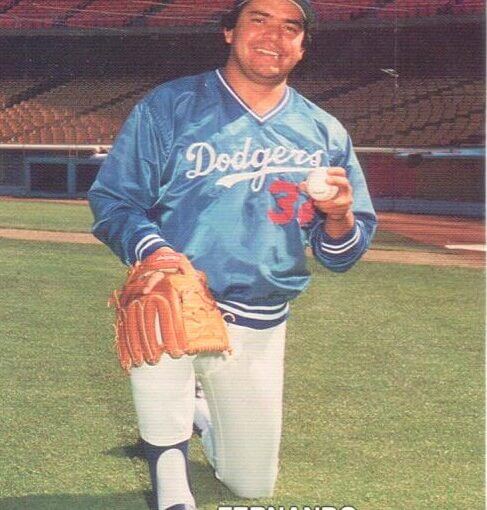
October 25, 2002
BASEBALL: Fernandomania!
Where were you when Cal Ripken broke the consecutive games record? You don't remember, do you? Did you even watch the game? I didn't. Sure, it was interesting at the time, but a moment you will remember forever? If you're keeping score at home, Major League Baseball's fan voting produced this Top Ten List: The Top 10 Most Memorable Moments (as voted by fans): 1. 1995 - Cal Ripken breaks Lou Gehrig's streak with his 2,131st consecutive game. Here's the complete 30-moment ballot, and ESPN Page 2's list of moments they left entirely off the list. The two lists, totaling 40 'moments,' present an inviting target, although Anyway, the inclusion of Clemente and Ichiro, coming alongside the late-season phenomenon of Francisco Rodriguez, brought to mind another of baseball's truly phenomenal runs, and one that is maybe not as well-remembered as I would have thought at the time: Fernandomania! Read More » Look back at the statistics from Fernando Valenzuela's rookie season, when he won both the Rookie of the Year and Cy Young Awards and was fifth in the MVP voting, and you'll see a very good pitcher in a strike-shortened season; but if you're not old enough to remember 1981, you may wonder what the fuss was about. In 25 starts, Valenzuela went 13-7 with a 2.48 ERA, good for second in the league in wins and seventh in ERA, although he did lead the league in innings (192.1) and strikeouts (180). But one number hints at the real story: 8 complete-game shutouts. In 25 starts. In 1980, Fernando, then "19" years old (my mom thought he was 40 when she first saw him), came up at the end of a season when the Dodgers were in an insanely tight pennant race, one that ended with a 1-game playoff, which the Dodgers lost to the Astros. He made his debut on September 15, and pitched so well that Tommy Lasorda used him 10 times in relief down the stretch, 6 of them for 2 innings or more. Over the season's last nine games, including the playoff, Fernando pitched 6 times, throwing 10 scoreless innings, finishing four games - including two wins and a save - striking out 9 while allowing four hits. He pitched 2 innings in the last scheduled game of the season against the Astros (the Dodgers won to force the playoff, with Don Sutton making one of just 4 relief appearances he would make between 1969 and 1988 to get the save), and 2 more in the playoff. The final numbers: 10 games, 0.00 ERA, 17.2 IP, 8 hits, 5 walks, 16 K. 16 straight scoreless innings after allowing 2 unearned runs in his debut. In 1981, the Dodgers decided to put the Mexican phenom in the rotation and let Sutton and his 230 career victories walk as a free agent. To the Astros, no less. Lasorda turned up the heat and the hype even further by naming the rookie to start Opening Day at home against Houston and Joe Neikro. He threw a 5-hit shutout, and won 2-0. In his second start, Fernando tossed another complete game victory at Candlestick, striking out 10 Giants and allowing just a run on 4 hits. In his third start, another 2-0 victory, a 5-hit, no-walk, 10-K blanking of the Padres in San Diego. Oh, and he went 2-for-4 at the plate. Start #4 was on to the Astrodome to face the defending division champs again; Fernando went the distance on a 1-0 victory, striking out 11, and added two hits and the game's only RBI for good measure. Start #5 was back home against the Giants, and another complete game shutout; Fernando also had 3 hits and drove in the go-ahead run. In Start #6, in Montreal, Fernando went 9 innings again, allowing one run, and left with the game tied 1-1; the Dodgers scored 5 in the tenth for another victory. I first saw him that season in Start #7, matched up at Shea against Mike Scott, who pitched what looked (until 1986) like the best game he'd ever throw; the Dodgers got just a single run off Scott, but Fernando went the distance yet again, winning 1-0. Here's his record at that point: 1981: 7-0, 0.29 ERA, 7 starts, 7 CG, 5 shutouts, 63 IP, 40 H, 2 R, 2 ER, 0 HR, 16 BB, 61 K. On the season, he was also hitting .318. Career: 9-0, 0.22 ERA, 80.2 IP, 48 H, 4 R, 2 ER, 0 HR, 21 BB, 77 K. He had already posted scoreless inning streaks of 35.2 innings AND 32.2 innings - in a career spanning just over 80 innings of work. He had beaten mostly good teams, and he had come out ahead in an exceptional run of close, In his next start, Fernando went the distance on a 3-hitter for a 3-2 nail-biter against the then-mighty Expos, scattering a pair of solo homers, the first two of his career, to go 8-0. This raised the Dodgers' record to 23-9 and their division lead to 5.5 games; by Fernando's next start, they were 26-9, and only the Big Red Machine, in its last hurrah, was within 7 games of them. The effect of all this was electrifying. Fernando was everywhere, and between the shutouts and the hitting and his eccentric, roll-the-eyes-to-heaven delivery, he was being compared to a cross between Sandy Koufax, Babe Ruth and Mark Fidrych. His first home start after the three straight victories on the road drew more than 49,000 fans to a Monday night game at Dodger Stadium, followed by a crowd of over 46,000 in Montreal (granted, between 1979 and 1983, the Expos were never lower than fourth in the league in attendance), almost 40,000 for a Friday night game against a dismal Mets team, 53,000 for a Thursday night game in LA, and 52,000 for a Monday night game in LA against the Phillies. Not all of his starts were packed, and attendance would be off later in the year following the strike, but there was no question that, especially among LA's huge Mexican-American population, Fernando was a big draw. You may think of Clemente and Juan Marichal as the trailblazers for Latin American ballplayers - you could even go back as far as Dolf Luque, the "Pride of Havana," in the 1920s - but those guys blazed it with little company. It was Fernando more than anybody who really represented the turning of the tide to Latin American players as commonplace in the game; more than that, it was the marketing potential tapped by Fernando that helped teams overcome the fear that Latino players wouldn't be popular. Valenzuela cooled off eventually, with some rough outings in late May and early June, and by the end of May his batting average, as high as .360 at one point, fell below .300. He would have some more spectacular successes late in the season, have several more great years including a 21-win season in 1986, and earn a deserved reputation as a great big-game pitcher with a 5-1 record and 1.98 ERA in six postseason serieses, including three wins en route to the Dodgers' 1981 World Championship. By age '25,' he had won 99 major league games; eventually, though, he broke down from severe overuse by Tommy Lasorda, which you can see in the 1981 records as well as the stretch in late 1987 when Lasorda left a struggling Valenzuela on the mound to throw 150 pitches in three consecutive starts, followed by a complete game, followed by a 10-inning complete game. Last I heard, he's still pitching somewhere in Mexico; who knows if he'll be back again someday for one of the abortive comebacks he's pursued for the last 14 years. We probably never will know how old he actually is. But all that is epilogue. If you want a "moment" when a new arrival turned _________________________________ FUN FACT: Fernando has hardly been the only Latin American pitcher to star « Close It
October 21, 2002
BASEBALL: Lessons From The 2002 World Series Teams
Originally posted on Projo.com In baseball, success is often imitated. Every year, general managers look at the teams that won it all, or won the pennant or division, and ask themselves what those guys are doing right that we need to try. Some people dismiss this as mindless groupthink - the herd mentality - and it can be, particularly if dumb GMs ape the superficial features of the winners (like Steinbrenner's ill-fated early-80s decree that the era of power hitters was over and he was going to rebuild the Yankees as a team of speedsters) without capturing the important parts. But it's also a useful evolutionary process, and hey, animals run in herds for a good reason. Last year's pennant winners offered lessons that were easy to understand and hard to imitate, like the value of having the two best (healthy) pitchers in baseball, or the importance of Mariano Rivera. But imitation is all the more tempting when the winners exceeded expectations. What lessons can we take from the Angels and the Giants? Read More » 1. Valleys Are At Least As Important As Peaks 12 Angels batted more than 100 times this season, and only two of them created less than 4.7 runs per 27 outs: Darin Erstad, a little under the average at 4.4 on account of the fact that he hit for no power (10 HR, 28 2B), didn't draw walks (27 in more than 650 plate appearances), and didn't compensate by hitting over .300; and Bengie Molina, the one weak link at 2.7. (If you're wondering, the team leaders were Tim Salmon at 7.3, Brad Fullmer at 7.0 and Garret Anderson at 6.3 - nobody in the range of Bernie Williams (7.8) or Jason Giambi (9.9)). How 'bout the Giants? Well, the average NL team scored 4.45 runs/game; the Giants scored 4.83, third in the league. Among the Giants' 7 regulars - the guys with 400+ at bats -- four ranged between 4.1 (Rich Aurillia) and 4.7 (David Bell), and Reggie Sanders at 5.1 isn't very far ahead. The one weak link is Tsuyoshi Shinjo, 3.8 over 362 at bats, and he's batted just once in the postseason. 8 other Giants have batted between 100-200 times, and again only two (Shawon Dunston at 2.6 and Pedro Feliz at 3.1) are truly non-hitters, while the tops is Kenny Lofton at 5.3. But the Giants do have one top offensive star -- 2000 NL MVP Jeff Kent at 7.4, a bigger number in an NL pitcher's park than, say, Salmon's production - and Barry Bonds at 21.4. (Yeah, you read that right, a team of Barry Bondses would score over 21 runs a game). Turn to the rest of the squads, and it's the same story. Of the guys who have started games in the postseason for these teams, none is a true superstar, and the biggest star is probably Jarrod Washburn. Not exactly Maddux, Schilling or Mussina here. But the highest ERAs are Kevin Appier (3.92) and Livan Hernandez (4.38, but 6-0 lifetime in the postseason). Virtually all of the two teams' relievers have been effective. The lesson: sometimes, the way to win pennants is by removing weaknesses as much as creating strengths. It's not glamorous work, but in a game that requires a team to use 18-20 players in large or important roles on a regular basis, it adds up. 2. Just Showing Up Is Half The Battle The emblem for both the Angels' health and consistency is Garret Anderson. Statistical analysts of the game have labored long and hard to get more attention for productivity stats like slugging average and on base percentage, and less emphasis on the traditional Triple Crown of Batting-HR-RBI. Anderson, who tends to do well in the Triple Crown categories while hitting for only middling power (in comparison to his vast accumulation of plate appearances) and rarely walking, has thus been a target of (justified) scorn for analysts for some time. But a little balance is sometimes in order as well, and if anybody embodies the idea that you can be a good outfielder without a good on base percentage, without hitting 30 homers regularly, it's Anderson. Yes, Anderson had just a .332 on base percentage, just one point above the league average, which is dismal for an outfielder, particularly one who sometimes plays in the outfield corners. But against that, set this: -- Anderson has never hit below .285 in his major league career and has had more than 180 hits 6 years running +Anderson has stayed healthy enough to ring up more than 640 plate appearances seven years in a row. -- Except for 2001, Anderson's slugging average has gone up every year, and has been above .450 five years in a row -- Anderson hit between 33 and 41 doubles 6 years straight, and then went up to 56 this season, pushing his slugging % to a career-high .539 -- Anderson's LOWS over the past 3 seasons: 28 homers, 117 RBI -- Add to that, Anderson has grounded into just 23 double plays over the last 2 seasons (1382 plate appearances), while hitting with enough men on base to drive in 246 runs -- He's a solid fielder who can play anywhere in the outfield as needed. In short: consistency, durability, flexibility, athleticism, growth over time, and a good batting average. Not a recipe for greatness, but Anderson's a guy you can write in the lineup and forget about, and that's a virtue that shouldn't be underestimated. (The anti-Garret Anderson would probably be Jeremy Giambi, a wonderful, high-OBP hitter with power who is slow as all get out, has no defensive position, has had various nagging injuries, and has twice been traded by teams that hated his attitude). Lesson: having the best team on the field starts with having the whole team on the field at once. 3. They Call It "Prime" For A Reason 4. Never Stop Tinkering 5. Hitting Like Babe Ruth Never Hurt Anybody 6. Dump Your Problems At Shea « Close It
October 04, 2002
BASEBALL: 1914-17 Giants Part Two
Originally posted on Projo.com With a team mostly composed of players in their late 20s and with substantial major league experience, and with no reigning power dominating the National League, the New York Giants must have been optimistic about a return to the top in 1916. But any illusions were rapidly dispelled as the team sank into a 2-13 funk, 4 games behind the next-to-last-place Pirates and 8.5 games behind the crosstown rival Dodgers, who were getting some spectacular pitching. Adding insult to injury, the Dodgers would go on to the pennant that year, with Chief Meyers catching and Rube Marquard posting a 1.58 ERA, both just a year after McGraw had sold them for the waiver price. The Giants at this point were misfiring on all counts: tied for last in the league in scoring (3.53 runs/game), third to last in pitching and defense (allowing 5 runs a game). Read More » Then, just as badly as things started, they turned around. The Giants ripped off 17 straight wins on a stunning 19-1 road trip, ending the month of May just 1.5 games behind the Dodgers, and second in the league in both runs scored and fewest runs allowed. During the 19-1 run the team scored 5.65 runs/game while allowing just 2.15/game. I couldn't find individual stats for each period, but in the 2-13 run, the Giants were 2-3 with Jeff Tesreau starting, 0-2 with Fred Anderson starting, 0-2 with Pol Perritt starting, 0-2 with Emilio Palmero (who finished the season with an 8.04 ERA) starting, 0-2 with Sailor Stroud starting, 0-1 with Rube Benton starting and 0-1 with Christy Mathewson starting. Not a very stable starting rotation, although early season rain may explain some of this. On the road trip, Anderson started 5 times, Perritt (who started the team's only loss) and Benton 4 times each, Tesreau and Mathewson 3 times, and Stroud once, for something closer to a set 5-man rotation. But the road trip, largely against the league's lesser teams (as opposed to 5 games against the Dodgers and 5 against the Phillies in the opening 15), would be the last hurrah for the old Giants. From June 1 through September 6, the team went 38-48-2 (ties happened in those days, when games would be called for darkness), scoring 3.27 runs/game while allowing 3.67. This time, the hitting was the major culprit. Merkle hit .237 with the Giants; Doyle, the 1912 MVP and still an offensive force in 1915, fell off to .268. Neither one of them did much else besides hit singles. Rariden, the new catcher, finished the season at .222 with just 13 extra base hits, and McKechnie hit .246. Kauff finished at .264, a far cry from his Federal League exploits, and George Burns, one young star from the 1913 team, wasn't much better, although both provided some power, steals and walks. On the pitching front, the team's old faithful ace, Christy Mathewson, had also broken down for good. After the hot May road swing in which he'd figured in the rotation ended, Matty started a 6-4 defeat June 2 and a 4-0 defeat June 14, and would never start another game in a Giant uniform. Entering action on July 20, the Giants' record in games started by the various starters was as follows: Tesreau (7-8) Not much to choose from here in cleaning house, but Stroud, Schauer and Palmero wouldn't start another game the rest of the year, and on July 20, McGraw made a wrenching break with the past, trading Mathewson to the Reds (who would make him the manager; he barely pitched again) along with McKechnie and the young Edd Roush (who hated McGraw) for 30-year-old Buck Herzog (an old favorite of McGraw's from the 1911-13 team, even though they couldn't stand each other either) and Cincinnati's 31-year-old left fielder, Red Killefer. Herzog was installed at third for the moment, and Killefer (who was batting .244) was sent straight to the bench; he would bat only twice for the Giants. Inserted into the starting rotation on was Schupp, who had made his first start July 13. Three days later, the Reds sold McGraw another starter, 31-year-old Slim Sallee, for $10,000. Basically, the Reds were dumping salaried veterans in favor of younger players, and gaining a manager in the deal. Schupp and Sallee would be the most important keys to the Giants' revival, pitching as well as any two pitchers have pitched over the season's final two months. Schupp would make 11 starts (including 4 shutouts) and 19 relief appearances on the season, registering a microscopic 0.90 ERA in 140.1 innings. Sallee, struggling along at 5-5 with a way-above-league 3.47 ERA with the Reds, would post a 1.37 ERA with the Giants. Their combined stats with New York: 18-7, 1.11 ERA in 252 IP, 6.25 H/9IP, 1.68 BB/9IP, 4.32 K/9IP, and just 3 home runs allowed. From July 20 to the end of the season, the Giants' record by starter was as follows: Tesreau (10-6) The primary starters in the 26-game winning streak would be Tesreau and Schupp, each starting 6 times. Opposing teams would score just 3 runs in Schupp's 6 starts during the streak, 10 runs in Tesreau's six starts during the streak (1.67 runs/game), and just 27 runs in Pol Perritt's last 13 starts of the season (2.08 runs/game). So, the pitching was in place; now for the offense. Still languishing hopelessly in fourth place in late August, McGraw shipped Merkle to the Dodgers for backup catcher Lew McCarty, age 27 (same as Merkle but with less mileage), on August 20. On August 28, he dealt Doyle, the team's biggest star, with little-used Herb Hunter and Merwin Jacobson to the Cubs for disgruntled 29-year-old third baseman Heinie Zimmerman (a solid hitter but a player whose glove work was so poorly regarded that he finished sixth in the MVP voting when he won the Triple Crown in 1912) and reserve shortstop Mickey Doolan. Although Zimmerman was less than spectacular, the overhaul could scarcely have worked better. Here's what the Giants' starting lineup now looked like; the new additions are listed in CAPS with their final season numbers (Avg/Slg/OBP) with New York: C LEW McCARTY (age 27) .397/.559/.453 On September 6, 1916, the Giants spilt a doubleheader with the Dodgers, Rube Benton starting both ends and losing the second game to Marquard. New York stood 59-62, 12.5 games behind the third-place Braves, 13 games behind the second place Dodgers and 13.5 behind the defending champion Phillies. But the Giants had one big ace in the hole: they were now 3 games into a 31-game homestand. And another: a 19-game stretch of that was against the league's three weak sisters, the Reds, Cubs and Cardinals, from whom McGraw had taken Herzog, Sallee, Perritt, Zimmerman, and Benton over the prior year. And then they got hot. Over the next 27 games, the Giants strangled their opponents, scoring 122 runs (4.52/game) while allowing just 33 (1.22/game). Only three of the wins in the Giants' streak were by 1 run, and one of those was a shutout by Schupp, although there was also the one tie (a 1-1 duel between Perritt and Hall of Famer Burleigh Grimes) to mar the streak. Besides the weak teams, the Giants swept 4 straight from the Phillies, beating Hall of Famers Grover Alexander, Eppa Rixey and Chief Bender in the process, and 3 straight from the Braves before Sallee lost 8-3 to the Braves in the second game of a September 30 twin bill to snap the streak; a win would have finally pushed them past Boston into third place. On the morning of October 1, the Giants woke up 4.5 games back of the Phillies and Dodgers (with the Phils leading by percentage points) with four games in Brooklyn left to play. Schupp, Benton, Sallee and Tesreau started those 4, but Benton's and Tesreau's starts went badly, the Giants were shut out by Jack Coombs in the game Schupp started, and the Dodgers took 3 of 4 while the Braves took 4 of 6 from Philadelphia for the pennant. The magic was gone. In the meantime, though, McGraw's outlays of cash had paid off; the Giants' attendance was the best in the NL, recovering nearly to the 1911-13 levels from a horrible slump in the Federal League years. 26-game winning streaks at home have a way of doing that. There are three postscripts to the 1916 run, two good, one unsavory. First, despite the speed with which the team came together, McGraw's men were no flash in the pan; they would go on to dominate the National League in 1917, leading the league in scoring, ERA and Fielding Percentage and winning the pennant by 10 games with basically the same lineup that ran the table in September 1916, except that Rariden won back most of the catching job, Anderson (who started 3 times during the streak) spent about half the year in the bullpen, and McGraw brought back Al Demaree. Kauff, Burns and Zimmerman would all hit around .300, while Schupp, Perritt and Sallee combined to go 56-21 with an ERA just a hair under 2.00. Perhaps just as amazingly as the fact that this hastily constructed team turned into a powerhouse is the fact that McGraw then tore it apart within the next two years and built a whole new team around young talent, starting with the arrival of Ross Youngs in 1918 and the emergence over the next two seasons of Frankie Frisch, George Kelly, as well as the acquisition of Jesse Barnes and Art Nehf from the Braves and Dave Bancroft from the Phillies' fire sale. The sadder, seamier part may be connected to why (other than Schupp hurting his arm) McGraw had to rebuild the team, and perhaps even to why so many of these players were available in the first place: too many of them were crooks. The Giants lost the 1917 World Series to the Chicago White Sox of Shoeless Joe Jackson and Eddie Cicotte, and there have long been rumors (unsubstantiated, as far as I know) that that series, as well, was fixed, perhaps by the same New York-based gamblers who reached the Black Sox two years later. Zimmerman and Kauff, two of the team's best 3 hitters, hit .120 and .160 in the series. Both men would be banned from baseball a few years later for their involvement in various scandals, including links to the 1919 fix, as well as Kauff's indictment for auto theft (he was acquitted). The White Sox had shown a propensity for corruption already, as they were accused of making payoffs to other AL teams to lay down during the 1917 race. Rube Benton, who (along with McCarty) failed to cover home plate in a rundown as Eddie Collins scored the winning run of the deciding game of the 1917 World Series, was banned from the National League in 1922, and Benton alleged that Zimmerman, Hal Chase and Herzog had tried to bribe him to throw a game in 1919. Herzog and Merkle both left major league baseball under a cloud in 1920. (As far as I know, nobody has ever accused Slim Sallee of anything, but Sallee pitched terribly in the 1917 Series and much more effectively for the Reds in the 1919 series, including winning one of the games thrown by Lefty Williams.) Apparently not satisfied with such a team, McGraw went out and got Chase in 1918, after Christy Mathewson's illness rendered him unavailable to press charges that Chase had thrown games under Mathewson's eyes with the Reds. McGraw testified as a character witness for Chase, who was basically the ringleader of many of the fixes of that era and was persona non grata in baseball after 1920. As a result, it's hard to draw too many lessons from this story. The main lesson is the genius of John McGraw; acting as his team's manager, GM and primary scout, he used both his substantial baseball acumen and his team's deep pockets to repeatedly rebuild his team on the fly, playing the hot hands and importing needed veterans while at the same time breaking in numerous young talents who would be keys to his team's ongoing success. On the other hand, McGraw clearly had some financial advantages over his competitors, and you have to wonder how he was so blind to the dishonesty pervading his roster. Was he in denial? Perhaps, as a man who liked to play the horses himself, he believed that players who ran with gamblers off the field could still be trusted to play to win? The answer is lost to history. But we know this much: from 1914 to 1917, John McGraw led the fans of his Giants on one heck of a ride. « Close It
September 20, 2002
BASEBALL: 1914-17 Giants, Part One
I generally don't post my Projo columns here, least of all before they are up on Projo, but since the readership here is small yet and there have been some transmission problems with getting the first half posted over there (plus the Projo folks are all tied up with the start of football season), here's a treat for y'all - Part One of my column on the 1914-17 New York Giants: The recent 20-game winning streak of the Oakland A's brought back mention of the 1916 Giants, with their 26-game winning streak, and some debate over whether the Giants should fairly be considered the record-holders when they had a tie in the middle of the streak. Fair enough. Most people who followed the story or know their history can tell you that, amazingly, the Giants finished fourth that year. Some could even point out the more astonishing fact: the Giants were in fourth place when the streak started, and were still stuck in fourth when the streak ended. But what these pieces of trivia don't tell you is that those Giants were part of a bigger story, one of baseball's great turnaround stories and all-around roller coaster rides -- the story of the 1914-17 New York Giants. Read More » A little history is in order. The Giants became one of the National League's perennial powerhouse franchises shortly after the turn of the 20th century when, in short succession, three significant things happened: In 1900 they traded their burned-out superstar pitcher, Amos Rusie, to the Reds for 19-year-old Christy Mathewson; Andrew Freedman, the penurious megalomaniac whose salary disputes with Rusie had ruined the previous decade, sold the team to John T. Brush; and in 1902, John J. McGraw abandoned the Baltimore Orioles of the American League (who would move to New York to become the predecessor of the Yankees the following year) to manage the Giants, bringing with him Joe McGinnity, Roger Bresnahan and a few other players. By 1904-05, the Giants had seized control of the National League. Perhaps McGraw's best team, and certainly his favorite, was the Giants team that won three straight pennants from 1911-13 and lost three straight World Serieses, at least one of them (1912) in exceptionally heartbreaking fashion. That team was built around a fast, agressive young lineup, plus hard-hitting veteran catcher John 'Chief' Meyers, with the pitching staff balanced between two young stars (Rube Marquard and Jeff Tesreau) and three veterans (Mathewson, still one of the league's premier pitchers, and Hooks Wiltse and Red Ames). If the Giants thought they had heartbreak in 1908 (the Fred Merkle incident) and 1912, though, they were in for even more in 1914, when the team was 52-33 on July 29, and 58-40 with a 6 1/2 game lead on August 12, and in sole possession of first place as late as September 4, but went 32-37 down the stretch while the Boston Braves (who had been in last place in the 8-team NL as late as July 18) finished the season on a 68-19 tear to become the "Miracle Braves," the first real 'Cinderella' team in the history of pro sports, and run off with the pennant by 10.5 games. The Giants' collapse was partially just bad performances in close games: over the team's last 71 games, in which they went 32-37 with 2 ties, the Giants actually outscored their opponents 272-248, which should have been expected to produce 38 or 39 wins. But a six-game swing wouldn't have been enough to make the difference anyway, and wasn't enough to explain an 84-win season by a team that had won 99, 103 and 101 games in 1911, 1912 and 1913. The Giants' offense dropped off from 4.7 runs/game to 3.8 runs/game over those last 71 games, and while they still led the league in scoring, McGraw must have seen that he needed more sock. So, in January 1915, he made a disastrous panic move: he dealt the team's weakest hitter, 20-year-old third baseman Milt Stock, to the sixth-place Phillies along with underachieving pitcher Al Demaree, age 28 (13-4, 2.21 ERA in 1913, 10-17, 3.09 ERA in 1914) and 24-year-old backup catcher Bert Adams for 33-year-old third baseman Hans Lobert, who had batted .327 in 1912, .300 in 1913, and .275 in 1914. You can see where this was headed, but uncharacteristically, McGraw didn't. Lobert would hit a punchless .251 in 1915 on the way to losing his job, while Stock and Demaree would play small roles in the Phillies' leap to the 1915 pennant and Stock would eventually mature into a solid player, hitting over .300 five times between 1919 and 1925. The bigger problem was the pitching, which had fallen in 1914 to sixth in the league in ERA. At age 33, Mathewson's ERA had jumped a full run to 3.00 in 1914 (above the league average) after having ERAs ranging from 1.14 to 2.12 every year for the prior 7 seasons, he allowed more than a hit per inning, allowed twice as many homers as his career high, and struck out just 80 men in 312 innings. Marquard saw his ERA also rise above 3.00, and he went 12-22 after three seasons of 24-7, 26-11 and 23-10. While Tesreau had another fine season, the decline in the team's two stars combined with Demaree's slide left the Giants' staff weak. McGraw responded with his other, wiser offseason move, buying 22-year-old Pol Perrit from the financially strapped Cardinals, for whom he'd posted a 2.36 ERA in 286 IP the prior year. That brings us to the other bit of context that would become significant later on: the Federal League, a third major league that put severe competitive pressure on the established NL and AL in its two years of existence in 1914-15, before the Feds folded under the strain. The Giants were under a financial crunch like other teams, but when the Feds went under, the checkbook would open again with important results. ++++++++++++++++++++++++++++ In the meantime, 1915 brought a new and unfamiliar form of humiliation to the team that had fallen just short of glory so many times in the prior 7 years: a last place finish. The Giants' mainstays through the pennant years showed the severest decay: Chief Meyers, now 34, hit .232. Mathewson, finally sore-armed after all those 300+ inning years dating back to his early 20s, was 8-14 with a 3.58 ERA. Marquard was worse. With bad pitching and bad defense, the team allowed more runs than anyone else in the NL, and while the offense could still score (3.75 runs/game, third in the league), it wasn't enough to make up. Once it became apparent that the veterans weren't making a run back to glory, McGraw was merciless in cleaning house. Red Murray, a regular for the three pennant winners but now 31 and hitting .220, was cut loose in mid season, as was backup catcher Red Dooin. In August, McGraw sold Fred Snodgrass -- only 27 but hitting .194 and never to recover as an everyday player -- to the Braves, sold the sore-armed Marquard to the Dodgers for the waiver price, and bought the 28-year-old Rube Benton from the Reds to shore up the rotation. After the season, Meyers would also be sold to the Dodgers for the waiver price. McGraw was also looking down the road, carrying rarely used teenager George Kelly (later the Giants' star first baseman in the 1920s and now in Cooperstown) and pitcher Ferdie Schupp, age 24 and severely ineffective in limited use for the second straight season. Schupp must have been used for mopup work: between 1913 and 1915, he pitched 36 times but with just one decision. ++++++++++++++++++++++++++++++ A long, slow rebuilding process was underway, but McGraw had other plans in the meantime. When the Federal League went under, McGraw came out swinging: on December 23, 1915, he bought 2-time Federal League batting champ Benny Kauff (the "Ty Cobb of the Federal League") from the Brooklyn franchise and catcher Bill Rariden (to replace Meyers) and slick-fielding third baseman Bill McKechnie from the Newark franchise. The Kauff acquisition alone cost $35,000, a huge price tag for 1915. In February, McGraw bought starting pitcher Fred Anderson from the Buffalo franchise the same day that he sold Meyers. McGraw also bought future Hall of Famer Edd Roush from Newark. The 1916 team now looked like this on paper: C Bill Rariden (age 28) SP Jeff Tesreau (27)* * - Players remaining who had major roles in the 1912 team. IN PART TWO, to follow soon (hopefully; I haven't written the second half yet): McGraw's late summer purge, and the aftermath. « Close It
September 16, 2002
BASEBALL: Oops
Yes, in my last Projo column, I forgot to mention the Phillies as a team that has been utterly eviscerated by their bullpen. Posted by Baseball Crank at 06:40 AM
|
Baseball 2002-03 |
Baseball Columns
| Comments (0)
| TrackBack (0)
September 06, 2002
BASEBALL: 2002 The Year Of The Bullpen
Originally posted on Projo.com With the threat of Baseball Armageddon behind us, 2002 will not now be known as The Year Of The Third Strike. Instead, it should be known as The Year Of The Bullpen. Nearly every one of baseball's major stories this season, at a team level, have turned on the bullpen. Some of the Major Leagues' best bullpens, of course, are no surprise: both the Yankees and Mariners entered the season stocked with well-known, well-paid relievers with extensive track records of success. Both have made good use of those resources. But around the majors, there are teams that have been better (or worse) than expected, and in nearly every case the bullpen has been a critical factor. Let's look at the teams that have been the biggest surprises of 2002: Read More » 1. The Braves While many people (myself included) predicted the Braves to hang on to their NL East crown, you would have to have looked long and hard before this season to find anyone picking them to have the best record in baseball, cruise to 100+ victories, and run away with the division. Yet, there they are. With at bats being wasted on the likes of Vinny Castilla, Keith Lockhart, Wes Helms, and Henry Blanco, plus Rafael Furcal underachieving and Javy Lopez and Marcus Giles failing to hit, Atlanta is in the bottom half of the National League in scoring. Yes, their starting pitching has been more outstanding even than usual with the revival of Glavine and Millwood and the emergence of Damian Moss (the fifth slot has been unreliable but less so than most teams'), and their defense has been the best in the league at converting balls in play into outs , but neither of these is a big shock. What has transformed the Braves from an ordinary low-scoring pitching team into a juggernaut has been the emergence of a killer bullpen populated largely by guys with (1) no major league track record of success or (2) a long recent record of failure. Here are the combined numbers on the 7 Braves relievers with 40 or more relief appearances this season - John Smoltz, Mike Remlinger, Chris Hammond, Darren Holmes, Kerry Lightenberg, Kevin Gryboski and Tim Spooneybarger: W-L SV-BS ERA G GS IP H/9 HR/9 BB/9 K/9 WHIP (All stats through Wednesday's action) For perspective, the average NL reliever has a 3.83 ERA and has allowed 1.36 baserunners/IP; the average AL reliever has a 4.24 ERA and has allowed 1.41 baserunners/IP. In each league, relievers have thrown approximately a third of their team's innings (oddly, last season NL relievers had a higher ERA than AL, 4.10 to 4.09) . . . also, bear in mind that relievers issue a lot of intentional walks. 2. The Twins Here we have a classic example of a team where the bullpen -- a perceived weakness of the team before the season -- has made a huge difference. The Twins' have exceeded their Pythagorean W-L record (i.e., the number of games they should mathematically be expected to have won given the number of runs they have scored and allowed) by more than 5 games this season, the second-largest margin in baseball (I'll get to the biggest one below), always a sure sign of a team winning a lot of close games and a lot of games in the late innings. The Twins don't have a terrifying offense; they are ninth in the AL in scoring, they don't have a single hitter who can compete with, say, Manny Ramirez or Nomar as far as season-to-season production, and they've been heavily dependent on unexpected development of outfielders Torii Hunter, Jacque Jones and Bobby Kielty. The team's strength was supposed to be the starting pitching, but beset by injuries, the big three of Brad Radke, Eric Milton and Joe Mays has won just 22 games with a 5.11 ERA. So, how have the Twinkies cruised to such a huge lead in the AL Central that even a recent slump leaves them 12 games ahead in the loss column? Well, previously unknown J.C. Romero has been one of baseball's most devastatingly effective pitchers, Everyday Eddie Guardado has put a hammerlock on what has been a revolving door closer's job since the departure of Rick Aguilera, and even LaTroy "Line Drive" Hawkins has showcased pinpoint control in the best season he's ever had (although the Players Union's website went a mite far when it said he had "recapture[d] his dominating form"). Bob Wells has had a terrible year (5.66 ERA, 65 hits and 7 HR in 47.2 IP), but otherwise, here once again are the combined numbers on the other 5 Twins relievers to make at least 39 relief appearances this season - Romero, Guardado, Hawkins, Mike Jackson (if there were a Hall of Fame just for setup men . . . ) and Tony Fiore: W-L SV-BS ERA G GS IP H/9 HR/9 BB/9 K/9 WHIP (and only 2 unearned runs!) (It may be objected that I'm skewing the numbers here by picking different samples from different teams, but of course as the season goes on, bullpen roles change, and I'm looking at who has emerged as the key guys on each team). 3. The Angels The Angels' success has been in the details: the way that four of the five starters (everyone but Aaron Sele) has pitched well; the best defense in the AL at turning balls in play into outs; a career year by Adam Kennedy, a revival by Tim Salmon, and production from several other lineup slots. But this is a team that was not expected to hang with a tough division, the team's putative ace (Sele) has struggled, and of the top 3 hitters on the team (Salmon, Troy Glaus and Darin Erstad), one (Glaus) has had a major off year and another (Erstad) has been very unproductive, with a .319 OBP and has had a complete power outage. But the bullpen, mostly consisting of steady journeymen plus a closer who has been off his game more often than on in recent years, has filled the breach. Here are the combined numbers on the 7 Angels relievers with 20 or more relief appearances this season without making a start (Scott Schoenweis has made 15 starts and 27 relief appearances, with a 5.00 ERA) - Ben Weber, Troy Percival, Al Levine, Dennis Cook, Brendan Donnelly, Lou Pote and Scot Shields (Mike Scioscia has spread out their workloads; none of the 7 has pitched more than 50 times, due also partly to Percival's and Cook's injuries): W-L SV-BS ERA G GS IP H/9 HR/9 BB/9 K/9 WHIP 4. The Dodgers Eleventh in the NL in scoring; fourth even in their own division. Their ace starting pitcher reduced to 3-3 with a 4.53 ERA, having started just nine games. Some wonderful starting pitching, led by Odalis Perez, has been a big factor; so has the second-most-effective defense in the NL (see the Baseball Prospectus link above). But the big story has been Eric Gagne, a talented but underachieving starter (in his first two go-rounds) who has set the ninth inning ablaze, saving 47 games with an 8-to-1 strikeout to walk ratio and more than 12 whiffs per 9 innings; Gagne has struck out 98 batters and allowed just 55 baserunners. Combined with two other guys who overcame disaster as starting pitchers, one of them during the Carter Administration (Jesse Orosco and Paul Quantrill) and unheralded if gopher-prone Giovanni Carrara, the Dodgers have improved on what was already a strong bullpen in 2001 to have their best pen since Tommy Lasorda retired. Gagne, Orosco, Quantrill and Carrara have been the only Dodger relievers to appear in 40 or more games (although Guillermo Mota hasn't been terrible in 32 appearances, despite his ugly ERA, and Orosco has tossed just 25 innings in 49 games); here's the combined line for those four: W-L SV-BS ERA G GS IP H/9 HR/9 BB/9 K/9 WHIP ++++++++++++++++++++ THEN, there are the underachievers: 1. The Red Sox I think most of you know this story, which involves the second-biggest shortfall in baseball between the Bosox' Pythagorean expected record and their actual record - an underachievement of 7 games. Art hit on the bullpen's role in this back on August 9. It's a little hard to separate Boston's main relievers because of the instability in the bullpen; only 4 pitchers have made as many as 25 relief appearances for the Sox this year, and 2 of them (Wakefield and Fossum) have pitched a substantial amount of their innings as starters (Castillo and Arrojo have also split time). That leaves just Ugueth Urbina, whose numbers aren't terrible (5 blown saves in 35 tries), although he's been a bit more hittable than you'd like, and Rich Garces, a mainstay of recent Sox bullpens who imploded this year under the force of his own gravitational pull, being charged with 20 runs in 21.1 innings. Here are the combined relief numbers for the three relievers (Urbina, Wakefield and Fossum) with 30 appearances, excluding Wakefield's and Fossum's numbers as a starter, followed by the totals for the other 11 pitchers to grace the Boston pen (also as relievers): W-L SV-BS ERA G GS IP H/9 HR/9 BB/9 K/9 WHIP As you can see, the good part of the bullpen has been OK - it just doesn't stack up to teams like Minnesota and Anaheim, not to mention Seattle, Oakland and the Yankees. One thing that sticks out here: the Red Sox bullpen has only won 13 games all year. Get ahead early, or it's over. And with guys in the back of the rotation who don't go deep into games (Burkett's averaging just 5.85 IP/start, Castillo 5.63, Wakefield 6.1, Fossum 5.47, Arrojo 4.92), it should come as no surprise that it's been Pedro and Lowe and pray for snow. 2. The Cubs I said the Red Sox were the second-biggest underachievers this year relative to their runs scored and allowed; the Cubs are worse. The Cubs' offense has been bad, but not this bad - they HAVE managed to score more runs than the Braves, Reds or Dodgers. And despite the recent injuries to Jon Lieber and Mark Prior, they've gotten some surprisingly good starting pitching from those two, Kerry Wood, Matt Clement and Carlos Zambrano. But the key to last season's 88-win Great Leap Forward was the bullpen under the tutelage of pitching coach Oscar Acosta and anchored by Jeff Fassero, Kyle Farnsworth, Todd Van Poppel and Tom Gordon, who among other things combined to whiff an astounding 343 batters in 276 innings. This year, Gordon has been hurt and Acosta and Van Poppel have gone on to less distinguished seasons in Texas, leaving four pitchers to anchor the pen - Farnsworth, Fassero, Joe Borowski and Antonio Alfonseca. All four have logged 40 or more appearances without a start, while no other Cubs pitcher has made more than 27 relief appearances. Here are the grim results: W-L SV-BS ERA G GS IP H/9 HR/9 BB/9 K/9 WHIP Aaaaaaaaaaaaaaaaaaaaaaaaaaaaaaaaaaaaaaaaaaaaaaaaaaaaaaaaa!!!!!!!!!!!!!!!!!!!!!!!!!!!!!!!!!!!!!!!!!!!!!!!!!!!!!! That's right, the GOOD part of the Cubbies' bullpen has been as bad as the BAD part of the Red Sox' bullpen. 3. The Mets The Mets' bizarre collapse this year -- not a totally unexpected result but shocking in its scope -- has come from every cause you could have dreamed up before the season and then some. The pivotal moment, though, was a blown save by Armando Benitez on a Craig Counsell home run in the first game of a doubleheader with Arizona on August 3, leading to the second of the Mets' record-setting 15-game home losing streak. Between them, Benitez and Scott Strickland have been tagged for 15 home runs in 117.1 IP, an unacceptably high rate for a team's top late-inning relievers, and the great majority of them game-breaking. Let us speak no more here of the Mets. They have gone on to a better place. ++++++++++++++ Of course, no theory explains everything, but even the less dramatic cases offer some support. The White Sox have struggled from a myriad of causes, and the loss of confidence in Keith Foulke isn't really at the top of that list, but it has been a factor. The Cardinals, in true LaRussa fashion, have used 6 different relievers with 40 or more games pitched, with varying results. But the triumvirate of closer Jason Isringhausen and setup men Mike Timlin (since traded) and Mike Crudale (ERAs of 2.47, 2.51 and 1.80, respectively) have been devastating. Another partial example is the A's. The red-hot A's, who have exceeded their Pythagorean W-L record by nearly 6 full games this season, the largest margin in baseball. The A's have gotten brilliant setup work from Chad Bradford (a 2.82 ERA, 69 baserunners allowed and just 1 home run in 67 innings) and a solid year from closer Billy Koch (9-2, 37 saves in 43 tries, 2.93 ERA), plus recent additions Ricardo Rincon (acquired the day before the trade deadline, a 2.13 ERA and just 6 hits and 3 walks in 12.2 IP over 16 appearances) and Micah Bowie (called up July 29, 2-0 with a 1.00 ERA in 9 games) have been big factors in the recent hot streak. Arizona has three top relievers with ERAs in the ones and a combined 14-3 record - Byun-Hyung Kim, Mike Koplove and Mike Fetters - although the bullpen's overall numbers are scarred by Eddie Oropesa (30 games, 11.03 ERA) and Bret Prinz (17 games, 10.45 ERA), and it's hard to say that the bullpen has been the key factor in the D-Backs' pitching staff. In the modern (post-Eckersley) game, a bullpen invariably involves anywhere from 4 to 7 pitchers who are expected to pitch regularly, each with a small role in terms of total innings, but collectively having a large impact on a team's ability to win close games. (Some managers always used these types of committees rather than individuals with huge workloads - Earl Weaver comes to mind, as well as Sparky Anderson in his Reds years and Chuck Tanner, who always went several deep around workhorse Kent Tekulve). There are a few steady setup men out there of the Arthur Rhodes/Jeff Nelson/Mike Jackson variety, but by and large, the individual relievers tend to be erratic from year to year; they are often drawn from the scrap heap; and many managers have to largely rebuild the pen every year. Handling patterns, who has what role and who warms up when can all have a big impact. That's why I regard the bullpen as the critical test of any manager in this day and age, the part that separates the men from the boys. Bobby Cox is the master, and Tony Muser was the worst at it, becoming the first, then the second manager ever to have a team with more blown saves than saves. (Do you doubt that most of the guys in the Atlanta pen would have ERAs over 5.50 pitching for Muser?) Many managers fall in between. The success of many of his bullpens is a big reason I've been a convert to Bobby Valentine, although this season even that has finally gone sour. The newer managers? Give me Ron Gardenhire, Jim Tracy, and Mike Scioscia. And I haven't seen enough Sox games to connect all the dots, but - for now, I'll pass on Grady Little. « Close It
August 25, 2002
BASEBALL: Baseball Mom
Baseball, the sages tell us, is a game for fathers and sons. From games of catch and Little League coaches all the way to the big league world of Alomars and Ripkens and Bondses and Griffeys, we often think of how the game ties together generations of men. All of this is true, of course; hey, I got choked up at the end of "Field of Dreams" the first time I saw it, too. But let's not overlook one of the best gifts a boy can have growing up as a baseball fan: the Baseball Mom. Read More » My father has been a baseball fan since the 1940s, and baseball has always been something we talked about; but in my house, at least, it was my mother who was even more important in shaping me, my brothers and my sister as baseball fans, as Mets fans. Ours was not a house where Dad had to battle to get sports on TV. My mother was an old Brooklyn Dodgers fan, and sufficiently set in the National League ways that when my parents got married, she converted my father to a Mets fan from his prior allegiance to the Hated Yankees -- not an easy feat, in the early 1960s. She always pulled for the National League in the World Series and the All-Star Game, even when the Mets and Dodgers weren't involved. There are different types of baseball fans. Some fans are the hard-core stat-heads, box score readers, rotisserie players and the like -- people who get into the history, the facts and figures. Some are guys who play ball themselves, and love the mechanics of the game. Some are season ticket holders who go to every game. Some are just casual fans who only get interested when the team is going good and the race is heating up. My mother was another kind of fan -- the kind who follows every game team faithfully on the radio and TV, and forms most of her opinions about the players from what she sees. She loved listening to Bob Murphy, Ralph Kiner and Lindsey Nelson. She knew generally who was a .300 hitter or a 20-game winner or held the famous records, but she didn't pore over stats or think of the players in terms dictated by the numbers. She always remembered the guys who tortured the Mets, like Mike Easler and Bob Knepper, and always preferred the scrappy little players like Mookie Wilson and Wally Backman and had little use for big sleepy lumbering sluggers like Dave Kingman, John Milner, George Foster, Darryl Strawberry, Kevin McReynolds, Bobby Bonilla and Mo Vaughn. I never asked in so many words, but I think her favorite player was probably Jerry Koosman, or maybe Gil Hodges or Rusty. She always said the best baseball games were the 4-3 games, just enough scoring to keep things interesting. She stuck by the Mets during the times in the mid-90s when even I was too disgusted and depressed to watch, and even in the worst years they always seemed to win when she made it out to Shea. And she always liked to talk about the Mets or just listen to us talk, even about our rotisserie teams -- and there are few topics in this world that get old faster than listening to somebody else talk about their rotisserie team.
But the fans who follow the game religiously for the sheer fun of it, for the love of their favorite team -- those are the backbone of the game, the way the guy on the couch with the beer in his hand is the backbone of the NFL. Unlike basketball and hockey, baseball's fan base isn't so much threatened by pricing its core fan base out of the seats and pulling all the games off free TV; but the one thing baseball can only survive so many times is plain ill will. Baseball needs to raise a younger generation of fans like my mother, and it's not going to do that if the game isn't there when we need it. The continuity of the game, the steady rythm of a game on the radio every night in the summertime -- my mother would listen to the games on the radio while doing jigsaw puzzles -- that matters, a lot.
My mother got to see her favorite team win the World Series four times -- the Dodgers in 1955 & 1959, the Mets in 1969 & 1986. If I could ask her today, I'd say the only regret she had as a baseball fan was never seeing a Mets pitcher throw a no-hitter even with decades of power pitchers like Tom Seaver, Nolan Ryan, Dwight Gooden and David Cone, even a guy like Hideo Nomo who threw them before AND after being a Met. She always mentioned how the perennially optimistic Bob Murphy ("if Doug Flynn can get on here, that will bring the tying run into the on deck circle") moans about that one absence in Mets history. I hope she's watching when somebody finally throws one. I hope the game gets its house in order and doesn't let somebody else's Baseball Mom down. I'll still be watching. I'll just miss watching with her. « Close It
July 12, 2002
BASEBALL: 2002 All-Star Break Musings
Originally posted on Projo.com I've been absent from this space for too long due to other commitments. Let's run down some random thoughts: +For a couple of years there, Jim Rice was just about as good a hitter as Brian Giles is. +It's ridiculous that the All-Star Game ended in a tie, but realistically it was the only decision they could make. Bud Selig looked like he wanted to crawl under a rock (maybe Joe Torre should have talked Giuliani into making the announcement). What's scandalous is how they got there - the managers can take a pitching staff full of superstars, you'd think they can find a few people to throw 2-3 innings at a stretch without getting hurt or tired. If 4 starting pitchers each throw 2 innings, you're entering the ninth with 6 or 7 pitchers on hand. They're pitchers, for crying out loud; the rest of them aren't going to complain if they don't pitch. I know, it's an unfair comparison in several ways, but I can't resist: In the 1933 World Series, screwball pitcher Carl Hubbell pitched a complete game in Game 1 - then came back on two days' rest -- TWO DAYS -- and tossed an 11-inning complete game 2-1 victory. Read More » +I was one of the biggest boosters of Derek Lowe as a starter, but even I didn't picture him starting the All-Star game. Let's update some of the numbers, and throw just a little cold water on him:
Lowe has cut down on the longball, but when you combine the lower strikeout rate and the lower hits/9IP, what you get is simply a dramatic improvement in the rate of balls in play becoming hits. Experience suggests that while improved team defense may help that hold up, it's not a great bet to continue. His rate of groundballs to flyballs, at 3.57 the highest in baseball last season, has jumped to 3.87; I'm not sure if that's sustainable, but it does suggest that the defensive improvements that have helped him the most have been the return of Nomar, the addition of Sanchez (and, improbably enough, Baerga) at second, and the maturation of Shea Hillenbrand, rather than the addition of Johnny Damon . . . I noted before the season that Lowe's walk rate should improve because he wouldn't be issuing so many intentional passes; in fact, Lowe's unintentional walk rate has risen slightly from 1.96 to 2.14, but he's cut his walks because he hasn't intentionally walked anyone all year . . . the Sox have also caught a third of all base thieves against Lowe and there have been far fewer attempts, a key improvement from the last two seasons and leading to a dramatic increase in GIDP (one every 12.9 groundouts as opposed to every +Trading Bartolo Colon and not trading Vizquel, Thome, Finley, Wickman, Burks, Lawton and what's left of Travis Fryman - that's just silly. Trading Colon is a sign the Indians are really serious about rebuilding - except that they're not. Instead, they are doing it halfheartedly, the way they tried this past offseason to play it halfway between rebuilding and contending. Omar Vizquel was in the All-Star game - you're telling me you can't trade him? +Will Barry Bonds ever see his reputation rehabilitated the way Ted Williams' has been? Partly, but not entirely. Williams mellowed with age, partially because he reached a stage in his life where he could put on a pair of pants without getting a microphone stuck in his face. Most anybody is happy to talk to reporters three times a year, and unhappy to do it twice a day. But he also benefitted from changing times: when Williams played, players who were surly with reporters, distant with teammates and obsessed with their personal accomplishments were considered unusual. Players (and sportswriters, for that matter) who served their country in wartime were common. Both of those things changed; the younger generation of writers came to see Williams' virtues as being exceptional and his vices as being ordinary. Bonds does have his virtues - he works hard, generally shows up ready to play and he's never had significant off the field problems - but I don't see the same shift happening. One of the things that irritates me about Barry Bonds' defenders, notably Joe Sheehan of the Baseball Prospectus, is their tendency to assume that Bonds' bad reputation stems entirely from being unpleasant with reporters. This is a whitewash. I went over this ground last year - Bonds has a long history of shooting his mouth off and feuding with teammates. The writers don't make this stuff up. +The Mondesi and Jeff Weaver deals. What these deals really do is to lay bare the Yankees' financial advantage. I mean, Raul Mondesi is clearly a better ballplayer than Shane Spencer, and is healthier (if less productive) version of Rondell White, but is Mondesi a huge upgrade for the Yankees? No, not particularly close. And Jeff Weaver has more of a track record of success than Ted Lilly, but again, is he a big-time upgrade? Heck, the Yankees didn't seem 100% sure they had room for Weaver -- the best player on the Tigers -- in their rotation. But this, in a nutshell, is the difference between the Yankees and everyone else. Any other team, even the "big-market" teams, given the ability to pay Ted Lilly peanuts, would be crazy to take Jeff Weaver's contract. WHY? Because the extra money spent on Weaver is money the team couldn't spend to The Weaver deal makes some baseball sense for all three teams, and also emphasizes the cost of stupidity: the A's got Carlos Pena cheap, and the Yankees got Lilly for Hideki Irabu. Both teams cashed those guys in for something better. The Rangers and Expos got the shaft. As for the Blue Jays, I understand that they think dumping Mondesi is addition by subtraction, but why give a guy who's still a potentially good player in his prime to the perennial powerhouse in your division, and for almost nothing? As with the Clemens deal, this just stinks. +Adam Dunn. Man, is that guy built like a brick wall. Reminds me of old pictures of Mantle or Gehrig. What's amazing about Dunn's progress this year is his patience, which was already considerable - he's on a pace to draw 145 walks, and he's 22 years old . . . Better get used to seeing Mike Sweeney at the All-Star game. Better not expect to see Randy Winn there again . . . Robin Ventura's having a fine year, but I still expect him to finish around .245. He hit .253 in April, .222 in May and .258 in June if you take away that crazy series at Coors Field. Ventura has not finished well in recent seasons. +The Fish send Cliff Floyd & Ryan Dempster packing. The Marlins assure us that it's not a fire sale if you give away a bunch of good players for next to nothing, as long as you get expensive stiffs or the walking wounded in return. Turns out Jeffrey Loria really did want to build a winner in Montreal, just not until he owned a different team. +Charlie Manuel has bitten the dust, and Jerry Manuel may also get the axe for the underachieving White Sox. Doesn't Ron Gardenhire have to be manager of the year if he succeeds in getting all the other managers in his division fired in the same season? +A little trivia: on 8 occasions, a major league pitcher has thrown 300 innings in a season without allowing a home run, all of them between 1904 and 1916: 1. Walter Johnson, 1916, 369.2 IP. Of course, Johnson holds the record. 2. Jack Coombs, 1910, 353 IP. This is the year he was 31-9 with a 1.30 ERA 3. Ed Killian in 1904, 331.2 IP. Killian would go two more full seasons 4. Babe Ruth, also in 1916, 323.2 IP. Ruth also cracked 3 homers that 5. Hall of Famer Vic Willis in 1906, 322 IP. Consistency? In his 4 years 6. Rube Vickers, 1908, 317 IP. Vickers is also remembered, if at all, for 7. Killian again in 1905, 313.1 IP. 8. Jake Weimer in 1906, 304.2 IP. Weimer, even I hadn't heard of. « Close It
June 18, 2002
BASEBALL: Rey Vaughn
Originally posted on Projo.com These days, if you watch him on anything like a regular basis, you can't avoid the question: is Mo Vaughn done? And, does Sunday night's big home run against David Wells change anything? The numbers tell a story that doesn't lie: entering Sunday, Mo wasn't just hitting .231, he was hitting an empty .231, with just 4 homers and 5 doubles leading to a .323 slugging percentage (lower than Rey Ordonez posted last season, and lower than the career slugging averages of Rey Sanchez or Rey Quinones - hey, maybe we should start calling him Rey Vaughn). He'd struck out a staggering 55 times in just 214 plate appearances - once every 3.89 trips to the plate - but in the 126 times he's put the ball in play, mostly batting behind a bunch of other struggling hitters, he's still managed to hit into 9 double plays. Mo is hitting .319 when not striking out, compared to .399 before this season, which suggests that he's not just not making contact, he's not making the kind of contact he used to. The only bright spot is that he's walking more and getting hit by more pitches, so he's on base sometimes (.332 on base percentage, which is not good but not dreadful) - but then he runs like a man carrying heavy boxes in the rain. Even those numbers don't entirely capture how helpless Mo has looked at the plate, constantly struggling to catch up to pitches. He's behind on everything. Keith Hernandez had a great point the other day: because Mo has such a severe uppercut, his bat spends very little time in the hitting zone (as compared to a Tony Gwynn type who swings level or even a Darryl Strawberry type with a long arc to his swing). As a result, if his timing is off even a little, he's lost. And his timing and bat speed haven't been right all year. Read More » (By the way, whenever they get Fran Healey out of the booth, the Mets get some great analysis from incisive ex-ballplayers like Tom Seaver, Hernandez and even the aging Ralph Kiner - all guys who have really thought about how the game should be played, and sometimes have very interesting arguments). Mo is contending with a series of problems that may be interrelated, and frankly the Mets should have been more realistic about the risks when they signed him to a long-term mega-bucks contract. OK, they didn't actually sign him to the contract, but they agreed to take the contract, which as a practical matter is almost the same thing, except that they couldn't have put the money to use in the free agent market unless they first dumped Kevin Appier's awful contract. Then again, Appier was a starting pitcher coming off a good year; it's not impossible that the Mets could have found someone desperate enough for starting pitching to take him without saddling the Mets with Mo. Anyway, let's count the ways: (1) Mo's missed a year, and it can take a very long time to get your timing back after that - many hitters are never quite the same, even if they've stayed in shape and not been injured. (2) he tore up his arm - that's bound to affect his swing. Frank Thomas was a better hitter than Mo before they got hurt, and he's got a longer, more fluid swing - but Thomas has also struggled after tearing a muscle in his arm. I'm not sure how many guys have had this injury in the past, but it seems like the kind of thing that can really screw up your swing. (3) The Fred Lynn problem: Mo benefited tremendously from Fenway -- from 1992 to 1996, he batted .322/.577/.414 at Fenway compared to .273/.503/.367 on the road, with 84 doubles in 1278 at bats in Boston compared to 48 doubles in 1195 at bats on the road. In other words, outside of Fenway he was never a .300 hitter. Thus, expecting anything better than his Anaheim numbers as a ceiling was unrealistic, particularly coming into a pitcher's park with poor visibility. (4) Mo didn't just miss a year, he missed a year when the strike zone changed. Another factor to adjust to. (5) The weight - Mo could get away with carrying extra weight when he was young and healthy, but he's now neither. Oh, and (6), my own pet theory: Mo has a short stroke and generates most of I was guardedly critical of the Mo deal before the season, but even the harshest critics never thought he'd be this bad. Actually, Mo hasn't been as bad as advertised with the glove, since he's actually got fairly quick reflexes and makes the occasional impressive play, although as has been true of both Mo and crosstown acquisition Jason Giambi throughout their careers, the rest of the infield has made more errors with Mo on the bag. Does Mo's homer off David Wells change any of this? I fear not; ESPN ran his lifetime stats against Wells, whom Mo owns as much as any hitter owns any pitcher (now .455 with 9 homers in 66 at bats), and Wells missed half of last year as well; he may not be the best barometer. (It was the ultimate insult to Mo that Joe Torre left Wells in to face him, given their history; he must have just decided that Mo was too washed up to matter). In the end, Mo needs to get in shape; he needs to understand that just being in the shape he was in three years ago isn't enough. But even that may not be enough, and the Mets will be stuck with one of the most immovable objects in sports for the next few years. I'm not optimistic. +++++++++++++++++++++++++++++++++++++++++ A few other notes on the Mets-Yankees series . . . if we've learned two things over the years about high-profile and high-pressure games, it's that you don't want Roger Clemens starting one, and you don't want Armando Benitez finishing one. Add two more exhibits to their lengthy rap sheets as big-game busts . . . the Piazza homer really puts the ball back in Clemens' court, since we're now back where we were before the initial beaning: with Piazza beating up the Rocket. Any bets on how long before Piazza hits the deck again? . . . Piazza is getting hot, which leaves only four everyday players in the Mets lineup severely underachieving . . . I thought before the season that Alfonzo and Astacio would be the pivotal players for the Mets. Here we are in June with Alfonzo hitting .319 and Astacio fifth in the league in ERA, and the Mets are at .500. Go figure. « Close It
May 31, 2002
BASEBALL: Gay Ballplayers and Steroids
Originally posted on Projo.com Somehow, it's always baseball. My mind came back to this, last week as the papers carried two reports on the same day: Mike Piazza denying he was gay, and Barry Bonds denying he uses steroids. For now, we must take both men at their word, and in Piazza's case in particular there is really no reason to inquire further if that is the answer he wishes to give. But the questions were being asked, and on the steroid issue, they are just getting warmed up. And that's baseball, and it's another reason why, for all the mega-ratings popularity of football, for all the pop culture cache of hoops, this is still America's game. People have higher hopes and expectations for baseball, and they expect it to solve its problems. Let college football wallow in hypocrisy, as it has done for all its existence. (Really, we're just students who like to play a game on Saturday! Nobody's making any money here!) See the NBA's popularity soar without the league having done a single thing about the various shames that have been reported about its players in recent years. But if baseball players are on steroids, sooner or later, people want to know. And they will know, even though nobody in the game really has a strong incentive to blow the whistle. Maybe, as he has threatened, it will break with Jose Canseco. The SI-Ken Caminiti expose means the process has already begun. Read More » And if there are gay professional athletes out there - and we know too much about human nature to say there are not - people look to baseball to deal with it, to bring someone into the open and test exactly how much the public is willing to accept. The first rumblings started with the whole story about a year ago about a gay writer who hinted, vaguely but tantalizingly, about a ballplayer he had had an affair with who played on the East Coast and wasn't the biggest star on his team (the writer has since scoffed at the suggestion that he was talking about Piazza, who is very obviously the biggest star on his team) and who was thinking of 'coming out.' There's a long tradition here. Baseball invented the color line, as far as sports were concerned, and baseball broke it; no other athlete did more to change the country than Jackie Robinson (Muhammad Ali fans to the contrary). Baseball started many of pro sports' traditions in honoring and disciplining players and others in the game; baseball was looked to for an example in wartime, and led the response after September 11. Baseball pioneered free agency, player unions and labor disturbances. Baseball grappled with the fixing of the World Series; as Bill James memorably wrote in the 1986 Abstract, "the reaction of the public in the period after the War to End All Wars was, in essence, that it was one thing when the police were corrupt, that it was one thing when juries were bribed and judges kept on retainer, that it was one thing when elections were rigged and politicians let contracts go to the highest briber, but when baseball players started fixing games, well that was just too much; something had to be done about it." James was writing about the Pittsburgh drug trials of the 1980s, and he wrote in the aftermath that nearly everyone in the game who'd used drugs in the late 70s-early 80s had been publicly exposed as such. Meanwhile, Art Rust jr. famously remarked in the 1970s that "if cocaine were helium, the whole NBA would just float away." But the NBA had no messy public reckoning. It's not like they were baseball players, after all. +++++++++++++++++++++++++++++++++++++++++++ Of course, the way the Piazza story broke was a particularly shabby episode, with a gossip columnist who knows nothing about sports running an item that was pointed enough to suggest Piazza, the most ostentatiously single Met, but does not appear (from the public reports) to have had much in the way of support from credible sources. This would appear, among other things, to violate the gossip columnists' code of ethics (if there be such a thing): don't make a 'blind item' so specific that everyone knows who you're talking about, unless you've really got the goods. Piazza will be heckled about this for the rest of his career, and there's not a damn thing he can do about it. Whatever you think about the merits of a gay man in baseball coming out publicly, I can't possibly imagine a worse situation than 'outing' the star of a contending team in midseason against his will. A week of the season was consumed by the story, and if there had been more support to it, the whole season would have been overshadowed. Remember, Branch Rickey didn't bring Jackie Robinson to the Dodgers in June, and he didn't bring him against his will, either. +++++++++++++++++++++++++++++++++++++++++++ Now the steroid story is the front-page saga, hitting the cover of Sports Illustrated with Ken Caminiti's extremely un-shocking confession that he used steroids in his transformation from a 30-year-old who slugged .390 in 1993 while tying his career highs in homers (13) and doubles to the muscle-bound player who slugged .621, cracked 40 homers and drove in 130 runs in his 1996 MVP campaign. If you were surprised that Caminiti was on steroids, well, there's also some bad news I should give you about pro wrestling. As with the gay question, there are people throwing around percentages and unproven innuendoes about specific players without a lot of support; in some cases, the same names come up in both debates. On this one, though, the truth should come out, and eventually the dam will break, because it can't hold forever. The SI story will naturally push a lot of people to ask questions they'd shied away from asking before. For my money, the use of steroids doesn't make the homer explosion of the last few years illegitimate any more than the spitball made Ed Walsh's exploits illegitimate or the rampant and varied cheating of the 1894 Baltimore Orioles made them less than true champions - it's just another facet of the competitive conditions of the era. But, like those earlier abuses, it has to be changed. And it's up to the players to change it. The league can police the issue once there's a testing plan in place - but the impetus will have to come from the players themselves, because as long as the owners can only get testing at the bargaining table, they will always have priorities that have more importance to their own interests that they would rather seek as a concession. Can you blame them? At some level, the health of the players is their own business. But sometimes the public has a role, when people need a little outside pressure to resist peer pressures to disregard their own health. You and I can be a part of that, and can give moral support to the 'clean' players who want to re-level the playing field. +++++++++++++++++++++++++++++++++++++++++++ The two issues of condemning the use of steroids and accepting (or not accepting) gay players involve very different underlying considerations, and perhaps some day I'll go back to untangle some of those in this space. (I'd probably be crazy to do so on the issue of gay athletes, but that day will come). But for a moment the two got intertwined: the issues are hot at the same time, the media (in all its various forms) is using the same methods to push them towards disclosure. In doing so, all I can say is, please, folks, tread cautiously. In the steroid debate, those methods, however ugly, may prove a necessary evil; even so, we can hope that reform will come without anyone's reputation getting slimed unfairly. As Bonds argued, false accusations of steroid use don't just hurt the player; they also contribute to the perception that everyone is doing it and that steroids are the road to success. But when innuendoes and unsubstantiated rumors are used to expose or distort people's sexual preferences against their will, well, that's not right. Because who is or isn't gay is at bottom a social/political issue and not a baseball one, and baseball players shouldn't be forced into social/political debates if they don't want to be. But people will always try. After all, they are baseball players. « Close It
May 14, 2002
BASEBALL: Canseco and the Dick Allen Problem
Originally posted on Projo.com One of the perennial debates that rages around baseball's milestone numbers -- 300 wins, 500 homers, 3000 hits -- is when the party will be crashed by someone who doesn't belong in the Hall of Fame (right now, other than Pete Rose, everyone in those clubs is in the Hall or on the way), or, more properly, whether they do and should guarantee a ticket to Cooperstown, no questions asked. We've had close calls -- Tommy John and Bill Buckner come to mind -- but the guys who didn't deserve the honor always came up short. In recent years, the debate has centered on Jose Canseco and Fred McGriff. With Canseco's retirement on Monday, it's time to look at why, in my opinion, he was never a Hall of Fame threat even if he made it to 500. (McGriff is a better HOF candidate than you think, but I'm reserving judgment on him right now). The occasional case for Canseco as a Hall of Famer has generally been based on his career totals: .266/.515/.353 with 462 homers and 1407 RBI. But his problem can best be explained by first looking at another candidate. It's the Dick Allen problem. Read More » Dick Allen, you see, was a great hitter. Hank Aaron great. Willie Mays great. Or very close, at least. Despite several lifetimes' worth of distraction and controversy, Allen was a career .292/.534/.378 hitter, with a higher career slugging average than Mel Ott, Mike Schmidt, Ty Cobb, Harry Heilmann, or Edgar Martinez, despite playing in the most pitcher-friendly era in modern history and spending seasons of his prime in some severe pitchers' parks like Dodger Stadium and Busch (for years he was the only man to hit 30 homers in a season at Busch Stadium). By any measure of per-at-bat offensive production, the top howevermany you're looking at winds up being a bunch of Hall of Famers, some guys with extremely short careers, some active players, and Dick Allen. Baseball-reference.com, for example, has a stat called "Adjusted OPS+", which is basically on base plus slugging divided by the league average over a player's career, with some park adjustments. Allen is 20th on the list, ahead of people like Aaron and Joe DiMaggio and Honus Wagner and behind only one eligible non-Hall of Famer, Pete Browning. (Browning played in the American Association in the 1880s, then the weaker of the two major leagues, and was a notoriously bad fielder, finishing his career with 659 RBI and 414 errors, not a ratio we usually associate with immortality). Allen's career totals are respectable: 351 homers, 1119 RBI. Other less productive sluggers have been enshrined without substantially larger totals (Orlando Cepeda and Hack Wilson and Chick Hafey, for example). For this reason, the statistically-oriented among us tend to be drawn to Allen's Hall of Fame cause. Allen's cause even has a "hook" -- many people feel that he's been unjustly slighted for being a world-class jerk, and relatedly for his gift for creating racially tinged controversies in the racially charged Sixties. Allen was the guy who wore a batting helmet in the field because the Phillies fans threw so much stuff at him, remember. A good sample of the pro-Allen case is this piece by Don Malcolm on the Baseball Primer site. Bill James, one of Allen's leading critics, hasn't really helped the argument by being unusually dismissive of the statistical record in lumping Allen with Hal Chase as a player whose clubhouse influence was so malignant that he may not even have helped his teams win no matter what he did on the field. There's something to the argument that Allen may be one of those players who was such a polarizing figure that it's an impossible task for him to get a fair shake from the people who saw him play. Even so, while I've been attracted by Allen's cause in the past, I ultimately don't buy it, and the reasons he falls just short are the same as why I don't think Jose Canseco is within shouting distance of being a Hall of Famer. In a nutshell, when I look at a Hall of Famer, the first question I ask is, "how many seasons did this guy have where he was a Hall of Fame quality ballplayer"? And the second is, "how good was he in those years -- just around or above the line, or way above it?" Dick Allen and Jose Canseco had plenty of days when they brought Hall of Fame talent to the ballpark. But they also both missed too much time and had too many other problems to really pile up a large number of Hall of Fame quality seasons. And if you don't have a decent number of those type of seasons -- I tend to think of an 8-10 year peak as the minimum necessary -- you need to either have a truly incredible Koufax-like peak or an equally incredible record of both consistency AND longevity a la Don Sutton (756 career starts, third all time) to belong among the immortals. The conclusion that Dick Allen was not quite a Hall of Famer came to me one day when I was trying to figure out, in the context of this argument, how Allen had been treated by the MVP voters of his day and whether he had been given a fair shake. Dick Allen only placed in the top 10 in the balloting 3 times, winning the award in 1972, finishing 7th in 1964 and 4th in 1966, and received virtually no votes in any other season. This seemed to me to be a poor performance for a guy who was such a dominating offensive force in his prime years, so I took a season-by-season look, with some help from Retrosheet and the player notes in the old edition of the Bill James Historical Baseball Abstract. The voters were indeed much too hard on Allen. Even so, there just weren't quite enough full "star" years to convince me of his case. Allen's Rookie of the Year season in 1964 was a legitimately brilliant year with the bat, comparable to Albert Pujols' debut but more valuable given the lower-scoring context. The Phillies improved by 5 games with Allen in the lineup and led the pennant race until a now-infamous late-season collapse, which wasn't any more Dick Allen's fault than anyone else's. Nor can you really blame Allen's "leadership," since he was a 22-year-old rookie. Allen led the league in runs and total bases, was 7th in on base, 5th in batting, 3rd in slugging, yet he finished just 7th in the MVP vote -- what gives? After all, the voters gave the award to Roy Campanella over Monte Irvin in 1951, Maury Wills over Willie Mays in 1962, Jim Rice over Ron Guidry in 1978, and George Bell (who was a huge cause of the Blue Jays' collapse) over Alan Trammell in 1987, so you can't say that the voters are biased against players on teams that choke down the stretch. I'd agree that Allen should probably have placed higher, but he was hardly the best player in the league. Allen was a very unstable glove man at third base, making a staggering 41 errors that season, and you can't plausibly argue that he was better than, say, Willie Mays, who hit 47 homers and finished ahead of Allen. The award went to Ken Boyer, a better fielder who drove in more runs; not a great award, and Allen probably should have been voted ahead of Boyer and Johnny Callison, at least. Give Allen a few points here for ranking lower than he should have, but he wasn't the MVP. 1965 is a somewhat similar story: Allen didn't have an argument to be one of the 4 or 5 best players in the league: he was miles behind Mays and Koufax, and since he was 7th in the league in OPS, didn't drive in or score 100 runs and made 26 errors at third base, he easily deserved to rank below people like Aaron, Willie McCovey, Frank Robinson, Ron Santo, Joe Torre, Clemente and Pete Rose. On the other hand, Allen's 28th place finish seems rather low for a guy who played 161 games for a team with a winning record, batted over .300 with power, drew walks and ran well. But 1965, when he was 23 years old, would be the last time Dick Allen appeared in more than 155 games. In 1966 he had a monster year with the bat: .317 with 40 homers, 110 RBI, 112 Runs, .632 slugging, .396 OBP. He led the league in slugging and OPS and was among the top 4 in the league in numerous other offensive categories. His team won 87 games. He finished 4th in the MVP balloting. By my reckoning, he should have been second: he was by far the best hitter in the league. I would have voted for Koufax, who threw 323 innings with a league leading 1.73 ERA and won 27 games for a team with a below-average offense (even adjusted for the park). But the voters put Allen behind Roberto Clemente (who had more RBI and a better throwing arm and won the award even as the second-best hitter on his team) and Willie Mays. Why? Well, Allen's team finished behind the Pirates and Giants, and the Phillies were buried in the early going because they went 11-13 in Allen's absence after he dislocated his shoulder in late April -- when Allen returned, the team had dropped from 1.5 back to 6.5 games back and in 6th place. They finished 8 games out. Of course, Mays and Clemente each missed a few games as well, but the voters clearly cut Allen for the damage done by his absence, as well as for a highly publicized and racially tinged fight with Frank Thomas, a veteran outfielder who had hit well for the Phillies down the stretch in 1964 and was released by the team shortly after the altercation. Also, the Phillies tried Allen in left field for 47 games, but his defense there was poor, and he wound up back at third. Then we get to 1967 . . . in 1967, the Phillies were never really in the race, but there wasn't much of a race: the Cardinals had an 8 game lead by the 5th of August. But 1967 would be the typical Dick Allen season: he hit tremendously well, leading the league in on base percentage (.404) and finishing second in slugging (.566), plus he stole 20 bases in 25 attempts and hit into just 9 double plays. A great player, right? But Allen wasn't among the league leaders in Runs, RBI, or Total Bases for a reason: he missed 40 games, including a 35-game stretch at the end of the season after shredding his hand pushing it through a headlight while moving his car. In his absence the team mostly used weak-hitting utilityman Tony Taylor (.238/.312/.308) at third base. The Phillies were 14-21 after Allen's accident, losing six 1-0 games in that period. The Phillies scored 3.78 runs/game on the season, but just 2.88 after September 1. Unsurprisingly, Allen finished 19th in the MVP voting, mostly behind players who stayed in the lineup (with the exception of catcher Tim McCarver, who missed 24 games and was second in the balloting). In 1968 Allen had to be moved to the outfield. He was healthier than usual, missing just 10 games and finishing second in slugging and home runs and 5th in RBI. His on base percentage was .352 compared to a league average of .298 (yikes!). His defense in left field was nothing to write home about, he was benched for a time by Gene Mauch, and the Phillies finished 10th, but you would still have counted him among the league's best players just for his bat in a league where bats were hard to come by. Instead, he was ignored: not named on a single ballot, while a variety of hitters with weaker numbers and uncertain defensive credentials drew support (Lou Brock was on the pennant-winning Cardinals, yes, but he was a dreadful fielder and not in Allen's universe as a hitter, and Brock was 6th in the balloting, with teammate Mike Shannon 7th for batting .266 with 15 home runs. Ernie Banks and Tony Perez also drew support for far weaker power numbers and unimpressive glove work). So, in his first 5 years in the league, Allen had a start: three outstanding seasons among the league's best players, one year as a star, one season of superstar quality but missing a quarter of the schedule. But his durability went downhill from there. In 1969 he missed 44 games; "missed" is one way to say it, but Allen was benched for a month in late June by Bob Skinner (Mauch was gone by now, and Skinner would be gone soon after) for failing to show up for a doubleheader after being late for games on several earlier occasions. By this point he was stationed at first base, and accustomed to his absences, the Phillies had lined up a backup (Deron Johnson) who was an above-league-average hitter, if no Dick Allen. For once the team played well in his absence, although they lost 99 games by season's end. Not surprisingly, Allen was ignored in the MVP race, drawing not a single vote. It's hard to fault the writers for this -- can a guy be MVP when he misses a month of the summer because he didn't care to show up for the games? We're not talking Barry Bonds or Albert Belle here -- there's a world of difference between a guy who's a jerk because he annoys reporters and teammates and a guy who's a jerk because he doesn't bother to play the game. Allen was traded to the Cardinals in the offseason, as part of the deal that touched off the Curt Flood controversy, with St. Louis looking to fill the void left by the departure of Orlando Cepeda the previous year. Allen was then pressed into service at third base when Mike Shannon's career came to an abrupt halt; he fielded .895, plus he made 2 errors in his 3 appearances in the outfield. He was 8th in slugging and OPS and seventh in homers against the headwind of Busch Stadium and made his fourth All-Star team, but once again not among the league leaders in Runs, RBI or Total Bases thanks to missing 40 games with assorted injuries. Bob Gibson went 23-7 and won the Cy Young Award, but the Cards were falling apart at the seams anyway, finishing 10 games under .500, and Allen was again ignored in the MVP race. In 1971, it was the Dodgers' turn. The Dodgers got 155 games of good play from Allen, and the team won 89 games and finished second, their best showing since Koufax retired, with Allen leading the team in slugging, on base, homers, and RBI. Allen's only league leaderboard appearances were 10th in OPS and 4th in walks, although baseball-reference.com lists him 5th in "OPS+", which is a park-adjusted figure, behind Hank Aaron, Willie Stargell, Joe Torre and Willie Mays. Despite his usually dreadful defense at multiple positions, Allen belonged in the race -- he was in the lineup more than Aaron or Stargell or the 40-year-old Mays (who finished 19th in the voting) -- and Torre was hardly a Gold Glover, although the OPS stat ignores the fact that Allen hit into more double plays than even the lead-footed Torre. Instead, Allen again got not one vote. The slightly strike-shortened 1972 season (most teams played 154 games) brought a fresh start in the American League, including a new group of writers. Allen played 148 of them, and responded with his best season, leading the league in homers (37, with only one other player topping 26), RBI (by 13), slugging (by 65 points), OBP, walks, and extra base hits. Chuck Tanner stuck Allen at first base, where he didn't do much damage. The White Sox improved by 8 games, their first winning season in 5 years, and held sole possession of first place as late as August 28 (the latest they'd held the lead since 1964) before fading in September. The writers recognized this -- Dick Allen fell just 3 votes shy of a unanimous MVP selection, the 3 votes going to idiosyncratic choices Joe Rudi, Sparky Lyle and Mickey Lolich. At this point, at age 30, Allen was still building his Hall of Fame resume. He'd been the undisputed best player in the league once, a legit MVP candidate 4 or other times, but with serious drawbacks regarding his defense and in some cases his durability, and had one very good season and three others cut short by injuries and insubordination. After that, there wasn't much left. 1973 was classic Dick Allen: he added 250 at bats of superb production to his career totals, but missed half the season with an injury. His team, 27-15 at the end of May and in first place on June 29 (around the time Allen went down), finished in fifth place, 17 games out; forced to replace Allen with light-hitting glove man Tony Muser at first base (Muser had a decent OBP but slugged just .388 to Allen's .612), the offense dropped off from 4.2 runs/game through June to 3.89/game the rest of the way. Allen made the All-Star team but did not finish in the MVP balloting, drawing just one tenth-place vote. Then there was 1974, Allen's last good year. Again, the numbers look good: he led the league in homers, slugging and OPS and was 7th in RBI. But Allen missed 34 games, including abruptly announcing his retirement in mid-September. The pennant race moment had passed for the White Sox anyway -- they wouldn't contend again until 1977 -- but Allen's absence certainly didn't help. He finished 23d in the MVP voting, behind a host of lesser lights (including Elliott Maddox, who also missed 25 games). Allen came back with the Phillies in 1975 but hit poorly, .233 with little power. He was more productive despite assorted injuries the following season (.268/.480/.346 in 85 games) but was not a factor in his first postseason. The A's released him early the following season, ending his career at 35. Allen was one of the best players in baseball in his prime, yes, but -- well, even in his best years there was always a "but" that kept him from being really the best, mainly poor defense. And a guy who played 130 games in a season just 6 times needs to do better than that. Allen's teams were always visibly better when he was in the lineup than they were before he arrived, after he left or when he was hurt -- but the Hall of Fame is about how much a player did to push his teams towards a championship, and in the real world championship teams need guys who show up for the games. Allen's career as a whole averages out to some great stuff -- and the totals aren't bad. Bill James' Win Shares system, for example, ranks Allen as one of the ten best eligible players not in the Hall of Fame in total Win Shares. But I just can't give him the same credit for, say, the 322 games he played in 1967 and 1973-74 as if he had played them in two seasons at 161 a pop; those absences had a real, concrete impact on teams fighting for position in real standings. That context matters. It's not the Hall-of-OPS, after all. What does all this have to do with Jose Canseco? Well, Canseco's story is much like Dick Allen's, although while Canseco can be a conceited pain in the rear end he's never been half as disruptive as Allen. But while Allen's take at the end of 15 big league seasons leaves him just shy of Cooperstown, Canseco's qualifications are far weaker, with even fewer genuine star-level seasons. Canseco has appeared in even as many as 120 games in a season just six times, in which he's batted .240, .257, .307, .274 (in 131 games, 43 of them as a DH), .266 and .237 (with more than half his games as a DH). Here's Canseco's line for those six years:
(XO= GIDP+CS) That's a fine ballplayer, with one season as the best player in the game, but is that the guts of a Hall of Fame career? Bear in mind that Canseco not only missed 31 games in 1990, he also spent another 43 as a DH, and he played more than half his games at DH in 1998. His on base percentage was below .320 in half of his full seasons, in years when the league average was between .328 and .337. Two of those years, 1987 and 1998 (as well as many of the years when Canseco has been plugging away at 75-115 games a year as a DH/stationary object), were high-scoring seasons. (And we're not even getting into his pitching exploits or the time the fly ball bounced off his head for a home run, which remains the single funniest thing that has ever happened). A typical Canseco year was 1995, when he hit .306/.556/.378 in 102 games as a DH for the division-winning Red Sox; you may remember him as a productive player, but there was a reason he didn't make the All-Star team or finish on the charts in the MVP balloting, because his limitations in the field and durability-wise made him a lot less than a star. Is that a Hall of Famer? Maybe if you have that same season every year for 27 years. Maybe. If you're dependable as clockwork. But the unpredictability of Canseco's career, as with Dick Allen's, has convinced innumerable employers that they can't bank on him as part of the foundation of a winning team. To me, that means something. Certainly a guy can have injury-shortened seasons or be used as a part-time player, and they can be part of his Hall of Fame case. Look at George Brett, or Ted Williams, or Mickey Mantle, or Joe DiMaggio, or Al Kaline, or Willie McCovey, or Willie Stargell. But those guys all had more of a foundation to build around than Canseco. Reggie Jackson played at least 131 games 12 years in a row (streak broken by the strike) and 16 times overall; Jim Rice 11 times, Stargell 9 times, McCovey 8 times and never with an on base percentage below .350. Billy Williams, with career totals similar to Canseco's, played 150 or more games 12 years in a row, and went 8 years without missing a game. Other than old-time catchers, nearly everyone in the Hall of Fame made it there by playing regularly for a good chunk of time; the exceptions are people like Frank Chance, who's half in as a manager, or Chick Hafey, whose enshrinement can't be justified without reference to the influence of Frankie Frisch over the Veterans' Committee. The only player in the Hall who may have legitimately put himself in on the basis of part-time play was Ted Lyons (I'll save the debate about the "Sunday pitcher" for another time). But by and large, you don't stitch together a Hall of Fame career out of bits and pieces of seasons. Dick Allen was a great ballplayer -- when he was available. Jose Canseco was sometimes a great ballplayer -- when he was available. A Hall of Famer is a great ballplayer -- period. « Close It
May 03, 2002
BASEBALL: The Reds, The Rangers and The Early Results
Originally posted on Projo.com Want an early candidate for a team playing over its head? Other than the Red Sox, of course; the Sox have played over anybody's head thus far, as well they should with 18 of their first 24 games against Baltimore, Tampa Bay and Kansas City. Playing close to .700 ball even against the bad teams is impressive, but we'll need more time to evaluate these Sox as the schedule balances out with an impending West Coast swing. But the rest of the early returns in the AL are fairly close to expectations. The real surprises have been in the NL, with the Braves and Phillies struggling, the Expos and Dodgers surging, and the whole NL Central is topsy-turvy. Everyone knows about the Expos, who are sort of for real but will cool down some when Michael Barrett returns to earth and when/if they get hit with their annual run of pitching injuries (ace Javier Vazquez complained of a sore arm in camp but has gotten stronger as the season has worn on, while the biggest injury risk, Carl Pavano, has not pitched well and thus hasn't been an element of the team's early success). Some of their success may keep up: early hero Lee Stevens may just be on his way to a good year in his mid-30s, Tony Armas Jr. has always had good stuff and Tomo Okha was a solid starter in the minors, and Brad Wilkerson has looked for some time like a guy who could get on base and contribute if he settled down into an everyday job. (One worry: key reliever Matt Herges, who worked hard the past few years in LA, is on pace to appear in 96 games and throw over 100 innings). Read More » For a team that's drawing some early raves but can't keep it up, I'd take the 17-9 Reds. Through Wednesday, the Reds were the only team in the vaunted NL Central to have outscored their opponents on the season, and only barely at that (108-100). The infield and catcher Jason LaRue aren't hitting at all, which might be a positive in a way (Sean Casey and Aaron Boone could get hot later on, and Barry Larkin and Todd Walker aren't this bad). The team's offense has come largely from young outfielders Adam Dunn, Juan Encarnacion, Ruben Mateo and Austin Kearns, and Ken Griffey is expected back soon. But that could also lead to a logjam, while the health record of the people involved suggests that the Reds would be premature in trying to trade any of them. The bigger problem is the pitching; the rotation really isn't in any better shape than at the start of the season. Jimmy Haynes has been terrible for about the seventh straight season. Joey Hamilton has a good ERA, but has allowed 59 baserunners in 37.1 innings, and you can't win for long doing that; ditto for Chris Reitsma (36 baserunners in 22.1 innings; I'm more optimistic about Reitsma but recall how he tailed off last season). Jose Acevedo was sent back to the minors two weeks ago, and in his place is Jose Rijo, hardly a guy you can bank on for 200 innings (remember all the times Fernando came back with 3-4 good starts and then fell apart). That leaves just Elmer Dessens, who's a solid enough third starter but not likely to post a 1.80 ERA over a full season. (The Dodgers are too early to call, although I'm skeptical since their success is based almost entirely on pitching and defense and depends on the mercurial Hideo Nomo and the equally wild but unproven Kazuhisa Ishii, neither of whom is likely to keep succeeding if they keep issuing so many walks. Odalis Perez has also been unconscious in the early going with a 1.64 ERA and a 25-3 K/BB ratio, threatening to justify the Sheffield trade. The Pirates, by contrast, are already running out of smoke and mirrors, with most of the non-Giles lineup not hitting and the starting rotation other than rookie Josh Fogg getting shelled). At this point in the year, the teams you look most skeptically at are the ones that are winning with late rallies, unreal relief pitching and a lot of close games - things that can all turn on you in a heartbeat, and usually do over the long season. The Reds and Pirates fit that bill to perfection, the Expos and Mets to a lesser degree. +++++++++++++++++++++++++++++++++++++++++++ On the other side of that coin, there's the Rangers. There has been more than a little unrestrained gloating over the Rangers' disastrous and embarrassing start to 2002. A prime example was this ESPN column by Phil Rogers, but he's hardly the only one. Mike Lupica of the New York Daily News has been piling on Tom Hicks ever since he signed Lupica's nemesis Alex Rodriguez after the 2000 season. There's a lot of reasons for this. Hicks is a brash, big-spending type who has tried to replicate his NHL experience of pouring big dollars into the free agent market to produce an instant winner, and a lot of the owners don't much care for the threat of salary inflation; writers like Rogers who tend to side with the owners echo this sentiment. Hicks is also close to a certain former Rangers owner now in the White House, and as with George Steinbrenner and Peter Angelos, his outside political activities give some people an added reason to dislike him. Lupica's war of words with A-Rod goes back a ways, and there's enough wrong to go around - A-Rod was treated shabbily by some of the teams he talked to as a free agent (i.e., the Mets), but he shouldn't have tried to paint himself as a martyr for selling out to the highest bidder; Lupica of all people should be the last to criticize a guy for changing jobs. I'm just picking on two writers here, but if you go down the list you find a lot of people with axes to grind against not just Hicks and Rodriguez but also John Hart, Juan Gonzalez, John Rocker, Hideki Irabu, Kenny Rogers, and of course Carl Everett. But beyond the media's ppig pile, the Rangers haven't actually been that bad in the early going. Sure, the bullpen's been dreadful, and that can be demoralizing as well as undoing all the good work of the rest of the team. But a bullpen is the cheapest and easiest part of a baseball team to fix. Specifically, Texas' starting rotation has been vastly improved over last year, but with the bullpen giving away leads like Halloween candy, there hasn't been a lot of attention paid to the starters. Kenny Rogers, Doug Davis and Ismael Valdes have all pitched well; none of them is going to challenge for a Cy Young award, but all have thrown strikes and generally kept the ball in the park (Davis has had longball problems but his control is exceptional). A return by Chan Ho Park in the next few weeks would greatly stabilize the staff, leaving Dave Burba as the only underperforming starter. They also have Rob Bell on hand, a talented youngster who has lost his way the past few years; if Bell throws well in Park's absence there would be a backup on hand if Burba flames out or Valdes goes down. Even with the bullpen gasping for air, the team's ERA is 4.48, much improved from last season, and tied for fifth in the AL. The Rangers have actually allowed fewer runs than division leaders Seattle and the White Sox. The hand of pitching coach Oscar Acosta, who guided the Cubs to a major league K record last season, is already apparent; only the Yankees have struck out more opposing batters among AL teams. Then there's the Fat Toad. The naming of Hideki Irabu as the Texas closer of the week drew predictable snickers (including from me), but Irabu has always had the stuff and the control, his problem has been stamina and concentration, which are less likely to be issues in the closer role. Cutting him back to 70 critical innings and two pitches may yet give the Rangers a solid foundation to build the bullpen around. The other people on hand - Todd van Poppel, Francisco Cordero, John Rocker, and Steve Woodard - are also talented guys (all except Woodard have serious fastballs), so it would not be a shock to see this team wind up with a half-decent pitching staff after all is said and done. With this team's offense, that ought to be enough to play .550 ball the rest of the way. Problem is, that won't be enough. In the wild wild NL West, the division winner may need scarcely more than 90 wins; even fewer may be needed to thread the needle between the aging divisional powers and the uneven upstarts in the NL East. The NL Central is practically upside down today, with the top teams talent-wise struggling, and the White Sox can probably win the appalling AL Central even if they take the second half of the season off. But to make the playoffs over the heads of the Mariners, A's, and the loser of the Yankee-Red Sox race could easily take 95 or more wins; recall that last season's AL Wild Card won 102 games. And the same dynamic may hold for 2003 as well, despite the age and injuries on people like Edgar Martinez, Andy Pettitte, Pedro Martinez, Roger Clemens and Jamie Moyer. The Rangers, if they are genuinely serious about building a championship team, need to do better than build a pitching staff that's sort-of competitive and an offense that's just one of the best in the league; they need to either dominate on offense or get a lot better pitching-wise. The pitching is still a good place to look - since divisional play started in 1969, only four teams have reached the World Series with a pitching staff that finished in the bottom half of the league in ERA, and one of those played in Fenway Park when it was a serious hitter's park (the four teams: the 1975 Red Sox, 1987 Twins, 1992 Blue Jays, and 1997 Indians). But offensively the Rangers also have needs: right now, in fact, they sit in 8th place in the AL in The problem? Don't look at the $252 million man, who's earning his pay as usual, leading the league in homers and slugging near .700. It still astonishes me that we've become jaded to a shortstop who hits like this. Heck, we Mets fans would kill for a shortsop who slugged .375. Injuries to Ivan Rodriguez and Juan Gonzalez haven't helped, with Bill Haselman providing woeful offense at catcher and Gonzalez' absence forcing the team to stick with both Carl Everett and Gabe Kapler, neither of whom is hitting. (Fortunately, light-hitting Calvin Murray has started well since being acquired to cover for Everett's inability to handle center field). Super-prospect Hank Blalock also proved unready in the extreme to handle an everyday job; he may come around with some patience, but people who expected Blalock to be the next George Brett from day one probably forgot that the original Brett slugged .363 with a .312 on base percentage as a 21-year-old rookie. I still expect Kapler and Frank Catalanotto to get hot at some point, but the fact is that the Rangers don't have a true leadoff hitter, and when Pudge and Gonzalez are in the middle of the order, neither one gets on base very much. The solution to this mess is as painful as it is obvious: trade Ivan Rodriguez when and if he's healthy again. If you're serious about building a truly excellent team for a period of years, trade Rafael Palmiero too, while he's still a deadly hitter. Trading the 33-year-old Rusty Greer while he's hot wouldn't be a bad idea either. The other options aren't so good: Alex Rodriguez is unlikely to bring back equal value in return, plus he's still only 26 and only a few teams could even afford to talk about him. Juan Gonzalez, like A-Rod, was bought on the open market for money only the Rangers would pay him; he's not going to bring back equal value either, and despite his injury history he's still young enough (unlike Palmiero) to project him as part of the answer for several more years. Unfortunately, that's the kind of long-range thinking that John Hart hasn't done in years; rather than contemplate planning a long-term attack on the division, Hart traded Carlos Pena before the season in a rerun of his deals of Brian Giles, Sean Casey and Richie Sexson. In fact, given Hart's record, the last thing I'd ask him to do is deal offense for pitching, for fear that he'd unload Blalock for Mike Williams or John Halama or somebody. Which is why, if I'm a Ranger fan, I'd be gritting my teeth and hoping for some wild breaks to go my way - because this team looks unlikely to make the moves it's going to need to get to that next level. « Close It
April 23, 2002
BASEBALL: On Track For 300
Originally posted on Projo.com I was having this discussion with a few different people in recent weeks, and so even though I'm sure I've seen it written up in one form or another in a few other places, I thought I'd pull together this chart and run it here - it's truly astounding, when you consider the growing consensus that the 300 game winner may be nearly extinct. Greg Maddux and Tom Glavine both turned 35 last year. Do they have a shot at 300 wins? How do they stack up against past 300 game winners? Well, check out the standings against all the other pitchers to win 300 whose careers started since 1920, plus active candidate Roger Clemens, at the same age (wins after 35 are in parentheses): Greg Maddux 257 (2) (thru Monday) Read More » That's right - Maddux is ahead of ALL the others at the same age. Every single 300 game winner of the past 80 years. This is an extraordinary group; you can say all you like about how exceptional they each were, but the fact that Maddux stands ahead of every one of them puts him in a fine position, and the fact that Glavine is right in the thick of things means you can't write him off either, although I'm deeply skeptical about whether Glavine can continue as an elite pitcher (his early 2002 returns say he can, but it's early). Sutton is probably the most positive model for Maddux, since he was a similar (albeit lesser) type of pitcher, and he finished his career not with a powerful late-30s surge but just with a long series of 15-11 seasons. Now, that's no guarantee of anything: Bob Feller has 262 at the same age even despite having missed three and a half seasons to war; Jim Palmer had 248, Fergie Jenkins had 247, Robin Roberts had 244. None of them made it; they were all great pitchers, and none of them was quite done at 35, although all had shown many more signs of decline than Maddux. Jim Kaat, a pitcher of Glavine's type, had 238 wins through age 36 after consecutive 20-win seasons, and his 12-14 record the following year was the last time he cracked double figures in wins. Jenkins and Palmer were both coming off a similar hot-and-cold streak to where Glavine stands now. Maddux still has to win 41 more games after age 35, Glavine 73, and the sledding only gets rougher from here. At the end of the day, the real lesson here is that in modern baseball there's no easy way to 300 wins -- you can only get there by staying in shape and effective to 40 and most likely beyond. (If you're wondering, Mike Mussina can catch Glavine's pace with 60 wins in the next 3 years, which is possible but a very tall order, while Pedro's 132 wins entering this season put him 8 ahead of Glavine at the same age but 18 behind Maddux and 20 behind the Rocket. Also, Niekro is the only 300-game winner with fewer than 231 wins through age 37 -- he had just 163 -- so Randy Johnson, with 200 wins through 37, will have to blaze some fairly untrodden ground to get to 300. Throwing 100+ mph at his age, of course, puts him in a class of two, but even if he matches Ryan's win total from here out he will come up 7 wins short). If we go back to pitchers who started their careers between 1890 and 1920, we get a more mixed bag: Christy Mathewson 373 (0) Still, that puts Maddux almost even with Grover Alexander, as well as 54 wins ahead of Warren Spahn - and both of those guys finished closer to 400 wins than 300. We won't go back further, since most pitchers in the 1880s didn't win much of anything past 30 - while Phil Niekro was 48 when he won his last game in the majors, three of the first five 300-game winners were dead by that age (Old Hoss Radbourn died at 42, Pud Galvin at 45, John Clarkson at 47). What started me looking at this issue, actually, was Jose Rijo. Rijo is one of the endless parade of pitchers we've seen in recent decades who had Hall of Fame talent -- or at least a shot at a Hall of Fame win total -- but couldn't stay healthy. And now, after he'd already been on the Hall of Fame ballot, he's back and getting another chance to start. Rijo had 97 career wins through age 28 (assuming all reported ages are correct), and a great ERA. Was that the start of a potential Hall of Fame career? Here's another (somewhat arbitrary) chart, comparing Rijo, some active pitchers and a few other recent flameouts to a battery of Hall of Famers through age 28; the non-Hall of Famers are marked with an asterisk:
Whitey Ford 91 Gee, you'd almost think winning a lot of games by age 28 is bad for your career - and maybe it is, given how much better the bottom group performed after 28. Of course, this isn't a scientific survey, just the flavor of how little a pitcher's early success can tell us for certain about his staying power. One encouraging sign: even with 6 years of arm injuries, Rijo still entered this season with the same career win total as Dazzy Vance at the same age. But Vance, who won his first game at 31, won 22 games at age 36. Better get busy, Jose.
« Close It
April 05, 2002
BASEBALL: Opening Week 2002 Observations
Originally posted on Projo.com Can anyone pitch in Coors Field? Well, during the past 3 seasons Pedro hasn't ventured there - but Randy Johnson has, five times in a stretch when he was one of the best pitchers in the game's history and the most extreme strikeout pitcher. How did he fare?
That's about as well as you can do it, folks, and even keeping the ball in How about a few of the NL's other elite starters? I took a quick look at
Hampton doesn't look so bad there next to Astacio and Kile. All three are good pitchers. Of course, Todd Helton is left-handed and Larry Walker is known for ducking the tough lefthanders, particularly Johnson, so that may skew the results in favor of Johnson and Glavine, plus Glavine and Leiter may be further away from the average just as a fluke of making just 2 appearances each there. But this isn't really a scientific study anyway, just a look at how the best have handled the worst conditions, and a reminder of how these pitchers' records might look if they too had to live with the Coors effect. Read More » Random observations: I forgot to list Marlon Anderson on my "thumbs down" pre-season list and Brad Penny, Ben Sheets and Toby Hall on the "thumbs up" list, although I see Hall as more a Terry Steinbach-type hitter than a Ted Simmons-type hitter . . . the early returns are looking up for the 2002 Corey Patterson Experience . . . look for Brian Hunter to get lots of playing time in the Darren Lewis role in Houston . . . Opening day was a banner one in Yankee-land. Sure, Roger Clemens got rocked by the worst team in baseball, giving up a grand slam to Tony Batista and a bases loaded 3-run double to Melvin Mora. But Pedro got clobbered, and the logic is inescapable: Pedro never gets rocked if he's healthy; if Pedro's not healthy, the Sox don't challenge for the division title; if the Sox don't challenge for the division title, nobody does, and the Yankees start resting people for October. An ugly loss, but a good day for the Yankees. +++++++++++++++++++++++++++++++ Al Cowens died recently, of a sudden heart attack. In his youth, Cowens was the Carlos Beltran of his day, but better; as a 25-year-old in 1977, he hit .312, slugged .525, drove in 112 runs, and won the Gold Glove as a right fielder for the team with the best record in baseball. He finished second in the AL MVP voting, ahead of Reggie and Jim Rice and behind only a .388-hitting Rod Carew, and drove in 5 runs in the best-of-5 ALCS. Cowens followed with a disappointing 1978 and missed 21 games after Ed Farmer drilled him in the jaw with a pitch in May 1979, escalating a feud that would culminate in Cowens charging the mound after grounding out against Farmer in June of 1980. Cowens had good years and bad years in the 9 seasons after 1977 - after he hit .205 in 1982, Bill James remarked that he'd had "a worse year than a biker in a Clint Eastwood movie" -- but in what should have been his prime years he was never the same star he had been for that one magical year. Sometimes, the best part gets away from you before you know it. Cowens was only 50 when he died. Jesse Orosco is 5 years younger than Cowens, and he made his major league debut on this day in 1979 at Wrigley Field, relieving Dwight Bernard following a 2-run double by Ted Sizemore with two outs in the bottom of the ninth, and retiring one batter to protect a 4-run lead. Here's the box score, thanks to the magic of Retrosheet. The one batter, the first Orosco faced in over 1100 major league games? Bill Buckner. TRIVIA QUESTION: Name the 5 men who played for Pete Rose in Cincinnati who have gone on to manage in the major leagues. « Close It
March 29, 2002
BASEBALL: 2002 Preview
Originally posted on Projo.com NL EAST 1. Braves The Mets, I've been through already. I'm skeptical of the Braves' starting rotation (heresy!) beyond Maddux, who is ceding ground only slowly and grudgingly to the ravages of time. And the infield corners are shaky at best, disastrous at worst. But this team has baseball's best offensive outfield, its best defensive center fielder, a dynamite young DP combination (if Furcal's healthy) and a catcher who can hit. And a manager who's a whiz at making a good bullpen from scratch. I'm just not ready to write the obit yet; this year's Braves may be different, but they are still a good bet for the 90 wins that are more than enough to win this division. Read More » The Phils have a good offensive talent core, but they still have the execrable Doug Glanville (998 outs the past two seasons and just 163 runs scored), and will wind up with either Glanville or Jimmy Rollins as their primary leadoff man. Unless Randy Wolf has a breakthrough they don't have anything resembling a #1 starter, and I still don't trust their bullpen. The good news is the return of Mike Lieberthal, who should hit even if not at his old level, the likelihood of mild improvements from Abreu and Rolen, and the high likelihood of a major step forward by Pat Burrell. The Marlins, with their young pitching, are a tempting choice for this year's surprise team, but other than Cliff Floyd there isn't a guy in this lineup who is likely to be significantly above league average in both slugging and OBP. I don't see them having the bats to keep up with the Cincinnatis and Philadelphias of the league, let alone Houston or St. Louis. And young pitching can make you famous, but it can also kill you; Josh Beckett could easily be the next Dwight Gooden, or he could be only the next Greg Maddux, Roger Clemens, or Randy Johnson, which is to say, not that much as a rookie. Paul "Mr. February" Wilson was once a projected superstar rookie, too. Some of you may have seen the recent article citing the "new fad" of using on base percentage to evaluate players and Montreal Interim GM Omar Minaya's disdain for the stat (Art noted the piece in his Notebook yesterday). What's strange to me about some of the "baseball people" knocking OBP is that it is one of the few statistics developed principally by and for people inside a major league organization -- the modern form of OBP came about through the efforts of Branch Rickey and his team statistician with the Brooklyn Dodgers. This is in contrast to, say, the save rule, which was invented in the 1960s by a Chicago sportswriter and yet has somehow assumed totemic proportions among the game's insiders. While Minaya's thinking may be stuck in the 1930s, however, Interim Manager Frank Robinson was an Earl Weaver disciple who gave Mickey Tettleton, Andre Thornton and Moose Milligan their first everyday jobs, so maybe we can hope that Robinson's thinking will rub off on Interim Right Fielder Vladimir Guerrero and Interim Second Baseman Jose Vidro. Thumbs up: +Bobby Abreu. If you don't think he's one of the game's biggest stars, you aren't paying attention. Thumbs down: +Tom Glavine. His days as an elite pitcher are done. NL CENTRAL 1. Cardinals The Cards still have the upper hand in this division unless the trio of Matt Morris, JD Drew and Jim Edmonds reverts to their injury-prone ways. A lengthy absence by Morris would be critical, especially now that it seems that the Rick Ankiel Era may have to wait another year (the name "Sam Militello" is starting to come to mind). I liked the acquisitions of Tino and Izzy even though I'm not a fan of either; they were better than letting holes fester at those spots. Here's two related questions: has any organization been as snakebit by injury as the Cards the past 15 years? Maybe Anaheim, but St. Louis stacks up with anyone. And has any organization had a better run of good health than the Cardinals did before that? Starting when they followed their first World Championship in 1926 by trading super-slugger Rogers Hornsby for the hustling Frankie Frisch and running at least through their last championship in 1982, the Cards had a clear and coherent organizational philosophy: young players who ran well and played hard, and pitchers who threw strikes. They were rewarded with many years worth of players, mostly in their twenties, who never got hurt; even the guys who lasted into their thirties with the team were durable. People like Frisch, Stan Musial, Enos Slaughter, Keith Hernandez, Ozzie Smith, Lou Brock, Curt Flood, Garry Templeton, Ted Simmons, Tim McCarver, Ken Boyer, Red Schoendienst, and Bob Gibson were astonishingly healthy. There were careers ruined by injury, to be sure: Dizzy Dean, Johnny Beazley, Joe Garagiola, Mike Shannon. But their numbers were generally fewer than you would find anywhere else in the majors. The mid-80s came, and there was Jack Clark, Pedro Guerrero, Bob Horner, and an incredible rash of pitching injuries (I think Greg Mathews and Ken Dayley are still on the DL). The 90s were even worse, from McGwire to Alan Benes to Donovan Osborne to Brian Jordan to Fernando Tatis. Maybe it was just their luck changing, but it seems that the gradual abandonment of the Cardinal philosophy, at least on the offensive side, played a role: fewer jackrabbits, more sluggers, more pulled muscles. The key for Houston overtaking the Cards is whether they can get .300 and 30+ homers each out of the outfield of Berkman, Hidalgo and Ward; a big year by any one of them is highly likely, but if all three click at once and Morgan Ensberg can step up before Craig Biggio steps down, they will be hard to contain even with weaker hitters at catcher and shortstop. Lance Berkman, center fielder. The mental image alone says all you need to know about how their surroundings have changed the Astros from the days of Terry Puhl, Craig Reynolds and Enos Cabell. A year ago I thought Enron Corp. must have been thrilled to have its name on a stadium where power is cheap and plentiful . . . The Central runner-up will almost certainly take the wild card. The next three teams are more interchangeable than you think; all three have young pitchers and young power hitters, and then there is Sosa and Griffey. But the pitching staffs aren't a match for St. Louis, nor the lineups a match for Houston. The Pirates will be in the game's desperate underclass again; new stadiums aren't as important as good players. I'll admit that I haven't seen enough of Jason Kendall to know if he'll ever return to the hitter he was just over a year ago. Thumbs up: +Roy Oswalt. Tim Hudson, Barry Zito, Juan Guzman, Whitey Ford, Bill Gullickson, Robin Roberts, Fergie Jenkins, Walter Johnson . . . there are plenty of examples of guys putting in a partial good season as a rookie and then handling the transition to a full-time starter as a second-year pitcher seamlessly. Thumbs down: +Adam Dunn. Not saying he won't be a great player someday with Mark McGwire power, and if he's healthy he should hit 35-40 homers this year. Just this: the guy strikes out A LOT, and he's 22 years old. Don't be surprised if he struggles to hit .250. You know, like the young Mark McGwire. NL WEST 1. Diamondbacks Any team in this division could finish anywhere, although the Dodgers look pretty unlikely to contend given the loss of Sheffield and Chan Ho Park as well as key 2001 contributors Terry Adams and Matt Herges. In a close pennant race, I still like the ability of the D-Backs to throw the Johnson-Schilling buzzsaw at whoever challenges them. They do have an awful lot of guys on the decline from what was already a weak offense, though, and if Schilling's 300-inning season catches up with him, they could finish last. Easily. The Giants still have Bonds, Kent and Aurilla, but the penny-pinching they went through to keep Bonds will catch up with them (Tsuyoshi Shinjo as a leadoff hitter?). Interestingly, Baseball Prospectus projects David Bell to recover his home run swing at Pac Bell. Highly-touted Kurt Ainsworth could be important, assuming he's healthy. The Pads may surprise, but I don't see their pitching as particularly reliable. Colorado should expect a better year from Mike Hampton, who flamed out after a good first half last season; like Pedro Astacio after 1998, he may be back with a better appreciation of how to pace himself at Coors. I like this team up the middle, and they are the most likely candidate to win if the Thumbs up: +Mark Kotsay. Think 'Trot Nixon 2001'. Not as good as Nixon but the same type of player. Thumbs down: +Miguel Batista. The numbers don't add up. AL EAST 1. Yankees Another boring, same-as-last-year's-predictions division. I've been through the Yanks and Sox already; the return (or not) of Pedro remains the biggest question mark in the game. One interesting subplot will be whether the Yankees have the patience to break in Nick Johnson if he doesn't come roaring out of the gate the way Soriano did last season; the answer, like the treatment of Ted Lilly, will say a lot about the sustainabilty of the current dynasty. Toronto could hang around the race a while but I sense that, with their commitment to rebuilding under J.P. Ricciardi, they won't hesitate to deal veterans even if they are in the thick of it. The main man likely to be dealt is Darrin Fletcher, who's 35 and being pushed by Josh Phelps and Jayson Werth, but Raul Mondesi and Shannon Stewart could also be on the market. The Rays seem to finally be going somewhere, and if they can locate Ben Grieve, they could get mediocre in a hurry. The Orioles don't have a single player who's better than a 50/50 shot to be above average at his position this season, or at any time in the future, and few prospects in the minors. That's pathetic, and there is absolutely nobody La Famiglia Angelos can blame but themselves. Let 'em rot in the cellar. Thumbs up: +Esteban Yan. Throws hard, mastered the strike zone last season. I like Yan's chances to hold down the closer job. Thumbs down: +Sterling Hitchcock. AL CENTRAL 1. White Sox I'm not excited about the White Sox, given the disarray of their pitching staff. But the offense is so far and away the best in the division that they can't help but win if they are healthy. Besides, only the Twins even have enough of a settled pitching rotation to take advantage of the matchup on the defensive side, and the Twins don't have Chicago's bullpen. 76 games against this division will make the White Sox look scary entering October, but don't be fooled. Look at some of the people the Indians had in camp, like Brady Anderson and Mike Lansing, and tell me these guys haven't crossed over into Angelos Land. The Nineties are over. Pretty soon they will be a "small market" team again and begging the taxpayers for a new stadium and the league for revenue sharing. The Royals . . . it's astonishing how many AL pitchers are holding down rotation slots despite no prior record of major league success. One pre-season depth chart listed a guy named Darrell May as the Royals' number two starter, and I'd never heard of him (May was in Japan). They need an offensive juggernaut to give their young arms (including guys who have been unproven young arms for 4-5 years now) breathing room, and instead we get Neifi Perez, Raul Ibanez, Brent Mayne, Michael Tucker, Carlos Febles, Joe Randa, and Chuck Knoblauch . . . and the Tigers, despite some good pitchers, should be even worse, having let go three talented everyday players in their twenties in the offseason and replaced them mostly with scrubs other than Dmitri Young. The Tigers have a bunch of catchers who can hit, so of course they intend to play two or three of them in the lineup at once and are still considering giving the catching job to a guy who can't. Both of these teams should by all rights lose 100 games. Thumbs up: +Matt Anderson. Heh heh, heh heh, fire! Thumbs down: +Bobby Howry. I hadn't noticed when I drafted him for my roto team that he has misplaced his fastball. It you've seen it, please contact the White Sox front office ASAP. AL WEST 1. Mariners Lou Piniella has what sounds like the easiest assignment in baseball: if your team wins within 25 games of last season's win total, with everyone of significance returning except one good starter and one mediocre third baseman, you probably make the postseason. But too many of us ran into trouble last season by rating the Mariners against the prior year's results rather than looking at the talent on hand from scratch. The Mariners have a lot of reasons to decline: Bret Boone won't match last season, the bullpen can't be as flawless again, Edgar's second half fade may signal the overdue onset of decline. But this team still has a solid lineup; Ichiro may drop down to .330 but a recent Baseball Prospectus analysis of his Japanese batting stats suggests that he may flash more power this season; Joel Piniero will improve the rotation; Carlos Guillen isn't sick anymore; and Jeff Cirillo should hit. I don't see a real weakness to this team, and that should keep them in the race all year. The departure of Giambi leaves the A's without any survivors of the slow-pitch softball talent core of the 1999 team, Giambi, Grieve, Stairs and Jaha. Either the Mariners or A's are Boston's primary rival for the wild card. Oakland is now a pitching team, not a mashing team and not really an exceptionally patient team at the plate, not with Tejada, Chavez, Dye, Long and Hernandez in the lineup. If Carlos Pena develops into an everyday player by midseason, Dye comes back good as new and Billy Koch bounces back, they may not feel as severely the impact of their many losses, but I don't see this as a 100-win team again. Texas is going to score a ton of runs even if Carl Everett falls off the face of the earth, and the pitching could hardly be worse, although it won't be good. I consider them a legitimate contender in this division. Anaheim may improve this year if Tim Salmon and Darrin Erstad bounce back - Salmon's had a good spring - but they won't keep up in this division. Thumbs up: +Jeff Cirillo. May have psyched himself out at Coors; won't see his numbers drop off as much as expected and his real level of performance should improve. Thumbs down: +Paul Abbott. The Postseason: I'm not going to try predicting the postseason in March again, except to say that it's been nearly 40 years since the fifth and most recent October meeting of baseball's two most successful postseason franchises. The Cards lead the Yankees 3-2, if you're keeping score. My pick, assuming there's a postseason instead of a strike: the Yankees beat the Cards. Hey, I said they were the preseason favorite. I'll be happy to be proven wrong. « Close It
March 15, 2002
BASEBALL: 2002 Red Sox Preview
Originally posted on Projo.com I'd give you a thorough appraisal of the current soap opera in Boston, except that (1) there are so many bizarre internal dynamics here that I can't hope to do justice to the situation from my perch in Queens and (2) this column takes some lead time to write, and at this writing, Lord only knows who else will be hired or fired by Friday. Let's do some basics: 1. Was it time for Duquette to go? Of course it was. First of all, the new guys will usually want to bring in their own people. Second, the "golden parachute" contract given to the Duke is a sign that the outgoing management knew he'd be toast when the sale cleared. Third, I've stressed before that getting along with people isn't a major part of the GM's job -- was any management team more "cold" and "calculating" than George Weiss and the rest of the team that ran the Yankees in the Fifties? -- but in any organization, when the boss is generating open contempt by the employees and the media all at once, he's in trouble. In the age of free agency, that has an impact on the team's ability to attract and retain free agents (although it didn't get in the way of signing Manny and Damon). I don't know the true story of whether Pedro and Nomar really hated Duquette and wished they weren't playing for his organization, but if the new owners had a basis for thinking that the stars of the team might leave some day because of Duquette and the circus that grew up around him, or if they just wanted a fresh start, they were certainly justified. Read More » 2. Did Duquette do a good job? I'd say yes, mostly; he took over a franchise that was nowhere near serious contention, quickly assembled a team that pulled out a surprise division title in 1995 largely out of spare parts, while the organization broke in the talent base for a more sustained run starting in 1998. That's really the definition of what you want in a GM. The fact that the Sox fell short and that Duquette contributed with a few misfires . . . well, not everyone can win the World Series, and it's not Duquette's fault that the Yankees had such a strong team from 1996 to 1999. The criticism of Duquette basically focuses on the past two seasons, when the Sox had an incredible talent core, the Yanks were vulnerable, and they just couldn't get the job done. Part of the problem was Duquette's preference for risky players: Bill James once said that Gene Mauch took on too many projects and not enough good teams, and you could say the same here. Even if a lot of the Saberhagens and Nomos and Castillos were good ideas, collectively they left the Sox without the rotation stability they needed. Duquette generally made the right strategic decisions in Boston -- when to build, when to go for it. Where he failed was in bringing in a lot of useless or overpriced veterans to gear up for the 2000 run (I was harshly critical of the Bichette and Arrojo deals at the time, and they really did nothing to move the Sox closer to a title), and overpaying to keep expendable talents like O'Leary. Duquette has some important skills that overwhelmingly argue in favor of another organization giving him a second chance. This is the man who pulled off the heist of the decade in Montreal (Delino Deshields for Pedro) and then went and got Pedro again in Boston. He fobbed off Heathcliff Slocumb for Derek Lowe and Jason Varitek. He traded Andres Galarraga for Ken Hill, a steal of a deal at the time, although Galarraga later revived his career in Colorado and Hill wore down after a few seasons. He is a fine judge of free talent, bringing in people like Wakefield, O'Leary and Daubach who'd been trapped at AAA. One of his better such pickups in Boston was Matt Stairs, but he let Stairs go before he hit it big as a major leaguer. His genuinely big-ticket acquisitions -- Manny, Pedro, Damon -- have been wise ones. Jose Offerman is a bargain compared to Darren Dreifort, after all. The Duke got ripped for letting Mo and Clemens go, but in retrospect he deserves more criticism for offering Mo a gigantic contract than for letting him leave, and you can understand why Sox management felt that Clemens was a bad risk given how he had fallen off after getting his last big contract after the 1992 season. 3. Did Joe Kerrigan deserve the axe? Kerrigan was even more the victim of the change in ownership than Duquette, in the sense that it's doubtful that he'd really had time to wear out his welcome of its own accord. Obviously you can't hold him responsible for the bad end to last season, but if the new team thought he wasn't up to the job, they were better off getting their own guy now. It's unfortunate, because Kerrigan seemed like a smart guy and talked like an innovative manager, even if he didn't manage like one last fall. When was the last time the Sox had a manager who thought a step ahead and who did things other managers would emulate - Dick Williams? Strong and decisive leadership is more important in a manager than pure brainpower, but after three decades of managers who came across as decidedly lowbrow (with the exception of Kevin Kennedy, who was more of a harebrained-scheme kind of manager), it would have been nice to see the Sox for once try a manager in the mold of a LaRussa or Bobby Cox, just for a change of pace. It's too soon to judge Grady Little, but from what I've heard he sounds more like a conventional Olde Towne Managere. One thing that interested me about the coverage of Kerrigan was the sense that, as an ex-pitcher, he couldn't command the respect of the everyday players. This was a widespread theme in the demise of Larry Dierker in Houston as well, and to a lesser extent Ray Miller in Baltimore. What puzzled me about the new conventional wisdom is that it was something I had never heard until a few years ago. It was always thought around the game that pitchers could have trouble adjusting to the everyday responsibilities of the manager's chair. But maybe it's just me, but I don't recall anyone suggesting that Tommy Lasorda or Roger Craig or Bob Lemon or Dallas Green or Fred Hutchinson couldn't get the respect of the players because they had pitched, and nobody micromanaged his offense more than Roger Craig or rode his players harder than Green. If it's true now that an ex-pitcher can't command the players' respect, when did it change? 4. What about the new owners? Maybe it's too soon to prejudge, but remember that the Henry-Werner team is a rogues' gallery of bad baseball owners cobbled together based mostly on their willingness to ask for taxpayer money. Tom Werner should have been banned from baseball for letting Roseanne Barr sing the national anthem, if you ask me. And Rob Neyer hit it on the head in the column last week suggesting that the Sox' decisionmaking process is already showing the hallmarks of an excessively bureaucratic management structure. On the positive side, Henry never did carry out his threat to hold a second fire sale in Florida, and Larry Lucchino had his moments in San Diego. I'd be worried about these guys if I were a Sox fan, but things could still work out OK. +++++++++++++++++++++++++++ I haven't had the time for a full Sox preview either, but here are some thoughts: *Perhaps the Sox' biggest need, besides health, is to improve their defense over last season. The acquisition of Johnny Damon to replace the increasingly immobile Carl Everett and shift Trot Nixon back where he belongs should help that greatly, despite Damon's weak throwing arm. With Nomo gone and the likelihood that both Lowe and Burkett will be in the rotation, the Sox will badly need to convert balls in play into outs, and I would like to see Rey Sanchez in the field when those two are on the mound, even with his weak stick, whereas a more offensive-minded second baseman may be in order when Pedro pitches, especially since he usually faces the other team's ace. *The second base mess. It goes without saying that Sanchez is only a viable option if the Sox don't have a decent two-way player to plug in. Veras would be the best option if he was 100%, but the early returns aren't encouraging. Carlos Baerga . . . don't get me started. We've seen that movie here in NY, and it does not have a happy ending. Offerman, to my mind, needs to either get the everyday job or a pink slip. The Sox have rid themselves of a whole raft of grumpy, overpaid veterans, the exceptions being Offerman, Arrojo and Wakefield. Arrojo and Wakefield are useful enough, but my sense is that Offerman is not, and if Grady Little doesn't have faith in him he should let him walk. He can let the new owners blame Harrington and Duquette and get the contract behind them. Media reports about "chemistry" can be overblown, but there's little doubt that the Red Sox need to fix the atmosphere around the team, and a younger, hungrier bench is a good first step. That's one good reason not to bring in Rickey, even if he is still useful as a platoon DH. Besides, there's nothing that helps a new manager set the tone better than just up and cutting a big-name veteran with a big contract in spring training. *John Burkett and Dustin Hermanson. Burkett for several years was living proof that a guy with a good K/BB ratio could still get his clock cleaned. Was the new strike zone the difference last season -- or did he have a better defense behind him, or just better luck? The good news is that Burkett is a horse, and should chew up plenty of innings. I like him to go 14-9 with an ERA in the high threes this season. Hermanson I'm deeply suspicious of, a guy who's been losing ground to the league for years. He gave up 34 homers in 33 starts last season pitching in Busch Stadium. I know Busch ain't what it used to be, but if that's how he does in a big ballpark, how will he fare in Fenway? Stranger pitchers have found themselves in their thirties, but Hermanson could well have further to fall before he does. *Is Trot Nixon already a star? Don't forget that run scoring was down 8.3% in the AL last year. Nixon's steps forward last season look that much more impressive when you account for that decline. He's still on the Paul O'Neill/Andy Van Slyke career path. *Tony Clark was just a great pickup; he's better than Dante Bichette ever was, even in his prime. Yes, he brings a great big question mark to a team with too many of them. Yes, he's been known to have slumps that last half a season. But trust me: if this guy gets even 400 at bats this season, he will have a huge impact. He's just shy of his 30th birthday and hit .283, slugged .497 with a .366 OBP the past two seasons, even with back problems and even in spacious Comerica Park. The big question marks are guys where you say "if he's healthy maybe he can get back to where he was." But Clark never left: he's kept producing at a 30-homer 100-RBI pace, just missing time. Any time you can get a guy like that in his prime for nothing but a short-term salary commitment, you do it. *Another acquisition I liked, even if he seems to be on the outside looking in at the moment, is Jeff Abbott, a guy who fits the mold of a Troy O'Leary a few years back, a 29-year-old guy stuck in AAA for years who could hit for a good average with line drive power and contribute off the bench. +++++++++++++++++++++++++++ It's just not spring training without Darryl Strawberry getting in trouble, promising he's finally grown up, or both. Man gets kicked out of rehab on his 40th birthday, it's time to admit he's never going to get it. When the Mets' current owners bought the team in 1980, they agonized over their first draft pick, and were ecstatic when they got both of their top two choices: Straw and Billy Beane. What different career paths for the two men took. Darryl came from a fatherless home in a bad neighborhood, but then his brother became an LA cop and by all accounts a level-headed guy, and Eric Davis came from the same part of town and has never been a serious troublemaker. God can give a player talent, and He gave Strawberry the same basic package that went to Reggie, and to Bobby and Barry Bonds, and Dave Winfield. Darryl's just got no sense, and never did. ++++++++++++++++++++++++++++++++ Either Ruben Rivera is a complete idiot, or there is something else seriously wrong with him that causes the guy to make bad judgments and need cash in a bad way. Either one would go far to explaining why Rivera has made so little of his tremendous talents. The Irabu-Rivera deal, like the trade that sent Fernando Tatis to Montreal for Dustin Hermanson, looks increasingly like one of those trades where both sides came away with a lot less than they expected. Good to see Eldon Auker back in the news, though . . . +++++++++++++++++++++++++++ Since I was on the subject of economics lately, and since it ties in to the game on the field, I thought it would be useful to look once again at how recently each major league team has contended for a postseason berth. I'm using an arbitrary cutoff of finishing within 6 games of the postseason, and obviously a lot of teams finish within 6 games of a wild card without being serious challengers to win it all, but the Twins and Mets both finished 6 out last season and it's safe to say that both teams gave their fans some real excitement and meaningful games in September. It's a useful reminder of how few of baseball's franchises have truly been hopeless for an extended period of time; 17 teams have finished in or close to the postseason in the past two years, 24 teams in the past five years, and the six franchises that haven't been to the postseason since 1991 include a team that had the best record in baseball in 1994, a team that lost a 1-game playoff in 1995, and a team that was just started in 1998. Only the fans of the Royals, Brewers and Tigers can really say that their team has not been in the hunt in fairly recent memory; if you are talking economics (the subtext of almost any discussion of competition these days), the Tigers are in a big market with a new stadium and a deep-pockets owner, and the Brewers also have a new stadium. Not to dismiss the plight of the Expos or some of the recent travails in Pittsburgh and Florida, but by historical standards, the size of baseball's true have-nots is fairly small. Team In Within 6 Games Expos*** 1981 1996 Devil Rays***** Never Never *Lost one game playoff for Wild Card in 1999 QUOTES: "Just look at my Rotisserie value. I'm a pretty cheap pick this « Close It
March 08, 2002
BASEBALL: 2002 METS PREVIEW
Originally posted on Projo.com Mike Piazza's Mets have found themselves in the same trap that ensnared Patrick Ewing's Knicks and Dan Marino's Dolphins (to say nothing of Pedro's Red Sox, but that's another week's column) for years: the star is so good, and a type of player who's so hard to come by, that you always feel like a championship is a possibility; he's also getting old and banged up, so you can never be sure if he'll last long enough at this level to risk a 2-3 year rebuilding process. So, every year, you give away a few more shots to develop young players, drag in wheezing veterans, and take another shot. Yet, every year it seems to get further away. It's an unenviable position for a GM, but as a fan there are worse things (ask any Knick fan in the post-Ewing era); the Mets will contend for a postseason berth again this year, and that beats being the Orioles. Whether it also risks becoming the Orioles later will depend on the decisions the Mets make once Piazza starts to lose his edge as a hitter. Read More » In an ideal world, we'd all love to see our favorite team build a multi-year champion from the ground up, with young players who grow and develop into stars, the way the Mets did in the 1980s. (Recall that under the present divisional alignment, that team would have won 7 consecutive NL East titles). With this ideal in mind, some in the "sabermetric" community have tended to be harshly critical of any non-Yankee team that adds expensive veteran players in an effort to get over the top or sustain a run at the top. It's true that it merits criticism when teams overpay for help they could have had on the cheap, as the Mets and others have done in recent years. But, to my mind, you only get so many chances to make your run, and once you've got the talent to commit to it, it's sometimes more short-sighted to start rebuilding or even retooling while the window is open and the chance is there. After all, anything really can happen in a short series; while there is generally at least one team in the postseason these days that has no realistic prayer, a team with an outstanding offense OR great starting pitchers always has the potential to run off a hot streak if it gets to October, at least a streak that (like the 1999 Mets) gives the fans a ride to talk about for years. You can criticize the Mets' decision to stage an offseason makeover aimed solely at 2002, but they may not come this way again for many a year. With Piazza still near the top of his game and more popular than ever in NY, the fans aren't crazy to expect another shot at October drama. Once you accept the premise of the Mets' approach to the offseason and the reality of who was available on the market, most of Steve Phillips' moves made great sense. After dumping the veterans in the bullpen just before they lost their trade value, the Mets in 2001 had a team with strong but not overpowering starting pitching, but the worst offense in the major leagues: a combination of old, slow power hitters with little or no power left (Ventura and Zeile), impatient, slap-hitting outfielders who hit for unimpressive batting averages (Payton, Shinjo, Timo), an injured Edgardo Alfonzo and the dismal Rey Ordonez, who as I noted in this space last fall needed a late season hot streak to avoid setting a new record for fewest runs scored by an everyday player. This would have been a horrifying record to set in a league where the average team scored 4.7 runs per game, close to the highest levels of offense seen in the National League since the foul-strike rule was implemented at the dawn of the 20th century. To top it off, Benny Agbayani proved unequal to the task of playing everyday, and Matt Lawton failed to hit the way he had in Minnesota. Two of the team's three best hitters were utility infielders having career years: Joe McEwing and Desi Relaford. Even the pitching staff was one of the worst-hitting staffs in baseball. Defying conventional wisdom about the scarcity of pitching, Phillips surveyed the market and apparently decided that, in this offseason, it would be easier to find cheap help for the rotation than for the lineup. With Rick Reed already gone in a midseason trade, Phillips proceeded to get rid of Kevin Appier, who had rebounded strongly in 2001, and Glendon Rusch, who was coming off a poor season but remained a good bet to be significantly better than a league-average starter in 2002. On top of that, promising reliever Jerrod Riggan was shipped to Cleveland in the Robbie Alomar deal. This left just Al Leiter, who pitched brilliantly in 2001 but missed time with injuries; Bruce Chen, a talented lefty who remains maddeningly inconsistent; and Steve Trachsel, who was one of the league's best pitchers in the second half (9-3, 2.74 ERA after the All-Star break) after struggling to get his ERA below 10.00 before a late-May demotion. To fill the two primary holes, Phillips signed free agent Pedro Astacio on the rebound from surgery, and added a second irritating lefthander in Shawn Estes (8-5, 3.33 ERA at the end of July, but started just 7 more times and was bombed in 4 of them), who the Giants - in a fit of frustration and Bonds-induced Astacio may be a real find, although he may never regain his health; the strain of pitching all those long innings in Colorado for several years will wear down nearly any pitcher. Estes is also talented, and we were treated a few weeks ago to that annual rite of spring, the newspaper story about which Mets pitcher was getting tutored by club president Fred Wilpon's close friend and high school teammate, Sandy Koufax. Personally, I'd rather see Sandy teach Estes how to throw 335 innings in a season than how to get his curveball over better, but that's just me. The Mets also brought in Jeff D'Amico, who makes Estes look like Don Sutton in the durability department and is roughly the size of Estes and Sutton put together. I regarded D'Amico as basically free dummy - the deal was essentially Burnitz for Rusch, with the other players the Mets gave up being either expendable (the justly popular but limited Agbayani) or simply not worth their salaries (Zeile, manager-in-training Lenny Harris). For that price, a guy with D'Amico's talent is worth the gamble, but I wouldn't go trading Chen to make room for him in the rotation, because he'll just be visiting. The bullpen is headed by veterans with various question marks. When Armando I still strongly suspect that, in addition to Chen and D'Amico, a big part of the story of the Mets' pitching staff this season will be told by pitchers with limited major league exposure, specifically Satoru Komiyama, Grant Roberts, Dicky Gonzalez, Eric Cammack, and possibly Adam and Tyler Walker. Komiyama was called the "Japanese Greg Maddux," which is a nice description of his style, but he appears to be essentially an over-the-hill starter who might be useful out of the bullpen. The Mets have a fairly good record with Japanese players owing in part to the fact that Bobby Valentine managed over there, and if the Mets are lucky, Komiyama will give them something reminiscent of a good Mike Maddux year. Gonzalez is a guy I inexplicably like - he's just got nasty-looking stuff, but couldn't seem to get out of the fifth inning last year as a starter. Roberts, once a highly over-touted starting prospect, seemed to find his true calling as a A staff like that can win you some games, but only if you succeed in turning the game's worst offense, overnight, into a truly outstanding unit. There are a lot of high-risk bids here, but Phillips may yet have done just that. Let's look at the lineup: ROGER CEDENO Cedeno is the first of the gambles. We know he can play everyday, we know he can hit around .300, we know he can draw walks, we know he can steal bases by the carload. Cedeno is, in fact, probably the finest base thief in Major League Baseball today. But can he do it all at once? Cedeno last season managed the improbable accomplishment of raising his batting average 11 points, while dropping 46 points from his OBP. To analysts accustomed to the notion that batting averages vary from year to year but "secondary skills" like a good batting eye are stable, Cedeno is an enigma. Hopefully, the Mets can get him to be patient and focused on getting on base to help win games; one got the distinct impression last season that Cedeno, finding himself on a dead-end team last season, was just playing for numbers and thought it was a waste of time drawing walks if he saw a pitch he might be able to hit. He also needs more than a few days off, since he's a high-energy player who can lose focus and some of the spring in his legs if he plays too many days in a row. ROBERTO ALOMAR Warning: Baseball-Reference.com lists the most similar player to Alomar at the same age as Robin Yount, with Ryne Sandberg third and Joe Morgan (probably the player, along with Jackie Robinson, most genuinely similar to Alomar's talents) seventh. Yount, the AL MVP at 33, lost 71 points off his batting average at 34 and was never again an above-average player. Morgan went from .288, 22 homers, 113 runs and 49 steals to .236, 13 HR, 68 R and 19 SB, and never again scored more than 72 runs in a season, only hitting above .250 one more time. Sandberg dropped from 26 homers to 9, lost 100 points off his slugging average, and was never a star again. Joe Torre is also on the statistical list and fell off sharply at 34, but the fact that the Similarity Scores system thinks Joe Torre, the second-slowest man in baseball in his prime (ahem, Rusty) was similar to Robbie Alomar shows why you can't take it too literally. The news isn't all bad: Frankie Frisch tailed off slowly, Robinson started missing games but stayed productive, and Charlie Gehringer at 34 batted .371 and won the MVP Award. Similarity Scores aren't destiny; all they do is give us the cautions of history. History says that even players as good as Alomar - including several players with similar talents - can just lose it overnight at his age. That said, the Alomar deal was the key to the whole offseason. All the other players the Mets got are, at this stage, fundamentally supporting players. Alomar gives the team a second superstar; if you want to win championships, you need players like this. He was expensive in terms of depth, but easily worth the cost. Escobar, when he's played, has looked similar to a young Sammy Sosa, moreso to a young Mike Cameron, but even before he blew his knee out this spring, his injury record suggested that he'd be very fortunate to match Cameron's career path. The days of comparing him to a guy like Vladimir Guerrero are gone. Matt Lawton's a fine player, but he's no superstar, and while I like Jerrod Riggan, I liked Robert Person, Jeff Tam and Corey Lidle too, and life went on at Shea without them. MIKE PIAZZA Piazza's probably reaching the end of his days as a .320-.330 hitter, but he's still the man, and the best hitter the Mets have ever had. Piazza clearly prefers burning out to fading away; he will probably just retire when he can't catch anymore. MO VAUGHN Mo is the one offseason acquisition I was not too enthused about. He's a dreadful fielder, his contract is huge, he's been in decline since leaving Fenway and was always helped by the place, he's hardly a conditioning fanatic, he missed last year with injuries, and he's even slower than Olerud or Zeile. It was particularly depressing to see the Mets pass on bidding on the far superior Jason Giambi to sink tens of millions into Mo. The Mets also apparently backed off rumors in the fall that they were considering bringing back Roberto Petagine, who would not have been that expensive and continues to hit well in Japan. That being said, Mo should at least remain a reliable power source for a year or two if he stays healthy, and he has to be a big improvement over Zeile, who was a few years older and had never been near the player Vaughn was in his prime. Plus, while Kevin Appier revived far more than I had thought possible last season, the fact is that Appier's contract was also a millstone, and dealing Appier was a critical part of the Mets' strategy to pull off this entire offseason renovation without substantially increasing their payroll. One thing working against him, however: Mo's big strikeout rate is likely to go over the edge this season in the poor visibility of Shea, plus he's got to adjust to a rearranged strike zone that everyone else has lived with for a year now. The popular perception among analysts is to project a gradual decline from a point below where he left off, which would rapidly make Vaughn a below-average first baseman if he wasn't already. But we have seen plenty of examples in recent years of the old power hitter having the One Last Big Year in his thirties - Robin Ventura and Matt Williams in 1999, Gary Gaetti in 1996, Galarraga in 1998, David Justice in 2000, Tino Martinez in 2001 - so it would be foolish to write of Vaughn entirely. If Vaughn gets 500 at bats and slugs .500, he'll be worth it, and I'd give him at least a 40% chance at each of those goals. EDGARDO ALFONZO No player is more critical to the Mets this season than Alfonzo, one of the best in the game in 1999-2000 and a dud with a bad back for the balance of last summer. If Fonzie rebounds, this team will be in the race all year; if he doesn't, it's time to start rebuilding no matter what else happens. It's that simple. JEROMY BURNITZ It's always better to trade a player a year too early than a year too late, and the Brewers will eventually congratulate themselves for choosing the former. Burnitz, a guy I never thought the Mets should have let go in the first place, is probably better suited to Shea Stadium than Mo because he has proven the ability to put runs on the scoreboard without hitting for average. The Burnitz deal was a steal, as I mentioned before; Rusch still looks like a guy who could break through big time, but his chances of doing so look rather slimmer with the Brewers' track record with young pitchers. JAY PAYTON I contended for several years that the much-maligned Garret Anderson would eventually have a season when he hit .330 and was a legitimate All-Star. It might still happen, but don't hold your breath. Payton, who was seen by many as a better prospect than Nomar when they were college teammates, had the talent to be a rich man's Garret Anderson, but he spent too many years mending from injuries when he should have been learning to lay off bad pitches, drive the ball and steal bases. He may yet hit .300 himself, but even at that he would not be a star. Gary Mathews jr. may take his job, but Mathews is just a different flavor of mediocrity. Since Cedeno is defensively overmatched as a center fielder, the Mets may be stuck with one of them. Then there's Timo. The sole grounds for my limited optimism about Timo Perez entering last season was his youth: a guy who could hit the ball with some authority at 23-24 years old has some growth potential, and has time to learn something about the strike zone. Turns out, though, that Perez, like so many other Latin American players, is older than advertised, which combined with a reportedly poor work ethic, clashes with teammates and bad on-field decisions, makes Perez a highly unlikely candidate to ever contribute anything useful at all to the Mets. Perez has seen some of the blame for the 2000 World Series drift away, as Game One is now more remembered as part of a long series of blown big games by Benitez, but there's really no reason to keep around a guy with minimal talents -- the upside on Timo is Randy Winn -- if he's not busting his hump. REY ORDONEZ Rey Sanchez was picked by the Red Sox off the scrap heap, and the Royals couldn't get takers for Neifi Perez; clearly, players like Ordonez are not in high demand. Now we don't even know how old this guy is. But the departure of Relaford leaves the Mets without even a halfway plausible alternative. Ordonez' steady defense will be needed this season, but is he really the game's only dependable shortstop? Ordonez' .299 on base percentage last season (against a league average of .338) sounds awful, but then it gets worse: that was the second-HIGHEST figure of his career; it was actually .274 if you take out his 17 intentional walks; and Ordonez hit into 17 double plays last season, so his true cost to the offense was much higher. The past three seasons, Ordonez has hit into 37 double plays while scoring just 90 runs, a ghastly ratio. Probably half the players in AA right now could do better than that. OUTLOOK The NL East was very ripe for the pickings before the Sheffield trade, and even fortified by Sheffield, the Braves can still be had. After all, he can't possibly hit the Mets any harder than Brian Jordan did last season. The rest of the division is getting stronger, but nobody else added any real help over the offseason; the Marlins and Expos still have questions about the health of their pitching staffs, and the Phillies still have Doug Glanville playing everyday (at least the Mets aren't playing Ordonez in the outfield) and still call Robert Person the ace of their rotation. With the growing powerhouses in St. Louis and Houston, the Wild Card is likely to come from the Central this season. In other words: the Mets can take this division, but if they don't they go home. In spite of Ordonez and Payton, I see the offense being in the top third of the league and probably the best in the division, but not matching up to some of the Central division monsters. This won't be a top-to-bottom machine, but the Mets have two good tablesetters, plus Piazza and Alfonzo can get on base, and Mo and Burnitz should hang just above the league average in OBP. With the tremendous power the Mets have in the 2-6 slots, that should make this an efficient offense, one that's very hard to shut out. That leaves the pitching. With some defensive question marks and a shaky bullpen, the Mets could give up a lot of runs, but there are high-upside pitchers here as well. The best outcome would be a replay of 1999: the Mets rotation muddles through the summer and gets hot down the stretch, particularly if Rick Reed comes back in July. This isn't a juggernaut - but this team has hope, and for now, I'll take that over the alternative. QUOTE: The Red Sox "talked briefly [to the Mets] about Carl Everett, but after the Wilfredo Cordero affair, they are not going to bring in Everett" -- Peter Gammons, November 2, 1997. « Close It
March 01, 2002
BASEBALL: Derek Lowe as a Starter
Originally posted on Projo.com One of the big questions in Red Sox camp this spring is, will Derek Lowe make it as a starter? I've been arguing for over a year that Lowe's high-hit, low-walk, high-ground-ball profile is better suited to a starting pitcher who gets to start his own innings rather than a reliever who comes in with men on base. The history of bullpen-to-rotation switches is a mixed one and hard to generalize, since the least successful transitions usually don't last a full season (Goose Gossage, Steve Bedrosian and Paul Quantrill being egregious exceptions). The most successful mid-career switches have tended to be knuckleballers like Charlie Hough and Wilbur Wood, who are difficult to generalize from. For a lot of Sox fans, putting Lowe in the rotation after last season may seem like participating in clinical trials to see exactly how much cyanide the body can handle. (As Bill Simmons put it, "Can you imagine going into a playoff series at Yankee Stadium next October with Derek Lowe as your No. 2 starter? I think I just threw up in my mouth.") But it's never wise to panic just because a guy had one bad year at the wrong moment. Lowe wasn't so much a horrible pitcher last season as a mediocre one with dreadfully bad timing, a bad characteristic for a closer. While he was certainly hit frightfully hard at times, there are important signs that he can bounce back. And even if he stayed within spitting distance of last year's form -- a 3.53 ERA in a league where the average is 4.47 -- he can still be useful. Read More » First, let's look at a critical statistical indicator: strikeouts and walks per inning pitched. Here are Lowe's numbers from 1999-2001:
As you can see, Lowe was off across the board last season, but except for hits allowed, not by much, and he was striking people out at the best rate of his career, which is rarely a sign of a guy losing his touch. The difference in homers allowed amounts to one home run over the course of the season, and while most of you reading this could easily identify the one homer too many, that's a pretty narrow basis for concluding that a guy is washed up at age 28. The real problem was that balls in play were far more likely to fall in as hits, and recent studies have validated our experience and common sense that say that the defense can have a lot to do with this. Remember: Derek Lowe was, last season, the most extreme ground ball pitcher in the major leagues, averaging 3.57 ground ball outs per fly out; only Jason Grimsley (3.30) and Danny Patterson (3.28) were even close. Isn't it just possible that such a pitcher would find his effectiveness hampered by his team conducting open auditions for middle infielders (to say nothing of Brian Daubach at first base)? 1000 innings comes to just over 110 games played -- and Shea Hillenbrand was the only Red Sox player to play 1000 innings at the same position in 2001. There's no guar-an-tee that the Sox will be more stable this season, but if Nomar is healthy he can't help but improve on the performance of Mike Lansing and Lou Merloni at short, Daubach looks poised to spend more time at DH, and the arrival of Rey Sanchez gives the Sox a reserve infielder who's one of the best defenders in the game. Sanchez likely won't hit much, but any time he can make it to second or short (on Nomar's day off) when Lowe's pitching, that could be good news (I'm less enthused about the defensive prowess of the Veras/Offerman mix at second). The banishment of Scott Hatteberg, the worst-throwing catcher in the majors, should also help a guy like Lowe who desperately needs to keep runners on first base in double play position, although Jason Varitek isn't exactly Johnny Bench. Opposing baserunners stole 17 bases in 19 attempts against Lowe last year, compared to 15 (but in just 16 attempts) over the previous two years. The base thieves are on to him, and they need to be stopped. Moreover, in Lowe's case, the strikeout/walk data is also misleading in one important respect. Being a short reliever, especially a setup man as Lowe was for a chunk of last season, has one statistical drawback that can make pitchers look less effective than they really are: they get asked to issue a lot of intentional walks. Derek Lowe handed out 9 free passes last season at the insistence of his managers, averaging 0.88 intentional walks per 9 innings, compared to just 6 over the prior two seasons. Take those away and his walks/IP for the three seasons look more consistent: 1.98, 1.68, 1.96 (granted that walks were down around the AL last season from 3.7 per 9 IP to 3.2). In his three-start trial at the end of last season, Lowe walked just 2 batters in 16 innings while striking out 15, another hopeful sign. If you're keeping score at home, Derek Lowe wasn't even the reliever who got saddled with the most intentional walks, or close to it. Here are the highest rates of intentional walks per nine innings of pitchers who threw a significant number of games or innings in 2001:
(As usual, I did these calculations manually, so I may have missed someone. For what it's worth, Greg Maddux was among the league leaders in total intentional passes, meaning that he issued just 17 unintentional walks in 233 innings). If you are drafting these guys in a roto league, remember that most of them will be doing more of the same this year, so you can't take those walks out of the equation. But if you're looking at whose record suggests a pitcher in command of the strike zone, remember that a guy like a Ben Weber or a Mike Myers has a bad K/BB ratio because of his manager, not because he's got bad control. It's also worth noting one caution, however. Lowe has another flaw that may be harder to hide: lefthanders killed him last season, and they were about half the batters he faced; as a starter he can't be slotted against a portion of the lineup and may be more vulnerable to the kind of lineup-stacking that plagues people like Orlando Hernandez. The stats can only point the way of trend lines and suggest that the ability is still there; Lowe still needs to put more work into finding new weapons to use against left-handed hitters and - more likely to yield immediate progress - on holding runners on first base. He needs to prove that his arm is up to 220-240 innings, although that may seem like a vacation compared to 100 innings a year out of the bullpen. He will also need help from the defense, and if Boston gives up and ships him to a team with a solid infield defense and a good catcher, the results could be dramatic. But my money is still on a solid recovery for Lowe and a lot less anxiety for Sox fans who can watch him leave games, rather than enter them, in the late innings. « Close It
February 24, 2002
BASEBALL: 2002 Yankees Preview
Originally posted on Projo.com BASEBALL IS BACK!!!!!! And, just in time to keep us all from getting too enthused about this, let's start with the obvious: thanks to an offseason spending spree, the clear preseason favorite to win the 2002 World Series is . . . the Hated Yankees. Do you doubt me? Let's ask a few questions, shall we? Read More » 1. Who has baseball's best infield? Really, it has to be either the Yankees or Texas. The Indians ditched Robby Alomar, and the A's lost Giambi. (By the way, is it just me, or with the facial hair gone and the Yankee uniform, doesn't Jason Giambi look like a puffed up Chuck Knoblauch?) The Mariners have a weak hitter at short, and are dependent on Bret Boone hitting .330 again, plus it's unclear how Jeff Cirillo will hit now that he's returned to sea level (my bet is about .285). The Giants are weak at the corners. Nomar and Tony Clark might be healthy, but even then, the Sox still don't have a solid second or third baseman. The Mets have assembled a fine unit, but one that features two big health question marks -- one of whom is an even worse fielder than Giambi -- as well as the worst-hitting everyday player since Bill Bergen. The White Sox and perhaps Cardinals might offer competition, but an awful lot has to break right for the Cards to have an infield that stands up to Giambi, Jeter, Soriano and Ventura. How do the Yanks stack up with Texas? Let's split the infields in two, and compare the 2001 batting lines (I'm assuming Lamb doesn't have to worry about Herbert Perry taking his job):
PA=Plate Appearances XO=Caught stealings plus GIDP On the top line, when you consider the hitter-friendly environment of The Ballpark at Arlington and the fact that a 37 point advantage in OBP beats a 30 point advantage in slugging any day, you have to give the edge to the Yankees, at least on last season's numbers. The bottom line is a rout favoring Texas - Frank Catalanotto went on a long tear last season, and with the departure of Albert Belle, nobody in baseball gets hotter when he's in the groove than Frank Catalanotto - but that's more than a little misleading when you consider that Mike Lamb played only half the time and was coming off a season of hitting .278/.373/.328 as an everyday player. I'd call it a close call, but the Yankees can point to one guy having an off year (Jeter), and one who gives every sign of continuing to improve (Soriano), while Lamb and Catalanotto are the least likely of the eight players to repeat their 2001 stats, and Giambi is younger than Palmiero (both are likely to be off a little from last year). Robin Ventura may not be the star he was, but he should more than step comfortably into Scott Brosius' shoes at third, and like a lot of Latin ballplayers, Soriano may have a lot of room to grow precisely because he's still learning plate discipline and some of the other basics that American players will never learn if they haven't grasped them by the major league level. Of course, with Jason Giambi and Derek Jeter at two slots and still-raw Soriano at another, the Yankees' infield defense won't make anyone forget the 1982 Cardinals, while Rodriguez is a fine shortstop and Palmiero is a fine first baseman (and yes, he now actually plays the field unlike in 1999). I will predict that, with Giambi at first, throwing errors by all three of his mates will rise this season. But Jeter did cut his errors almost in half last season, and as we saw in the playoffs his lack of range and propensity for errors are partially compensated for by his alertness and willingness to back up the play in key situations. I'd take the Yankees, if nothing else because I'm not convinced that the defensive edge at short and first isn't outweighed by the other two positions, because Jeter is due for a better year, and because I have a little more faith in Ventura than in Lamb. Besides, who really knows where Catalanotto will play this year? If the Yankees don't have the best infield in baseball, they're awfully close. 2. Who has baseball's best starting rotation? Well, there's Mussina, Clemens and Pettitte, and after that there will be a scramble among David Wells, Sterling Hitchcock (who has been promised a rotation spot), and Orlando Hernandez, with Ramiro Mendoza available as always for spot duty. The talented Ted Lilly will be consigned to middle relief, which suggests that the Yankees are reverting to their bad old ways with young pitchers; after Ron Guidry, Ron Davis and Dave Righetti, the Yanks went years without developing a young pitcher of much value and sticking with him before the current crop of Pettitte, Rivera and Mendoza came along (thirteen years with nothing to show but Bob Wickman, Scott Kameniecki and Dennis Rasmussen is not a recipe for championships). But that's the price of win-now baseball, and you can't fault the Yanks for expecting to contend this year. That's a heck of a 3-man rotation, with the possibility that one of Wells or Hitchcock will rebound as a solid number 4 (my money's on Wells). Not the Yankees? Then who? The D-Backs have a heck of a 1-2 punch, but even if Curt Schilling stays healthy all year again, the rotation gets iffy in a hurry after that. Check out Voros McCracken's "Defense Independent Pitching Stats" - a measure that looks only at strikeouts, walks and homers on the theory that hits allowed are too dependent on defense and luck to be a reliable year-to-year tool for evaluating pitchers - and you will notice that McCracken's system rates Miguel Batista as a decidedly mediocre pitcher (4.63 DIPS ERA last season) whose good ERA is unlikely to repeat this year (by contrast, several of the key Yankee starters, most dramatically Andy Pettitte, allowed more hits than they should have been expected to based on the number of balls in play, although that may simply be another way of saying the team had defensive problems). Anyway, McCracken's numbers just validate the general experience that guys who come out of nowhere to have a good year as a spot starter, but don't strike people out or have great control, tend to be flukes. And Rick Helling may be a horse, but his days of being a big winner look over. The Braves? Again, question marks after the top two guys, even if you don't think that the deterioration of the 36-year-old Tom Glavine (career high in walks and homers despite fewer IP, lowest K total since 1989, and nearly a hit an inning allowed) is a cause for concern. Jason Marquis is promising and Kevin Millwood might bounce back and Albie Lopez might hold up as a rotation starter - I've never been a fan of Lopez as a starter - but that many what-ifs is too many. The Mariners? Sele is gone, and while I've liked Paul Abbott for some time, he's hardly a guy who goes 17-4 every year. Jamie Moyer just turned 39, and John Halama is coming off a rough year. This could be a tough staff, and there is help on the way in the form of Joel Piniero and (more likely in 2003 than 2002) Gil Meche and Ryan Anderson, but beyond Garcia and Moyer there are a lot of unanswered questions. In the end, the A's may have the best rotation, but the difference between Oakland and the Yankees is fairly tight. I'd take Mussina over any of the Oakland starters, but the top 3 are just about even. That leaves Corey Lidle and Erik Hiljus vs. a bunch of guys with a lot of mileage on them, which may favor the Yankees in October (see ALDS Game 4 for details), but not over the long season. Either way, you have to put the Yankees, again, extremely close to the top. Nobody else blows them away. 3. Who has baseball's best closer? Yeah, it's still Mariano. Do we really need to argue about this? Rivera carried his heaviest workload since 1996, and took maximum advantage of the tweaks to the strike zone. And the rest of the bullpen might not be the best in baseball - there's the Mariners, for one - but it's a deep pen with the likes of Stanton, Karsay, Mendoza, Randy Choate, and the losers in the battle for rotation spots. 4. Who has baseball's best catcher? Despite the fact that there are two of the all-time great catchers still active and in their primes, there isn't one catcher in the majors who gives you the total package. Piazza and Posada are relatively weak defensive catchers - Piazza can't throw, and Posada is just as bad plus he has trouble catching the ball. Ivan Rodriguez, who has squatted his way through 1,326 major league games, can no longer be counted on to stay in the lineup. And let's not even talk about what has happened to Jason Kendall. But after Piazza and Rodriguez, you really have to put Posada down as the #3 catcher in the majors at the moment, a serious hitter who shows up for work every day. 5. Who has baseball's best center fielder? One more time, the answer might not be "the Yankees," but then again it might be. Last year, Jim Edmonds was probably the best, followed closely by Bernie and Carlos Beltran; this year I'd probably still rather have Andruw Jones than anyone else despite a lackluster 2001, and Griffey might always bounce back to 50-HR form. Williams doesn't stand far out of a crowded pack that also includes Mike Cameron and maybe even Richard Hidalgo, but there's no way to make a really clear-cut argument for anyone as better than Bernie. 6. Do these guys have any weaknesses? That leaves us with only the corner outfield slots and DH as the Yankees' "weaknesses." But Rondell White is a star-quality hitter and a respectable enough glove when he's healthy, John Vander Wal is a professional hitter who hit .313/.500/.412 in road games last season. And then you've got Nick Johnson, a prospect who once posted a .523 on base percentage in the minor leagues. These guys aren't anything you can bank on -- Vander Wal's 36 and coming off his first season as a regular, White and Johnson have gruesome injury histories, and Johnson wasn't quite the same last season after returning from a year missed to hand injuries. (There's also Shane Spencer, who's not terrible and has some value as a part-timer, but most every team can at least plug in a guy of Spencer's quality at these positions). But bear in mind that (1) at least the Yankees have options that MIGHT pay big dividends, (2) these are the easiest slots on the roster to fill in July if you need to and have money to burn, and (3) this is the WEAKEST part of the team. Some people will predict that the Yankees will miss Tino, O'Neill and Brosius because they brought in a bunch of people who haven't won it all. Maybe in October, but for now I don't buy it. There are still plenty of people around here, from Joe Torre on down, with gobs of big-game experience, and Rivera is still here. If you're looking for a ray of hope, I can offer you two words: Age and Injuries. The Yankees' free agent acquisitions, even though they were guys in their thirties, made them younger, but this is still an old team full of guys who the Yankees could ill afford to see break down. For all their resources, the Yankees still lack depth, particularly in the infield, although the free agent signings of FP Santangelo and Ron Coomer at least give some potential upgrades on the Clay Bellinger Show. If the Yankees had a run of injuries like the Red Sox did last year -- like losing Jeter for 5 months and Mussina for half the season -- they would probably miss the playoffs. More likely is losing a little here and there: White and Johnson break down, Bernie misses 30 games, Ventura's cranky shoulder costs him still more effectiveness at the plate and hurts his throwing, Rivera gets a tender elbow and needs to be shut down for two weeks, the 39-year-old Clemens has another year like 1999, Stanton or Mendoza misses three months, the guys at the back of the rotation just can't pull things together like they used to. None of these things are all that unlikely, and collectively they could humble the Yanks. But you want a preseason favorite? Look no further than a team that can boast that it's at or near the top of the game in so many different areas. Like it or not, the Yankees are still with us. « Close It
January 25, 2002
BASEBALL: 2001 In Review
Originally posted on Projo.com Before we bid good riddance to 2001 I thought it would be useful and fun to Read More » 12/13/00: Free Agents Roundup Most of the pre-2001 signings were pretty easy calls. I was very harsh on On the positive side, I predicted that Frank Castillo would be "a good 1/26/01: The New Strike Zone I made a lot of predictions here based on the history of what types of Pitching-wise was mixed. I thought Roger Clemens "should be one of the 2/16/01-2/22/01: Red Sox 2001 Preview Nostradamus couldn't have predicted the full scope of the train wreck that 3/13/01: Crank's Top Twenty My top 7 players were decent predictions, although Pedro may have been too 3/30/01: Preseason Predictions NL East: Braves, Mets, Phillies, Marlins, Expos. Missed by 4 games. I NL Central: Cards, Astros, Reds, Cubs, Brewers, Pirates, with the Astros as NL West: Rockies, Giants, D-Backs, Dodgers, Padres. I was too hard on AL East: Yankees, Red Sox, Blue Jays, D-Rays, Orioles. Missed by 1.5 AL Central: Indians, White Sox, Twins, Tigers, Royals, with the White Sox AL West: A's, Rangers, Mariners, Angels. "[T]he A's are the only team in I predicted that "Kenny Rogers could win 20 games with this lineup," and Postseason: Cards over Braves in NLCS, A's over Yankees in ALCS, A's beat 4/19/01: Opening Month Notebook I called Jay Gibbons "a legitimate major league hitter," and he hit .236, 8/17/01 - The 2001 AL Pennant Race The contenders rated as A's-Yanks-Mariners-Red Sox-Twins-Angels-Indians. 10/19/01 - Gotta Get To Mo This column argued, two games into the ALCS, that "nobody beats [the 10/26/01 - Notes Before The 2001 World Series "Yankees in five" -- OK, I gave up hope too soon . . . QUOTE OF THE YEAR: "We're like Menudo: You reach a certain age and you --A's GM Billy Beane on having to replace Jason Giambi with 24-year-old « Close It
November 16, 2001
BASEBALL: The New Bill James Historical Abstract
Originally posted on Projo.com Fans of baseball history and statistical analysis -- and, for that matter, fans of good writing about the game, period -- have reason for great excitement this off-season: the long-long-long-awaited arrival of the third edition of the Bill James Historical Baseball Abstract. Since the first/second edition (the paperback second edition was only slightly revised) is the one book I'd take with me to a desert island, I eagerly awaited the third edition and dove into it once it arrived. After a 15-year interval, does the book live up to the hype? Well, James' reputation at this point is such that it would be nearly impossible to do so. Reading Bill James as a teenager didn't just teach me how to think about the game, he taught me how to think, period; the approach to critical thinking that I learned from his books has been invaluable to me in my career as a litigator. Many others feel the same way. In some ways, the relationship of James to his devotees reminds me of Hari Seldon, the character in Isaac Asimov's "Foundation" novels who predicts the future through a set of mathemetical models and then, after his death, has his followers open holographic messages from him at specified times to tell them what's next. Many of us want to see what the master thinks of everything that's happened since we last heard from him, and that's a terrible burden for any writer. James' work can no longer have the earth-shaking impact it once did, plus as writers get older they sometimes pull punches to avoid being unnecessarily mean -- they become better human beings, and worse writers. There's a little of that here. But if James isn't the best in the business, like Michael Jordan, he's still awfully close, and he still has asides and comparisons that nobody else draws on, and pulls together interesting facts from many sources -- who else would compare Lave Cross to the Emperor Constantine? And did you know (I didn't) that Honus Wagner was the only player of his generation who lifted weights, or that it was said that Bibb Falk could curse for an hour without repeating himself? If you liked his work in the past, or if you missed out but have enjoyed the work of his many imitators -- Rob Neyer, the guys at Baseball Prospectus and Baseball Primer, yours truly -- you really do need to buy this book. Read More » The original book was divided in three sections: a decade-by-decade history of the game (Part I); a discussion of the players by position, with a comparitive ranking of the top 10 at each position and top 100 overall by both "peak value" and "career value" (Part II); and detailed statistics on about 200 players, including the top 100 plus numerous other significant players (Part III). Part I was the really revolutionary part of the book and the most entertaining, an attempt to go beyond just telling the highlights of each decade to really recapture the flavor of the game at each stage -- where the players came from, how strategies changed, what the controversies of the day were, how uniforms and equipment changed, what was going on in the minor leagues (and how the minors got that way). Part II followed in the footsteps of past books, particularly Pete Palmer and John Thorn's "The Hidden Game of Baseball," but added a lot of individual color to the portraits of some of the players, tried to explain, among other things, what about each player was ability and the perceptions of contemporaries and what was an illusion created by the time and place (the identification of a current player each guy most resembled was a useful insight). Part III included a lot of new statistical information that had not been gathered in one place, like a comparison of each pitcher's W-L record to that of his team and previously unavailable data on annual MVP voting. Key advice on the new book: don't throw out the old one, which is now out of print. James hasn't substantially overhauled Part I, just adding some new categories (like "Last of His Kind" and "Better Man Than Ballplayer") and a section on the 1990s, but some of the interesting essays are gone or truncated (such as the history of platooning). But Part III has been basically eradicated, no doubt in deference to the availability advanced stats in the STATS, Inc. All-Time Handbook and Total Baseball. This is a loss -- not just because the collection of stats at the back was handy in working through the debates in Part II, but because there was stuff in there like "notes" on player injuries and salary data that isn't readily available in the encyclopedias. In its place is a selection of Win Shares data, an issue I'll get to in a moment. The changes to Part II are almost as dramatic, and represent the centerpiece of the revisions. The old book had a discussion of each notable player and rankings at the end; here, the discussions are ranked in order, and go far deeper into the talent pool. You can now know where Kevin McReynolds rates among the all-time greats, and Gary Matthews, and Ed Bailey and Ed McKean. But most of the essays from the old Part II are gone, including brilliantly written summaries that captured the essence of players like Yogi Berra, Stan Musial, Al Simmons, Tris Speaker and Rube Waddell. If you read only the new book, you may walk away missing important points about these men that were contained in the original. * * * The rankings will no doubt be the most talked-about part of the book, intentionally so, and they aim to be much more comprehensive than the last round, including 19th century and Negro League players, both of whom were excluded the last time around for lack of reliable information. I'll come back to these to quibble from time to time in this space; many of them are uncontroversial but enough are that they will stir up debate. James has ranked players based on a statistical formula, albeit one that includes a numeric value designed to account for subjective factors, and that gives weight both to a player's overall career value and to the height of his peak, thus eliminating the separate lists for career and peak value in the earlier book and abandoning his previous criticism of "great statistics" that seek to roll all evaluations into a single integer. On another point of great interest, James does a big mea culpa on his prior advocacy of range factors. While that groundbreaking work set the stage for many of the more recent developments in fielding statistics, by focusing attention away from errors and onto a fielder’s ability to make plays, James now concedes that the statistical illusions that plague range factors make them too suspect to use as a benchmark for defense. He specifically argues that Total Baseball’s rating of Nap Lajoie as one of the top handful of players all time, based on his defensive statistics, is deeply misguided. The Win Shares system, which is the foundation of the new rankings, is not fully explained, and James will have a book-length explanation coming out in the spring that you will have to buy to examine the statistical underpinnings of this book. The system makes the assumptions that a team's total wins can be rationally connected to its runs scored and allowed. Thus, each player is assigned a share of the team's total wins based on his contribution to scoring and preventing runs. Thus, a team's total "Win Shares" will always be equal to three times its number of wins (1 share per win would be too small to quantify the differences between players). I can't explain the method any further without doing it some violence, but its accuracy will depend in large part on the accuracy of its offensive and defensive measurements and the wisdom of squeezing these measurements into a box tied precisely to team wins. Because he sets out to rank the top 100 players at nine positions, James inevitably gives some short shrift to interesting players and to explaining all the rankings. I've had this problem myself in columns that try to be comprehensive -- even if you find one or two interesting lines about 900 players, you wind up leaving a lot unexamined. For example, in the first book he wrote a glowing comment comparing George Sisler to Babe Ruth in their primes -- now he drops Sisler out of the top 100 players of all time without addressing whether he's rethought that comment or just placed more weight on the Mattingly-like long, disappointing coda to Sisler's career (and compounds the confusion with a comparitively high ranking for Mattingly himself). James has generally tried to avoid overrating active players, even at the expense of sometimes underrating them, but he abandons this in one ranking that he has to back away from in an end-of-2000 addendum to the book. In probably the most controversial ranking in the book, he rates Craig Biggio extremely highly, ahead of (among others) Yaz, Reggie, Ripken, Spahn, Seaver, Koufax, Mathewson, Bench, Yogi, Hank Greenberg, Nap Lajoie, and Charlie Gehringer. This for a leadoff man in a high-scoring era with a career high on base percentage of .415, after the 12th season of his career. I'm a big Biggio fan, but James got carried away with Biggio's virtues on this one. (He also ranks Oscar Charleston third all time, but while that's suprising, there's no way to really know how accurate it is, and Charleston has probably gotten the least respect of all the truly great Negro League players.) Another controversial one is Will Clark, who rates above apparently superior contemporaries like Rafael Palmiero as well as above numerous Hall of Famers, including old-timer Dan Brouthers, who was the best hitter of the 19th century. Though I understand why James cuts down some of the old-timers, Brouthers’ low rating conflicts sharply with his high Win Shares totals and is hard to explain. James’ longstanding hostility to Rogers Hornsby has only deepened, and he attacks Hornsby at numerous turns in the book for being a jerk, a bad fielder (James’ defensive method rates Hornsby as the worst-fielding second baseman among anyone with a long enough career to be worth rating), and a guy whose career fell apart after age 33 because he didn’t take care of himself. I still think it was unfair in the old book to hold Hornsby’s frequent changes of address against him when he’s compared to Eddie Collins (who was sold in mid-career by the A’s for reasons similar to those that sent Hornsby from Boston to Chicago) and Joe Morgan (who moved around as much as Hornsby did). But James does have his points on this one. * * * I was gratified by James’ analysis of the starting pitchers, since I've been working on my own list for some time now and James' methods and resulting list have a lot of similarities to my own, though he rates Warren Spahn a good deal higher than I do, and he drops John Clarkson well below some of his 19th century contemporaries due (I believe) to a failure to take proper account of the value of Clarkson’s workload relative to the league. In the pitcher section, James backs off what I always regarded as the most controversial position in the original: that Lefty Grove, not Walter Johnson, was the best pitcher of all time. Grove and Johnson had similar ERAs, if you adjust for the league and park effects; James’ previous argument had rested on three main points: 1. Grove led the league in ERA and winning percentage more often. This is a red herring; Johnson’s ERAs are just as good in context, and he was more often among the league leaders when he wasn’t number one. More to the point, Grove’s ERA titles were often in years when he didn’t throw a ton of innings, while Johnson was working like a dray horse. If you look at the innings, Johnson worked far harder than Grove did even relative to the leagues they pitched in, which made him much more valuable in comparison to his contemporaries. And Grove’s winning percentages – well, give Walter Johnson Jimmie Foxx for his whole career and see what happens . . . 2. Johnson didn’t throw as hard (which James concluded from looking at his motion) and didn’t have to throw hard on every pitch. This ignored two things: one, that contemporary observers almost unanimously said Johnson threw harder, which even if discounted for the “old fogey” factor undermines the idea that Johnson’s velocity was a myth, and two, that Johnson pitched very well in the 1920s, even winning the AL MVP in 1924, even though he was 32 and sore-armed when the lively ball arrived. 3. While Grove’s career was shorter, he should get credit for the five years he dominated the International League (Johnson’s best years were at the same age). This is worth something, but, as James now concedes, these would have to be at the level of Grove’s best seasons to keep Grove even with Johnson’s quality, and he still doesn’t match the length of Johnson’s career. * * * Then there are the analytical surprises -- you'll have to open the book to see James' answers to the following questions: *What player, rarely discussed as a glove man, not only ranks about even with double play kings Bill Mazeroski and Glenn Hubbard as one of the greatest defensive second basemen of all time, but was also off the charts as a defensive player at two other positions? *What was the best single season starting rotation of all time? This one came as a huge surprise even to James. *Of all the ways relief aces and closers have been used over the past 50 years, which is the most effective? *Which DiMaggio was the best defensive outfielder? *Who was the second-best shortstop of all time? *What starting pitcher never won a Cy Young award -- but was robbed of several he could have won? *What third baseman vaulted 30 spots in the rankings when James ripped up his subjective list and forced himself to look at the hard numbers? * * * There are plenty of other interesting issues outside the rankings, and and I haven't touched on nearly everything here, including James' prescriptions for shortening games and fixing economic problems. Two more are worth noting. In one aside, buried in an essay on great teams in Part I, James attacks the two fundamental bases of the team rankings in Rob Neyer and Eddie Epstein's "Baseball Dynasties," (a book he gave a glowing blurb to at the time). First, he argues that ranking teams by runs scored and allowed rather than W-L records is largely redundant. This assumes, of course, that wins are the true measure of a team's qyuality -- an obvious point to the casual fan, but controversial to those who follow James' own Pythagorean Theory of how a team that outperforms its expected wins and losses based on runs scored and runs allowed is likely playing over its head (this is a continuing issue also raised by the Win Shares system). Second, Neyer and Epstein assumed that a team's real strength had to be examined by reference to the competitive balance among the league's offenses and defenses, and therefore used a standard deviation method to rank each component of the team. James scoffs at this, noting by way of example that there was a huge split in the standard deviations between the NL and AL in 1974, and asks rhetorically whether this is really a valid basis for giving a much higher rating to the best AL teams (Neyer and Epstein had specifically relied on this in including the 1974 A's in their book). In contrast to the Biggio controversy, James actually made one prediction in the book that came at least partially true before it was published. In discussing why he thinks teams in the past decade have grown too dependent on power hitting and will soon find themselves defeated by teams that get back to the basics of focusing on getting people on base, he writes: "Sooner or later, we're going to get some little guy with limited athletic ability who just draws walks and punches singles, somebody will put him in the lineup in front of Albert Belle or Ken Griffey or Nomar or Juan Gonzalez, and the big guy will drive in 175 runs, and everybody else will go scrambling around looking for little guys who can get on base." Of course, the great sensation of 2001 wasn't a player with limited athletic ability nor a guy who drew a lot of walks -- but Ichiro did punch an American League record 192 singles by basically slapping the ball, led the majors in batting, and set the table for 141 RBI not by one of the big boppers but a career .255 hitter who had averaged 69 RBI a year the prior six seasons. With a team nobody expected to win its division tying the all-time single season wins record, you can bet major league GMs were paying attention. The book has other failings -- there are an awful lot of typos, and the simple fact that parts of the book are updated through 1999 and parts of others through 2000, with inconsistencies in the positional and overall rankings, is a bit jarring. But these are minor issues. Maybe this book isn't a walk-off grand slam like the prior edition, but it definitely goes for extra bases. « Close It
November 09, 2001
BASEBALL: 2001 World Series Wrapup
Originally posted on Projo.com Did the Yankees choke? They came into the World Series heavily favored. They entered the weekend with a 3-2 lead after two victories so totally demoralizing that one would scarcely expect any opponent to revive, much less against a 3-time defending champion. Saturday, Andy Pettitte -- the Yankee with the most big postseason starts to his credit -- came out with nothing, the offense was flat, and they lost 15-2. Sunday, they played their first Game 7 in a 7-game series in the modern Yankee era (i.e., since Steinbrenner bought the team), and even after the Yankees came from behind to take a 2-1 lead into the ninth, it wound up a lot like the last one, the 1964 defeat that ended the Yankee dynasty of 1947-64. Should we regard this as a simple defeat, or one of the big choke jobs in postseason history? Read More » It really all depends how you look at the postseason. There are those, like me, who believe that baseball games are basically determined by four things: (1) talent, including not just physical talent and skill but the collection of abilities ranging from concentration to judgment of the strike zone and on the basepaths that separate good players from bad ones; (2) strategy; (3) matchups, i.e. the fact that the righthanded-swinging 1953 Dodgers would fare much better against Randy Johnson than would the 1927 Yankees; and (4) timing or luck, which may or may not be the same thing. The first is paramount over the long regular season, provided that the strategy isn't so totally awful that a team squanders its ability to put the best talent on the field. In the postseason, though, the other three factors loom much larger because the games are closer, they're head-to-head rather than against a cross-section of the league, and with fewer games a single blunder can turn the tide. The Yankees were far and away the best team in baseball in 1998, and in 1999 you have to give them the same respect for outlasting the 3 comparably talented teams - the Indians, Mets, and Braves. In 2000 and 2001, though, the Yankees were beating teams that they couldn't keep up with in the regular season. You tip your cap to them, and recognize that they won the Series in 2000 and the pennant in 2001 fair and square. Still, also recognize that this team would have finished third in the AL West. But there are also those, most prominently among pro-Yankees sportswriters, who view the postseason as a sort of mythical proving ground where true champs are separated from "phony" stars who don't really "have what it takes" (you know, like Randy Johnson). Thus, winning in the postseason becomes proof of a form of moral superiority, or is seen as somehow revealing who is truly the better team. The media loved, for example, revelling in how the Mariners' 116 wins "don't mean anything now" once they lost to the Yankees -- as if the entire regular season was an illusion and in 6 games the shadows had now been cast off to reveal, with Platonic insight, the actual form of the best team in the American League. We heard variations on this line for three years, but the problem with the argument is that it provides no room for the best team to lose - if you lose, by definition, you are no longer "a champion." Did they choke? Sometimes you put your best pitcher on the mound, and he gets beat. Happens to everybody. Except the Yankees, we were told. We were told wrong. * * * One thing I disagreed with was the post-game questioning of Joe Torre for pulling in the infield in the ninth inning. There are two choices in that situation: draw in the infield and hope to get the lead runner at the plate on a weak grounder while risking missing an inning-ending GIDP or allowing a flare to fall for a game winning hit, or pull the infield back, prevent a line drive from falling and hope for the DP. There are two factors at work here. First, the pitcher: you might draw the infield back for a guy like Ramiro Mendoza or John Franco who gets a lot of sharply hit ground balls, but Rivera tends to get a lot of weak dribblers, and do you really want one of them to cost you the World Series? Second, the fielders. Derek Jeter was hobbling like Bill Buckner out there by the ninth inning, and I was starting to wonder why Torre didn't pull him from the game when he had a 1-run lead to protect. Regardless of what you think of Jeter's defense when he's healthy, we've seen what can happen when you let loyalty get in the way of putting your best defensive team on the field with the Series on the line. The only real answer is that the Yankees don't have a backup shortstop Torre can trust -- a sad comment on a team carrying so many reserve infielders on the postseason roster. Anyway, with the infield drawn back, it would have been very difficult for Jeter to reach a slow rolling ground ball. Like I said, sometimes you make the right call, put the best players you have out there, and you still lose. The Yankees have reacted by firing their batting coach. * * * New York Daily News headline Tuesday morning: JASON WHO? The article said that team sources say the Yanks were sticking with Tino and not interested in buying Jason Giambi. The New York Post headline the same day: GET GIAMBI! George orders team to bring in A's slugger. I love New York. * * * I can't let this one pass before he retires: am I the only one who thinks * * * A minor thing, but it surprised me a bit: Tim McCarver hammering Bob Brenly for leaving in Curt Schilling to hit in the seventh. Now, I know the parallel isn't perfect, since a lot of McCarver's point was that the D-Backs needed runs. But I thought ironic for McCarver to give Brenly no credit for wanting to stand or fall with his horse. When McCarver was a Mets broadcaster, his all-time favorite story to tell was about how he was catching the 7th game of the 1964 World Series, and Bob Gibson was on the mound, and he was visibly exhausted, and Johnny Keane came out to the mound, and Gibson essentially refused to come out of the game, and Keane said afterwords that he left Gibson in to finish the thing because he "had a commitment to his heart." McCarver always told this story with unmixed admiration for both Gibson and Keane - yet he didn't even consider that there might be a good reason for Brenly to feel the same way about Curt Schilling. Now, Brenly probably should have tried to get an extra bat in there, and there's no question he was managing scared, afraid of his own relief pitchers. But who can blame him for that after Byun-Hyung Kim had a worse trip to the Bronx than Sherman McCoy? Brenly wanted to stick with Curt Schilling unless he absolutely had to take him out. I can't fault the logic. * * * Some people around the country were rooting for the Yankees to help the city heal. OK, I can understand that, but for a substantial number of us baseball fans here in NY, watching another Yankee championship would have been about as much fun as that plotline on "ER" last week with the guy who tried to circumcise himself with a pair of scissors. And sure the Phoenix fans haven't really earned a championship, but a lot of them are basketball fans too, and certainly the Suns have paid their dues over the years with two gut-wrenching losses in the NBA Finals. Plus, they've got Bill Bidwell, which should be penance enough for any town. Thank you, Arizona. * * * I don't have the stomach for all the financial stuff right now, but as the owners prepare to party like it's 1899, consider this: the last time the baseball owners approved a contraction plan, another major league was formed within two years. It's appalling that a 100-year-old franchise that's won 6 pennants and 3 World Championships is being targeted for extinction. The Twins (then the Senators) produced the greatest pitcher in baseball history - they are the only franchise to see a pitcher win 400 games in the same uniform. The Hall of Fame is littered with men who earned some or all their way to Cooperstown with the Senators/Twins: Walter Johnson, Clark Griffith, Goose Goslin, Sam Rice, Joe Cronin, Harmon Killebrew, Rod Carew, Kirby Puckett, Dave Winfield, Stan Coveleski, Heine Manush, Bucky Harris, Rick Ferrell, Early Wynn, Al Simmons and Ed Delahanty; the list may yet be joined by Paul Molitor, Bert Blyleven, Jim Kaat, Luis Tiant, Jack Morris, or Tony Oliva. Legally, the government can always take private property for public use as long as it's willing to pay for it. In these days of tight budgets and a slow economy, that's a daunting task, and taking over private businesses to prevent them from leaving town is an awful precedent. But I personally think it would be hilarious if Jesse Ventura decided to seize the Twins, run them like the Green Bay Packers, and force Carl Pohlad, after years of crying that his team is losing money, to come into court and argue that the state underpaid him for the team's real economic value. « Close It
October 26, 2001
BASEBALL: Notes Before The 2001 World Series
Originally posted on Projo.com A few thoughts as we come to the end of the second extended break in this bizarre baseball autumn . . . +Yankees in five. Yeah, I've given up picking against them. No, I don't have a rational explanation, I just think they aren't going back to the desert once they get to the Bronx - unless Curt Schilling can do to this Yankee team what Mickey Lolich did to Bob Gibson's aura of unbeatability in 1968. Arizona's offense has two flaws that go badly together: a lack of guys who get on base and a lack of team speed (other than the frightening Tony Womack). Yet, they finished third in the NL in runs scored, and scored more runs than the Yankees did even with the DH. In any normal year, you would look at that and just give Luis Gonzalez the MVP award in a walk. +Looking at the numbers, one of the huge factors in the Yankees' improvement this season as compared to last has been Andy Pettitte's command of the new strike zone. Pettitte cut his walks in half this year, and had his best season since 1997. Curt Schilling, obviously, has also shown he knows how to take maximum advantage of the higher zone. +Imagine how miserable Mariner fans must be right now, after expecting some vindication for the disappointments of the nineties. Win 116 games, have the media on your bandwagon all year - and then all of a sudden it's just another Yankee year, for the 38th time in the past 81 AL seasons. It would have been your dream year; now it will be just another pennant that Yankee fans won't even remember 5 years from now except as part of a blur, anymore than they remember the difference between the 1950 team that squashed the Phillies' first pennant winner after emerging from 31 losing seasons in 32 years, and the 1951 team that crushed the Bobby Thompson Miracle Giants. The Mariners won't be forgotten, but like the 1954 Indians they will always be a footnote in the discussion of all-time great teams (unless, like the 1906 Cubs, they can reel off a few World Championships after this one, which I doubt). While the 116 wins may have been a bit of a fluke, the Mariners' "Pythagorean record" (i.e., the number of games they would be expected to win based on their runs scored and allowed) was 109-53, still a staggering mark. Another of their secrets, besides those I examined back in July, was health: while Edgar got hurt, their other top 4 hitters (Boone, Olerud, Ichiro and Cameron) nearly never came out of the lineup. Only 3 bench players got more than 100 at bats, and of their top 12 hitters only one (backup catcher Tom Lampkin) was really awful. Read More » +I had a wager at the All-Star Break over whether Roberto Alomar would finish with a higher OPS than Bret Boone. I won, but narrowly. Boone got over The Hump: that point in the season when most of the guys having seasons above their head start dropping off badly, but a few survive. What's odd is that guys who clear The Hump usually wind up just getting hotter as the season goes along, as if they've broken so far through their own expectations of what the limits on their performance are that they just keep expecting more. What often then happens is the guy stays hot in the postseason (if his team makes it), stays hot early the next year (confounding the experts), then gets hurt and comes back as the same old guy. Think of Hubie Brooks 1985-1987 for a perfect example of this arc. Another reminder that while baseball in general is a game of probabilities created by talent, it's also a game of confidence and continuous adjustments. +Irony: after hearing all year how losing the superstars didn't hurt the M's one bit, if the Big Unit manages to lead Arizona to a title and A-Rod and/or Griffey get rings some day, people will go back to asking about Seattle "what might have been?" +If the Yankees win it all, where will they have the parade? +Power hitters, generally, are patient hitters, and hitters who develop more patience or more power often develop the other as well (such as Sammy Sosa, Mike Cameron and Luis Gonzalez). Hitters who hit for both average and power tend, overwhelmingly, to be patient hitters who draw a lot of walks. But if you look historically at the high-average power hitters who draw very few walks, you notice a pattern: nearly all of them are righthanded hitters. Al Simmons is the prototype of this type of hitter. Other examples: Nomar, Juan Gonzalez, Roberto Clemente, Kirby Puckett, Joe DiMaggio (when he was younger), Andre Dawson, Ivan Rodriguez, Steve Garvey, George Bell. There are some lefties of this type: Don Mattingly and George Brett in their youth, Al Oliver, Cecil Cooper. But it's mostly righthanders. I wonder why. +That Bagwell/Biggio, Malone/Stockton comparison is just way too easy. The Jazz, however, never scapegoated Jerry Sloan. +The Yankee radio announcers made fun of the Mariners for having Julio Cruz throw out a first ball instead of somebody like Whitey Ford or Yogi Berra. +Here's what I want to know: runner on third, one out, tie game, bottom of the ninth inning of the deciding game of the series . . . if you're calling for a suicide squeeze, aren't you just admitting you don't have faith in the batter to even put the ball in play? Isn't that a pathetic comment on an everyday player? +It was very, very funny when the Yankees got all exercised over Barry Zito pitching inside. We know none of Joe Torre's pitchers would ever throw high and tight. +Where are all those people who were ready to crown Ichiro the best player in baseball two weeks ago? +Mariano Rivera's Hall of Fame argument is going to be very, very interesting. We are going to need some perspective, though; Goose, Quiz and Sutter all had this mystique once too, and if the current postseason alignment had existed in the 80s they would have pitched in the playoffs a lot more often. But Rivera should be the first player to go on the ballot who will likely be elected almost entirely on the basis of his postseason performance. On the other hand, Edgar Martinez' Hall of Fame candidacy was ended this week. Martinez, though unquestionably a Hall of Fame quality hitter, entered 2000 with nine, count 'em, nine strikes against him: (1) he's a DH and no career DH has ever made the Hall; (2) his career has been short; (3) his teams had consistently underachieved; (4) his best years came in a hitter's era; (5) he had played his whole career in a hitters' park; (6) he is extremely slow on the basepaths; (7) he had never had a huge RBI year; (8) he had never won the MVP; and (9) he has a reputation for being injury-prone. In two years, he made a lot of progress. The fact that Martinez has kept on trucking into his late 30s and survived the move to SafeCo has helped with (2) and eliminated (5). The Mariners did better than expected in 2000 and busted out with the 116 wins this year when most people picked them to finish out of contention, so (3) looked like it was gone. His 145 RBI in 2000 knocked out (7). But with an injury-riddled second half followed by a spectacular flameout by the Mariners in the playoffs when the whole world was watching, Martinez lost the battle, lost his chance to have the kind of clutch mystique that separates borderline Hall of Famers from guys who top out at 10% of the vote. Twenty years from now, Martinez will have a devoted following among statheads, but the press will have forgotten him. « Close It
October 19, 2001
BASEBALL: GOTTA GET TO MO
Originally posted on Projo.com Well, they’re doing it again. The Hated Yankees knocked off the A’s, stifling yet another threat to their title defense. Now, they’ve got the hammer ready to fall on the Mariners. I can’t say I’ve enjoyed this – it’s like having sand poured down your throat watching it – but one of the things I love about baseball is watching a story develop, watching history unfold, if you will, and seeing where it seems to be headed. Maybe the mind plays tricks on us, and there are always twists you can’t anticipate, but the whole “team of destiny” thing doesn’t come from nowhere. Baseball is a game in which talent creates probabilities, and the team with the odds on its side usually wins out in the end. But sports is also an emotional business, a confidence game. Emotions are volatile, particularly when magnified by all the things sports does to magnify them – the roaring crowd, the lack of time to reflect or seek a moment’s peace, the fact that everything rides on just a few at bats, the inevitable stretch of days and years ahead rehashing split-second decisions. Sometimes, that confidence can be fragile as emotions run high. All this is to say that part of the fun of tight September races and the postseason – and the maddening part, to analysts of the game – is putting aside the logic and the probabilities and getting on the emotional roller-coaster. And waiting for that storyline you see playing in your head to play out. Here’s what I see: the single biggest advantage these Yankees have had over the past few years in the postseason is the bullpen: Rivera and Stanton, Nelson, Mendoza – but mostly Rivera. Read More » I’m not terribly impressed with Rivera’s value in the regular season, not because he’s not great – in fact, he’s been as consistently dominant as any reliever except Eckersley and Sutter – but because there’s only so valuable a guy can be throwing 70-75 innings a year. He threw 80.2 innings this year, his highest total since 1996. But the postseason is different, and Joe Torre deserves credit for using Rivera in a way that demonstrates an understanding that the rules of baseball have changed dramatically since 1994, and that the postseason is almost literally a different game. Put simply, using Rivera as a specialist, one-inning-save-opportunity-only closer has kept him fresh enough to become a different pitcher in the postseason. Only in the age of the wild card can a manager afford to ration one of his best pitchers this way, but the long postseason requires fresh arms. Let’s look at Rivera’s career postseason numbers through last night, projected to a 162-game schedule (the Yankees have played 73 postseason games in his career):
Wow. Eck’s effectiveness at Goose’s workload. Rivera in the postseason has been a different pitcher not so much because he’s been better (although he has) but because he’s pitched so much that he’s been a humongous factor. A guy who throws 155.2 innings in 100 appearances, all with the game on the line, and has an 0.77 ERA – that would be a reliever worthy of the MVP award in the regular season. So, what’s my story? Here it goes. Maybe the Yanks get old, fall apart, and fail to make the postseason. But until they do . . . nobody beats them until they beat Rivera. FOX has been all over this, noting that the Yankees over their history are 153-1 when leading after 8 innings in the postseason, an improbable stat even when you consider how relatively few baseball games are decided in the last inning. Sometimes you have to beat the champ at his strength to knock him off. The Mets came tantalizingly close in Game 2 last year, and of course the difference in the Yanks’ lone postseason loss of the last 5 years was Rivera’s lone blown save, the homer by Sandy Alomar in Game 4 of the 1997 ALDS. Until somebody else does it, the Yankees keep rolling. ++++++++++++++++++++++++++ I couldn’t let pass without comment Rob Neyer’s column on October 16, claiming that the Maddux-Randy Johnson pitching matchup was the first time in more than 35 years – since the 1963 matchup of Koufax and Whitey Ford – since pitchers who “might be described as the best of their generation” hooked up in the postseason. Now, Neyer can draw his lines where he likes, I suppose. He can ignore Catfish pitching against Tom Seaver; I’d agree that Catfish isn’t in the best-pitchers-ever class he’s trying to look at. He can even throw out Dwight Gooden’s 1986 matchups against Nolan Ryan and Roger Clemens, I suppose, although at the time nobody doubted that Gooden was the best pitcher in baseball. (Ryan wasn’t really in that class, but Game 5 of the 1986 NLCS was as good a pitcher’s duel as you will ever see, with Gooden allowing just 1 run in 10 IP and Ryan surviving a broken ankle in the second inning to strike out 12 and allowing just an uncharacteristically dinky home run to Darryl Strawberry). It’s fair enough to say that Gooden’s greatness didn’t last long enough, but those games sure looked like ones for the record books to the people watching them. But was Neyer watching in 1999? Game 3, ALCS? Or a half-season of injury later, has he already forgotten Pedro Martinez? Sure, as with Gooden-Clemens, Martinez-Clemens was a bust as a pitchers’ duel, but what Pedro has done since 1997 is so unprecedented in the history of the game that, like Koufax, he would have earned himself a place among the true immortals even if he retired tomorrow. « Close It
September 13, 2001
WHY BASEBALL STILL MATTERS: My September 11 Story
On Tuesday, they tried to kill me. I am ordinarily at my desk between 7:30 and 8:30 in the morning, in my office on the 54th floor of one of the World Trade Center’s towers. Tuesday, I was running late – I stopped to vote in the primary election for mayor, an election that has now been postponed indefinitely. Thank God for petty partisan politics. Around 20 minutes to 9, as I have done every day for the past five years, I got on the number 2/3 train heading to Park Place, an underground stop roughly a block and a half, connected underground, to the Trade Center. The train made its usual stop at Chambers Street, five blocks north of my office, where you can switch to the local 1/9 that runs directly into the Trade Center mall. The subway announcer – in a rare, audible announcement – was telling people to stay on the 2/3 because the tunnel was blocked by a train ahead of us. Then he mentioned that there had been “an explosion at the World Trade Center.” Now, I grew up in the suburbs, so maybe I’m not as street smart as I should be, but after living in the city a few years, you develop a sense of the signs of trouble (like the time there were shots fired in the next subway car from mine). I didn’t know what the explosion was, maybe a gas leak or something, but I knew that I was better off getting above ground to see what was going on rather than enter the complex underground. So I got off the train to walk to work. When I got above ground, there was a crowd gathering to see the horror above: a big hole somewhere in the top 15-20 stories of the north tower (having no sense of direction, I thought that was Number 2 at the time, not Number 1 where my office was), with flames and smoke shooting out. I quickly realized it would not be safe to go into the office, despite a number of things I had waiting for me to do, so as I heard the chatter around about there having been a plane crash into the building (onlookers were saying “a small plane” at that point) and a possible terrorist attack, I turned away to start looking for a place to get coffee and read the newspaper until I could find out what had happened. That was when it happened. The sound was a large BANG!, the unmistakable sound of an explosion but with almost the tone of cars colliding, except much louder. My initial thought was that something had exploded out of the cavity atop the tower closer to us and gone . . . where? It was followed by a scene straight out of every bad TV movie and Japanese monster flick: simultaneously, everyone around me was screaming and running away. I didn’t have time to look and see what I was running from; I just took off, hoping to get away from whatever it was, in case it was falling towards us. Nothing else can compare to the adrenaline rush of feeling the imminent presence of deadly danger. And I kept moving north. Once people said that a second plane had hit the other tower, and I saw it was around halfway up – right where my office was, I thought, still confused about which tower was which – it also appeared that the towers had survived the assault. I used to joke about this, telling people we worked in the only office building in America that had been proven to be bomb-resistant. I stopped now and then, first at a pay phone where I called my family, but couldn’t hear the other end. I stopped in a few bars, calling to say I was OK, but I still didn’t feel safe, and I kept moving north. In one bar I saw the south tower collapse, and had a sick feeling in my stomach, which increased exponentially when I saw Tower Number One, with my office in it and (so far as I knew) many of the people I work with as well, cave in. Official business hours start at 9:30, but I started reeling off in my head all the lawyers who get in early in the morning, and have for years. I thought of the guy who cleans the coffee machines, someone I barely speak to but see every day, who has to be in at that hour. I was still nervous, and decided not to think about anything but getting out alive. A friend has an apartment on 109th street, so I called him and kept walking, arriving on his doorstep around 1 p.m., and finally sat down, with my briefcase, the last remnant of my office. I had carried a bunch of newspapers and my brown-bag lunch more than 120 blocks. The TV was on, but only CBS was broadcasting – everyone else’s signal had gone out of the Trade Center’s antenna. Finally, the news got better. I jumped when there were planes overhead, but they were F-15s, ours. American combat aircraft flying with deadly seriousness over Manhattan. My wife was home, and she had heard from people at the office who got out alive. It turns out that my law firm was extraordinarily lucky to get so many people out – nearly everyone is now accounted for, although you hold your breath and pray until it’s absolutely everyone. The architect who designed the towers – well, we used to complain a lot that the windows were too narrow, but the strength of those buildings, how they stayed standing for an hour and an hour and a half, respectively, after taking a direct hit by a plane full of gasoline – there are probably 10 to 15,000 people walking around New York today because they stayed up so long. ++++++++++++++++++++++++++++++++++++++++++++++++++++++++++ By Wednesday night, the adrenaline was finally wearing off, and I was just angry. They had tried to kill me, had nearly killed many of the people I work with, and destroyed the chair I sit in everyday, the desk I work at and the computer I do my work on. And that’s before you even begin to count the other lives lost. Words fail to capture the mourning, and in this area it’s everywhere. I finally broke down Thursday morning, reading newspaper accounts of all the firemen who were missing or dead, so many who had survived so many dangers before, and ran headlong into something far more serious, far more intentional. My dad was a cop, my uncle a fireman. It was too close. The mind starts to grasp onto the little things, photos of the kids and from my wedding; the radio in my office that I listened to so many Mets games on, working late; a copy of my picture with Ted Williams (more on that some other day); the little Shea Stadium tin on my desk that played “take me out to the ballgame” when you opened it to get a binder clip, the new calculator I bought over the weekend. All vaporized or strewn halfway across the harbor. The things can mostly be replaced, they’re just things, but it’s staggering to see the whole context of your daily routine disappear because somebody – not “faceless cowards,” really, but somebody in particular with a particular agenda and particular friends around the world– wants you dead. ++++++++++++++++++++++++++++++++++++++++++++++++++++++++++ There’s a scene that comes to mind, and I’m placing it in the Lord of the Rings because that’s where I remember it, but feel free to let me know if I’ve mangled it or made it up. Frodo the hobbit has lived all his life in the Shire, where the world of hobbits (short, human-like creatures) revolves around hospitality and particular etiquette and family snobbery and all the silliest little things, silly at least in comparison to the great and dangerous adventure he finds himself embarked on. Aragorn, one of the Men, has been patrolling the area around the Shire for years, warding off invading creatures of all varieties of evil. Frodo asks Aragorn, eventually, whether he isn’t frustrated with and contemptuous of hobbits and the small, simple concerns that dominate their existence, when such dangers are all at hand. Aragorn responds that, to the contrary, it is the simpleness and even the pettiness of the hobbits that makes the task worthwhile, because it’s proof that he has done his job – kept them so safe and insulated from the horrors all around them that they see no irony, no embarrassment in concerning themselves with such trivial things in such a hazardous world. It has often struck me that you could ask no better description of the role of law enforcement and the military, keeping us so safe that we may while our days on the ups and downs of made-up games. +++++++++++++++++++++++++++++++++++++++++++ And that’s why baseball still matters. There must be time for mourning, of course, so much mourning, and time as well to feel secure that 55,000 people can gather safely in one place. The merciful thing is that because, save for the Super Bowl and the Olympics, U.S. sports are so little followed in the places these evildoers breed – murderous men, by contrast, have little interest in pennant races – that they have not acquired the symbolic power of our financial and military centers. But that may not be forever. But once we feel secure to try, we owe it most of all to those who protect us as well as those who died to resume the most trivial of our pursuits. Our freedom is best expressed not when we stand in defiance or strike back with collective will, but when we are able again to view Barry Bonds and Roger Clemens as the yardsticks by which we measure nastiness, to bicker over games. That’s why the Baseball Crank will be back. This column may be on hiatus for an undetermined time while the demands of work intrude – we intend to be back in business next week, and this will not be without considerable effort – but in time, I will offer again my opinion of why it would be positively criminal to give Ichiro the MVP, and why it is scandalous that Bill Mazeroski is in the Hall of Fame. And then I’ll be free again. Posted by Baseball Crank at 11:00 PM
|
Baseball Columns |
Blog |
War 2002-03
| Comments (0)
| TrackBack (0)
September 07, 2001
BASEBALL: Mussina's Near-Perfect Game
Originally posted on Projo.com Give the devil his due: if there's one thing we've seen this Yankees team do over the past 5 years, it's put away an opponent on the ropes . . . On Sunday, Mike Mussina nearly became only the fifth pitcher in major league history to throw a 9-inning, complete game perfect game -- on the road. When you consider how many games have been played in the history of the game, 4 perfect games by the visiting starting pitcher is just a shockingly low number. On the high wire of finishing off a perfect game, maybe that friendly crowd really does make a difference . . . Carl Everett also robbed Paul O'Neill of the opportunity to play right field behind an unprecedented four perfect games. Mussina's near-perfect game, sowing salt on the ashes of what used to be the AL East race, brings to mind a question: how many perfect games have been thrown in pennant races? Read More » The Baseball Almanac lists all the perfect games: *15 regulation, nine-inning perfect games - 6 in the NL (in 126 years), 8 in the AL, and 1 (by David Cone against the Expos) in interleague play. *1 postseason perfect game. *2 nine-inning perfect games broken up in extra innings (Pedro's effort with the Expos and the Harvey Haddix game). *4 complete perfect games of less than nine innings; presumably, these were called for rain or darkness. Major league baseball has seen perfection in one form or another just 22 times in 126 seasons. It's not as easy as a teenager whomping on Little Leaguers. Of the perfect games, 6 were thrown in September or October: *Don Larsen's perfect game, which gave Larsen a 1-1 postseason record to go with a career record that then stood at 30-40, was a 2-0 victory to give the Yankees a 3-2 Series lead over the Dodgers. Interestingly, Jackie Robinson, who had hit just .275 with 10 homers in 1956 and would retire after the season, batted cleanup in that game (not that the batting order wound up mattering). *Sandy Koufax threw a perfect game against the lowly Cubs on September 9, 1965 on the way to winning the pennant by just 2 games (the Dodgers' lead was just a half a game entering September). Not only was this in an airtight pennant race, but the Dodgers scored an unearned run in the fifth inning for their only run, and had just one hit and one walk the entire game. *Tom Browning threw one in September 1988, in a year the Reds finished 7 back of the Dodgers team he beat that day (they were 9 back entering September), so that was about as much in a pennant race as Mussina's game. This was also a 1-0 game, with just 3 hits for the Reds, all after the fifth inning. *Mike Witt threw one the last day of September in a season when the Angels finished 3 games out in a second-place tie; as I recall, they'd just been eliminated when Witt tossed his masterpiece. This, too, was a 1-0 game won on an unearned run. *Rube Vickers' 5-inning perfecto in the second game of an October 1907 doubleheader against a dreadful Senators team was the season's last game, but his team finished just 1 game back in the loss column, so in many ways the situation was the same as Witt's (the A's were eliminated the day before, having been beaten by Washington rookie Walter Johnson in an extra inning duel with Eddie Plank.). There are some strange notes with this game: Vickers had thrown 12 innings of relief to win the first game of the doubleheader, and those were his first two major league victories. Unsurprisingly, this earned him a spot in the rotation for the following year. *The most critical game, other than Larsen's, was thrown by Addie Joss on October 2, 1908, a game that stands with Larsen's, with Jack Morris' performance in Game 7 of the 1991 World Series, and with Babe Ruth's 14-inning victory in Game Two of the 1916 World Series, among others, as one of the best big-game pitching performances ever. Joss was facing 40-game winner Ed Walsh (the two men finished first and second on the career ERA list, albeit due to having short careers in the pit of the dead ball era, and both were at the peak of their powers in 1908), and beat him 1-0, in a race the Indians lost the next day by half a game (and the White Sox finished just 1 game out). Walsh, the big spitballer, struck out 15, which if memory serves was the AL record at the time. ++++++++++++++++++++++++++++++++++++ A few other semi-random thoughts: *This season's rookie crop is really something, although history teaches that great rookie classes don't always yield the best players, long-term (the vaunted 1986 crop had more than its share of duds, but whose list that year even made room for the .223-hitting Barry Bonds?). Should Ichiro be eligible for the Rookie of the Year Award, formally known as the Jackie Robinson Award, after the first man to win it, a 28-year-old veteran? The question answers itself. But who will be the best player to come of this group? I haven't seen Adam Dunn play yet, but my money is on Roy Oswalt. *Russ Branyan has struck out 116 times this year -- in 279 at bats. I believe that Dave Nicholson had held the prior record for fewest at bats in a season while striking out 100 times, just 294 at bats to whiff 126 times in 1964. *Ichiro will probably get just enough rest in the season's last month to fall short of Willie Wilson's at bats record; he's currently just even with the pace. *All those graphics you see showing Bonds ahead of McGwire at the same point . . . they ignore how hot McGwire got at the end. Like catching Henry Aaron's career record, you have to be ahead of the pace to outrun that powerful finishing kick. *Only 2 weeks ago, I defended Dan Duquette. But failure to communicate with the players is one thing; actively aggravating the team's superstars is another. When they asked Joe McCarthy how he got along with Ted Williams, he replied that if the manager doesn't get along with the .400 hitter, who's the team going to get rid of? McCarthy was a wise man. The Duke has made some great moves in Boston and some terrible ones, and the overall record is not a bad one at all considering the state of the franchise he inherited, but there comes a time when new management is needed to start the housecleaning that needs to go on among the team's second-tier players. *Tony Batista has the major leagues' lowest on base percentage among all major league players with enough plate appearances to qualify for the batting title; in fact, at .268, he's more than 20 points below the nearest competition. Yet, unlike many other players with dreadful K/BB ratios, Batista sees more than 4 pitches per plate appearance, among the highest in the majors. Even granting that some of that is foul balls, that's a bad sign -- it's one thing to take an impatient man and teach him patience. It's entirely another to teach a man good judgment -- which pitches to swing at -- or the ability to make contact. Batista was a good gamble for the desperate Orioles, given his power, age, salary and ability to play multiple positions, but unless there's something we're missing here (bad eyes?), Batista may just lack the ability to tell the difference between good pitches and bad pitches. If so, his days as a regular may already be done. *On this "Curse" business . . . don't forget that the Red Sox were not the only, or even the first, team to sell Babe Ruth. In 1914, pressed by declining ticket sales caused by the opening of a Federal League team accross town, Jack Dunn -- owner of the Baltimore Orioles of the then-independent International League, and the man who discovered Ruth in a home for wayward boys -- had to sell Ruth to the Red Sox to stay in business. Dunn's team had some hard times immediately thereafter, but between 1919 and 1925 they ran off 7 straight pennants, winning 100 or more games every year, and 3 postseason championships. It was one of the greatest runs in the history of American professional baseball. No Babe? Dunn came up with Lefty Grove. Some Curse. *How conservative have major league baserunners become? Roger Cedeno and Luis Castillo share the major league lead in caught stealing -- with 15 apiece. *The talk among Mets fans this month is of 1973, when the Mets went from last place at the end of August to within a game of the World Championship. Stoking this has been a rare combination of aggressive play and bizarre luck, like the recent game where (1) Tsuyoshi Shinjo scored from first base on an infield groundout and (2) Todd Zeile scored the winning run from second on a botched routine toss back to the pitcher. I wrote off the Mets as far back as June, but in some ways this is the fun part: watching a team try to scale the mountain. There's only so disappointed you can get if they fail. And Bobby Valentine is a big part of it. I'm not a huge fan of overmanaging in general or Valentine's style in particular, but you've got a veteran team that's been miles from contention all year, and Valentine is pulling out all the stops, running through relief pitchers like there's no tomorrow, battling the umps, sending in the pinch runners and calling the trick baserunning plays . . . even from the cheap seats you can feel the sense of urgency coveyed by Valentine -- we need this run! this inning! this out! -- and that has to rub off on the guys in the dugout, watching it up close. « Close It
August 31, 2001
BASEBALL: Hating Barry Bonds, Scoring Rey Ordonez and the 1962 MVP Race
Originally posted on Projo.com Happiness is a 3-game series at Shea Stadium where even Rey Ordonez gets a game-winning hit and Barry Bonds doesn't homer. But then Bonds has to go and spoil it in the fourth game . . . Sports is entertainment, and entertainment needs good guys, heroes. But it also helps to have villains. And Barry Bonds, like John Rocker, hasn't just blundered into the villain role; he's embraced it so thoroughly it might as well have been scripted for him by the WWF. Bonds' improbable late-career assault on the home run record -- a record he never challenged until Mark McGwire raised the bar -- has provoked a new round of that all-American sport, Barry Bonds hating. Rick Reilly of SI, who never met a moral high horse he didn't mount, led the way with a series of Jeff Kent quotes slamming Bonds as a selfish, me-first guy who surrounds himself with a staff of acolytes and won't give his teammates the time of day, let alone a seat in his comfy chair and a gander at his big screen TV. (Never mind that Kent has never been well-liked anywhere he's played, and that none of his teammates is exactly hard up for cash to buy a recliner and a TV at home). Bob Klapisch piled on with innuendo that Bonds uses steroids and/or corks his bat -- fair enough charges if Klapisch has a good faith basis for levelling them, but he wouldn't phrase them the way he does if he did. Klapisch should think back to when Bobby Bonilla called him names one time, and remember that this is not always a great strategy. As much fun as we have maligning Bonds, a little fairness and objectivity wouldn't be a bad thing, for the sake of the readers, if not the man himself. Read More » Bonds' defenders, such as they are, usually argue that Bonds-hating is (1) an irrational phenomenon stoked by reporters who malign any player who's not nice to reporters, (2) driven by people who don't understand the stats and therefore assume that Bonds isn't as good a player as, say, Tony Gwynn, (3) an unfair penalty for his failures, and his teams' failures, in the postseason, or (4) racist. I don't buy any of this, either. First of all, it's not just the media that dislikes the guy; he's feuded with too many teammates for that, and a lot of fans disliked the guy even when he was a young player in a city with few reporters. Second, you can find plenty of sophisticated people who appreciate Bonds' accomplishments but still don't like him. I voted for the guy for the All-Century team myself, and I still can't stand him. Third, there's something to that, but to a lot of the critics, Bonds' failures in October (like his low RBI counts before 1990) have always been more of a club to beat him with than a reason for getting on his back, the same as it was with Michael Jordan in the 80s. And on the race thing, it may be true that the fact that Bonds is black has made it harder for white fans and media to reach out to bridge the gulf he has created -- but who created it in the first place? Most of the people who hate Barry Bonds also hate Roger Clemens, and for most of the same reasons, and they don't get any whiter than Roger Clemens. They're two of a kind, except that Bonds never had a year when he wasn't in shape and played badly. The race argument might carry some weight with, say, Gary Sheffield, but not Bonds; there's just too much history there to say he's just misunderstood. Bonds has never given any of us -- fans, the press, teammates, anybody -- any reason not to hate the guy. It's not just the aloofness; Ted Williams and Joe DiMaggio were aloof, too. And it's not just the high opinion of himself, either; this is America, after all, and most people are pretty forgiving of big egos if you can back it up. The great ones always have that confidence. Part of it is a combination of the two, but there's always more, what comes out one way or another as a determination to antagonize people. Personally I can't even remember all the details of why I loathe Barry Bonds and root against him under all circumstances, but I can tell you it goes back to the late 1980s and a series of pot shots Bonds took at the Mets (particularly Dwight Gooden), just as Rocker and Chipper Jones did in later years. Bonds doesn't shoot his mouth off like that anymore, but the bad odor of those days lingers. We can all play armchair psychiatrist, which is also unfair but it's fun . . . what I wonder is if Bonds' apparent complete disinterest in connecting with the fans, teammates, media, etc. isn't in part a reaction to his father's experience. You will recall that, like Bobo Newsom in the 1930s, Bobby Bonds was, by the time Barry was an impressionable teenager, synonymous with the well-traveled, oft-traded player. (How quaint it seems today to think of guys who get traded every year as an unusual phenomenon; these days we have guys like Mike Morgan, who makes Odysseus look like a stay-at-home). He was also, as I recall, the focus of various controversies (now largely forgotten) on a series of fractious teams, including Steinbrenner's Yankees (before they'd won anything) and the Garry Templeton/Ted Simmons/George Hendrick Cardinals, one of the all time bad-chemistry teams. Somewhere along the line, Barry must have picked up the ideas that (1) lots of people get by in baseball without getting along, and (2) it's not a good idea to get too attached to one team or one city or the people in them, because you never know where you'll be next year. What's a shame is that, from all reports, Bonds isn't such a bad guy away from the game -- he's never been in any kind of trouble. Baseball Weekly did a very sympathetic profile a few years ago on him as a family man, a religious man. And he's a guy who works hard at his craft and has never had a serious off year. But he's just too happy to play the villain. +++++++++++++++++++++++++++++++++++++ Where will Bonds be next season? The Yankees are rumored to be interested, and part of me would like to see Bonds a Yankee, since he would slide perfectly into the Reggie/Rickey role and he and Clemens are such a perfectly matched set. Bonds' father went to the Bronx as his next stop after San Francisco. On the other hand, he's still that good, and would put the Yankees in the drivers' seat for a few more years. There's also been talk about the Mets, and some Mets (including Piazza) have leaped with uncharacteristic energy to Bonds' defense. Now, it might be a rational decision to sign Bonds, good as he is right now, and bad as the Mets' outfield is. But just watch: if they offer him anywhere near the $20-25 million per year range, it will prove they were wrong last winter, when they could have signed Alex Rodriguez for that. Unless, of course, you believed all of Steve Phillips' malarkey about not wanting to sign A-Rod because it would disrupt the team concept. After all, Barry Bonds is the ultimate team player, isn't he? A good organization can admit error, of course, but signing Bonds -- even if it makes sense -- is clearly not as good an idea as signing A-Rod would have been. Bonds will be four years older next season than A-Rod will be at the end of his 10-year contract with Texas (at which point maybe the Mets will talk to him). And even putting aside age, it's a lot easier to find good hitters -- not Bonds, but useful bats -- in left field than shorstop. Meanwhile, the Mets continue to employ arguably the worst hitting everyday player in the history of baseball at short (well, he's not really in Bill Bergen's league, but who else is even close?). +++++++++++++++++++++++++++++++++++++ How bad is Rey Ordonez? The Baseball Almanac credits Leo Cardenas with the fewest runs scored in a full season, just 25 in nearly 600 plate appearances in 1972. (Cardenas never played every day again). The NL record listed is 32, for Mickey Doolan in 1913. (POSTSCRIPT ADDED JULY 2003: Cardenas still holds the record for fewest runs by a player with 450 or more at bats in a season; click here for the list of players with 450 or more at bats and 32 or fewer runs scored). Now, I'm not sure what the definition of "full season" is, but through Wednesday's action Ordonez had appeared in 122 of the Mets' 133 games, almost all as a starter, and was on pace to fall about 10 plate appearances short of qualifying for the batting title. How many runs had he scored? 19. And that's with a hot streak, scoring 4 times in the Mets' last 4 games. A pace for 23, a new major league record for un-productivity if he gets enough playing time to "qualify" for it. (Rodriguez, albeit batting higher in the order, is tied for the major league lead with 113 runs scored, is third in the AL in RBI with 114, and leads the AL in total bases by a wide margin). But remember one thing. The average AL team in 1972, the year Cardenas set the record, scored just 3.47 runs per game. The average NL team in 1913, when Doolan played, scored just 4.15 runs per game. The NL has seen the average go as low as 3.33 per game, in 1908. This year, in which Rey Ordonez may set a new standard for light-hitting regulars, the average NL team is scoring 4.76 runs per game. Runs are plenty easy to come by. Just not if you employ Rey Ordonez. ++++++++++++++++++++++++++++++++++++++++++++ One final question: is it possible that Ichiro will win an MVP award this season, and Bonds won't? Particularly since Bonds is approaching the point Rogers Hornsby reached in the 1920s, where the National League abolished the MVP award in part because nobody wanted to keep giving awards to Hornsby. Anything's possible. Consider, just as one example, the 1962 NL MVP race, listed in order of the balloting:
(I left out Don Drysdale, who won 25 games and finished 5th in the balloting). One of these things is not like the others . . . What game were these guys watching? I mean, I know Wills was a shortstop and a pretty good one, and in a close call we have to give a little latitude to the MVP voters who watched them play, but ignoring a gap of 30-40 homers and nearly 100 RBI? Frank Robinson (whose team won 98 games) got totally screwed; Robinson even scored more runs than Wills and got on base a lot more, and nobody ever played the game harder than Frank Robinson. Mays could have won the award too, since he was a comparable hitter, his team won the pennant race at the wire, and he played center field like, well, like Willie Mays. I wonder how many writers, if you asked them today, would admit thinking that Maury Wills was more valuable than Willie Mays or Frank Robinson or Henry Aaron in their primes. « Close It
August 24, 2001
BASEBALL: Was Jimy Williams A Rational Manager?
Originally posted on Projo.com My first reaction to the Jimy Williams firing was, has anybody ever fired a manager in August in the middle of a pennant race? Let alone, done so and win? Other teams have rallied to win around the halfway mark, but it looked from the published reports (such as Jayson Stark’s column) like the answer was no. Not so fast. In 1981, the strike season, Dick Williams left the Expos – I believe he was fired, if I remember right -- with just 27 games left in the second half of the spilt season. The perennial runner-up Expos had finished third in the season’s first half, and stood just 14-12 in the second half with the season winding down. New manager Jim Fanning guided the Expos to a 16-11 mark, taking the second half title, and eventually winning the divisional series over the defending World Champion Phillies and coming within a Rick Monday home run of the World Series. Read More » Is – was – Jimy Williams a rational manager? Not having watched the Red Sox on a day-to-day basis, I can’t offer a better answer to that question. But there was plenty of evidence from the moves he made over the years, particularly his starting lineups and in-game substitutions, to suggest that he was not. Not that the decisions were stupid or misdirected or based on bad ideas, necessarily, although you could always find someone to argue with any particular decision, and some of them were way out there. Rather, the problem was simply that you could not possibly come up with a theory of who should play when, in advance, that would ever explain the things he did. If there was thought at all behind any of this, it had to be thought that was as changeable as the weather. Thus, from everything the public had to go on, Williams was literally irrational or non-rational in his decisionmaking, going by hunches or the seat of his pants. If (as Art has suggested) there was more to his thought process than that, we never heard it, never got the Jimy decoder ring. In fact, his public statements were often either laughable, obviously wrong or completely inscrutable. And his record in Toronto was very much the same; after the Jays’ disastrous collapse in the 1987 pennant race, Bill James argued that Williams’ inability to settle on a second baseman had doomed the Jays, because the constantly auditioning infielders (with a washed-up Garth Iorg in the Mike Lansing role) had collectively performed far worse than any one of them could have individually. (This was before George Bell played the Carl Everett role of disgruntled star who fatally undermines Jimy in the clubhouse). One specific charge was that Jimy jerked players around in the batting order apparently without rhyme or reason. Did he do it, like Tony LaRussa, on the basis of a carefully guarded array of scouting reports, situational stats and "inside" insights? Did he do it, as Bill Simmons has suggested, because his decisions were dictated to him by Mr. Weebles, a microscopic man who lives in his mouth? We will probably never know. But we can do one thing: look at the evidence. If players are going to rotate through the batting order like the Cubs’ old “College of Coaches,” based on information or hunches that they will hit better here than there, the proof should be in the pudding. Let’s look at the Sox hitters’ performance at the top of the batting order (slots 1-4), the middle (5-6) and the bottom (7-9), this year and in prior years under Jimy. (This includes a few games under Kerrigan this year but not enough to affect the sample). I’ll also note some other splits where relevant. Let’s assume that a manager who shuffles his lineup regularly is looking to move guys up top in situations where they should hit well, and down when they shouldn’t. DARREN LEWIS Let’s start with the least favorite player among the Jimy-bashers. Lewis is on the roster mostly because he can field (though not spectacularly as in his heyday with the Giants) and hit lefthanders. From 1998-2000 his on base percentage was a respectable .351 against LHP, a dismal .318 against RHP (with no power against either one). Lewis’ playing time has declined this year mostly because he’s been limited to that role, with 64% of his at bats vs. lefties as opposed to 31% in 1998-2000. He’s hit .282 vs. lefties as opposed to .200 vs. RHP, but has drawn so few walks (with the usual lack of power) that he’s been equally useless against both. Lewis has mostly hit first or ninth, too few appearances (mostly pinch-hitting/running) in other lineup slots to draw any conclusions. Here’s the breakdown for 2001 (batting/slugging/obp and (plate appearances)): 1-4: .225/.375/.244 (41) Even at the bottom of the order Lewis isn’t that useful. From a standpoint of picking your spots, Jimy’s handling of Lewis rates as a complete disaster: he’s been far less effective when thrust into a more prominent role in the order. For 1998-2000, Lewis spent about two-thirds of his time at the top, mostly leading off: 1-4: .249/.325/.323 (932) You would expect that Lewis’ numbers would be better at the top, since as he’s gotten older he’s led off less (in 1998 he was used almost exclusively as a leadoff man), but instead they’ve been about even. In Jimy’s defense, that may be because he’s hit better as a platoon player. Either way, we have to score the overall handling of Lewis as unusccessful. JASON VARITEK In 2001, Varitek mostly hit sixth. The breakdown: 1-4: .250/.250/.333 (9) That 7-9 line is too small to take too seriously, and mostly resulted from a May hot streak, but clearly if Jimy was trying to move Varitek down in the lineup when he had the least confidence in him, the strategy was not a success. 1998-2000: 1-4: .225/.441/.271 (118) Varitek has clearly hit better when he’s been at the bottom of the order. There’s no way to call this one a success. SCOTT HATTEBERG Hatteberg has mostly been platooned, as he continues to fail against lefthanded pitchers, batting just .178 compared to .273 vs. RHP, with a severe dropoff in walks against lefties. He’s been one of the main juggling-act guys, hitting second about half the time but also sixth, eighth and ninth. Here’s 2001: 1-4: .294/.402/.374 (115) Hatteberg’s 0-for-8 batting seventh, so the real story here is that he’s succeeded more at the top of the order than the bottom, though not dramatically, while struggling in the middle. 1998-2000: 1-4: .192/.308/.276 (29) Almost exactly the opposite pattern, except for the part about hitting better in the 8-9 holes than 7. I’d rate Hatteberg’s handling a success, though – he’s generally hit best where he’s been used most, and this season at least he’s done his best work when expected to produce at the top of the order. JOSE OFFERMAN 2001: 1-4: .253/.342/.323 (449) What is hidden here is that Offerman has been great this season batting second (.329/.500/.392) but dreadful in the leadoff slot. 1999-2000: 1-4: .278/.404/.378 (1192) In 2000, the 1-2 pattern was the same; in brief action at the 2 slot in 1999, Offerman hit .191. Offerman is a top of the order guy if he’s worth playing at all, but maybe he’s better off at #2. Or maybe splits like that are just random chance. Either way, his handling in the lineup has been at best a wash. DANTE BICHETTE 2001: 1-4: .313/.500/.313 (16) Bichette hasn’t been moved around much, but the few times he’s been moved up or down it’s worked as expected. He’s also faced an increasing proportion of lefthanded pitchers, and he’s hit far better against lefties than righties since leaving Colorado. Dante may be happier playing regularly, but I’d rate his use by Jimy Williams a success. CARL EVERETT Obviously the relationship with Carl Everett won’t be on Jimy’s resume. But has he placed him well in the lineup? 1-4: .291/.515/.335 (319) Obviously this has been injury rehab related. In 2000: 1-4: .284/.498/.355 (290) If memory serves me correctly, Everett moved up from fifth to third in the lineup after his hot start, so this shows little. TROT NIXON Another controversial figure in the Williams analysis. Since only Manny and Nomar get on base more than Nixon and he has the least power of the three, he’s a logical leadoff man, but Williams split his time evenly between the 1-2-3 holes. 1-4: .280/.503/.375 (419) Nixon’s had a .381 OBP as a #2 hitter and .405 in the 3 hole, but .323 batting leadoff. A Jimy critic could point to that as evidence either that (1) he picked the wrong spots to lead off Nixon or (2) he allowed Nixon’s intermittent poor showings as a leadoff man to override the logic behind just sticking him there full time; after all, he’d hit well as a leadoff man in prior years. The decision to platoon Nixon on a continuing basis is one I don’t really agree with, but he’s been so awful against lefthanded pitching that you obviously can’t start using him against them in the middle of a pennant race. 1998-2000: 1-4: .287/.484/.379 (456) Nixon, overall, shows up here as a success. Yes, you can argue that Jimy should have lived with some ups and downs to turn him into an everyday player, the way Paul O’Neill and Andy Van Slyke did after they broke out of the platoon mode. But in the short run, Jimy succeeded at his goal of maximizing Nixon’s value in the lineup by the shuffling and platooning. SHEA HILLENBRAND 1-4: .000/.000/.000 (3) Clearly, the Hillenbrand-batting-sixth experiment was a case of falling in love with a hot-starting rookie. Thumbs down. BRIAN DAUBACH 1-4: .231/.231/.286 (14) Like a lot of the Red Sox, Daubach’s hit best at the positions in the lineup he plays the most, sixth and eighth. Mixed bag here – he’s been more patient and productive in the middle of the order, but a lot more power at the bottom. 1999-2000: 1-4: .273/.506/.333 (715) Pretty even here comparing top to bottom. Daubach is another guy who has really had to be platooned. I’d have to rate Daubach a modest success. MIKE LANSING 2001 stats only. 1-4: .348/.543/.375 (48) Call it blind luck or small sample sizes if you will, but Lansing’s usage pattern has to be called a success (once you assume he should be playing at all, that is). TROY O’LEARY Another guy who can’t hit lefthanded pitching, O’Leary has hit righthanders well enough this year (with the benefit of reduced playing time against lefties) to justify the roster spot. 2001: 1-4: .000/.000/.000 (3) 1-4: .250/.250/.400 (5) Looks like Jimy did a decent job of picking the spots where O’Leary was at least less likely to hit for average. Then again, in 2001, as in 1998-2000, O’Leary hit much better batting sixth than fifth. The fact that O’Leary has the team’s most plate appearances over the 1998-2001 period says more than you want to know about recent Red Sox history. I’d declare him a modest success, but barely. CHRIS STYNES Stynes is a natural platoon player – he murders lefthanded pitching – but circumstances have pushed him into a larger role in Boston. 1-4: .272/.404/.313 (160) Aside from a freakish 22 at bats hitting sixth, there’s not much to choose from here.
Manny has yet to bat anywhere but cleanup. Some things, no manager can screw up. But score a victory for Jimy in sticking to his promise to at least not jerk Ramirez around. Nomar has been moved around some, but only within the top 4 lineup slots, and without much effect on his hitting. Has been most effective batting cleanup before 2001. CONCLUSION There’s six players here who rate as a success, if mildly, as opposed to three significant failures. That’s not bad; if you want to look solely at the short-term impact of picking spots, Jimy Williams didn’t do a bad job, a fact that is reflected in the team’s W-L record. And of course, some of the juggling act was driven by injuries. More importantly, what has really benefited the team is the use of a lot of platooning arrangements – even if never quite officially acknowledged as such – that have reduced the roles of players trying to do things they can’t. None of this is to say that all the juggling was good for morale – it wasn’t. The loss of Williams’ authority over the players, alone, made it necessary to let him go. And the team’s long-term interests may have been better served by letting Nixon in particular experience the necessary growing pains to become an everyday player. And just because Chris Stynes hits well at the top of the order by his own standards doesn’t mean that he belongs there. And the criticism specifically directed to Williams’ love affair with Darren Lewis was certainly justified. But at least give the man the benefit of the doubt that, given the players he had to work with, he tried to keep everyone involved and, at least on the offensive side, didn’t do such a bad job on the whole of picking where and when to do that. +++++++++++++++++++ Before I leave this topic, I can’t let one pro-Jimy argument pass without comment. The Duquette critics among the press have generally responded that if anyone has alienated the players, it’s Duquette. But that is completely beside the point. The general manager’s personal interactions with the players aren’t really all that regular or important, at least to the day-to-day functioning of the team, although it can matter in re-signing free agents. Motivating players and commanding their respect is the manager’s job; in many ways, it is the most important part of his job. He is paid, first and foremost, to be a leader of men. Duquette could make roster moves on an old typewriter from a shack in the Montana wilderness, but if he has a manager worthy of the title, the players will play. « Close It
August 17, 2001
BASEBALL: The 2001 AL Pennant Race Outlook
Originally posted on Projo.com At the three-quarters mark, with scarcely more than 40 games left on the schedule and major roster overhauls unlikely, the pennant races are now set: barring injury, teams will either win with who and what they have, or they will lose. What lies ahead for the new man at the Red Sox helm? Let’s look at how the AL contenders stack up by position grouping similar positions together. (I’m being generous in considering the Angels as a "contender," but stretching the definition out to the White Sox seemed a bit too far, plus trying to evaluate how good the White Sox new starting rotation really is made my head hurt) I’m rating the players on one simple standard: who would you rather have on the roster from now through October? Thus, I’m not interested in what Bret Boone or Nomar has done so far this year, except insofar as it shows where they are headed. Nonetheless, this year’s performance so far does bear some serious weight in that discussion. Read More » CATCHER 1. Jorge Posada, Yankees ESPN.com ranks the 77 qualifiers by “offensive winning percentage,” (i.e., what would a team’s record be with an average pitching staff and a lineup of 9 guys who hit like this). Of the 16 players below .450, 10 play for one of the top six contenders; only the Angels have avoided employing at least one true offensive sinkhole. Then again, 14 of the top 19 are on the same 6 teams, but no Angel ranks higher than #27. From the bottom up, the list runs: Luis Rivas, Kenny Lofton, Carlos Guillen, Hernandez, Jose Offerman, David Bell, Omar Vizquel, Chuck Knoblauch, Johnny Damon (!), and Torii Hunter. FIRST BASE/DH 1. Jason Giambi, 1B, A’s 2B/SS/3B 1. Roberto Alomar, 2B, Indians OUTFIELD 1. Manny Ramirez, Red Sox That's a staggering difference; for 67 games, Damon hit like Rey Ordonez, and he was batting 4-5 times a game at the top of the order. It's a wonder the A's are still in the race at all. They had replaced Ben Grieve, who hit .279/.487.359 and driven in 104 runs, with a complete offensive sinkhole and gave him all the at bats he needed to ruin the offense. Only the collapse of the Royals and Grieve's nightmare season in Tampa Bay were any consolation to those of us who saw the Damon deal as a heist that made the A's the favorites to capture the AL crown. One interesting thing about Damon's resurgence is that he has been walking less since he started hitting again. Perhaps, one wonders, Damon was putting too much pressure on himself to fit in with the A's philosophy of patience at the plate. This is normally a good thing, but it is harder than you think for a 27-year-old ballplayer to change his spots at the major league level, and maybe Damon is one guy who's just better off playing the game his way, which means staying aggressive at the plate. In fact, Damon walked less in last season's second-half turnaround as well, which may undercut the idea that the new environment was the cause of his struggles, but supports the notion that freer swinging suits his style. STARTING PITCHERS CLOSER 1. Mariano Rivera, Yankees SETUP MEN 1. Mariners – Jeff Nelson, Arthur Rhodes, Jose Paniagua OTHER: BENCH/BULLPEN DEPTH/MANAGER/TEAM EXPERIENCE I’m just awarding an extra point here to the Mariners, who have depth and experience, and the Yankees, who have no depth but have Joe Torre and the confidence of 4 rings behind them, and subtracting a point for Minnesota, which despite Tom Kelly’s 2 rings has little depth, no momentum, and nearly nobody who’s been there and done that. Everyone else was too much the mixed bag to declare a real advantage. I will NOT discuss the departure of Jimy Williams at this stage. CONCLUSION I scored 1 point for each difference at each position. Last year when I did this I gave less credit for closers, but closers matter more in tight head-to-head matchups, of which there will be many down the stretch between the contenders. I awarded extra points where indicated. Here’s the final tally: 229 A’s That’s not the final answer: schedule strength will also be a factor down the stretch (see Sean McAdam’s analysis), as of course will who has pole position in the standings. All an exercise like this does for us, really, is force us to focus on how we evaluate the talent stacking up by position. Clearly, the Mariners are going to win the West, and it says here that their talent makes them competitive with the A’s and Yankees but certainly not dominant. For the Yankees – well, the big three starters are everything, and if El Duque comes back at some point and returns to form, or if Justice or Shane Spencer starts to step it up at bat, they could be deadly once again. The A’s, up and down the lineup, still look like the strongest team to me, as they did before the season, but I may be underestimating here the hazards posed by Oakland’s bullpen. The big surprise was how badly the Indians fared in this scoring system, reflecting the dismal state of their starting rotation. Maybe the White Sox aren’t out of this race yet after all. For Boston, though, look position by position and you’ll see the cumulative impact of too many injuries. The Sox have to catch either the Yankees or the A’s, but unless they can dominate the head to head matchup with the Yanks – and those 7 games in September are more than enough to even the scales, but only if the Sox win 5 or 6 times – the road is all up hill from here. « Close It
August 10, 2001
BASEBALL: Best-Hitting Catchers Ever
Originally posted on Projo.com I’m writing from vacation this week, so forgive me if I digress from the pennant races . . . I’ve come across this question a lot lately: where do Mike Piazza and Ivan Rodriguez rank, really, among the best-hitting catchers of all time? It is so widely said that Piazza is the best-hitting catcher of all time that nobody even bothers, it seems, to look behind the spectacular numbers and ask how he stacks up when you take account of the high-scoring context of the past decade. And there are many who argue that Rodriguez, with the fastest gun in the West, is on his way to being the best catcher ever, period; is he? There’s a number of ways to skin this particular cat, and I won’t try to go through them all here. For example, my personal view is that, when rating players in general and catchers in particular, we need to zero in on the block of seasons that constitute their productive years, and not judge, say, Mickey Cochrane or Roy Campanella or Thurman Munson ahead of Gary Carter just because the violent ends of their careers prevented them from hanging on as subpar part-time players way past their prime. Eddie Epstein and Rob Neyer take a useful look at the “big four” catchers (Cochrane, Bench, Berra, and Campanella) from this perspective in their book “Baseball Dynasties.” For a quick measurement, I took a look at the historical “player cards” database on the Baseball Prospectus site to compare the all-time and active catchers by EqA and see what came up. (Scroll to the bottom here for an explanation of EqA and my thoughts on the player cards). Unfortunately, the answer I got back was one that just didn’t seem right – the number 2 hitting catcher of all time, for example, came up as Gene Tenace. Now, Tenace was indeed a fine hitter; he hit for power and drew tons of walks in an extreme pitcher’s park in a pitcher’s era. Joe Rudi’s batting averages notwithstanding, Tenace was probably the third-best hitter on the “mustache gang” A’s, behind Reggie and Bando. But I’m suspicious of relying on a formula to conclude that he was really better than Yogi Berra. Read More » There was a recurring theme, however: the guys who just didn’t seem to fit had mostly shorter careers or had done a lot of work at other positions. So, I narrowed my search to players who (1) had caught more than 1000 games in their careers, not a terribly demanding standard but what you would expect as the minimum for, say, the Hall of Fame to take you in as a catcher (for the math-impaired, this is 100 games a year for 10 years); and (2) had caught in at least half of their career games. It didn’t seem right to include guys who rolled up big batting years at first base next to somebody like Cochrane, who was behind the plate in all but 31 career appearances. Once I applied this criteria, I was amazed how many of the impostors dropped away – Tenace (.310 EqA, 892 games caught), Joe Torre (.298, 903, one MVP award won as a third baseman), Mickey Tettleton (.296, 872), Darren Daulton (.284, 965), Ed Bailey (.281, 907), Mike Stanley (.293, 751), and Chris Hoiles (.293, 819). You will sometimes see the statistically inclined argue that Tenace or Torre belongs in Cooperstown when you compare their hitting stats to other catchers; don’t believe it. (Torre will go in anyway when his managing and playing careers are considered together). Also dropping by the wayside were active catchers like Jason Kendall (.298 entering 2001), Jorge Posada (.291), and Javy Lopez (.280), and old-timers like Buck Ewing (.301, 636), Roger Bresnahan (.301, 958), Johnny Bassler (.283, 756), Bubbles Hargrave (.291, 747) and Chief Meyers (.287, 887). That leaves us with the list, the hard core, the guys who took 1000 games of pounding behind the plate and kept on hitting. With Rodriguez coming in at .279 entering 2001, I cut the list off just above him; I’m pretty sure I got everyone above .280. I list career EqA, games caught, and games the player appeared in but didn’t get behind the plate, which includes pinch hitting appearances:
*- Campanella was already 26 and a veteran everyday catcher when he followed Jackie Robinson across the color line in 1948. In the case of ties, lacking the ability to run multiple decimal places, I’ve just ranked the longer careers first. For the record, the other catchers in the Hall of Fame came in at .254 (Ray Schalk), .266 (Rick Ferrell), .249 (Al Lopez, really in as a manager), .240 (Wilbert Robinson, same), and unavailable but probably ahead of Piazza if he could have been measured (Josh Gibson). This list is pretty much the usual suspects, in roughly the order you would expect, and does give an idea how far Piazza stands ahead of the others at this point –far enough that the inevitable decline in his numbers as he ages will likely still leave him atop the list. By contrast, even if Rodriguez raises his career EqA – entirely possible, since he’s far better now than when he was younger – he will still probably fall far enough short of the really elite all time catchers that he won’t be able to bridge the gap by even a generous assessment of his defense. For this season, through August 2, Piazza was second among catchers at .314, Rodriguez third at .303 (Jorge Posada was first). Check here for daily updates. There were four real surprises on the list, but three of them (Haller, Cooper and Clements) had the shortest careers other than Piazza and Campy. Clements surprised me only because he was the only 19th century catcher to catch enough games to qualify – he’s best known for holding the single season batting record for catchers (.394 in 1895) and for being either the only or the last catcher (I forget which) to throw left-handed. But the biggest surprise was Darrell Porter, who batted .247 with 188 career homers and only drove in more than 70 runs in a season twice. He really only had the one year (1979) when he was a major star. What’s with that? Porter drew a lot of walks and hit into very few double plays, and the EqA formula puts a high premium on not making outs, but his ranking appears to be mainly a reflection of how scarce runs were in the times and places he played in – Milwaukee in the early 70s, KC in the late 70s, St. Louis in the 80s. Conversely, given the high-scoring era he played in, I was a bit surprised to see Dickey so high. Also, this and similar methods seem to support the Hall of Fame candidacies of Carter, Freehan, Schang, and Munson, particularly in light of the fact that all were key players on championship teams (Schang most of all, catching 32 World Series games for 6 pennant winners and 3 World Champs with the A’s, Red Sox and Yankees between 1913 and 1923) and, in Carter’s case, the tremendous length of his career. You can also see the knock here against Ted Simmons, a wonderful hitter but a worse fielder than even Piazza and a guy who spent a lot of time at other positions. So there’s your answer, by one method. Mike Piazza really is the best hitting catcher ever, or at least the best to play in the major leagues. And Ivan Rodriguez isn’t that close – but he’s also moving into some very good company. +++++++++++++++++++++++++++++++++++++++++++++ For reviewing offensive productivity, two of the top measures are the Bill James/STATS, Inc. Runs Created formula (which is designed to express how many runs per game a lineup of nine of this guy would score), and the EqA method used by the Baseball Prospectus, which is a similar measurement but is translated into a batting average-like scale, so that .300 is a good EqA. Both are complicated formulas mainly dedicated to measuring the relationship between bases and outs, giving slightly more weight to singles than walks, for example, and including miscellaneous stats like GIDP and HBP. Both have been designed by study of team records, so that a team whose offense creates, say, 5.5 runs/game will almost always score close to that. There are devotees of both and I won’t enter the debate here, although EqA has the advantage (for quick and dirty comparisons) of being adjusted for park effects. The BP player cards (which have been temporarily out of service lately due to server trouble) have some other fascinating, if controversial, features, like a “translated” stats measurement designed to project what a player’s numbers would be equivalent to in 1990s terms. That can be tough to do accurately – translating overall doubles/triples/homers power numbers from the dead ball era into modern homer totals is dicey, since unlike triples in 1907, almost nobody legs out homers these days. But that’s an unavoidable dilemma – it’s better than treating the difference between 2 HR a year and 3 as if it made a difference. The idea that Honus Wagner would hit 700 homers today isn’t at all unreasonable, for example; Wagner was a much more dominant power hitter, in his day, than Alex Rodriguez is. They are also soon coming out with translated pitcher cards – I’ve tried a similar idea myself in a system I aired on the BSG site a few times, and while I’m sure the BP system will be more matehmatically sophisticated than my pen-and-calculator computations, I can only hope that they also use one of the central features of my system: adjusting pitcher workloads and numbers of decisions per start to reflect changes in the role of starting pitchers over time. Remember: how much a pitcher pitches is at least as important as how well. Without that adjustment, you just can’t compare how good Cy Young was in his prime, relative to the other starters of his day, to a guy like Robin Roberts, who pitched a lot less in raw numbers than Young but carried a much heavier workload relative to his competitors than any other pitcher in history except maybe John Clarkson. « Close It
August 03, 2001
BASEBALL: Nomar v. Joe D, Giambi v. Gehrig, 2001 Sox/Mets/Yanks Deals
Originally posted on Projo.com This week we round up some semi-random observations on a few of the deadline deals and developments. . . THE RED SOX Let’s start with the Red Sox:
Player A is Nomar, 2001, projected from his 1998-2000 “established performance level” (((three times 2000 totals) + (two times 1999 totals) + (1998 totals))/6) over the 59 games remaining on the schedule starting with his return on Sunday. Player B is Joe DiMaggio, 1949, the year he missed the first half of the season Read More » (Looking over my preseason preview of the Sox reminded me of another funny thing – remember in the offseason, when they got Manny, and Jimy said he wanted to make sure to set the order for the middle of the lineup and keep it that way because it was important to the players to get used to batting in the same place every night? Has anything changed from last year’s chaos? Jimy still uses more different lineups in a week than Don Zimmer did in his entire managing career). Nomar’s return should, mercifully, put a final end to Mike Lansing as an everyday player, anywhere – ironically, after Lansing’s first good month with the bat in years. (Am I the only one who thinks Lansing looks like the guy who plays the psychiatrist on “Law & Order”?) The Urbina trade has all the makings of really bad Red Sox karma – stop and think a minute about picking up a guy the Yankees backed away from when he failed his physical – and he hasn’t pitched great, and there’s a chance that Ohka could become a steady third starter in Montreal. That said, it’s definitely a deal the Red Sox had to make – Ohka just wasn’t going to work the bugs out in the middle of a pennant race, and nobody among Garces, Beck and Pichardo is exactly the second coming of Mike Marshall (or even Bob Stanley) when it comes to durability. And Urbina has looked just fine every time I’ve seen him. (Fun fact: in 1998, Urbina saved 7 games against the Mets). (A hallmark of bad organizations is imitating surface characteristics of good ones while missing the hard work of assembling talent – like when Charlie Finley tried to move the fences in Kansas City to Yankee Stadium dimensions and load up on lefthanded pitching and power, thinking that you could do those things and just magically become the Yankees. Do the Expos, in importing Ohka to join Irabu and Yoshii, think they are learning a big secret from Seattle? Will they sign Shinjo in the offseason?) Will Rich Rundles be the Bagwell of this deal? Hey, when you trade a corner infielder who’s a year from the majors, you have a decent idea what you’re giving up. Just like the Yankees knew what they were risking in dealing an everyday shortstop for a middle reliever. When you deal a 20-year-old pitcher in A ball, you’re trading a lottery ticket. Sometimes, if the other guy hits the lottery, you look stupid. Sometimes all you did was waste a buck. Plus, Derek Lowe has resumed his 1987 Roger McDowell impersonation. McDowell, who was a very similar type of pitcher to Lowe, averaged 69 games, 127.2 IP and a 2.93 ERA in 1985-86, and worked his arm off in the 1986 postseason (14.1 innings, including 5 scoreless innings in Game 6 of the NLCS). After hernia surgery in the spring of 1987 he came back with a 4.16 ERA, allowing 95 hits in 88.2 IP, and allowed a back-breaking homer to Terry Pendleton in September. He was only 26 but was never quite the same. Urbina may not really be closer material anymore – he didn’t look it in his Sox debut - but if Lowe is going to implode, better to have someone else to turn to. (Yet another tangent . . . that Pendleton home run game brings to mind another controversy earlier this season: bunting to break up a no-hitter. The Mets entered that game, the first of a 3-game set, trailing the Cards by 1 game if I remember right, and Ron Darling had a no-hitter and a 3-0 lead through 6 innings. Vince Coleman dropped a bunt down the first base line – and the no-hitter was gone, and so was Darling, who tore ligaments in his thumb trying to field it and missed the rest of the season. That started the Cards’ rally that culminated in Pendleton’s ninth inning homer; they shelled Gooden the next day, and the pennant race was done. I hated Coleman for that at the time – but that’s what you do in a pennant race, and no less so just because it’s not September yet). THE YANKEES The Sterling Hitchcock deal was pretty cheap, and bringing in another starter made sense because the Kiesler elves (Randy Kiesler, Ted Lilly and Adrian Hernandez) are very much not ready for prime time. Lilly has shown the most promise, but pitching in a pennant race in the Bronx is a gauntlet few young starters are equipped to handle. It looks like Lilly will be the one to stay in the rotation, with Hitch bumping Kiesler, but two of those guys at once was straining the Yankee bullpen. Not a bad deal. But remember that there’s still a risk – even considering the lack of good alternatives – in giving a job to Hitchcock. Remember, this is a guy who had a 4.69 career ERA before he got hurt, and his two good years were in San Diego, one of the NL’s best pitchers’ parks. Maybe he’ll recapture the magic of the 1998 postseason, when he was NLCS MVP, but for now, don’t expect big things. The main hope is that he can pitch just enough better than Kiesler to give the bullpen some rest. As is their habit, the Yanks made the deals they wanted ahead of the deadline. Acquiring Mark Wohlers already looks like a mistake; the league was hitting .291 against him in Cincinnati, and he’s been awful in the Bronx. Witasick’s been slightly better, but has given up a ton of hits and still looks frighteningly like the pitcher who had ERAs above 5.50 for his first five straight seasons entering 2001. D’Angelo Jimenez went 14-for-75 in July, so the Yankees haven’t gotten bad press on this one, but if Jimenez can recapture his pre-injury form this could really wind up looking bad. Even the acquisition of Enrique Wilson has gone badly thus far. I loved the move at the time – the Yanks got a 25-year-old middle infielder who entered this season as a lifetime .283 hitter, in exchange for next to nothing – but Wilson has been completely helpless at the plate. I’ve reserved judgment on the Yanks thus far this year on the assumption that, as so often proves true, the team they had on the field would not be the one they took into October. But they have basically chosen to stand pat and tinker just around the edges, which means they will have to get production the rest of the way from at least 4 of O’Neill, Tino, Brosius, Justice, Knoblauch and Soriano. Several of those guys have reached back lately to past glory (and Soriano has even taken a few pitches, a sign of the value of having good influences around), and it’s always dangerous to count out a veteran team with multiple championships behind it. But is the talent level still up to par? I’ll take a closer look in the next few weeks. THE METS The Lawton deal, from the Twins’ perspective, I don’t quite understand. On the field, 2001, this is a fairly even trade: both Lawton and Reed are productive but not quite All-Star caliber players; Lawton’s younger, but Reed’s having a better year and, as I’ve explored in past columns, he has something extra on the ball late in the season: for his career, in the regular season, he has struck out 6.28 batters per 9 innings after September 1, compared to 5.47 the rest of the year (through 2000), and in the postseason the past two years that jumped to 7.94. But this is a team that’s already got an unimpressive-looking offense (granted, they are fifth in the AL in runs and sixth in pitching) and in particular a shortage of outfielders who can hit, and trading their most reliable hitter (Lawton’s really the only guy on the team who’s established himself as a consistent offensive force for more than just this year) for another starting pitcher seems risky. The deal probably leaves the Twins with the worst hitting outfield in baseball; Hunter, Jones and Allen are even worse at the plate than the pre-Lawton Mets crew of Agbayani, Payton and Shinjo. Maybe the Twins felt that they were better off staying in more games rather than throwing them away at the back of the rotation, but the back of the rotation can be buried in October, as anyone can remember from 1987. What this deal really means is that the Twins think that getting to the postseason is so important they are willing to sacrifice their odds of winning once they get there. Also, Reed makes almost $8 million a year and is signed for 2 more years; that’s not big money by Mets standards, but compared to the Twins’ payroll it’s a longer term commitment than I had expected. Plus, Reed (like Lawton, but for different reasons) was extremely unhappy with the move. The Twins’ other deal, for Todd Jones, makes some sense given their need for insurance for their Russian Roulette-playing closer, LaTroy Hawkins. The “proven closer” tag is overrated; with the exception of a few guys who are just too psyched out by the pressure, nearly anyone who can pitch can learn to close games. But pitchers who have done both closing and setup work will all tell you that there is a real mental adjustment to be made, and there’s something to be said for the idea that it’s harder to adjust to closing for the first time in August in the middle of a pennant race. You can’t fault the Twins (or the Red Sox for that matter) for Mike Lupica calls Lawton "a lefthanded Tsuyoshi Shinjo," which is like calling the late-80s Lenny Dykstra a young Joe Orsulak, or comparing Bernie Williams to Garret Anderson. Lawton may not have the name recognition, but he’s a very good hitter; as of the deal he had a better OBP than Ichiro, Jeter or Bernie, and the Mets desperately need a guy who gets on base. The Mets should use him as a leadoff man, although Valentine’s still tinkering with where to put him. What’s odd from the Mets’ perspective is the win-now aspect: Lawton’s not old, but at 29 he’s probably got more good years behind him than ahead, and he’s only signed through next year. Baseball-reference.com lists the ten most similar players to Lawton through age 28, starting with ex-Met Kevin Bass and also including Bernard Gilkey, and the ten all had highly similar career totals at the same age. Eight of the ten had their last good year by age 29, the two exceptions being Larry Hisle, who had 2 great seasons at 30 and 31 (driving in 119 and 115 runs) before abruptly washing out, and Jackie Jensen, who won the MVP at 30 and had his career cut short at 32 in part by a fear of airplanes. Trading Wendell and Cook to the Phillies for Bruce Chen and Adam Walker looks like a great idea for the Mets, since Chen has a great arm and Walker’s hot start at AA suggests a guy who may be a real prospect (albeit one with a history of injuries, a familiar song for Mets pitching prospects the past decade or so). Chris Kahrl of the Baseball Prospectus noted some weeks back that the main reason the Phillies had soured on Chen was his failure to adequately prepare for his starts by reviewing scouting reports. Ironically, the Mets just dealt to Philly their go-to guy on drilling the pitchers with advance scouting, Todd Pratt. The attitude/desire question does move Chen from “coming star” status to “talented project,” but he’s still a chance worth taking. He's a better bet than Glendon Rusch was when the Mets picked him up. I’ll miss Wendell – this really does cut the guts out of the Mets pen in a way that can’t be replaced this season – but in the long run, young, cheap starting pitchers are worth a whole lot more than old, expensive middle relievers. And the deal does make you wonder what the Phillies got when they spent a fortune on free agent relievers in the offseason and dealt another starting pitcher (Paul Byrd) to Kansas City for Jose Santiago. Meanwhile, the starting rotation has come unglued, and so has Bowa. Oh well, when the Phillies are hoisting their 2001 wild-card-runnerup banner they will look back on this deal as a key move . THE JERMAINE DYE DEAL Maybe I’m giving away my conclusion in the caption, but notice how the press accounts always identify the Royals’ trades by the guy they give up, not the one they get? This is definitely a win-now deal for Oakland; Dye could join the parade to greener pastures in the not-too-distant future if he ever starts hitting again. But there’s good reason to play for today. Let’s do another player comparison:
Player A: Jason Giambi (2000-01) This is yet another reason for Billy Beane to ignore the fact that his team is 20 games out of first place, swallow hard and bet the ranch on the 2001 Wild Card. Now, these weren’t Gehrig’s best years, and of course he had 13 straight seasons like this, not 2. But that’s the point: it’s a very rare thing in baseball to get a guy who can hit like Lou Gehrig in his prime in the middle of your lineup, and rarer still when it’s a guy who was just another solid hitter the first five years of his career. Even if the A’s re-sign Giambi, it’s as likely as not that he’ll go back to being just another .300/.500/.400 guy by 2002 or 2003, and Oakland will have lost a tiny window of having a guy put together back-to-back seasons in the rarefied air of Gehrig, Foxx and Greenberg. The bizarre thing about the Royals trading for Neifi Perez – who’s basically a younger version of Rey Sanchez once you get him out of Coors Field – is that it puts the lie to their argument that the Damon deal was really all about Angel Berroa, the “shorstop of the future” they got from Oakland in that trade. If you really made the deal to get a shortstop of the future, why’d you trade another outfielder for yet another young shortstop? To fill a hole for 2001 – when you’re in last place? For 2002, which you open without Dye and Damon? At last check, Berroa is hitting .269 at AA Witchita, where he’s hit 3 homers and drawn 6 walks. Oh, but he is really good at getting hit by pitches . . . « Close It
July 27, 2001
BASEBALL: A's Coming On; The K/BB Record For Pitching Staffs
Originally posted on Projo.com Mariners 52-22 .703 (20-6) An object lesson, here, in the importance of April. The A’s and White Sox were 8-18 and 8-16, respectively, on the morning of May 2, and the Angels 11-15, while the Twins were 18-7 and the Red Sox were 17-9. Some other points of note: the Blue Jays’ hot start has masked the complete collapse of the team over the succeeding 77 games. The Orioles have sought out their true level after initial aspirations of mediocrity. And did anyone think the Angels would hang in there to play competitive baseball, despite the loss of Mo, a horrible year by Tim Salmon, the continued offensive black hole that is Garret Anderson (RBI opportunities go in, but they don’t come out), and all manner of other problems? Granted they should be bringing in guys off the street who could out-hit their DHs, but give Mike Scioscia a hand for dealing with a no-win situation in terms of making the most of the available talent. Anyway, the main point of this chart is to show why the Oakland A’s are probably not going to dump salaries, or shouldn’t. They’ve been the second-best team in the league since their April swoon, playing at the pace of a 98-win club for 76 games now. That’s not a hot streak; it’s a good team. I’ll get into why in a later column, but unless Oakland management decides to cut bait on Jason Giambi and Johnny Damon, this team should prevent the contenders in the East and Central from assuming they have the wild card to safely fall back on.
One of the few causes for optimism in this dismal season for the Mets has been the pitching staff’s control of the (allegedly new) strike zone. Experience teaches us that pitchers who control the strike zone (as measured by K/BB ratio) succeed far more often than not – because it’s a sign that they are staying ahead of the hitters and fooling enough of them to get strikeouts, and simply because strikeouts and walks are the elements of the game a pitcher has the most control over. Read More » The starting rotation is largely responsible. Among other things, the starting rotation’s great K/BB ratios early in the season suggested that Al Leiter, Glendon Rusch, Kevin Appier and Steve Trachsel were not likely to continue struggling all year. Indeed, while Trachsel hasn’t been good he has improved some, and the others have all pitched well. Here are the lines (all stats through Sunday’s action): IP BB K Trachsel, like Kevin Tapani and John Burkett, has long been one of those rare pitchers who is unable to translate consistently good K/BB ratios into good pitching. Some of that is a tendency to give up home runs, but all three have tended to give up an extraordinarily high number of hits per balls in play. Burkett’s success this season has come largely as a result of reversing that trend, but who knows if Trachsel ever will? (One might speculate that his tendency to give up hits is exacerbated by his slow pace on the mound, which puts his fielders to sleep). Anyway, the staff overall has a remarkable 2.71 K/BB ratio, and I started wondering if this would be any kind of record. As it turns out, the Mets don’t even lead the league – that distinction belongs to the Diamondbacks, at 2.75, led by Randy Johnson (225/45), Curt Schilling (180/24), Byun-Hyung Kim (85/30) and Greg Swindell (26/4). And Arizona doesn't lead the majors; that distinction falls to the Hated Yankees at 2.80. The Yanks are getting great K/BB numbers from nearly everywhere on the staff: IP BB K But what’s the all-time record? For that, I don’t have a sortable database, so I hit the books, and while I may have missed somebody I’m pretty sure I got the answers. As so often happens with searches for records, the answer to this one was simultaneously staggering and unimpressive. The best K/BB ratio ever posted by a major league pitching staff is 10.69 (!) by the Milwaukee team in the Union Association in 1884. As students of the game’s history will recall, the Union Association was a third major league (in competition with the NL and the American Association, which did business from 1882 to 1891) that operated for just one season, 1884. The league’s status as a “major league”, conferred retroactively by historians, is extremely dubious; in the late 1800s there were always a number of competing leagues filled with players of quality similar to the National League, but only the AA was able to consistently match the Senior Circuit’s overall quality. As an example, Fred Dunlap, a career .283 hitter elsewhere, dominated the UA, hitting .412 with power. The league had five teams with a collective .239 winning percentage (that’s 39-123 on a modern schedule). Anyway, the Milwaukee franchise was one of several that folded early in the season, but after 12 games the pitching staff had struck out 139 batters and walked 13 in 104 innings. This must have impressed somebody, because the 3 pitchers – Henry Porter, Ed Cushman and Lady Baldwin – all caught on to pitch successfully in the real majors (Baldwin went 42-13 for the Detroit Wolverines of the NL two years later) despite having minimal major league experience before this. So somebody got something out of it, anyway. Me, I’m left wondering how a professional ballplayer in the 1880s got stuck with the nickname “Lady”. Not satisfied with the result, I looked at teams that played a full schedule. This, too, yielded a spate of Boston Red Caps/Beaneaters teams (later the Braves) from the 1880s, most headed by ace Tommy Bond but the capper being the 1883 team, with basically a 2-man pitching staff of Jim Whitney (a staggering 345/35 in 514 innings) and Charlie Buffington (188/51 in 333 innings) combining for a 5.98 K/BB ratio. Still, this was back when it took 7 balls to walk a man, so I kept on going to the modern ball-strike count (4 balls and 3 strikes became the standard in 1889). The best team of the past 2 decades, entering this year, was the Expos of 1994 at 2.80, with (naturally) Pedro Martinez leading the way (142/45). Other teams above 2.7 included the 1996 Braves (2.76), led by Greg Maddux (172/28) and the 1988 and 1990 Mets (2.72, 2.74) led by Dwight Gooden (175/57) and Bob Ojeda (133/33) in 1988 and David Cone (233/65) and Gooden (223/70) in 1990. But the kings of the mound, the only team I could find with a better than 3-to-1 K/BB ratio since the 4-ball rule came in in 1889, turned out to be an eminently logical candidate: the 1966 Dodgers, with three Hall of Famers in their 4-man rotation. The Dodgers struck out 1084 batters, an impressive total at the time but one that would be in the middle of the pack in the 1990s. But they walked just 356 batters, barely over 2 a game. Eight pitchers threw more than 97% of the Dodgers’ innings: Player IP BB K Dodger Stadium or no Dodger Stadium, that’s a pitching staff. Osteen also had a long, successful career, and except for Moeller all of the relievers had several other good seasons. This staff carried a weak offense all the way to the World Series, although, unfortunately for the Dodgers, they didn’t score a run after the third inning of Game 1 of the Series. « Close It
July 20, 2001
BASEBALL: The 2001 Mariners at the Midpoint
Originally posted on Projo.com The Seattle Mariners weren’t supposed to be this good. Not even close. I mean, I remember the preseason in 1998, when everyone was talking about how good the Yankees could be, how deep they were. I remember 1986, when Davey Johnson declared in the spring (after the Mets had won 98 games the year before despite their best hitter missing almost a third of the season) that he didn’t just want to win – he wanted to dominate. The Tigers of 1984 weren’t as heralded, but everyone knew the talent there was superior and they were preceded by years of debate about when they were going to put it all together. Yet, almost nobody picked these Mariners to win more games than it did last season, and few gave them a chance to make a return trip to the ALCS. Good teams often sneak up on you – but great teams rarely do. And this has been, thus far, a great team. Through 66 games, they had the best record of all time, topping the 1927 Yankees, the 1998 Yankees, the 1906 Cubs, everybody, peaking at a 52-14 record (!!) on June 16. They currently lead the majors in runs scored and are second in the AL in fewest runs allowed. Entering Thursday’s action they were 68-26, on a pace to break the 1906 Cubs’ record of 116 wins in a regular season. The hot question around the majors is: How did they do it – and can it keep up? More than a few columnists have weighed in on this, so I won’t hit every angle here, and I’m not going to speculate on how they will fare the rest of the season beyond noting some of the things that can’t be expected to continue. But there are a few elements of Seattle’s success worth exploring in some detail. Read More » To start with, the Mariners were a stronger team last season than most people realized. They allowed 780 runs (only one other AL team, the Red Sox, was under 810) while scoring 907 runs, fourth in the AL. Only three other major-league teams – the White Sox, A’s and Giants – finished in the top 4 in their league in both runs scored and runs allowed, and the Mariners were the only one of those four to make it out of the Divisional Series alive. And the pitching staff had to survive more than two months with Freddy Garcia on the shelf with a broken leg. Still, the prevailing wisdom was that Seattle’s various offseason additions wouldn’t be enough to offset the offensive hole left by the departure of the game’s best everyday player. (Note to Barry Bonds fans: This is an offhand comment. Argue with me about it some other time). The Mariners were busy in the market, though; among other things, this has to be the least home-grown team since Wayne Huizenga’s Rotisserie team won the 1997 World Series. Other than the back of the bullpen, only three significant Mariners are products of the Seattle farm system: Edgar Martinez (who was signed by the Mariners when Tony Eason was in college), Bret Boone and Jeff Nelson, both of whom left town years ago and had to be re-signed on the free-agent market. While a lot of the contributors came as bounty for Griffey and Randy Johnson, the long list of free-agent signings should disabuse anyone of the notion that the Mariners, with their huge regional and international TV market and spankin’ new ballpark, are a “small market” team. The source of the Mariners’ success has been a bit hard to pin down. The pitching staff carried the team for the first 28 games, posting a spectacular (in this day and age) 3.20 ERA on its way to a 22-6 record. That fit the popular image of the Mariners as a team remade around pitching and defense after the departure of Griffey and Rodriguez. After that, the offense kicked in. THE HITTING At this writing, the greatest share of the credit has to go to the offense. The Mariners are scoring nearly 6 runs a game (5.95) – not quite the 1927 Yankees (6.33) or 1999 Indians (6.23), but definitely in that neighborhood, and in a cavernous, pitcher-friendly park (they’re scoring 6.54 runs/game on the road, which if done over a full season would fall just short of the post-1900 record for runs scored). Yet, it doesn’t look that impressive. Seattle has offensive holes at three positions: SS (Carlos Guillen batting/slugging/on base of .255/.351/.326), 3B (David Bell .268/.434/.309, even after a hot streak), and C (mostly Dan Wilson .261/.393/.313). Now, the 1927 Yankees had weak links at the same three positions plus a pitcher, but those Yankees also had Babe Ruth hitting 60 homers and Lou Gehrig having his best season. You will not see anyone on the Mariners roster who resembles Ruth or Gehrig; nobody’s hitting above .340 or slugging .600, and Bret Boone is the only Mariner on a pace to hit more than 30 homers. The main reason the Mariner offense doesn’t get a lot of respect is Boone. The problem, image-wise, is that the best players on the team are having (by their own standards) ordinary years, while the one guy who’s having a huge year is a proven mediocrity with a consistent track record of not being anywhere near this good. Boone has not been the team’s best hitter – that’s Edgar Martinez, who’s been the Mariners’ best hitter most seasons since 1995 – but he’s probably second. Boone is leading the team in slugging (.583), HR and RBI, on a clip to finish the season at 40 HR and 153 RBI if he keeps the pace. Those numbers wouldn’t jump off the page if they came from Alex Rodriguez, who slugged .582 and averaged 40 HR and 122 RBI his last three years in Seattle and is coming into his prime at age 25. But Boone is 32, and except for the strike season he’s never hit .270 or slugged .460 in a season. His career on-base percentage of .312 is bad even for a middle infielder. Freak seasons do happen – Norm Cash, a fine hitter but nobody’s idea of a batting champ, hit .361 once, and Miguel Dilone hit .341 – and Boone credits his improvement in part to adding 20 pounds of muscle in the offseason (a common enough story these days). But our long experience as baseball fans teaches us to mistrust veterans who are hitting 75 points above their lifetime batting average in mid-July. So Boone gets discounted, and we wonder how these guys score so many runs with three weak links and without a big-time power hitter. (I had intended to write up here an argument on why Roberto Alomar, a great player having his best season, should have started the All-Star Game ahead of Boone, but Joe Sheehan of the Baseball Prospectus beat me to the punch. Note that Boone’s RBI edge comes from batting twice as often with men in scoring position than Alomar.) The other guy who has stepped up is Mike Cameron. Let’s make the obvious comparison:
Player A is Cameron, Player B is Ken Griffey, both since The Trade. Cameron’s not as good as Griffey and never will be, but he’s certainly held up his end, hasn’t he? Looking hard at the numbers, the Mariners are scoring with four particular weapons: 1. Balance among the team’s good hitters. The STATS, Inc. Runs Created formula, which measures how many runs a team of 9 of a hitter would score, has 5 Mariners at 6.4 or higher (Martinez, the equally silent-but-deadly John Olerud, Boone, Ichiro and Mike Cameron), but only one above 8 (Martinez at 9.2). 2. High on-base percentages -- .357 as a team, led by Martinez (.431) and Olerud (.426). In this regard, supersub Mark McLemore (.366) has been the stealth weapon, taking playing time from Bell and Guillen in addition to playing left field. 3. The team is hitting improbably well with men on base – see this rather dense Baseball Primer article for an in-depth look at how this affects the offense and why it’s less-than-likely to keep up. Ichiro is hitting .425 with men on base, .493 with runners in scoring position. 4. That old staple of managers everywhere, moving baserunners – but without losing them. The Mariners hit-and-run a lot, and steal a lot of bases; they’re second in the majors (behind the Yankees) in steals with 97 but have been caught just 20 times, the fourth-lowest total in baseball and an impressive 83% success rate. Partly as a result, even with guys hitting third and fourth who would struggle to beat Rod Beck in a foot race and despite having more men on base than any team in the majors, the Mariners have hit into 10 fewer double plays (55) than any other AL team (only the Rockies have fewer). Olerud alone has accounted for 11 of those. Seattle also leads the majors in sac flies with 43 (only the Phillies are even close), and is near the bottom in batter strikeouts. Take a look at #3 & 4. You can scoff if you want at the virtues of “little ball,” and it remains true that the difference between good teams and bad teams is the big things, not the little ones. Teams that build a team around “little ball” as a strategy almost always come to ruin. None of this would matter if Seattle didn’t have all those baserunners to start with. But the Mariners have executed the “little things” so well across the board that it all adds up to a big advantage, big enough to help explain how a team that’s twelfth in the majors in home runs is leading the pack in scoring. It also helps explain a pattern that the Baseball Prospectus’ Keith Woolner examines in exhaustive mathematical detail: The Mariners are scoring in a higher percentage of their innings, and in a higher percentage of the innings following another team’s scoring, than any team of the last 20 years (since records of such things have been kept). THE PITCHING AND DEFENSE The Mariner pitching staff, like the offense, doesn’t look like a great staff. There are no superstars, yet when you look instead for superior depth you see that 56 of their 94 games have been started by 5 pitchers who collectively have a 5.06 ERA and have allowed 363 hits in 322 innings while striking out 188. There are two major elements to their success. First is the much-vaunted bullpen. Jeff Nelson has surrendered 15 hits in 39.2 innings, 3.4 per 9 innings; I’m not sure if that would be a record pace for a low-inning reliever, but the record for starters is 5.26 (Nolan Ryan, 1972) and it’s rare for even the Wagner/Benitez/Percival crowd of relievers to go below 4.5. I wouldn’t say that Nelson has been the most important free agent signing of the offseason – there’s that Manny guy, for starters – but his impact on the M’s pen has been huge and the Yankees had to trade valuable prospects for two guys to fill the void he left in New York. Kazu Sasaki, Arthur Rhodes and Jose Paniagua have also all been unhittable to various degrees. This puts opponents on the flip side of Seattle’s offensive success: they can’t get the key hits when they need them. Mariner opponents are batting .199 after the sixth inning. The other item is defense, specifically the outfield. Let’s recall that last season the Mariners had a famously indifferent 41-year-old with a wet noodle of an arm (Rickey Henderson) play over 900 innings in left field. They had a 36-year-old (Jay Buhner) play over 800 innings in right field with knees that weren’t up for shuffleboard. While both were once fine defensive oufielders, those days are ancient history now. Both those players are gone, Rickey permanently. In right field is Ichiro; with blazing speed and a great arm, Ichiro leads all AL right fielders in range factor (plays per inning) and is fourth in zone rating (plays per ball hit in his “zone”). Those figures are up 20% and 7%, respectively, from Buhner’s 2000 stats, which depending how you figure it may have saved the Mariners anywhere from 20-40 hits allowed already. At any rate it’s a noticeable difference, at least as noticeable as the loss if you replaced Ichiro with a .280 hitter. The left-field situation is less dramatic, but Al Martin, Stan Javier and Mark McLemore have all been clear improvements over Rickey in left in both defensive categories. They’ve also got 4 assists, not spectacular but Rickey didn’t throw out a baserunner all last year. Ichiro has also already matched Buhner’s assist total for last season. And playing amidst better help on all sides, Mike Cameron’s already impressive defensive stats have been much improved. The net result of all this: it can’t be a coincidence that pitchers like Nelson and Aaron Sele are allowing so many fewer hits this season. Good defense may not show up in the box score, but like moving baserunners, if you do it well enough, when you add it all up over half a season the evidence is there. TRIVIA FACTS: #1 Many fans know that Lou Gehrig, not Babe Ruth, won the MVP award in 1927. But did you know that Ruth didn’t get a single vote? Under the rules then in force, a player who had won the MVP previously was ineligible – so after winning the award in 1923, Ruth wasn’t even considered again until the award was discontinued and then revived by the BBWAA in 1931. #2 The Cubs of 1906 lost the World Series – smack in the middle of a regular-season tear that may never be equalled. The Cubs finished the 1906 season 55-10, and started the next one 51-16, for a staggering 106-26 record, an .803 clip. « Close It
June 15, 2001
BASEBALL: The End of an Era
(Originally posted on the Boston Sports Guy website) THE END OF AN ERA As this website closes its “doors,” it’s only fitting to contemplate the end of another era . . . In 1996, at the tail end of a dismal season that followed five dismal seasons before that one, the Mets hired Bobby Valentine as manager. The team he inherited had some talented players in their primes – Todd Hundley was then 27, Jeff Kent 28, Bernard Gilkey 29, Mark Clark 28, Bobby Jones 26 – as well as a few promising youngsters – Edgardo Alfonzo was 22, Carl Everett 25, Butch Huskey 24. But it was not a good team, and didn’t look likely to become one; Hundley was the closest thing to a major star on the team, and Kent was dealt to Cleveland for Carlos Baerga, who claimed to be a year younger but turned out to be nearly finished. For Valentine’s part, his record didn’t inspire confidence – his tenure in Texas showed no signs of a superior grasp of the game’s big-picture strategies, and he’d had an unfortunate tendency to get locked into petty battles with players. Read More » 1997 didn’t look promising, and that was before Lance Johnson started pulling up lame, Bernard Gilkey went blind (or at least hit like it), and Hundley’s season ended early. The farm system wasn’t delivering much help. Rather than rebuild a team that was already – unsuccessfully – rebuilding, though, Mets management embarked on a course of bringing in guys in their prime and veterans, looking to force the team into contention. Joe McIlvane, before he was fired, dealt Robert Person to Toronto for John Olerud, then 28, in a spectacular heist; Olerud gave the team three years of great defense (see this Sportsjones piece for a tribute to Olerud’s glovework), a knack for hitting whenever the rest of the team slumped and for beating up Greg Maddux, and a completely unflappable demeanor. In three years he hit fantastically: .315/.501/.425, averaging 97 RBI and 96 Runs a year. Valentine picked Rick Reed off the scrap heap (in 1995, Reed was reduced to being a scab) and made him the staff ace; he finished 6th in the league in ERA, has been a solid starter ever since, and is on the way to his best season at this writing. Alfonzo developed suddenly, hitting .315. Everett didn’t, but did hit an improbable number of late-inning, game-breaking home runs. The Mets weren’t an outstanding team, nor a young team, but at least they were back in the neighborhood of the pennant race. There were to be more stumbles after the Mets brought in Steve Phillips to run the show in mid-1997. In August, hoping to stock up for the stretch run, Phillips traded Johnson, Clark, Jose Vizcaino and Manny Alexander for Brian McRae, Mel Rojas, and Turk Wendell. The deal looked awful, and the Mets sank like a stone while Clark went 6-1 with a 2.86 ERA down the stretch. McRae stank. Rojas pitched worse than anyone could have imagined, allowing 128 baserunners and 13 home runs in 84.1 innings as a Met over two seasons. He moved on to Detroit, where he managed the improbable feat in one outing of allowing 9 earned runs while throwing just 11 pitches. After the season, Everett was dealt for peanuts (John Hudek, actually), where he went on to star. But the Rojas deal wound up working out, because Johnson’s various injuries had finished him as a productive player, Clark never had another good year, McRae managed one good season as a Met in 1998, and Turk Wendell wound up as the best player in the deal. And the Everett situation was just impossible, after an avalanche of bad publicity over allegations that he beat his kids. Slowly but surely, the pattern emerged. Both Phillips and Valentine, working alone, were apt to make bad decisions, and the two men have never really gotten along. Throw in an ownership group that has consistently demanded short-term results while refusing to spend the really big bucks needed to stay at the top of what Bill James called the “treadmill” of dependence on importing veterans, and it’s an impossible situation. Yet, because Valentine and Phillips managed to check each other’s worst ideas, identify guys like Reed who could be added to the team for nothing, and seize occasional opportunities to profit from other teams’ financial woes, the Mets squeezed out a very successful four-year run. Year in and year out, they retooled their outfield on the fly, swung deadline deals, and tinkered with the starting rotation. In 1998, as they had done in 1985, the Mets brought in the extra talent to turn one good year into a legitimate contender. Al Leiter and Dennis Cook were the Mets’ take from the Florida Fire Sale. The Marlins came calling again when Mike Piazza’s contract talks broke down with the Dodgers – the Mets dug into the farm system again, dealing Preston Wilson and Ed Yarnall for a guy who looked like he might walk after a rocky first season in Queens. The gamble paid off. The team played thrilling baseball, highlighted by a dramatic series at the Astrodome in late August, but an offensive deep freeze in the season’s last week left them one game shy of the wild card Cubs. The era peaked, really, in 1999. The team’s offense took a great leap forward with a full season from Piazza and the addition of Robin Ventura, Rickey Henderson, Roger Cedeno, and Benny Agbayani, vaulting from 11th to fifth in offense. The move of Alfonso to second (clearing the way for Ventura to replace the ruins of Carlos Baerga) and Alfonso’s breakout as a hitter immediately vaulted the Mets to the status of an elite offense. The Olerud-Alfonso-Ordonez-Ventura infield shattered records as the most sure-handed in history, and SI put them on the cover comparing them to Ozzie’s Cardinals and the Brooks Robinson Orioles. The great tragedy of 1999, though, was that the team never peaked all at once. After a 27-28 start, they went on a 65-30 rampage, propelled by the offense. Henderson was having his best season with the bat, improbably for a 40-year-old first-tier Hall of Famer. Then, the pitching got going – Masato Yoshii was one of the league’s best pitchers over the last two months, and Al Leiter and Rick Reed shook off injuries to get into a fabulous groove that lasted into the postseason. But the offense came unglued as Henderson and Cedeno ran out of gas and injuries crippled Piazza and Ventura. The season’s conclusion is too fresh and too complex a story to revisit here, but I still think those Mets would have matched up better with the Yankees in 1999 than they did in 2000. After the season, the Mets lost Olerud, who went home to Seattle. Maybe nothing could have been done about that, but it was a severe blow, and the offense in particular has never entirely recovered. Todd Zeile was about the best the Mets could have done for a replacement, but to get him the team tied itself into an overly long contractual commitment to a middling 34-year-old power hitter, the type of player most likely to decline rapidly in value. Rickey Henderson became useless again early the next season. And the focus on win-now was exacerbated when the Mets traded 2 of their few promising young players (Cedeno and Octavio Dotel) for the last year of Mike Hampton’s contract. Further, further they went out on a limb. This time, things broke just right – the Mets dropped to seventh in the NL in offense, but behind Hampton, a revived Leiter and another scrap-heap find in Glendon Rusch, the pitching was outstanding. After upsetting the Giants in the first round of the playoffs, the Mets found the road to the World Series easy when an injury-plagued Cardinals team toppled the Braves. The rest, again, is history: the Mets lost a series of close games in the World Series, Hampton left as a free agent, and when the team dropped out of the Alex Rodriguez sweepstakes due to his financial demands (who are we kidding that it was anything else), the certainty that the team would head into a period of decline was sealed. It’s hard to knock the strategy pursued by Phillips and Valentine. At every turn, they faced a choice between tearing apart a contending team to rely on a threadbare farm system, or pushing the team to acquire more and more veterans and bigger contracts. The 1998 team almost made the postseason for the first time in a decade, and with a few breaks the 1999 and/or the 2000 teams might have won it all, making it impossible to argue that it wasn’t all worth it. Compared to the prospects of rebuilding (given the Mets’ dismal track record with keeping young players healthy), that’s quite an accomplishment. But the promise of the future, throughout 2000, was Alex Rodriguez, and when the team decided it couldn’t afford him, the end of the road came into view. When Mike Hampton left, it was obvious that the Mets would need to rely on luck and a declining division just to squeak into October. The luck wasn’t there, and we are finally at the point where any more attempts to keep the current team halfway competitive will just put off the day when there is any possibility of rebuilding into a serious contender. Memo to David Wells: don't worry about having to play for Valentine. It’s over, folks. The Mets, at this writing (Thursday), stand 9 games out of first place, and more importantly 7 behind the lively-again Braves in the loss column. Could they get back in the race? Sure, this division can be won with 85 wins. But they haven’t played that way, not even close. They have yet to put together anything like an extended hot streak, they haven’t proven they can beat the Phillies head to head (Pat Burrell, the type of outstanding young power hitter the Mets system has produced precisely once in its 40-year history, simply owns the Mets), and this past weekend they dropped 2 out of 3 to the Devil Rays. They are 11th in the NL in ERA, despite the best control record of any NL staff, and 12th in runs scored. The team’s best player, Edgardo Alfonso, has been hobbled by a back injury and may never be the same. As a Mets fan, I generally don’t give up easily. It’s been some of the most thrilling baseball I can remember, the last 4 years; Robin Ventura’s grand slam single in the driving rain was one for the ages, but there have been countless other memorable moments. But now the bill is due. The team the Mets have assembled is aging, and fast. Piazza is 32 and has caught 1124 major league games; Ventura and Appier are 33, Wendell is 34, Reed, Leiter and Zeile are 35, Cook is 38, Franco is 40. Even the young players I hate the idea of breaking this team up, trying to trade some of the core guys like Rick Reed or Ventura. Maybe a month from now 2001 will look different, and the team will hang together for a last run. But it will only get worse from here, and the last thing any Mets fan wants is to get what the Orioles have – old guys with big contracts hitting .190 and blocking the rebuilding process. Some players, like Zeile, Appier and Ordonez, should probably be dealt even for short-term reasons; probably the guy with the best market value as compared to the team’s need to keep him is Benitez. It’s time to start moving the pieces and facing up to the need to build a new winner for 2003 and beyond. Otherwise, as most Mets fans remember too well, it can get a lot worse than this before it gets better. POSTSCRIPT Well, that’s the end of a year’s run for this column on the BSG site. I’ve got a few thank yous of my own: to Bill for giving me a soapbox and getting me back in the writing business, to Jay Murphy for making it happen, my wife and kids for putting up with this and to all the readers who wrote supportive notes. I’m shopping around for a new place to write; if you want to know where this column (in whatever form) lands, just sign up for the BSG mailing list and Bill will let you know. « Close It
May 02, 2001
BASEBALL: ICHIRO THE THROWBACK
Originally posted 5/2/01 on the Boston Sports Guy website Through Tuesday's action, Ichiro Suzuki was on a pace to hit 212 singles, which would break the major league record of 206 set by Wee Willie Keeler in 1898 and shatter the AL record of 185 set by Wade Boggs in 1985. Yeah, it’s early to be doing paces (Kazu Sasaki isn’t going to save 84 games), but we are getting a good look now at what kind of player Ichiro is. Like it or not, the answer is: a throwback. Read More » In the beginning, there was the single. Today, we know that a hitter’s most important skill is getting on base to score runs and keep innings going; we measure that skill mostly with on base percentage and runs scored. The second most important skill is advancing baserunners; we measure that with slugging percentage and (as susceptible as it is to team influences) with RBI. How is it, then, that batting average remains the instinctive standard of measurement for people inside and outside the game? For the answer, you have to go way back in time, back to the earliest days of the professional game in the 1870s. When the game began, all was not as it is today. Pitchers threw underhand, from 50 feet away (ask the bird Randy Johnson drilled in spring training what his fastball would look like at 50 feet). Batters could call for a low pitch or a high pitch and the pitcher was obliged to give him what he asked for. It took nine balls to walk a batter. And fielders didn’t wear gloves, not even the catchers, who stood (not crouched) well behind the plate because they wore no masks or padding. Under these conditions, naturally, walks as an offensive weapon were nearly useless. When Henry Chadwick invented the box score and began tallying statistics, it is said (I don’t have a source handy) that he considered including walks in the “batting average” but decided against it; if I recall correctly he believed that walks were too rare and out of the batter’s control to be a useful measurement. This made sense at the time; nobody works a pitcher for a nine-ball walk if there’s a chance of putting the ball in play. In the National League’s inaugural season, Ross Barnes led the league with 20 walks in over 340 plate appearances. Since Barnes batted .429 and led the league in doubles and triples, it’s a safe assumption that some of those were semi-intentional. There was no use in batters focusing on trying to up their walk totals from 10 to 15, nor in statisticians tracking such minor variations. Extra base hits were also rare, for less obvious reasons – it’s hard to pull the ball at 50 feet, and few hitters stood taller than 5 foot 6 – but mostly because of the stress placed on putting the ball in play. The reason why is directly connected to the absence of gloves: in each of the NL’s first five seasons, there were more unearned runs than earned runs scored, and it wasn’t until 1906 that the average number of unearned runs dropped below 1 per game. Given the ease of making contact (when you knew where the pitch would be) and the payoff in errors as well as singles from putting the ball in play, it was a sensible strategy to pick a team on the basis of who was best at just making solid contact on a regular basis. A strikeout was a lost opportunity to induce an error. As Keeler said, “hit ‘em where they ain’t;” but also hit ‘em where they are and hope they drop the ball. Over the years, the game changed. The number of balls needed for a walk dropped throughout the 1880s, settling at the current 4-balls/3-strikes by 1889. The mound was moved to its current distance in 1893 and pitchers started to throw overhand. Six-footers entered the game, like the first real power hitter, Big Dan Brouthers. Gloves entered common use by the late 1880s, and after about 1920 the combination of bigger gloves, better fields and clean baseballs dramatically improved fielding percentages, which have been rising steadily ever since. In the 1890s, players emerged who drew lots of walks and got hit by lots of pitches as well as hitting for average; one of them, John McGraw, became the game’s most successful manager for three decades and built his teams around the same philosophy. In 1919, 1920 and 1921, Babe Ruth shattered the home run record (pushing the record from 27 to 29 to 54 to 59 in three years), and the modern game of getting men on base and waiting for the home run was born. Through it all, though, the old-time contact hitter and his hit-‘em-where-they-ain’t credo remained a fixture in the game. The Hall of Fame was populated with the likes of Keeler (who stood just under 5 foot 5 and had just 7 doubles, 2 triples and 1 homer in 1898), George Sisler, Rod Carew, Lloyd Waner, Sam Rice, and Nellie Fox, as well as more well-rounded players like Pete Rose (should be in), Ty Cobb, Lou Brock and Wade Boggs for whom the humble one-base hit was their calling card. And the connection of these players to the game’s earliest roots gave sportswriters a reason to laud their accomplishments as somehow morally superior and more pleasing to the “purist” than the likes of Ralph Kiner, who was broiled by the media of the day for his outspoken argument that “Cadillacs are down at the end of the bat.” Inevitably, though, the winds changed. Kiner’s teams never won anything, but Branch Rickey's and Earl Weaver’s did. Rickey’s statistician introduced on base percentage in the late 1940s, and Weaver’s argument that “if you play for one run that’s all you’ll get” and his mantra of “pitching, defense and the three run homer” began to capture the imagination of people inside and outside the game. Bill James’ books first rocketed to the top of the best seller list in 1982, tapping into a booming base of fans who learned that careful study of the game’s records validated the ideas of McGraw, Rickey, Kiner and Weaver. After Weaver’s retirement his disciples (like Frank Robinson and Davey Johnson) carried on his methods within the game to great success. By the early 1990s it was nearly impossible to ignore the importance of high on base percentages in building successful offenses. Then in the early 1990s, the old taboo against hitters lifing weights was rejected by trailblazers like Mark McGwire, Brady Anderson and Ken Caminiti. The home run boom of the 1990s would follow, and teams that were built on batting average – or even on base percentage, like Whitey Herzog’s Cardinals – without power were forced to adapt or get buried. The Oakland A’s built a contending team that looked like a beer league squad. High-average hitters like Derek Jeter started smacking 20 homers a year. Tony Gwynn started to look like the last stegosaurus. ***** But we should appreciate the slender Japanese right fielder for bringing back a little glamor and pizzazz to the single, the original foundation of baseball’s offensive game. There really is an art to spraying the ball to all fields and just dropping balls between fielders, and it can be an entertaining part of a game that is played at its best when teams have a balance of each of its elements. Most comparisons before the season likened Ichiro to Johnny Damon, a player with more patience and more power to the gaps, but the player we see now has more in common with Willie Keeler, George Sisler and Rod Carew. That’s not a bad thing. QUOTE OF THE WEEK: --Royals manager Tony Muser, after the Devil Rays beat the Royals to raise Tampa Bay's record to 6-14. « Close It
April 19, 2001
BASEBALL: Opening Month Notebook 2001
Originally posted on the Boston Sports Guy website. It's early yet, even if we remind ourselves that the Mets have faced the Braves six times, the Yankees-Royals season series is over already and new pages have already been added to the Sox-Yanks rivalry. What’s new this April? A few questions and answers. But first... think like a manager! Here’s a strategy quiz based on an actual game situation in April 1999. The answer (well, at least what actually happened) appears at the bottom of this page: 1. Bottom of the third, Orioles up 2-0, one out, Kevin Appier on the mound for KC, Jeff Conine at the plate, Harold Baines on first base, Albert Belle on third, what does Ray Miller do? a) Pinch hit for Conine with a lefthanded hitter Now... back to our April stories: Read More » Q: Did the Rangers waste their money on A-Rod? Q: What’s with this Soriano guy? Warning: in 120 major league plate appearances through Wednesday, Soriano had struck out 30 times and walked just once; even though he’s hitting .290 this season, his on-base percentage is an surreal .286. Soriano should hit some homers as well, but his career high in the minors was 19, so don’t expect him to suddenly turn into Miguel Tejada. Q: How on earth is Jeff Fassero leading the major leagues in saves? Q: Why did Joe Torre pitch to Manny last week? (I know Rivera is usually lights-out, but this is the best hitter in baseball we are talking about and TROY O’LEARY is on deck. But all Tim McCarver could talk about was how Manny can’t hit the high fastball. The good thing about a guy like Rivera is he won’t walk someone like O’Leary. Maybe O’Leary gets a hit and maybe he doesn’t, but I’d pitch to him over Ramirez any day.) Q: Will the Orioles lose 110 games this year? One guy I liked and picked up for my rotisserie team: Jay Gibbons. Gibbons still needs to find playing time, but he is a legitimate major league hitter. As for Tampa, manager Larry Rothschild has now been sacked, which seems a little unfair for a guy who made chicken salad out of chicken &$%# (he was stuck with thin pitching staffs and never had the horses offensively). I can't say the Rays were entirely unjustified in seeking a new direction, but Rothschild was killed by the incompetence of GM Chuck LaMar; it's hard to imagine how LaMar can justify firing his manager when he played the guys LaMar told him to play instead of demanding a lineup with some young hitters and fewer Randy Winns (young, not a hitter) and Fred McGriffs (hitter, not young). Hopefully a GM with a balanced team will give Rothschild a second chance to show whether he can manage or not. Q: Who’s benefitting from the new strike zone? An unlikely beneficiary: the pinpoint control artists. Rick Reed hasn’t walked a batter yet – not while striking out 14 in 25 innings this season, and not all of spring training. Reed’s threw complete games of 96 and 98 pitches in his first two starts. Greg Maddux has thrown just 226 pitches through 20 innings and allowed just a single, unearned run. On the other hand, projections that Matt Anderson would become a star were clearly premature . . . Q: Who’s been hurt? Q: Are the Twins for real? Q: What about the Blue Jays? But the optimist’s view was that Chris Carpenter, Roy Halladay, Kelvim Escobar and Clayton Andrews combined to start 66 games last season and pitch 443.2 innings with a 6.73 ERA. Those four pitchers, even with mountains of run support to work with, were a combined 25-36. The odds would have to be against getting pitching that bad again; Halladay has been dispatched to the Class A Florida State League, Escobar to the bullpen, Andrews back to the minors and Carpenter (who’s been spectacular so far this season) will be on a much shorter leash. A full season from Esteban Loaiza and the arrival of veteran mediocrity Steve Parrish promises less excitement but more stability, and Joey Hamilton is healthy again. Homer Bush may also lose his job to veteran Jeff Frye and utilityman Ryan Freel. All in all, the Jays have plugged enough holes that they might yet win the 90-92 games it will take to catch the Sox and Yankees if both teams are stumbling. Q: Can we now fairly say the Reds got screwed in the Denny Neagle trade? Q: Is the Coors Field effect overrated? Dante Bichette: .254 Q: El Sid couldn’t make it back after all? Q: Whose injuries are worse than they originally looked? Q: Is Jimy Williams nuts? 1. Move Arrojo to the bullpen Unfortunately, the Nomar injury short-circuited any chance of completing the trifecta and cutting Mike Lansing. One reader wrote in to suggest that the Sox should cut a deal for Rey Ordonez, which would make a certain amount of sense (Ordonez could stabilize the infield and is really better suited to being a bench player, albeit a grumpy one) but wouldn't work because Ordonez has a big contract and the Mets' other options at short are even more frightening. Q: Who will hit more homers, McGwire or Bonds? Bonds’ established home run level is 42; if he hits 42, 37 and 30 over the next three seasons that gives him 603, and unless he gets a serious injury I don’t see Bonds as a guy who would just hang it up at that point. Unlike Rickey Henderson or A-Rod or Pete Rose, Bonds has never given us enough insight to know if he’d just stick around for stats, though I suspect that at some point his pride in his game would compel him to retire on his own terms rather than just play for a buck. My guess is that Bonds will be with us a while, so he will outhomer McGwire unless McGwire can regain his role as an everyday player buy next season. Q: Is Bonds better than Ted Williams? (By the way, even playing in a mostly higher-scoring era, Bonds has never had a season that matched Williams’ career batting average or career on base percentage and he’s only topped Williams’ career slugging percentage in a season three times). ANSWER TO LAST WEEK’S TRIVIA QUESTION ANSWER TO THE STRATEGY QUESTION: « Close It
April 08, 2001
BASEBALL: Clemente and Musial
Originally posted on the Boston Sports Guy website. Before the regular season really hits its stride, let's take one more trip in the way-back machine. Now, the All-Century Team, while an interesting debate at the time, was something I had not planned on going back to except as one illustration of how the all-time greats are viewed by the fans. But last week, Jon Saraceno of USA Today decided used the Opening Day festivities in Puerto Rico as an excuse to resuscitate an obnoxious and unnecessary charge against the selection of that team: that it was some sort of injustice, or worse yet prejudice, that resulted in Roberto Clemente being left off the team. Saraceno doesn’t just argue that Clemente should have been given a special place on the team as a symbol of his pioneer/icon status, which is a defensible point depending on what you think the purpose of the team was. Certainly he is justly revered by a whole generation of Latin American ballplayers. No, Saraceno wants to show that Clemente was robbed: “Clemente belonged on that team. On merit.” This argument is made (by noted baseball historians such as Spike Lee and impartial figures such as Roberto Clemente Jr.) to advance a larger point – whether you agree with it or not – that baseball has not given fair treatment to its Latin American stars and fans (Luis Clemente has a specific list of demands in mind when he touts this claim). So it’s worth examining the facts rather than taking them for granted, and the facts show that Clemente, great as he was, was absolutely not slighted by finishing tenth in the All-Century outfield balloting and being left off the team in favor of Stan Musial. Read More » ITEM: CLEMENTE vs. PETE ROSE And then you get to defense. Rose was a pretty good outfielder and won two Gold Gloves on the basis of his legendary hustle, but nearly everyone who ever saw Clemente thought he was the best defensive outfielder they had ever seen. Rose lasted longer, and after 1967 Clemente missed a lot of time, but over their productive years (particularly just the outfield years) Clemente was almost certainly the better all-around player. ITEM: CLEMENTE vs. MUSIAL It doesn’t matter how you measure it, either... but we'll break it down: --1. Musial was by far a better hitter. His best seasons were much better than Clemente’s (and he had many more of them). He was a better baserunner. His teams won more championships, three World Championships and a pennant to Clemente’s two World Championships and a division title (in fairness to Clemente, the Cards had a cakewalk to the 1943 pennant and 1944 World Series because so few of their players got drafted, but then unlike Clemente, Musial won in his prime when he was the focal point of the team). Musial was clearly more highly regarded when he was playing. Clemente’s cannon throwing arm gives him the defensive advantage, but Musial was hardly a bad fielder. --2. Here are their lifetime stats, per 162 games; Musial (18.7 seasons) followed by Clemente (15.0 seasons):
There’s a big difference there; besides the 14-point spread in batting average, Musial hit an extra 10 doubles and 9 homers a year and drew twice as many walks while striking out half as much. And that doesn't mention double plays; Clemente hit into 32 more double plays in about 2500 fewer career plate appearances and despite generally batting with fewer men on base. The STATS Inc. "Runs created" formula values Musial at nearly twice the league average hitter over his career (before park effects) compared to about 40% better for Clemente. The Baseball Prospectus "EqA" formula, which does take account of ballparks, similarly rates Musial about 10% better on average and more than twice as far, cumulatively, above the average or replacement level player over his career: check the player cards for Musial and Clemente. You might wonder what Clemente would have done if he hadn’t died tragically after batting .312 at age 37. Well, Musial hit .337 at age 37, and his lifetime batting average then stood at .340. He batted .283 over the last 5 seasons of his career (the comparison would look even more lopsided if you take out that coda). And yes, Musial had two seasons (1943 to 1944) to beat up on war-depleted pitching and win an MVP award, but he also missed a full season of his prime (1945, in between .347 and .365 seasons) to the war, which more than makes up for two years of hitting soggy gray wartime baseballs. (Granted, Clemente played his prime years in a low-scoring era, while Musial did not. According to STATS, Inc., the league scoring average was 4.12 runs a game over the course of Clemente's career compared to 4.35 in Musial's, and Musial played in a decent hitters' park (an outstanding one in his last five seasons) while Clemente played in a mild pitchers' park.) --3. The league leaderboards confirm that Musial’s numbers truly reflect his dominance. Musial finished in the top 5 in the league in batting average 17 times. Repeat that to yourself a few times (Clemente did it 10 times, still an impressive figure). There were seven batting titles in there, to Clemente’s four. And hitting for average was Clemente’s strong suit. Musial was Top 5 in slugging 14 times to twice for Clemente, top 5 in on base percentage 15 times (Clemente did it twice, although he was sixth three times), first or second in the league in on base plus slugging (OPS) ten times to Clemente’s one. First or second in runs scored nine times (Clemente was in the top 10 three times, finishing as high as fourth); top 10 in RBI 15 times to Clemente’s three. Fifteen times. In 1948, Musial led the NL in batting, slugging, on base, runs, RBI, doubles, triples, hits, and total bases. He was second in at bats, third in homers, seventh in walks. He led the league in more offensive categories in one season than Clemente did in his entire career. He was one of only two NL players to have 400 total bases in a season between World War II and the opening of Coors Field. --4. Baseball-reference.com lists the career leaders in “black ink” (league leads, with special weight given to the most important categories) and “grey ink” (finishing among the league leaders); Musial trails only Ruth, Cobb, Hornsby and Williams on the black ink list (Clemente is 80th) and only Cobb and Aaron in grey ink (Clemente is 74th). Talk about not even being in the same class. --5. OK, the stats aren’t everything. What about the respect of the people who saw them play? Musial’s nickname wasn’t just a catchy rhyme; from 1943 to at least 1954, Stan Musial really was “the Man” in the National League – the one guy nobody wanted to face. He won three MVP awards and drew more votes for the MVP, over the course of his career, than anyone else. Ever. More than Mays or Aaron, more than Mickey or Yogi or Joe D., more than Williams or Barry Bonds or any other legend you can think of (the modern MVP started in 1931). He terrorized the Dodgers, the Cards’ chief rivals in the NL in those days; it was the Brooklyn fans who gave him his nickname. Clemente was selected to the All-Star Team in 12 different seasons? Try 20 for Stan the Man. Now, Clemente was very well respected. In 1966, Sandy Koufax went 27-9 and had a league-leading 1.73 ERA in 323 innings for a team that won the pennant with a below-average offense. The writers gave Clemente the MVP even though he failed to finish in the top 5 in the league in slugging or on base percentage. That says a lot. On the other hand, Clemente clearly outhit Orlando Cepeda the following year, and Cepeda (playing first base by this point) won the award unanimously. But you could win 7 MVP awards and get fewer votes than Musial did over the years. That is respect. ITEM: CLEMENTE vs. THE FIELD Let’s try Clemente against the field – here are his lifetime numbers again compared, in order, to two contemporaries (Frank Robinson and Al Kaline), one dead-ball era star (Tris Speaker), and two from higher-scoring eras (Mel Ott and Barry Bonds). Note again that Clemente played fewer games (about two full seasons’s worth) than any of these guys but Bonds and, unlike all except Bonds, he had no declining years:
(I left out Bonds’ 2000, since that was after the team was selected and the century ended) On the raw numbers, everyone but Kaline outclasses Clemente by a wide margin, and Kaline also comes out ahead. There has to be a pretty hefty adjustment for the times they played in to make up for that, but the first three of these guys played mainly in the same years as Clemente or under even worse conditions, and the other two are just miles ahead of Clemente. Three (Speaker, Kaline and Bonds) were tremendous fielders in their own right, and Ott was also known to have a great arm. Let’s look at the two most obvious cases: * Frank Robinson’s career ran nearly parallel to Roberto Clemente’s. At what point in their careers would anyone in their right minds have traded Robinson for Clemente? In 1966, when Clemente won the MVP award, Robinson won the Triple Crown, hit 49 homers, led his team to a World Championship and was World Series MVP. In the early sixties, when Clemente was just another outfielder, Robinson was the 1961 NL MVP and slugged .604 over a four-year span. Clemente hit 240 homers; Robinson hit 586. Though a year younger than Clemente, Robinson drove in or scored 100 runs in a season three times before Clemente even reached 70. And Robinson’s fiery personality and gung-ho style of play left a stamp on both the Reds and Orioles that persisted years after his departure. * Then there’s Tris Speaker. Maybe Clemente was really the second-best outfielder ever, but Speaker was the best, a revolutionary centerfielder who played close behind second base and could go back to get nearly anything. That 76-point advantage in on base percentage is huge. In 1912, Smokey Joe Wood went 34-5 with a 1.91 ERA; they gave the MVP award to Speaker, who batted .383, had 75 extra base hits, and scored 136 runs. In 1916, he hit .386, cracked 41 doubles and drew 82 walks in a league where the average team scored 3.68 runs a game. When the lively ball arrived, Speaker was 32; he batted over .375 four more times, with line-drive power and walks. He played for three World Champions – two for the Red Sox and one for the Indians – the third as player-manager. I’m willing to grant that Clemente belongs ahead of Kaline, despite the disparity in the numbers. First, while Kaline was a truly outstanding outfielder, Clemente was better. Second, Clemente was better at his best – unlike Kaline, he had his best years at the pit of the sixties rather than in the higher-scoring 1955-62 period. But the comparison is a very close one, and nobody would take seriously the idea of Kaline as having been insulted at being left out of the top 9 outfielders of the century. And I’m not going to run the whole analysis on Ott and Bonds here. But you can’t just dismiss them out of hand, the way Clemente’s boosters do. ITEM: WAS THE BALLOT UNFAIR? Now, I’m not going to defend the fan balloting, which made some really egregious errors (Honus Wagner finishing third among the shortstops was the worst, and if anyone has a beef it’s Satchel Paige and Josh Gibson), but Saraceno misses a few details. First, most of the people who actually saw Clemente play are here in the US, and it should mean something if those people voted for somebody else. Second, Luis Aparicio (who had no business getting anyone’s vote as one of the two best shortstops ever) did unexpectedly well due to an online campaign on his behalf in Venezuela. Third, the Pittsburgh Pirates, Clemente’s old employers, staged a push to get Clemente (and Wagner) elected. Now, maybe it says something about the Pirates that they couldn’t even get Wagner – the greatest player in National League history and by far the greatest of all shortstops – elected to the team. But Clemente didn’t lack for his boosters. CONCLUSION
TRIVIA QUESTION « Close It
March 30, 2001
BASEBALL: 2001 Preview
Originally posted on the Boston Sports Guy website I originally planned on a more elaborate preseason spread, with projected records and league leaders, but work intervened and this column doesn’t pay the rent. Here are the standings as I see them: NL EAST The Mets and Braves might not be helped by the unbalanced schedule; the Mets were just 27-23 last season against the NL East, but 34-16 against the Central; the Braves were 27-24 last season against their divisional rivals but 32-13 against the West. In fact, the Marlins had the best record in intra-division play (28-22). If you’re wondering, the teams with the best records within their divisions were: Marlins (.560), Cardinals (.597), Dodgers (.588), Blue Jays (.571), White Sox (.592), and A’s (.579). Teams that overachieved against their division rivals: Royals, Orioles, Phillies, Astros. Underachievers: Yankees (.510), Red Sox (.469), Indians (.412, worst in the Central Division and one of the worst home-division records in baseball), Mariners, Cubs (.339 against a weak division), Giants and Rockies. Take all that for whatever it’s worth. Anyway, the Braves, like the Yankees, have seen their well-balanced juggernaut unravel and are increasingly dependent on a few superstars and veteran starting pitching -- still a tough mix to beat. With injuries attacking their rotation and catching, a desperate situation at first base and potentially bad outfield corners (although Brian Jordan may rebound), the Braves are ripe for pickin’. But I don’t see it happening. One piece of good news on the Mets: they plan to use Benny Agbayani in the leadoff spot more often than not. Bobby V can do some strange things, but he deserves credit for not just going with the knee-jerk move of leading off the small, speedy Timo all the time and instead picking a 225-pound home run hitter to lead off because he gets on base. Read More » (Note: I’ll take a closer look at the NL East some time in the next few weeks. This could be a much more competitive division, top to bottom, than it’s been in years. But for now I’ll be brief and move on to the other divisions.) NL CENTRAL The Cards face some challenges: Jim Edmonds had a career year last year; Darryl Kile may also be off; Rick Ankiel is a wild Card, literally; McGwire’s age, injuries and huge strike zone could catch up to him; Will Clark and Fernando Tatis are gone; Mike Matheny remains. But this team still has the best balance in the division, they could get real improvements from JD Drew and Edgar Renteria, and they would take a large step forward if McGwire hits 60 homers again (you can’t say for certain he won’t) and Matt Morris starts 30 times. Things often collapse much more quickly than they can be rebuilt. The Astros lost too many close games last year, and frankly, they seemed unprepared for how moving from the Astrodome to Enron would affect them (with Billy Wagner mostly healthy, that won’t happen again). I expect an off-year (.290 with 28 homers would be an off-year) from Bagwell and only a partial return to form by Biggio, who’s older than you think (34), but this team can still hit. The rotation is a mess, though, and with Shane Reynolds hurt it could take time to come together. Both Jose Lima and Octavio Dotel may need to be exchanged for ground ball pitchers for the Astros to be more than just Rangers Part Deux! I was debating picking the Reds before Griffey got hurt, but then reality set in. If healthy, Griffey should rebound. Sean Casey had a huge second half last season; his huge second half in 1998 led into a big 1999, and this could be the same thing. Casey is a serious hitter. The bullpen should be good again. Beyond that, the Reds are their usual collection of talented question marks, and I’m not optimistic about Barry Larkin. I will also be waiting to see if Bob Boone has learned anything from his disastrous tenure The Cubs have patched some holes by bringing in Todd Hundley, Bill Mueller, Rondell White and Matt Stairs. It’s a fair question whether they should be focusing on plugging holes rather than rebuilding, but with Sammy re-signed and a weak division the Cubs clearly sense an opportunity and a need to make a push now. They should be improved and might finish ahead of the mercurial Reds, but their rotation is still weak behind Jon Lieber and Kerry Wood (assuming Wood is all the way back; the high strike should help), the bottom of the order is pitiful, and the lineup is loaded with guys who list the disabled list as their primary residence. Only three non-pitchers on the roster are under 30, and Rondell White (an old 29) is the only one expected to play a significant role. The Brewers, as usual, are headed nowhere in particular. They badly need Ron Belliard to step up, and together with the Jenkins/Sexson/Burnitz power core he could give them some offensive oomph. But the pitching staff is not strong, and Jeff D’Amico’s health is (as always) a major concern. Ben Sheets and Miller Park could create some excitement, which is much needed after a lost decade in the wilderness; I watched one Met-Brewer game last summer where Tom Seaver just tore into the Brew Crew for going through the motions. The Ship of Fools was already headed for rough sailing in Pittsburgh before a battery of pitching injuries set in. The charitable reading of Lloyd McClendon’s decision to name Pat Meares the starting second baseman is that he’s just trying to light a fire under Warren Morris, but it appears that he’s actually serious about giving up entirely on a talented young player coming off a disappointing second season and handing his job to a thirtysomething who is trying to recapture the mediocrity of his youth. Is it too late for Brian Giles to fail his physical and get sent back to Cleveland? This simply has to be the worst team in the National League. NL WEST Another division with four competitors and one doormat, although the competitors are all weak enough that the West may be thankful for the unbalanced schedule. The Rockies are hardly an imposing team outside of the best-hitting pitching staff since Babe Ruth left Boston, and the Neagle signing is sure to be a disaster. But they have two outstanding starters (Hampton and Astacio) and an offense that ought to score some runs even on the road. Fleet-footed rookie Juan Pierre should help shore up the outfield defense, always a burning issue in spacious Coors Field, and Neifi Perez is probably the NL’s best defensive shorstop. The Giants, who looked like the best team in baseball entering the 2000 postseason, missed their chance. To repeat, they are heavily dependent on Bonds and Kent repeating their 2000 performances. Both should still be outstanding this year, but it’s highly unlikely that they will finish 1-2 in the MVP balloting again. Ellis Burks wasn’t going to hit .344 again, but now he’s gone entirely, as is Bill Mueller, and Mueller leaves a gaping hole (Russ Davis) in his place. Robb Nen will also have difficulty repeating at last year’s unearthly level. I will admit that I may not be giving their rotation its fair credit, but SF’s collection of number 3 starters still doesn’t inspire confidence. Arizona, the Orioles of the National League, should stay above .500 thanks to solid pitching, but their offense was unimpressive last year and only seems older. My list of guys threatened by the new strike zone includes virtually the entire D-Backs lineup except for Tony Womack, who already stinks. The Dodgers tempted me, but the Beltre injury leaves them with only two dependably above-average hitters (Sheffield and Green), Chan Ho Park may not be able to repeat last season (when he was the best nonPedro pitcher in baseball the last two months of the season), the bullpen is ancient (you think the Twins still regret dealing Jesse Orosco for Jerry Koosman?), and the defense is suspect. Oh, and now Kevin Brown’s banged up, albeit mildly. The Pads? Well, there are better ways to develop a young pitching staff than an outfield where Tony Gwynn is not the oldest guy out there. San Diego may make some progress but frankly there’s little new to say about a team there was really nothing to say about last season. AL EAST 1. Yankees OK, the top 3 aren’t real original. The Yanks aren’t really a championship-caliber team at this stage, given the injury threats to the pitching staff, the decay at three positions (1B, RF and 3B) and defensive experiments at two others (LF and 2B). Justice and Posada are likely to be off last year’s pace, although if Knoblauch survives in left he could give a big boost to the offense. They still have Rivera, Bernie, Jeter, excellent starting pitching, and they are still the Yankees: even if THIS roster isn’t enough, George will get more at the deadline. They won’t win 96 games, but they should hang on to take an injury-riddled division and the mid-season additions could still make them scary in October. My older brother called this one: the Red Sox look like a rotisserie team assembled by an owner who spent all his money in the first five minutes of the draft and had to fill out his roster with $1 players . . . . At this writing, the 2001 Red Sox Bandwagon is in the garage with the door shut and the motor running. Did I mention that Chris Reitsma, traded by the Sox for Dante’s Decline, will be in the Reds’ starting rotation this year? Toronto is the same old story: key guys will hit, Billy Koch will close the close ones, but the young pitchers are unpredictable and the lineup peters out at the end. 86 wins. Yawn. Much of the Rays’ success will hinge on two things: can they unload Vinny Castilla to get more at bats for Aubrey Huff and Steve Cox? And, can Albie Lopez and Paul “Mr. February” Wilson hold up as productive starters over a full season? If so, Tampa could threaten .500. Larry Rotschild deserves some credit as an excellent handler of pitchers. Jason Tyner appears relegated to a bench role, but Tyner is only 24, and if he gets playing time he still has a decent shot at developing the patience at the plate to be an effective table-setter. The best hope for these guys is to shop Vaughn, McGriff, Castilla, Guzman, Alvarez, and Flaherty to contending teams in July. How bad are the Orioles? A starting outfield of Melvin Mora, Brady Anderson and Delino DeShields? And take a look at the starting rotation beyond Hentgen and Ponson. They are planning on starting some guy named Willis Roberts, a prospect so obscure that none of the many preseasoon guides I own (including the Baseball America and Baseball Prospectus books) even cover him. Peter Angelos should be sued for malpractice . . . AL CENTRAL No bad teams in the Central, so head-to-head competition will be vicious. I see the Indians, like the 1992 A’s, the 1983 Phillies or the 1972 Tigers, squeezing out one more run. Their top 3 starters should be a match for the Twins’, the bullpen is deep, and the offense should still have some firepower. Obviously a revived Juan Gonzalez and the health of Travis Fryman will be key; they need to handle their aging outfielders with care without giving too much playing time to Wil Cordero. The other big things that could kill them: 1) Chuck Finley suddenly getting old, or 2) Russ Branyan hitting .180. The White Sox have some real health issues on the pitching staff; Ray Durham is due to have a mild off year; Charles Johnson is gone; the team’s best defensive player (Chris Singleton) has lost his job; and Frank Thomas will probably not be quite as good as in 2000. They should still win 90 games, but I sense the Indians taking them head to head. Mark your calendars now for 8 games between the Indians and White Sox between August 31 and September 10 ( the same stretch when the Yankees will be playing the Red Sox and the Giants playing the Rockies). Some people are picking the Twins to contend for the wild card or even the division title based on their starting pitching. I don’t see it. Their three best hitters are Matt Lawton, David Ortiz and Corey Koskie. Good players all, but can those three outhit Thome, Alomar and Juan Gonzalez? To say nothing of Thomas, Ordonez, and Konerko. The Twins’ vulnerability to lefthanded pitching could be lethal, given how often they’ll see Finley, Wells, Parque, and (if healthy) Rosado, plus rookie lefties Mark Buerhle and CC Sabathia. And their closer is LaTroy Hawkins; baseball-reference.com lists Lynn “Line Drive” Nelson as one of the ten most similar pitchers ever to Hawkins. Not a good sign to be compared to a man known for serving up line drives (for the optimists, Jose Mesa is also listed as a comp through the same age, two years before his '95 breakout). The Tigers just don’t impress me. Sure, there’s cause for optimism. Roger Cedeno is primed for a solid season at bat and a huge one on the bases (he should lead the league in steals by a margin of about 15-20). The disgruntled Juanny Paycheck is gone. Tony Clark could be healthy. And Matt Anderson’s 100 mph fastball can’t help but make him a big beneficiary of the new zone. But beyond that, this team is too far from having a passable pitching staff or a scary offense to make a dent. Mitch Meluskey's season-ending injury doesn't help. The Royals aren’t really a last place team; they still have young hitters, and they finally have a closer after an unprecedented stretch of having more blown saves than saves two years in a row. But their starting rotation stinks, Johnny Damon’s gone, Rosado’s ailing, and Joe Randa is probably going to hit .254 again, which would give them three non-hitters in the lineup. The keys to a winning record are the rotation and a revival by Dos Carlos, who have lost their luster of two years ago. AL WEST Sure, anything can happen, but the A’s are the only team in the majors that doesn’t need a miracle to have a realistic shot at 100 wins this season if they get reasonably good breaks. The main wild cards would be a big sophomore slump by Barry Zito, the failure of Mark Mulder to develop, the right field platoon, and whether Eric Chavez can crack the Mendoza line against lefthanded pitching. He’d better be prepared for off-speed stuff, since none of the half-decent lefty starters in this division throw much The Rangers will score plenty, but injuries and bad pitching will doom their playoff hopes. They already have five or six guys on the DL. The bullpen is a shambles, Rusty Greer has struck out in a third of his spring at bats (don’t say you weren’t warned), and Rick Helling collapsed in September last season. The upside: Kenny Rogers could win 20 games with this lineup, and if Helling rebounds, Doug Davis could actually give them 3 decent starters. The new strike zone could help Darren Oliver get his ERA back around 5.00. The Mariners just don’t have the bats. Besides Olerud – another guy on strike-zone watch – and 38-year-old Edgar, the only possibly above-average hitter at his position is Ichiro! Suzuki, and with little home run power and a moderate number of walks, Suzuki will have to swing his herb-quelling sword at at least a .320 clip to stand out among AL right fielders. The Angels will get real sick of this unbalanced schedule real fast. Besides Glaus, Salmon, Erstad, Ortiz and some middle relievers, is there anyone on this roster you would want on your team? What kind of organization can’t find a decent DH? ***** WILD CARDS AL -- Nomar's injury clears the way for the Central Division runner-up as the clear favorite in the Wild Card race; since I have the Indians winning the division, that leaves the White Sox for the card. POSTSEASON PICKS NLDS: Braves over Astros (pitching wins the day); Cardinals over Rockies NLCS: Cardinals over Braves, again; this time Atlanta’s just outgunned. Of course, Ankiel could upset that analysis. ALDS: A’s over White Sox, because the Sox still don’t have the starting pitching; Yankees over Indians, just because they’re the Yankees ALCS: A’s over Yankees; the torch passes, or rather is pried out of the hands of Clemens and Mussina. WORLD SERIES: A’s over Cardinals. Not even close. The Yankees will give Oakland a much better fight. SUMMARY The parity trend continues, as the rich get older and the young stay poor. Last season exposed gaping weaknesses in the game’s top teams, most of whom have responded by dragging in still more expensive veterans, while the young teams continue to find critical elements missing from their hopes of contention. Of the teams with the most prime and near-prime talent and the least dependence on old folks, the Blue Jays, Red Sox and Rockies all have gaping holes in their lineups. Only the A’s are capable of really seizing the moment, which is why they are the logical pick to win it all. If they don’t click, the inevitable mid-season retooling will put the Yankees back in striking distance of the baseball’s third-ever Four-Peat and third ever by the Yankees, but for now I’m going with the AL’s second most-storied franchise to win its sixteenth AL pennant and tenth World Championship. QUOTES OF THE WEEK: “I want to make the team, but if I don’t, I’m in the frame of mind it’s not going to spoil my golf game.” « Close It
March 20, 2001
BASEBALL: Crank's Top Twenty - 2001
Originally posted on the Boston Sports Guy website I’m starting what will hopefully be an annual feature here: my preseason ranking of the twenty best players to have in 2001. I’m not looking long-term; these are the guys to have on your team this year. I’m looking at the stats and past performance only for what they say about this sesason’s performance. And this isn’t a rotisserie exercise, otherwise Mariano Rivera would be on the list. Here are the top twenty players that any major league GM should and would want: 1. PEDRO MARTINEZ 2. ALEX RODRIGUEZ 3. VLADIMIR GUERRERO Read More » 4. ANDRUW JONES 5. DEREK JETER 6. CARLOS DELGADO 7. MANNY RAMIREZ 8. BARRY BONDS 9. EDGARDO ALFONZO 10. NOMAR GARCIAPARRA (Here’s why Jimy Williams is under so much pressure this year: if you rank them as if they were healthy, Nomar and Manny give the Sox three of the top six players in the game. It’s hard for that not to lead to great expectations, particularly when you throw in Everett and Derek Lowe.) 11. IVAN RODRIGUEZ 12. KEVIN BROWN 13. CHIPPER JONES 14. MIKE PIAZZA 15. TROY GLAUS 16. BERNIE WILLIAMS 17. RANDY JOHNSON 18. JASON GIAMBI 19. TODD HELTON 20. SAMMY SOSA HONORABLE MENTIONS ****** GROUP A: Ready to make the leap JD DREW BARTOLO COLON GLENDON RUSCH BEN GRIEVE JEFF CIRILLO AND TODD WALKER CHRIS RICHARD PRESTON WILSON GROUP B: Ready to disappoint ADRIAN BELTRE NICK JOHNSON JEFF BAGWELL THE "AFFECTED BY THE STRIKE ZONE" GANG « Close It
March 13, 2001
BASEBALL: Fixing Baseball's Economic Problems
It’s hard to imagine that anyone in their right minds enjoys writing – or reading – about the economics of baseball. Frankly, even though it can be fun to poke some humor at the big numbers, I don’t give two hoots whether Alex Rodriguez makes $252 million or $252 a month. Nor do I care whether George Steinbrenner makes more money from his baseball team than Jeffrey Loria and David Glass put together. And, I suspect, neither do you. The game on the field – and, for that matter, the financial disputes off it – would be exactly the same if you took every dollar figure in baseball and cut it by 95%. Nonetheless, it seems you can’t scan the newspapers for a single day without seeing dollar signs, salary disputes and sky-is-falling warnings about the game’s fiscal health. Reporters report this stuff and columnists write about it because (1) they need something to talk about; (2) their sources are obsessed with this issue, which is pretty much the same reason why political reporters wind up wasting so much space on polls instead of ideas – you tend to assume that whatever matters to the people you spend all day with must be important to just everyone; and (3) journalists generally tend to be armchair socialists who love to rail against economic inequality. All of this can have a rather corrosive effect on any fan’s attempt to just enjoy the competition on the field; we would all be better off if more journalists remembered former Chief Justice Earl Warren’s dictum that “I always turn to the sports pages first, which records people's accomplishments. The front page has nothing but man's failures.” Nonetheless, economic issues DO affect the game on the field; increasingly, they have affected the way we look at the game. It’s worth taking a closer examination at some of the ideas being mooted about by baseball’s powers-that-be to see if the cures are likely to work – or are as bad as or worse than the disease. I profess no great expertise in baseball finance, and unlike professional sportswriters I don’t feel compelled to pretend otherwise, so I’ll mostly stick to generalities here. If you get the big picture right – fixing the incentive structure, that is – the details can usually be worked out anyway. Read More » PART A: WHAT’S THE PROBLEM? As usual, experts moan about the game being in trouble without specifying exactly what’s wrong. The usual lament is a variant on the idea that, under the current structure, the richest teams constitute a permanent “winning class” (Yankees, Braves, Yankees, Indians, Yankees, Mets, Cardinals, Yankees, Dodgers, Yankees, Orioles, Red Sox, and Yankees) that goes to the playoffs every year. The poorest teams (Pirates, A’s, Twins, Expos, Royals, Reds, Marlins, Brewers) are a permanent underclass that can’t pay their own young players to stay, can’t sign free agents, can’t draft the players they want due to “signability” issues, and therefore needs handouts to have an occasional chance at the postseason, let alone any hope of beating the Yankees. (If you look at this politically, by the way, it’s ironic: New Yorkers screaming for the right to keep the fruits of their labors, Midwesterners crying for redistribution of income to the heartland. Not your usual tunes from either camp). Obviously, there are problems with this view of the world, not least of which is that its entire foundation would have crumbled had the A’s beaten the Yankees in the 2000 ALDS. The owners would have been totally screwed in their bargaining position for the coming lockout if it happened... and Oakland came fairly close. "Of course, the series was cleanly played and this isn't David Stern's NBA (the home of a million and one conspiracy theories), so I'm not suggesting it was fixed; just that the owners and their allies in the newspapers breathed a huge sigh of relief when the Yankees preserved their justification for redistribution. But let’s pick this apart, because there are really two separate complaints – the good teams are too good, and the bad teams are too hopeless – and a lot of reasons advanced why this is so. 1. ARE THERE HUGE DISPARITIES IN OWNER PROFITS? If you want a more detailed look at market sizes, here are two thoughtful 2. DO SOME TEAMS PAY THEIR PLAYERS TOO MUCH? 3. IS OVERALL COMPETITIVE BALANCE OUT OF WHACK? Face it, the real driving force here is Yankee-hating. Now, I hate the Yankees probably more than is healthy, but if anyone else – even the Mets or Braves – won the World Series last year we wouldn’t hear half of this. And the fact is, the Yankees aren’t invincible, and do have some problems of their own. It’s not like they win 110 games every year, they’ve just learned how to build a team that’s both good and well-suited to short series. 4. ARE THE BAD TEAMS TOO STUCK IN THE CELLAR? Also, the fact that some teams reach the postseason every year (and, in fairness, the reason so many different teams have been there lately) is the wild card, which rewards the constant retooling that a big budget makes possible. For a 90-win goal, that's fine; it's much harder if your object is to win 100 games. The core complaint here, it seems, is that the best teams operate at a level that “small-market” teams simply can’t reach – they can make the playoffs, maybe they can get lucky in one series, but sooner or later they will get stomped by a team that adds depth that poor folks can’t match. And there IS at least some validity to that – the Yankees and the A’s may look even (or better than that, for Oakland) right now, but at the trading deadline this season, the Yankees can go out and add another big salary if they want to. The A’s might add another low-paid guy who’s about to be a free agent (like Johnny Damon), but they can’t pay a Sosa or a Sheffield if they need one to keep up, particularly if it’s a guy with more than a few months on his contract. So we’ve diagnosed one problem: the big-market teams can add salaries to put them over the top, and the small-market teams generally can’t. 6. DO THE GOOD TEAMS HAVE A BETTER CHANCE AT STAYING GOOD? 7. WHAT ABOUT YOUNG PLAYERS?
So we’ve identified the specific issues. Smaller-revenue teams have more difficulty with three things relative to teams with the biggest revenue streams: --A) Paying their existing players to stick around once they are free-agent eligible. Moreover, it would be better if more teams had at least the ability to match the top payrolls in the league. Any solutions offered should look to even the score, at least partially, on these four counts. The few solutions that have been tried so far -- banning cash sales of players, the amateur draft, limited revenue sharing, etc -- have either failed or produced unintended consequences. For example, revenue sharing failed because cheapo owners like Carl Pohlad in Minnesota and Claude Brochu in Montreal preferred to pocket the money they begged off of Steinbrenner instead of investing in players. As for other solutions, it is generally agreed that salary caps are bad for many reasons: they’re either inflexible, discourage trading, and ruin existing teams, or they’re laughably ineffective, or both. Most of the owners’ options would either (i) cause war with the players’ union (e.g., salary caps), (ii) devalue existing franchises (e.g., Rupert Murdoch would never have paid so much for the Dodgers if he thought there would be comprehensive revenue sharing) or (iii) require owners to open their books to detailed examination of their finances and/or encourage cooking the books to look poor.
PART B: MY SOLUTION So... how do we fix this? The Deep Thought that came to owners during the offseason was to hold an annual “competitive balance draft,” in which the teams with the 5 or 8 or so worst records would select players (beyond a core protected from drafting) from the 5 or 8 best teams. This was obviously triggered on the notion that there is too much imbalance between the top and bottom of the scale, and specifically that the top teams need to be brought down as much as the bottom teams need to be brought up. As I said before, I don’t really buy it, but there’s a point in trying to get the richest teams to at least have SOME constraints in how they try to spend the opposition out of the water. The competitive balance draft has been widely pillored, and justifiably so. The owners’ reasoning, given the benefit of the doubt, runs something like this: there are many ways to address the specific imbalances in revenue or spending, but rather than open themselves up to the kind of gamesmanship that separates revenues from success on the field, the owners have decided to look at the ultimate bottom line – winning – to determine who’s rich and who’s poor and in need of help. The obvious problem is that this confuses cause with effect, poverty with foolishness and bad luck; as many critics have pointed out, it would be ridiculous to let the wealthy but dim-witted Orioles draft from the poor but clever A’s. Talk about “corporate welfare.” One other problem: this draft does nothing to stop top teams from signing people like Alex Rodriguez, since nobody’s going to draft the most expensive player, and once you’re good enough there’s no extra penalty for piling on. In fact, the fear of losing key role players would likely lead teams like the Yankees to spend more on free agents, since they know that part of what they spend is being taxed to help the Twins. Still, it’s worth asking exactly what is wrong with the diagnosis and how the owners could structure such a draft in a way that would, at least, be directed at the actual problem. I propose that there’s a better way to conduct the same draft, one that would not be nearly as bad and might have the positive effect of imposing some hesitancy on teams who want to spend, spend, spend.
Before we attack my idea, here are some essentials for how a better mousetrap might work: --1. Instead of drafting from teams with the biggest revenues or records, target teams with the biggest and smallest payrolls. That’s sort of what’s done in today’s “luxury tax” system anyway. Anybody with a minor league contract would be excluded, but foreign free agents and draftees with salaries above a set scale would be counted in, so as to alleviate the signability issue. --2. Instead of allowing teams to protect a certain number of players, teams would be allowed to protect a certain amount of salary. That way a team that signs an A-Rod-type market-busting contract would have to make tougher choices about which players to protect. Also, teams would have to choose between protecting more of their young, low-salary players or the high-salary veterans. --3. Instead of picking a certain number of teams at the top, the eligibility for losing players would arise from being a certain percentage above the average or median payroll. The fact that this would be a floating target is a good thing, because teams would be kept guessing a bit about how far they want to stick their necks out. On the other hand, the number of teams at the bottom would be fixed, so as to discourage artificial suppression of payrolls. --4. Of course, bad teams wouldn’t draft guys with $8 million salaries unless the teams that lose them are required to keep paying them. This sounds awful, but it’s really no different from the luxury tax or the “Steinbrenner tax” (how Steinbrenner often has to pay teams to take guys like Kenny Rogers off his hands). On the other hand, the salary would be transferred to the acquiring team for draft purposes, so that teams can’t play the same poverty game year after year. (I know some of the free-marketers in the audience are gagging at this point, but remember, baseball is not intended to be a free market; equality of opportunity to compete is part of the product). This may be both too draconian and too complicated, and as a practical matter such a draft’s depressing effect on the top salaries would likely trigger a labor war. Also, how thrilled do you think Paul O’Neill or Andy Pettite would be about getting drafted onto the Twins? The prospect might result in good teams losing scads of young players because their veterans would all demand contracts providing for protection in the draft. But at least the solution would be aimed at the right problems. Still, we need something more tangible. Baseball agent Scott Boras proposed giving teams a financial incentive for the number of plate appearances (and, presumably, innings, although as Rick Ankiel’s agent he might want to reconsider encouraging teams to work their youngsters harder) they give to home-grown players. He also proposed giving teams a financial bonus tied strictly to the number of games they win. The problem with the first solution is that nobody wants to see teams giving playing time to stiffs just because they came from the farm system. The second is even more objectionable – the game has worked too hard to avoid having money change hands on the basis of particular regular-season games. The incentives for fixing games are too serious to put in such a system. But Boras’ ideas gave me some pause, and ultimately gave me an idea that I like much more than re-jiggering the competitive balance draft. What we're really concerned about here is giving low-revenue teams an incentive to retain their players while putting them on sounder financial footing to compete in other ways? That's it in a nutshell.
So here's my grand idea... Why not CREATE A FUND from which ALL teams – rich or poor – would be able to draw matching funds for the purposes of re-signing their own players? The matching-fund concept is widely used by government programs and corporate benefit programs; it’s a well-recognized way to subsidize something without just giving handouts. The more teams spend on their own players, the more they would get back, so this wouldn’t just be welfare or a Steinbrenner-fleecing scheme. The fund could be financed by a levy on local TV revenue, which is the single largest source of economic disparity between franchises (Bob Costas lays out the numbers on this in his book Fair Ball, which offers a mixed bag of good and bad ideas about reforming the game’s economic structure; Costas proposes sharing local TV revenue). I don’t have numbers on how big a bite such a fund would take out of that pie, if, for example, you had a 50/50 match for all free agents and all contract extensions beyond the date of eligible free agency. The NBA has long recognized, with the so-called “Larry Bird rule,” that teams should have a financial advantage in re-signing their own guys. My idea for a matching fund would go even further, by putting actual dollars (not just “cap room”) in teams’ pockets. Players would love it, since it would exert an upward pressure on salaries by putting more teams in the market to re-sign their own guys and requiring suitors for free agents to offer a bigger premium. Also, many players would be happy to stay where they are for the right money, particularly guys with families and/or close friends on the team. The only downside is that mid-level free agents (unlike the A-Rods and Mussinas of the world who aren’t really replaceable) would find demand for their services drying up because it would be cheaper for teams to keep their own guys than shop through the market. Obviously you would need to have restrictions to curb abuse of the rule by jerks like Roger Clemens who (1) demand a trade, and (2) use the automatic free agency that comes after being traded under certain conditions to demand fat contract extensions from their new team. Such a rule would be easy to devise, simply requiring that players would be eligible to be signed with matching funds only if they either had their rookie season with the team (under the Rookie of the Year eligibility standard) or had been with the team for two years, or three years, or something like that. One of the virtues of the matching fund concept: it would fix the problem Steinbrenner gripes about of owners taking handouts and pocketing them. Owners would only receive help in proportion to how much they help themselves. The flexibility of the fund concept beats some of the alternatives suggested for policing the owners, like requiring them to spend a certain amount on payroll. And in the end, it would give fans what they want most: to keep the guys they have. Teams don’t have to look like roto squads, after all. As for the high school draft, the owners actually seem to be headed in the right direction as far as extending the amateur draft to foreign players. Not perfect, but a good idea. Some scouts have complained that the signing of foreign players is too chaotic to be subjected to the amateur draft, but teams will still pick the players they want, and if it was really that much of a crapshoot, teams wouldn’t spend their money on foreign players. Yeah, there will be risks, but those risks are part of the business already. The amateur draft isn’t a cure-all, since teams with shallow pockets often pass over the best players (or the ones represented by Scott Boras) because they can’t sign them; perhaps the matching fund I described above should be extended to the draft as well (although the issues would be more complicated). Allowing trades of draft picks would also be a good idea --this would give teams more leverage over draftees and enable teams to benefit from a high placement even if they don’t have the cash to get the best player. Anyway, these are just a few of the ideas kicking around. The game’s problems are real, but they aren't as bad as they look; there aren’t nearly as many teams in trouble as many people think. And solutions are not that hard to imagine. The real problem is that players and owners don’t always have incentives to fix them; they certainly don’t have sufficiently similar incentives to reach agreements. And that’s a shame.
QUOTES OF THE WEEK On Kevin Brown’s contract, in the winter of 1999: “People say it's monopoly money. That's wrong. When we were kids we never had that much monopoly money." "Parity is not the American way. The American way is to dominate somebody « Close It
March 02, 2001
BASEBALL: REMEMBERING EDDIE MATHEWS
Originally posted on the Boston Sports Guy website. Eddie Mathews died last week. Although it wasn't quite ignored by the media, Mathews' passing was given only a cursory writeup in many corners and widely overshadowed by the spectacular death of Dale Earnhardt. Sports Illustrated ran only a brief note on how Mathews was the magazine's first-ever cover picture, in 1954. The New York Times buried a small obituary for Mathews under a much longer one for "sex expert" William Masters. ESPN.com couldn't even find space on its baseball page for a decent tribute, leaving it to the indecipherable Ralph Wiley to give him a decent sendoff. CBS Sportsline did a better job with this "Behind the Numbers" profile and career retrospective. But Mathews deserved better. In 130 years of organized major league baseball, thousands of men have played Mathews' position, and only one - Mike Schmidt - played it better. That's more than you could say about Joe DiMaggio, or Roberto Clemente, or Sandy Koufax, or Whitey Ford. Mathews was one of baseball's giants, only the second third baseman (after Frank "Home Run" Baker) who could have been considered one of the game's superstars. It still astonishes me that it took Mathews five tries to get elected to the Hall of Fame. I've been busy this week, so I don't have the time here either to do Mathews justice. But it's fitting to compare him to some of the other, more prominent contenders for the title of "second greatest third baseman of all time." (Schmidt is regarded now, by acclamation, as the best at the position, and since I have no quarrel with that assessment I'll leave him out of the discussion). I’ll stick to the most famous ones, although I feel comfortable as well that Mathews was a greater player than Baker, Jimmy Collins, or John McGraw. Read More » PART ONE: THE ALL-TIME GREATS Here are the contenders: I'll run links for each player to the baseball-reference.com profile and the Baseball Prospectus profile (which includes BP evaluative stats like "EqA" that are explained on the BP website). 1. Eddie Mathews I don't have a definitive list, but I believe that when Mathews retired in 1968, he had hit more home runs than any other two third basemen combined; the only other players I could find with 200 homers to that point who had played most of their careers at third were Ron Santo (282) and Ken Boyer (224). One thing that sticks out is Mathews' influence on the Braves organization. After the great teams of the 1890's left town, the Braves spent half a century in Boston as a team without an identity, playing mediocre baseball before miniscule crowds in a stadium with the most distant fences in the history of modern baseball. The 1914 miracle was just that - the major players came and went within a few years. When the team headed to Milwaukee in 1953, the 1948 pennant winners looked to go the same way. But with his blockbuster arrival as a slugger from 1953 to 1955, Mathews joined Warren Spahn to give the Braves an identity that they have basically kept to this day, as a team built around home run power and a combination of young hitters with what have usually been veteran pitching staffs. Although they don't have the cache of Yankee centerfielders or Red Sox leftfielders, Mathews was the second in an almost unbroken line of hard hitting third basemen, from Bob Elliott (the first third baseman to win an MVP award) to Mathews to Darrell Evans to Bob Horner to (briefly) Terry Pendleton to Chipper Jones. 2. Pie Traynor Beginning around the time Mathews came up and until Schmidt and Brett were in their primes, Traynor was regarded as the greatest third baseman of all time, primarily due to his lifetime .320 batting average and seven 100-RBI seasons. (Bill James, in the Historical Baseball Abstract, traces the timeline of the rise of Traynor's reputation). Third basemen in Traynor's day were expected to be glove men first and hitters second, in part because until the home run became an accepted weapon, teams bunted incessantly and used other strategies (runners trying to take extra bases, hit-and-run, squeezes, steals and double steals) that involved the third baseman in a lot more fielding plays than is true today. You can see the game changing through the average third baseman's range factor Although Traynor played after the "lively ball" era began when Ruth hit 54 homers in 1920, it took several years for managers raised in the old way to adjust; most teams generally only had 1 or 2 power hitters until the 1930s, and the bunt was still a popular weapon. Anyway, Traynor was known as a gifted fielder as much as he was known for his hitting. Much like Mathews, Traynor also became the prototype Pittsburgh Pirate. Within a few years of his arrival, they had a whole team of guys just like him, high-average hitters with doubles-and-triples power, good gloves and usually not a lot of patience at the plate (the 1925 World Champs were one of the great teams as far as hitting singles, doubles and triples); subsequent Pirate teams have usually built around this model, from Kiki Cuyler to the Waner brothers to Dick Groat to Roberto Clemente to Al Oliver, Bill Madlock and the young Dave Parker to Tony Pena to Johnny Ray to Andy Van Slyke to Jason Kendall. There have been exceptions, of course, but Traynor serves as the dominant model. 3. Brooks Robinson Robinson handily defeated Mathews for the second slot on the All-Century team (Brett was third); Robinson was named on 56.3% of all ballots (bearing in mind that everyone was permitted to choose two 3B and Schmidt was named on 63.3% of ballots), while Mathews was named on only 12.9%. He was another guy whose reputation really took off after he dominated the 1970 World Series with his glove, although he also captured the AL MVP in 1964. Like Mathews and Traynor, Robinson has really been the guy the Orioles have sought to replicate in their organization, most prominently with Cal Ripken and Eddie Murray: guys who are fundamentally sound, good defensive players, not that fast afoot and who never, ever take a day off. 4. George Brett I actually voted for Schmidt and Brett for the All-Century Team, although when I thought it over afterwards I was ashamed of myself for overlooking Mathews. For me and almost anyone who ever saw him, Brett was the ultimate clutch hitter. I have read many, many studies on the non-existence of clutch hitting as a distinct skill, and as a rational person I accept them... but if my life literally depended on one hitter driving in a run in a big situation, I'd be lying if I said I'd take anyone I've ever seen other than George Brett. There's another theme here: George Brett wasn't just the Royals' best player but the guy they've modeled the franchise after. Ballparks have something to do with this process, of course - there's a reason the Red Sox have traditionally favored big sluggers while the Mets have favored power pitchers - but a dominant player can put a deep stamp on the way an organization thinks about the elements of success. The Royals remain to this day a team that is best served by hustling, aggressive hitters with line-drive power. 5. Wade Boggs Boggs is overlooked in discussions of great third basemen, mainly because (1) he was still playing until recently and (2) he's hard to compare to other players. Like Robinson, he stuck around a few years as a so-so player, which really needs to be ignored in evaluating how good he was in his prime. 6. Chipper Jones Just for comparison's sake, we should include the man who holds Mathews' old job and doubles as the best in the business at the position today. Jones hasn't been around long enough for a fair comparison to the rest of these guys, but he does give us a framework to appreciate Mathews and the others through the light of today's game. PART TWO: THE OFFENSIVE NUMBERS As I've done for earlier columns, I'm looking just at these guys in their prime years: Mathews, that's 11 seasons, 1953-63, age 21-31. A. Raw Stats Player G PA HR R RBI BB SB XO Avg OPS (XO= Extra outs, caught stealing + GIDP) On raw numbers alone, only Chipper surpasses Mathews in this group -- in just half as many seasons -- although you could argue that Boggs was equally valuable because of his extraordinarily high on base percentage. But what about the context? Pie Traynor and Chipper Jones both benefitted from high-scoring eras, and of course Boggs had Fenway. By contrast, Brooks Robinson played in what was practically another dead-ball era, while Mathews played in Milwaukee County Stadium in the fifties, when it was (along with Yankee Stadium) the toughest pitcher's park in the game. How tough was it? In 1958, the Braves and their opponents scored 31% more runs in Braves road games than home games. In 1954, there were 173 homers (24 of them by Eddie Mathews) hit in Braves road games but only 73 (16 by Mathews) at County Stadium! More runs were scored in the Braves road than home games every year from 1953 to 1962, and the difference was greater than 10% in 8 of those 10 years. It was a tough, tough place to hit. Adjusting the league runs/game by ½ of this "park factor," we can come to a proper sense of the offensive context each man batted in: Mathews 4.04 runs/game When you put it that way . . . it's pretty obvious that Mathews was the best hitter of the bunch, by a substantial margin, and that's comparing his best 11 years to Chipper's 5. Traynor is just as clearly the worst. I don't mean to knock Traynor; a guy who bats .329 and drives in 100 runs every year while playing great defense is valuable in any era... just not in the class of this company. And Brooks Robinson wasn't not so far behind Boggs, Brett, or Jones in his own low-scoring context; Boggs and Jones both played in a time and place where you needed 20% more runs to win. One hidden advantage Mathews possessed was his ability to avoid the double play; I'm guessing here but that was probably due in part to hitting the ball in the air a lot. Each of the others on this list made between 4 and 10 extra outs every year, mostly through GIDP but in Brett's case through caught stealings (Boggs was the worst offender, hitting into 16 twin killings a year as a leadoff man and getting caught more than half the time he tried to steal). More technical measures of offensive production agree with the common sense conclusion. The STATS “Runs Created/27 Outs” leaderboard, through 1997, listed Mathews as the #3 hitter at the position (relative to the league but unadjusted for park effects) behind McGraw and Schmidt; Boggs ranked sixth, Brett 11th, Traynor 43d, and Robinson was not on the list. The Baseball Prospectus “EqA”, which takes account of league and park influences, places Mathews above Jones (even in mid-career), followed by Boggs, Brett, Traynor and Robinson (Robinson’s career percentages are dragged down by many years at the beginning and end of his 23-year career when he was a no-hit glove man). B. Leaderboards Mathews’ formula for success was simple: he finished in the league’s top 5 in homers nine years in a row, and the top 4 in walks twelve years in a row. How does he stack up on that count? League lead-Top 5-Top10 in average, slugging, on base percentage, OPS, hits, homers, total bases, runs, RBI, walks, or steals (for their careers as a whole): Mathews: 7---48---83 Mathews wasn’t a regular as batting champ like Brett and Boggs, but over a range of key offensive categories he was up there in the league leaders more than any of these guys. C. In the Field Brooks Robinson was the best at his position in the modern age, quite possibly ever. You can’t argue with 16 Gold Gloves, which his defensive stats back those up. Neyer and the Baseball Prospectus folks have been debating lately about the studies of Voros McCracken, a dedicated analyst who has offered a fascinating, if hard to digest, mathematical analysis of why the rate at which balls in play become hits is determined almost entirely by the hitter and defense and not by the pitcher. It’s a controversial theory, but among recent pitchers with long careers one guy sticks out as having an Traynor was also a sensational fielder, and along with Ossie Bleuge he defined defense at the position in his day. Brett and Boggs were up-and-down fielders, though each eventually won Gold Gloves, and Chipper was so dreadful last year that the Braves spent the off-season debating moving him to the outfield. In this class, Mathews has to fall in the top half, behind Robinson and Traynor. He had a great arm and was regarded as a fine fielder; his defensive stats are very good. He led the league in range factor twice, assists three times, and had well above average range factors and slightly above average fielding percentages for the balance of his career. He never won a Gold Glove; the awards only started in 1957, and Ken Boyer owned it for the latter half of Mathews’ career. Billy Cox would probably have won it in Mathews first few years, though it’s not clear whether Mathews might have won it in 1955 or 1956. D. In the clutch No doubt about it, George Brett is the class of the field on this count; Brett batted .339/.627/.399 in 43 postseason games, and .373/.529/.439 in two World Series. Brett’s clutch hitting stemmed in part from his health; while his regular season stats were merely mortal due to constant injuries, he was mostly healthy in October (a prominent exception being his famous battle with hemorrhoids in the 1980 World Series), and raised his level of performance accordingly. As with Mickey Mantle, that’s the story of Brett’s career; on the whole he can’t match up to a guy like Mathews who brought his “A” game to the park 150 times a year for a decade. Robinson was also a terror in the postseason, with bat and glove. Each of the others, frankly, underachieved in the postseason, although some had their moments, then and in big regular season games: Chipper’s September 1999 demolition of the Mets, Mathews’ 10th inning homer off Bob Grim in Game 4 to even the 1957 World Series. That homer was a key turning point: remember, the Yankees had won 15 of 17 World Series between 1927 and 1956. Mathews helped break the spell, if only for one October. E. Personality Mathews was remembered by everyone who knew him as a fiery emotional leader, like Brett but perhaps not as impulsive. He was not a particularly successful manager, though some of his players thrived under him as never before or after. On the other hand, unlike Traynor, none of the teams he managed choked spectacularly down the stretch (See: pennant race, 1938). In many of his prime years, Mathews was the biggest star on a team with Warren Spahn and Hank Aaron, which says something. Then again, the Braves probably should have won more in those years; they blew close pennant races to a geriatric Dodger squad in 1956, a rebuilding Dodger team in 1959, and upstart Pirates and Reds teams in 1960 and 1961. Final analysis Eddie Mathews was a better third baseman -- both in his prime and over the course of his career -- than the legendary Pie Traynor (who lacked Mathews’ power and patience). He was better than Brooks Robinson; maybe they weren't in the same league defensively, but Matthews had a fine glove and he was a far better hitter than Robinson. Matthews was better than George Brett: far more durable, more patient, a better fielder, and he didn’t spend years as a first baseman and DH. He was better than Boggs, with far more power and much greater range afield. And he was better than the best in the business today, Chipper Jones. Let the record show that Eddie Mathews was baseball’s number-two man at the hot corner, trailing only Mike Schmidt. Don’t forget this. « Close It
February 22, 2001
BASEBALL: 2001 Red Sox Preview Part II
Originally posted on the Boston Sports Guy website Last week we looked at the offense; this week we'll look at the pitching staff. There should be 11 or 12 roster spots open. Let's assume 12 (with someone starting off on the DL) and take a look: #1 STARTING PITCHER (Ace Di Tutti Aces) Pedro should be coming into camp ready to go, having stayed in good shape with daily walks on the water near his home in the Dominican Republic . . . this man, like the key Sox hitters, needs help; he’s been carrying more stiffs and freeloaders than Thidwick the Big-Hearted Moose. Read More » I've been promising this for a while, so I'll run here the Translated Records for Pedro's last four seasons as compared to Sandy Koufax's final four:
Appreciate this man, while he's in front of you. I never saw Walter Johnson. I never saw Lefty Grove. But I've seen Pedro... and I'll tell my grandchildren about him. I’ll probably run the how-great-exactly-is-Pedro column later in the year, with the historical perspective. Have you looked at the Red Sox schedule for the coming season? I have. And if you are thinking about the schedule at all, you are thinking about two things: 1. How many games will Pedro start? Follow me on this one, Sox fans: if Pedro starts opening day (April 2 at Baltimore), it will be impossible for him to appear on his regular rest in the Sox' first two series against the Yankees (April 13-16 and 20-22). If he starts either Saturday or Sunday during the opening weekend at home (April 7-8 against the Rays, which would no doubt keep the sellout crowd happy), and if Jimy Williams is willing to give him an extra day of in May (good possibility), Pedro can appear in all four Sox-Yanks series in April and May. thus potentially face the Yankees six times this year. Granted, the Yanks beat Pedro 3 times last year, but he's still the guy you want in that situation. And granted, this approach means 11 starts the first two months instead of 12, a loss the Sox don't get back. But there's something to be said for using extra days to keep the Ace of all Aces fresh for the long haul. And if you move beyond that, it’s possible to work the second half so that he could start the opener of the first second-half series against the Yanks, a 3-game set ending September 2, and the final Sox-Yanks game to end the last, with a start against the Indians in between. Here’s Pedro's first two months could go if the Sox attempt that six-man rotation for the first few weeks to keep everyone fresh: 4/2 opening day, Orioles Notice how Pedro would get five days rest for every start through the second week of May... and he would face the Yankees in every NY-Boston series. I won’t run the whole thing, but the extra rest will cost him starts; if he starts the opener and goes every fifth day without fail he could start 36 times. My schedule would cut that to 35, and 34 if he sits out the last day of the season to prepare for the ALDS (best-case scenario). It appears, instead, that Jimy intends to give Pedro even more extra days of rest, getting the fifth starter as many starts as Pedro. That means he'll probably use off-days on May 7th and May 14 to give Pedro an extra day of rest, causing him to miss one start against the Yanks. Too bad. I’m all in favor of working Pedro carefully to keep him from repeating past DL trips, but that might be just as well accomplished by keeping some of his early outings short, and either way the prime consideration should be maximizing Pedro’s value over the season and postseason, not getting enough starts to decide between Cone and Castillo. Pedro was 4-5 last season on 5 days’ rest (albeit with a 1.91 ERA), so it’s not like the record suggests that one extra day of rest is the best way to keep him fresh. We’ll see how it works out, but I’d love to see him get six shots at the Yankees. #2 STARTING PITCHER The Sox are spinning the idea that Nomo will benefit greatly from the new strike zone since he has control troubles and likes to work high in the zone. He certainly will be helped, and there's no reason to think he can't be a solid starter, but I wouldn't get too excited about a return of Nomomania. When Nomo was with the Mets, the popular theory was that he had some sort of incurable degenerative disorder that caused the muscles in shoulder to slowly unravel, sapping his ability to control his pitches. There was also a lot of talk of how insanely hard pitchers work in Japan - Nomo often threw 150+ pitches a night - and the accumulating toll that had taken on his arm. Nomo will be the Sox' number two starter this year (in terms of workload) by default unless the youngsters step up, but I can't see him winning 18 games. A 15-10 season is a much more reasonable forecast, if all goes well and he gets good run support. The good news is that Nomo has been – however maddening he may be to watch – steady and durable the last few years. He’s a good bet for 30 starts, at least. #3 STARTING PITCHER Yeah, you read the WHIP right – Okha was the third-best starter in the AL (ranked by ERA) last year with at least 10 starts, behind Pedro and Barry Zito (Frank Castillo was fourth), and he allowed only one unearned run, so that’s not a deceptive stat. But opposing batters weren’t really baffled, hitting .263 with a 741 OPS. Okha has succeeded everywhere he’s pitched, and I expect him to hang in with an ERA around 4.10 this season; if the offense breaks right and he’s healthy he could win 16 or 17 games. But he’s not going to dominate; another 3.12 ERA is too much to ask. #4 STARTING PITCHER Arrojo is probably the biggest wild card on the Sox; I really don't know what to make of him. I have no idea whether he's actually healthy or not, or how old he is, and his time in Coors Field makes it difficult to tell whether his track record the past few seasons spells success or failure. Certainly he's got the deceptive motion and bewildering array of pitches that are common among Latin American pitchers, but then David Cone has those too, and he's still finished. He’s not a horse like El Duque. My sense is that, if he struggles, the Sox might prosper by getting him into the bullpen, where batters will get only one look at him (particularly with the imbalanced schedule). He will likely have a long trial in the rotation to prove himself first because the other options aren’t so impressive. #5 STARTING PITCHER I’d compare the Sox rotation to Russian roulette, but that would imply getting their brains blown out only once every six days. Castillo is about as high-risk a starter as there is, but of course he was outstanding last year. In 1993 he followed a 3.46 ERA with a 4.84 ERA, and lasted just 4 starts the next season. In 1996 he followed a 3.21 ERA with ERAs of 5.28 and 5.42 (the latter with a little help from Coors). Each time, his peripheral stats (K/BB ration, hits/IP, HR/IP) were good, no signs of trouble. In 1998 he started well, then got reamed the rest of the way, and didn’t pitch in 1999. CLOSER In the regular season, Lowe may well be the most valuable relief pitcher in baseball. He’s not as lights-out effective as Rivera or Hoffman (and of course he lacks Rivera’s postseason resume), but he works harder, and I can’t say it often enough: how much a pitcher pitches is as important to his value as how well he pitches. That said, even sinkerballers have their limits when it comes to working 90-100 innings a year in relief. I’m not a fan of the current save-driven closer scheme, but while the 2-inning closer can be hugely valuable, it’s not clear whether pitchers today can handle Goose Gossage/Kent Tekulve/Mike Marshall/Dick Radatz type workloads. But there’s absolutely no reason Lowe couldn’t be effective – and probably more durable – as a starter. It’s not like the Sox don’t need a good number 2 starter. He wouldn’t have a 2.89 ERA in the rotation, but he could pitch twice as many innings with less stress on his arm. If the Sox have other options to close games – I think they do – putting Lowe in the rotation would make a whole lot of sense. RIGHTHANDED SETUP The new Aurelio Lopez, but not as durable. Maybe this is unfair, but I just have a hard time imagining that El Guapo is only five months older than I am. The Twins were talking about making him their closer ten years ago. If he’s healthy again (as early reports suggest, but you know what they’re worth) there’s no reason he can’t finish games. LEFTHANDED SETUP --Jesus Pena (26) (not established in the major leagues) --Sang-Hoon Lee (30) (not established in the major leagues) I loved it when the Sox re-signed Schourek and Jimy said it was because he “knows how to win.” Is that how he went 3-11 last year? I guess a less crafty, less veteran pitcher would have been 0-14. Schourek must’ve picked up that winning attitude from being a teammate of Anthony Young . . . Schourek still has a decent shot at a spot on the staff mostly because the Sox are so short on lefthanded pitching. The only other lefties anywhere in sight are Pena and Lee, unless you're keeping your fingers crossed for Kent Mercker. Pena’s pitched 50 innings at one stop only once, but he’s been reasonably effective in the minors; the problem is nearly a walk an inning at the major league level. My guess is that the Sox will go north with two lefthanders (they could still get one in a trade) and Lee will be one of them; he should be ready. SPARE PARTS Tim Wakefield (34) Wakefield should be traded. His main attribute as a soft-tossing knuckler is the ability to handle a heavy workload, but he’s not Stretch Armstrong; even a knuckler needs a predictable schedule, and his struggles the last two years are at least partially the result of getting jerked around so much (Now he’s a starter! Now he’s the closer! Now he’s a mopup man!). At 34 he may just be entering his prime, and with a regular rotation turn he might well rebound to his 1997-98 form, which plenty of teams could use. But the Sox can’t give him the space to try, with too many options and too much pressure to win now. Philly or Detroit would be a good destination. Obviously he won’t help anyone if he gives up 31 homers in 159.1 innings again. Rod Beck (32) Hipolito Pichardo (31) If Beck can pitch, he can close. I’m not a big fan, but he held his own last season, and the glass-armed Pichardo did that one better. I’d feel better about arguing for Lowe in the rotation except that the back of the bullpen is as unreliable as the back of the rotation; neither of these guys is exactly a safe investment. Bret Saberhagen (37) Personally, I’d like to see the Sox try Sabes in the bullpen. In fact, if he’s healthy, there’s no reason he couldn’t prosper as an Eck-style closer. Granted, he’s 5 years older than Eck was, but Saberhagen can still get people out; the problem is getting him healthy. Throwing 15 pitches three or four days a week is much less stressful than starting for a guy his age (the opposite of Lowe’s issue, but only because Lowe goes more than an inning and comes into games that aren’t save situations; Sabes could be saved for those precisely as a limit on his work). Paxton Crawford (23) Crawford should be the first option when one of the others breaks down. With just 11 starts at AAA, he's probably best suited to start the season there, but if Pichardo, Beck and Saberhagen are on the roster, there will be call for him soon enough. David Cone (38) It's hard to think of any pitcher who has come back to any significant success after a year as bad as Cone's; guys have had bad or injury-riddled years, but a 6.91 ERA in 155 innings is an awful lot of awfully awful pitching. And he didn't really have a major injury last year; anything that was wrong with Cone physically last season is still wrong with him. Tom Seaver bounced back from a dreadful 1982 (5.50 ERA in 111.1 innings), but that season wasn't quite as bad and Seaver was suffering from a back injury. Also, he was younger. About the only example that comes to mind is Robin Roberts, who was 1-10 with a 5.85 ERA in 117 IP in 1961, and rebounded to four more years of good pitching that stretched his career win total from 234 to 286. Probably the most similar situation I can think of is Jeff Fassero, who entered last season with many of the same problems Cone has - Fassero had suffered more from a loss of location and movement than velocity, but it was the same sudden wrong turn into a batting tee. After a few touches of Joe Kerrigan magic, Fassero wasn't useless last season, with an ERA better than the league average, but he didn't have the stamina to finish 6 innings and he lost steam as the season went on. Cone just looked done last season -- he doesn't have the heat anymore and struggled with his command. The new strike zone won't help him, because he doesn't have the high hard one anymore and nibbling at the edges will be harder with a narrower zone. I won't be stunned if Cone throws 120 innings, reels off a few wins in a row and has an ERA a shade under five, a la Fassero and Schourek last season. But I'll be shocked if he stays the season in the rotation and has an ERA below 4.50. It's far more likely that the Cone retirement press conference will be before the end of June.
There are actually people out there who think David Cone is a "traitor" for taking his 6.91 ERA to the Red Sox (not kidding; listen to WFAN if you don’t believe me). More like a double agent, I'd say, and anyway if Cone is a traitor at all he has been one since the day he put on Yankee pinstripes. Did the Yankees give him his first rotation spot after seven years in the minor leagues? Did the Yankees stick by Cone when he was accused (falsely) or rape the night before his 19-K game and accused of exposing himself in the bullpen (the only obscene act I can remember Cone performing was in a 1990 game against the Braves when he inserted his head completely into his rectum, holding the baseball to argue with an umpire while two runs scored)? Or when he turned in 3 straight disappointing 14-win seasons on contending teams? Or antagonized the opposing team in print before a big playoff start, in which he got hammered? Anyway, surprise, surprise, Cone is a mercenary. He was one of the union leaders during the 1994 strike, remember? It's not like he's never been a free agent . . . I like Cone, actually, but this is not a new phenomenon with him. Live with it. And remember the Cone-bashing next time a Yankee fan claims to be above the whole Yanks-Sox rivalry. Cone had the best perspective on the whole thing, when he explained last week that he signed with the Red Sox to stay in the Sox-Yankees rivalry, adding, "I'd rather be booed than forgotten." Actually, the Red Sox played a crucial but now-largely-forgotten role in Cone's development as a starting pitcher. In April 1987, with Dwight Gooden in rehab, Davey Johnson made an ill-fated decision to go to a four-man rotation. Bob Ojeda hurt his arm almost immediately, and the Mets were down to three starters. Cone had pitched brilliantly in relief (a 2.79 ERA to that point), flashing the curveball the scouts had raved about to strike out Jack Clark and Dale Murphy in key situations, so Davey decided to stick him in the rotation. This was not a smashing success; Cone got hammered in his first two starts. He looked terrified and couldn't find the plate. The Mets needed him, but it looked like Cone would have to be sent back to the pen because he was too nervous to handle the pressure of starting. Enter the Sox. In 1987, for the second year in a row, the Mets and Red Sox played an in-season exhibition game to benefit the Jimmy Fund (the game was discontinued after this, presumably because Red Sox fans never wanted to see the Mets again). This time it was in early May. Picking a starting pitcher to waste on exhibition games is always an adventure, but there was a lot of speculation that Davey would use the low-pressure forum of an exhibition to get Gooden tuned up. Instead, he started Cone. Freed of the pressure of starting a regulation game, Cone settled down and pitched well, and went on to reel off several more good outings before he had the pinky on his pitching hand crushed by a pitch while trying to bunt. The following year, Cone entered the rotation full-time following an injury to Rick Aguilera, and with the help of the new strike zone vaulted to 20-3 with a 2.22 ERA. A star was born - thanks in part to the Red Sox and the Jimmy Fund game.
RED SOX OUTLOOK: Unless something really surprising happens, a team with this many weaknesses can’t win 98 games. But 90-93 wins is a distinct possibility, and that could be enough to win the division if the Sox fare well in head-to-heads with the Yankees. That alone, by the way, is good reason to keep Daubach and either O’Leary or Burkhart in the lineup against right-handers: you need lefty power to win in Yankee Stadium, and need lots of lefthanded hitters to beat Clemens, Mussina and Hernandez. I’ll do predictions as we get closer to Opening Day. But February is an optimistic time, and the important thing is that the Sox are plenty good enough to support the dreams that make spring training exciting.
QUOTE OF THE WEEK "There's a best way to throw, there's another way to pitch. The best way to throw isn't always the best way to pitch. You can make a guy throw better, but all of a sudden, the ball's straight and he can't get anybody out." « Close It
February 16, 2001
BASEBALL: 2001 Red Sox Preview Part I
Originally posted on the Boston Sports Guy website Pitchers and catchers ... pitchers and catchers ... pitchers and catchers ... It’s time to start preparing for 2001. I’ll start by looking ahead to the 101st edition of the Boston Red Sox, the 90th season at Fenway Park, and the Sox’ 83rd season in pursuit of their sixth ... well, you know. Introductory note: For each player with significant major league exposure in the past three seasons, I will run an “established performance level.” EPL is a very simple way of combining the past three seasons into a weighted average that gives the past season greatest weight. For example, Manny Ramirez smacked 45, 44 and 38 homers the last 3 years, so his EPL is ((38 x 3) + (44 x 2) + (45))/6 = 41 (rounded off). In other words, Manny enters this season as an established 41-homer guy. Pretty simple. I prefer to look at EPL rather than the “projected stats” from outfits like STATS Inc. or the Baseball Prospectus, since an EPL is a historical fact while projections sometimes fool you into thinking that they are scientific. The events most likely to occur in the future can be predicted, after all; the actual future is always unknown. Also, the BP projections in particular tend to assume that young players won’t have an adjustment period entering the majors, and I was stupid enough to rely on those projections in drafting Eric Chavez for my rotisserie team in 1999 and Matt LeCroy in 2000. Keep tinkering, guys. For Part One of this preview -- the offense -- I’ll run age, batting/slugging/on base percentage for each hitter, plus whatever else fits the particular player. (I’m only running totals for a few players because for some of these guys this includes seasons, like Varitek’s 1998, when they didn’t play regularly. In those cases the low G/AB totals should indicate that the player’s experience is limited). Read More » If Boston's goal was to maximize the number of veterans in their prime – guys between 27 and 31 – this roster certainly gets them there. Of the 15 major everyday and bench players, none are younger than 27, one (Offerman) is 32, and three of the four guys over 32 are likely to ride a lot of pine. Of the 13 pitchers with significant big league experience, only one (Okha) is younger than 28 while three (Wakefield, Cone and Saberhagen) admit to being over 32. In other words, this is a team designed to be ready to contend now but have just a 2-3 year window to win before everyone is on the wrong side of 30. CATCHER Varitek’s second-half flameout was one of the single largest reasons why the 2000 Sox missed the playoffs. As you see from the numbers above, his 3-year picture shows someone who's a decent enough hitter for a catcher... but not among the league’s elite like Jorge Posada and Darrin Fletcher (Pudge is on another level). Varitek’s defenders point to injuries as the reason, but catching injuries tend to recur; the pounding behind the plate doesn’t let up. Varitek might still have a .280-20 HR season in him if he stay healthy, but it seems like his role is to hit at the bottom of the order and prevent a hole from opening at catcher – still a valuable role, but not a starring one. It makes sense to work Hatteberg into the lineup more often, since Hatteberg is basically a known quantity at this point (and a slightly better hitter than Varitek). The knock on Hatteberg has always been his throwing, but Varitek was a disaster on that front as well; only the Mets were robbed blind by base thieves worse than the Sox last season. The pitching staff didn’t help that; Hideo Nomo's arrival will only make the problem worse. SECOND BASE Varitek was one part of the failure of guys who the Sox counted on; Offerman was the other. At 32, Offerman basically lost it as a base thief and he’s no longer an elite leadoff hitter. But he IS the Red Sox’ leadoff man -- they need at least a .375 OBP and a full season of at bats from Offerman. I suspect he has one more solid year left. Offerman’s defense has never been as bad as it looks. With Mike Lansing in the latter stages of rigor mortis, the Sox don’t really have another option here, anyway. SHORTSTOP Baseball’s second-best shortstop must be thinking about the $19 million a year salary for baseball’s third-best . . . I may get to the raging debate on the Three Shortstops soon, but SG more than covered it for this week. The consensus – supported by his defensive stats – was that Nomar had slipped a bit in the field last season. He’s still a good shortstop, and sometimes guys suffer an off year in the field just like at the bat. Declining home run power is another issue, but Nomar’s 51 doubles last year suggest bad luck more than anything else; he certainly hit the ball well enough. Nomar led the AL in intentional walks last season; if he bats ahead of Manny -- which he should -- that's extremely unlikely to happen again. One of the funniest lines of the offseason had to be when Jimy Williams said that he hadn’t decided where Everett, Garciaparra and Ramirez would bat, but once he made up his mind, he felt it was very important that they get used to batting in the same place every night. Yup, that’s Jimy Williams, a man who hates to mess with the lineup card . . . THIRD BASE --John Valentin (34) - .252/.406/.323 I'm assuming that Stynes probably has the everyday third base job, with Valentin coming off the bench as the utility infielder (now that Manny "the Body" Alexander has been given his walking papers). Stynes hit .348, .254, .239, and .334 the last four years; while it's impressive to hit over .330 twice in any context, he is obviously neither a .330 hitter nor a .250 hitter. The EPL above is probably a fair estimate of what he can do in 400 at bats, and another way of saying the same thing is that he hit .288 in 545 at bats in 1997-98 and .312 in 493 at bats in 1999-2000. Playing everyday may wear him down further - Stynes is a hustling, aggressive player, the type that sometimes burns out over a full season. And he can actually do a little of everything else besides hit for average - he runs well, will hit a ton of doubles in Fenway, and draws the occasional walk. As long as they keep his legs fresh, Stynes should give them what Bill Mueller gave the Giants last year - no star power, but a guy who fills a key gap. And a vast improvement over Wilton Veras. Valentin? I'm not so optimistic about him -- he was on his way down even before the injury. But he remains popular and can at least nominally fill in at several positions. Even playing a declining Valentin everyday would be an improvement over last season. RIGHT FIELD The best hitter in baseball, period. I’m assuming Ramirez plays right, although since 1) he’s a constant adventure in the field (his defensive stats were atrocious last year, although he was playing on a bad leg) and 2) he's going to be around until he’s old and slow, it would probably make sense to wean him on left field from Day One. If I were an optimist, I’d say he will outlast the Green Monster... but don’t bet on it. By the way, am I the only one who noticed this? Compare Manny’s 2000 to “Player X”:
Player X is Babe Ruth, 1922... the following season, Ruth batted .393, drove in 131 runs, scored 151 and set the walk record. The year after that, he won the batting title and smacked 46 home runs. What’s funny in this comparison is that Ruth didn’t draw a single MVP vote even though his team won the pennant, while Ramirez drew significant support (granted they had some odd rules then; Ruth may have been ineligible or the voters were upset at his early-season suspension for barnstorming). Anyway, Manny Ramirez isn’t Babe Ruth, but anyone who can play hurt and post numbers that stack up to a a healthy Ruth in his prime... well, that’s a hitter. And it wasn’t even Ramirez’ best year. CENTER FIELD Range factors aren't always as reliable a defensive measure for outfielders as infielders -- because of the as-yet-undetermined extent of park effects -- but a guy who finishes at the bottom of the league just isn’t making many plays. Carl Everett was dead last among major league centerfielders in making plays last season; in 1999 (playing in the Astrodome in front of a totally different pitching staff), he finished ahead of only ESPN analyst Brian McRae. Everett runs well, but he’s a powerfully built guy who’s likely to slow down in his thirties; if the Sox had another option he’d be better suited for right. An outfield with Ramirez in right and Everett in center is going to give up a lot of singles and doubles. If you are looking for the Achilles heel of the 2001 Sox offense, look at the EPL in Games for Offerman (missing 28 games), Garciaparra (missing 23 games), Ramirez (missing 29 games) and Everett (missing 30 games). This offense looks wonderful on paper, but so did the Sox in the 70s who never seemed to keep Lynn, Fisk, Evans and Hobson healthy at once. It’s also why they need a deep bench, which they only sort of have (and the bench will suffer even more if one of the outfielders gets dealt). Sometimes you get the breaks; Bernie Williams suddenly got healthy in 1999 after years of nagging injuries. But the Sox need to have their four best hitters change their injury-riddled (and Jimy-benched) ways all at once. And they need it with the luck of the Red Sox, not of the Yankees. That’s a tough act. LEFT FIELD/ FIRST BASE/ DESIGNATED HITTER --Troy O’Leary (31) - .269/.454/.327 --Dante Bichette (37) - .302/.507/.352 --Morgan Burkhart (29): .261/502/.401 last year between Pawtucket and Boston (including 16 HBP) --Izzy Alcantara (28) – .300/.658/.365 in 380 AB's at Pawtucket in the last two years. Here’s where things get sticky. Daubach and O'Leary represent the best side of Dan Duquette - a GM who liberates veteran minor league hitters and uses them as low-cost alternatives to proven mediocrities. Alcantara and Burkhart are these kinds of players too, although Burkhart's minor league track record is hard to figure. The problem is this: good hitters who are stuck in the minors are often there for a reason, and if you load up your roster with guys who can't hit lefthanders, can't run, can't field, have no common sense, and/or have attitude problems, pretty soon you have a chronic problem on your hands. Also, if (as with O'Leary) you keep these guys around too long, they wind up turning into the same expensive mediocrities they were hired to replace. In my opinion, both Daubach and O'Leary should be platooned at this point in their careers. Both have established beyond any doubt that they can't hit lefthanders. Last season, both were ineffective overall, but Daubach's averages were .257/.468/.326 against righthanded pitching (closer to being useful, and his 1999 was great), and even O'Leary's were .265/.429/.331. (Unfortunately we have Duquette telling the media that O’Leary has “proven” his ability to play everyday and Nixon hasn’t). There has been a curious hesitancy in recent years to rely on platoons, particularly with these types of players. Fifteen years ago platoon arrangements were all the rage, with Bobby Cox, Sparky Anderson and Davey Johnson platooning at multiple positions (remember Mulliniks/Iorg and Backman/Teufel?) Today Cox and Johnson hardly platoon at all. I haven't studied the issue but it seems that very few teams anymore use fixed righty/lefty platoons at any position. When they do, it's often to platoon younger lefthanded hitters, like Trot Nixon, Corey Koskie, and Brian Giles (in Cleveland). This may be a decent strategy for rookies, but young, developing players, particularly those with star-quality hitting talent, need and can benefit from the chance to be everyday players. We've seen many examples of guys like Giles, Paul O'Neill and Lenny Dykstra who became stars when they were traded to teams that played them every day. It's hard to explain why this has happened, particularly at a time when most managers are obsessed with left/right matchups in the way they use relief pitchers and pinch hitters. Perhaps the very fact that everyone has effective counter-measures available has frightened managers into thinking they could be the next Cox after the Blue Jays' platoons were decimated by Dick Howser's right-left-right switches in the 1985 ALCS. Perhaps, with more teams carrying 12 pitchers, managers are more determined than ever to divide their teams into everyday players and flexible bench players, rather My preference would be to see Daubach and a righthander platoon at first, and Nixon play every day in whichever outfield corner Manny Ramirez doesn't occupy. An O'Leary/Bichette platoon at DH would probably be a good baseball decision, but it would seem that the Sox have fallen into the trap of thinking that Bichette is actually a good everyday player (he's really quite similar to O'Leary as a hitter at sea level) and in any event his ego has had too many 130-RBI seasons to accept being the righthanded half of a platoon. The other problem is, who platoons with Daubach? From what I understand, Burkhart is a better hitter lefthanded than righthanded, and the only other alternative is to play either Bichette or Izzy at first base. (In theory you could do a 2-position platoon with Lansing playing second against lefties and Offerman at first, but Casey Stengel's success with the 50s Yankees notwithstanding, you need a really clear benefit to the offense to make a 2-position platoon worth the cost in defensive instability, and Lansing looks like he's just plain finished.) Given the need for a righthanded bat to match up with the lefthanders (including Nixon - there's always the possibility that you reach August and he's hitting .150 against lefthanders, in which case his future development has to take a back seat to the pennant race), it seems like a great idea to bring back Alcantara for another spin - IF AND ONLY IF Jimy Williams has agreed to it. Izzy's minor league stats are pretty convincing – in addition to his AAA stats, Alcantara has hit well at every stop since 1996, and if you can slug .658 at Pawtucket (never a hitter's haven) you can hit major league pitching. The problem, of course, is that Dizzy Izzy doesn't hustle, can't play the outfield and is a hazard on the basepaths; Jimy's refusal to play him last season almost led to his resignation while Alcantara's presence on the roster badly undermined Jimy's authority. This can still be a positive situation if Jimy agreed to it, because Izzy will be coming into spring training knowing he has to prove himself to a skeptical manager to win a roster spot. And he should obviously be kept out of the outfield at all costs. The best way to break the logjam and fill the gaps is probably to trade Bichette for a righthanded first baseman so that O'Leary and Izzy can platoon at DH. This won't happen, since nobody wants Bichette's contract, so the Sox instead are actively shopping O'Leary (reportedly the Mets, who have about 12 relief pitchers and two outfielders, have been in talks about O'Leary). That probably spells doom for Alcantara and everyday jobs for Bichette and either Daubach or Burkhart. Burkhart, I'd love to see get a shot - he's patient, has power, and gets hit by lots of pitches. He MIGHT be better than any of the others except Nixon. But it's hard to say if he's going to pan out as a major league regular... and the Sox aren't really in a position to be patient. BENCH I didn’t mention him above, but Lewis hit lefties well last season and can still cover some ground, albeit not the way he used to. But giving him 300 at bats is lunacy, and at 33 he’s on the way down. If the Duke wants to send the players a message that he’s serious about winning, he should cut Lansing and admit that the team was willing to eat his salary to help the rotation all along. Whoever bats behind him will lead off a lot of innings. OUTLOOK And there are a handful of health questions; there isn’t one guy here I could be sure will play 150 games, with the exception of Bichette. The Sox will score at least 100-200 more runs than last year’s 12th place finish; they should outscore the Yankees as long as the big guns stay reasonably healthy. But that defense looks scary. And I’m not sure the offense can carry all the holes in the pitching staff. But that's another story for another time. Until next week... ANSWER TO LAST WEEK'S TRIVIA QUESTION « Close It
February 03, 2001
BASEBALL: IN DEFENSE OF THE BANDWAGON
Originally posted on the Boston Sports Guy website There are few phrases that enrage dedicated sports fans faster than "bandwagon fans." Nearly all of us have faced the appalling spectacle of watching our favorite team go down in flames in a tight, crucial game, only to be taunted by some blowhard who couldn't have named two players on the winning team two years ago. Remember all those people with the Michael Jordan jerseys? How many of them do you think could pick Elton Brand and Ron Mercer out of a police lineup? Hey, where'd all the Rams fans go? Here in the Big Apple, we have long held a reputation as the bandwagon capital of the world. Never having been to LA, I will have to accept that as true, because we certainly have the evidence. How many "Yankee fans" have ever heard of Oscar Azocar, Alvaro Espinoza, or Dave LaPoint? When I was in grammar school I was the only Mets fan in my class. I can remember trading baseball cards - in those days you could do this unsupervised in a schoolyard without calling your broker and checking the price of Ken Griffey on the CNBC ticker - and discovering that you could get an NL All-Star and half the Mets roster for one Yankee. When I was in high school (1985-89), strangely enough, there were plenty of Mets fans. Where'd they come from? Read More » The Mets drew about 800,000 fans a year in the late 70s (I guess that means they were a "small market" team then, but that's another day's issue); by 1986 it was over 3 million. Jim Baker, a Mets fan who used to work for Bill James, has a nice description on Rob Neyer's website of the frustration this created for long-time Mets fans. That meant plenty of people who cheered on Dwight Gooden and Ron Darling who didn't remember Kevin Kobel, Scott Holman, Mardie Cornejo and the day Mark Bomback gave up a home run to Pedro Guerrero that broke the windshield of Bomback's car in the Shea Stadium parking lot. Boston fans who haven't lived here can't fathom the impact of this. I mean, at least in Boston, the fans are either full-fledged hometowners or such obvious bandwagon fans that they have no credibility. Losing a heartbreaker and having to eventually face people from another city is one thing; living with the bandwagon is another. But there are two types of bandwagon fans. One is the frontrunner – the fan who switches gleefully from team to team, always in search of associating himself with a winner. The other is the fan who just doesn’t pay as much attention when the team is losing. To a certain extent we are all that way, even if only to the point of being less emotionally invested in each individual game when the team is going nowhere. I’ve never been a team-switcher, but I will admit that in football and to some extent basketball, my interest in the Giants and Knicks wanes when the team’s not very good. There is little in life more dull and depressing than rooting for a bad, boring football team. The Subway Series, of course, was the true frontrunner's nightmare - two basically evenly matched teams from the same city, and the absolute necessity of taking sides in advance. Most of the bandwagon fans had been on the Yankee bus since at least 1998, and there they stayed. After all, if they lost they could still yell about all the other world championships, Yankee tradition blah blah blah. It even spilled over into politics, where Rudy Giuliani's withdrawal from the Senate race left us with a lifelong Mets fan from the Island running against a newly declared Yankee fan from the suburbs of Chicago (and by the way, how can anyone be both a Cubs fan and a Yankee fan? I understand the appeal of one or the other, but rooting for both is like saying your two favorite historical figures are John D. Rockefeller and Gandhi). Thinking about the Senate race, though, brought another thought to mind: undecided voters. You see, most people, like me, who have strong political opinions find perennially undecided voters maddening; we can’t understand why they can’t see the major philosophical differences between the two sides. But you know what? Our political system is better off for having undecided voters; for the same reason, our sports teams are better off for bandwagon fans. One-party governments, of course, are famous for their corruption and unresponsiveness to the people. Hey, why bother? For the baseball equivalent, you need look no further than Chicago. No matter how bad they are, the Cubs draw. They make money. No matter how good they are, the White Sox don’t draw as much. They just aren’t the cash cow the Cubs are. The consequence? Remember, Boston – with one baseball team since 1953 – has won the World Series more recently than Chicago, with two. Chicago Why is this? Coincidence? Partly. The curse on a city whose team threw the World Series? Maybe. But the refusal of Cubs fans to even stay home once in a while from Wrigley means that IT JUST DOESN’T MATTER if the Cubs win. I won’t stop following the Mets, but I have to consider it my duty as a fan to stay home from the park sometimes if my team is being run poorly. Management needs to have a message sent sometimes. So... feel free to scorn frontrunners and scoff at the fans who didn’t suffer through bad times. But remember this as well: like the undecided voters, we need these people.
TRIVIA QUESTION ADDENDUM IN MEMORIAM « Close It
January 26, 2001
BASEBALL: The New Strike Zone
(Originally posted on the Boston Sports Guy website) One of the hottest topics coming into this baseball season is what the new strike zone will mean. Word has it that the powers that be (i.e., Sandy Alderson) want the umps to enforce a strike zone that is much higher – extending all the way to the letters on the batter’s uniform – but also narrower, extending only so far as the edges of home plate. In other words, it's the strike zone in the rulebook, rather than one shaped like Eric Gregg. Peter Gammons reports that, at least for now, the umps are actually taking this seriously. Personally I’ll believe this when I see it. We’ve heard about new strike zones before, and they tend to drift downward and outward after a little while. The last really big new-strike-zone initiative, in 1988, was never formally repealed but drifted gradually into disuse. This much is certain: at least at the start of the season, the zone will be different. And the effect on the game of baseball will be dramatic. The strike zone is baseball’s central battlefield; control of the strike zone is to baseball what control of the line of scrimmage is to football, what control of the boards is to basketball. With enough talent you can lose that battle and still win the war, but you are swimming upstream something fierce. Read More » STUDYING THE IMPACT I’ll get out my own crystal ball in a little bit. I certainly agree with some of Olkin’s picks (Matt Anderson could benefit tremendously from the high strike) and he’s probably seen some of the young guns in the NL more often than I have. But as I was working on my Hall of Fame column, a thought hit me: it seemed like an awful lot of the key candidates – Hernandez, Carter, Dale Murphy, Rice, Parker, Lance Parrish – hit the wall dramatically right around the time the new strike zone came in, cutting the productive parts of their careers short just shy of the qualifications needed to cement their Hall of Fame cases. I started to think back and realize that they weren’t alone – there were lots of players of that generation who just evaporated at about the same time (remember Buddy Bell?), to the point where comparing a list of the best players in baseball in 1987 and 1991 would yield very dramatically different lists. Just suspicion wasn’t enough; I decided to take a systematic (albeit not entirely scientific) look at what happened to players age 32 and up when the new strike zone hit town. I picked 32 because the most dramatic results seemed to be with guys who were expected to begin a long, slow decline to their careers and instead just turned into pumpkins overnight. Spurred on by the cases of the most prominent players, I decided to focus not on the immediate one-year impact but on how these players’ careers changed from 1986-87 to 1988-89, a long enough span to test whether their relationship to the rest of the league was fundamentally altered. Of the roughly 300 players who played at least semi-regularly in 1988, 60 were 32 years old or older. This was a bit of a self-selecting list; guys like Jerry Mumphery, who dropped from .333 in 1987 to .136 in 1988, were left out because they didn’t even last out the year. Ditto for Ted Simmons. To calculate the change in performance, I used OPS (On Base Plus Slugging), which provides a good general snapshot of offensive production. SPLAT! THE RESULTS -30.3% Bob Brenly (34, C: 780 to 544) Other players with 10% or greater dropoffs (in order): Don Baylor*, Terry Kennedy, Jack Clark, Fred Lynn, Pedro Guerrero, Lance Parrish, Chet Lemon, Keith Moreland, and Gary Carter. There are some obvious caveats here. The league OPS declined 4.7% in the AL and 5.7% in the NL over this period, so anyone who declined less than that was actually improving relative to the league, and anyone who declined by less than about 8% or so certainly wasn’t suffering from anything more severe than the natural aging process. Also, you can easily identify individual issues at work in some of these cases: Jim Rice was going downhill in 1987, and a bunch of these guys (Hernandez, Buckner, Carter and Guerrero) suffered from various leg injuries. A number of players (18 of the 60 in the study) actually either improved or improved relative to the league (i.e., a 2-3% decline). The ten biggest trend-buckers: +25.5% Carlton Fisk (40, C: 691 to 867) Notables just off this list include George Brett, Robin Yount and Andre Dawson. Again, some individual factors were at work; Smith’s improvement was all in 1989, as he had less than 200 at bats in both 1987 and 1988; Dawson didn’t move to Wrigley until 1987; Salazar got his first everyday job in years in 1988. This list also includes a lot of people who were bouncing back after hitting rock bottom, including Fisk (who sulked through an awful '86 in left field before returning to catching as a part-timer), Smith, Armas and Templeton. There is, perhaps needless to add, neither any rational explanation nor any precedent in history for two of the three most-improved hitters in any group being a pair of 40-year-old catchers. Fisk and Boone just stick out like a sore thumb from virtually all the visible trends. To wrap up the heavy number-crunching, here are the overall trends, listed by Age, Average Change, and number of players declining out of number in the sample. Age 32, -5.4%, 12 of 18 Ages 32-33, -5.4% 16 of 27 CONCLUSIONS As far as individual declines, the list here reminds us what we should already know: catchers in their mid-30s tend to drop like flies. The rest of the list of big losers is a mixed bag of the patient and the impatient, the tall and the short . . . all different types of hitters. When you combine it with the list of improvers, though, one thing does jump out: the guys who were hit hardest were mostly good players, while several of the people who went the other way were terrible. That suggests that reduced offensive conditions tend to exacerbate the leveling forces already at work in the game, and that players who have built a foundation of some success have the most to lose. Also, the decliners were more likely to be people who depended on good strike zone judgment, while half of the top 10 list of improvers were died-in-the-wool hackers (Templeton, Quirk, Washington, Armas, and Salazar). In retrospect, it would have been more interesting to run a complete study of all hitters, to see if there were other patterns among the likely victims. The other group of hitters who had a tough time in 1988-89 were the guys who had their first good year – mainly rookies and guys getting their first full-time job – in 1987. I didn’t study them systematically; there are certainly counterexamples (like Bonds and Bonilla, or like Howard Johnson, who bounced back in 1989), but the number of players who dropped off severely and somewhat permanently in 1988 was substantial, including Larry Sheets, Benito Santiago, BJ Surhoff, Devon White, Dale Sveum, and Juan Samuel. But this group exists in any year: guys who just had a big year and never adjusted once the pitchers caught up with them. Dave Concepcion, among others, fits in both groups, since he had a career year with the bat at age 39 as a part-timer in 1987. The reasons why so many older players, particularly successful ones, took it on the chin when they started calling the high strike in 1988 seems easy enough to explain rationally, in two ways: --1. Players with a long track record of success may be more stubborn about changing their approach. --2. The high strike mostly helps out the hard throwers – meaning that these guys are suddenly seeing a lot more high fastballs just at the age when they are starting to have real trouble catching up with the high heat. --3. Players who could foul off borderline fastballs and let the high hard one go for a ball, laying in wait for breaking balls, are suddenly required to swing at pitches they really can’t hit anymore with consistency. There’s nowhere to hide. BILL JAMES’ 1963 STUDY AND 1988 PREDICTIONS The most pronounced effect he found was that “tweeners” – players who hit for good but not great averages with medium power – just got destroyed. For 1963, James cited people like Willie Davis, Brooks Robinson, Vic Power and Tito Francona. The 1988 results at least partly bear this out. The people he named for 1988 were Keith Hernandez, Pete O’Brien, Phil Bradley, Carney Lansford, Ryne Sandberg, Bobby Bonilla, and Terry Pendleton. I’m not sure that the last two really belonged in the group; Pendleton had been wildly inconsistent before this and kept that pattern, while Bonilla blossomed into a serious home run hitter in 1988. Sandberg was OK in 1988 and later returned to being a big home run threat. But the others held the pattern: * Hernandez I discussed above, as well as Buddy Bell, Walling, Griffey, Knight, Herndon, and Buckner, also all players of this type. (Another group worth mentioning: three nearly identical players, all centerfielders with speed, some power, and some plate discipline but only moderate averages and high strikeout rates: Lloyd Moseby, Mike Davis, and Oddibe McDowell. Not sure why, but these guys all got ruined for good in 1988-89, even though they weren’t that old. Hard to say if that’s a trend or a coincidence.) 2001 PREDICTIONS: HITTERS Let’s start with the obvious suspects, the guys who lived through this last time and took it on the chin then as young players: Surhoff (age 35), Rafael Palmiero (age 36), Mike Stanley (age 38), Dave Martinez (age 36), Santiago (age 36), Devon White (age 38; he’s basically done anyway), Joyner, Raines (working on a comeback with the Expos), and Mark McGwire. McGwire may seem bulletproof, but remember: he’s 37, he has an enormous top half of the strike zone, his batting average fell off a cliff in 1988-89, and he’s got to get his timing back after a half season on the DL. Could be tough sledding for these guys. What about the Keith Hernandez group, the line-drive-hitting tweeners? James defined these guys as players who hit .275 to .310 with 15-20 homers a year, although the definition of “moderate power” has changed some; I’m thinking more of guys who generally hit around .290-.320 with 15 to 25 homers most years. The two guys who come to mind as parallels to the Hernandez/Buddy Bell type are Mark Grace and John Olerud; both are in their 30s (37 and 32, respectively) and Olerud is about 6 foot 5 to boot. Others in this general class of hitters include Surhoff, Joe Randa, Rusty Greer (age 32), Garret Anderson, Bobby Abreu, Travis Fryman (age 32), Paul O’Neill (age 38), Dante Bichette (at sea level; Bichette is 37), Johnny Damon, Jay Payton, Ray Lankford (age 34), Todd Walker, Jeff Cirillo, David Segui (age 34), Brian Daubach, Herbert Perry, Troy O’Leary, Jeff Abbott, and until recently Derek Bell (in his good years; Bell is 32), Jeff Conine (age 35) and Rico Brogna, all of whom are the same type of hitter. (Abreu and Damon are just hitting their prime and at the upper end of this group, so they would seem the best bets to buck the trend or at least stay very valuable. Also, there’s no telling how this will play out in Colorado. I would not want to have a lot of money tied up in Randa, Fryman or Greer under these conditions, never mind some of the guys who have multiple strikes against them.) An additional group that, one reasons, should have a tough time is players who had long track records as pretty weak hitters until the 1994 offensive bonanza, and who would thus presumably be most vulnerable to changed offensive conditions. These guys may have stepped up for other reasons, such as adding muscle mass, but it’s worth a spin: Jay Bell (age 35), Surhoff (boy, he’s really got a lot going against him), Bichette (his improvement wasn’t all altitude), Todd Zeile (age 35), Ken Caminiti (age 38), Steve Finley (age 36). A subsidiary group is the guys who were good enough hitters until 1993 but were vaulted to stardom by the same changes: Edgar Martinez (age 38), O’Neill, Jay Buhner (age 36), to a lesser extent Palmiero. In a class mostly by himself is Frank Thomas. Thomas is unusually dependent on the strike zone; you may remember that some people blamed his 1998-99 slump on his running feud with the umpires over to his continual griping on called strikes; I don’t think it’s a coincidence that he had a big resurgence after Alderson fired about half the veteran umps in the league. Thomas could be in for a long, grouchy year. The other enormous power hitters in the McGwire/Dale Murphy mold will be the main group to have trouble, although these guys were all over the map in 1988. This group includes Richie Sexson, Canseco (who had his best year in 1988 but is a lot older now), Cliff Floyd, and Tony Clark. Of course, these days the ranks of 6-foot-3 and over power hitters is a very long list and includes catchers and shortstops. Rickey Henderson may actually be helped by the new zone if the narrower corners are actually enforced; with his crouch there’s not much room between the belt and the letters anyway. But Rickey is obviously sensitive to any tinkering because he rarely swings at anything anymore. Eric Davis will be unaffected as he was in 1988, since he swings at everything above the belt anyway. Tony Gwynn’s decline should not be affected, since contact hitters in the Gwynn mold (including Gwynn) faired pretty well the last two times. Anything that makes scoring runs harder is good news for Rey Ordonez, who can’t hit under any conditions. 2001 PREDICTIONS: PITCHERS The old power pitchers may wind up being helped as much as the new ones, since they will know from Day One how to take maximum advantage. Clemens, even at his advanced age, should be one of the biggest beneficiaries, since he can get ahead of hitters by throwing closer to the head, thus setting up the split finger pitch (same goes for Armando Benitez). Clemens’ control has been a big issue in recent years. Al Leiter also loves to work high in the strike zone and misses high a lot, as does Curt Schilling. The high strike may revive the careers of Troy Percival and Billy Wagner, and might even rehabilitate Jose Mesa and Heathcliff Slocumb. Randy Johnson, if he stays healthy, should finally break the strikeout record. A number of players have been quoted as saying Pete Harnisch will be particularly tough with the high strike. I’ll address Hideo Nomo and David Cone in my Red Sox preview (coming in the next few weeks). Pedro would seem to be helped as well, but he’s the flip side of Ordonez; since Pedro’s butting up against the theoretical limit on how good a pitcher can be, anything that helps the rest of the pack catch up is bad news. Same goes for Mariano Rivera. Should be fun to watch and see.
FUN FACT: The federal budget averages out over the year to spending just over $205 million an hour. At that rate it would take the entire government 73 minutes to spend the equivalent of the reported value of A-Rod’s contract. « Close It
January 25, 2001
BASEBALL: Link From The Prospectus
My Hall of Fame column mentioning Dave Parker and Lou Whitaker (now here) got a link from the Baseball Prospectus.
January 18, 2001
BASEBALL: Random Notes Column
Originally posted on the Boston Sports Guy website. This week: a series of random thoughts on recent events; the "notes" in Baseball Weekly contained a number of gems recently, and the trade wires were hot: THE WELLS TRADE This is mostly a gut feeling - although Rusch's great K/BB ratio (157 to 44) backs it up - but he seems primed for a breakthrough season in '01. Rusch struggled after a hot start last year, but he appeared to be learning as the season went on, trying out new approaches to left-handed hitters in particular, and in the postseason he was deadly, repeatedly getting out of man-on-third-less-than-two-out jams he was brought into. His development reminded me of David Cone in 1987; I can still remember Cone, a rookie the Mets got from Kansas City for not much more than they gave up for Rusch, using his curveball to strike out Dale Murphy in one jam in April of that year and then strike out Jack Clark with the bases loaded in a key game later that week. The next year Cone was 20-3 with a 2.22 ERA. The White Sox, though, had different needs than the Mets; they have a better offense but no Al Leiter. Mike Sirotka is a good pitcher, maybe better than Wells and certainly younger and cheaper, but he's injury-prone and not the workhouse of Wells' caliber; with a staff in shambles and no postseason experience, someone like Wells looks a whole lot better. The White Sox needed a rotation anchor, and Wells can certainly provide ballast. Plus, they’ll love Da Boomer in Chicago. The Jays, of course, get rid of a whining headache (Wells can be a pain when he’s unhappy) and a fat salary and bring in a pitcher who’s 8 years younger. A good deal all around. Note: Another team that could have used Wells or Pat Hentgen or Kevin Appier (neither of whom I’m all that enthused about for their new teams) is the Phillies. Philadelphia has a number of talented young pitchers (Bruce Chen, Randy Wolf) but nobody able to soak up 230 innings and keep on ticking. Read More » THE JOHNNY DAMON TRADE The Royals are either stupid or got screwed, depending on whether you think Damon would have fetched a higher price elsewhere; clearly they're a better team with Damon. While their bullpen the last two years was the worst in baseball history by several standards, Hernandez may be a shorter-term fix than they think, given 76 hits and 9 homers in 73.1 innings last year. They still have no starting pitching. They claimed that the A-ball shortstop was the key to the deal, but that’s just what M. Donald Grant said when he traded Tom Seaver (“the Dan Norman trade.”) GMs do that because the guy at the bar who thinks they otherwise gave Damon away doesn’t know anything about the A-ball shortstop and will forget about him in two years. For Tampa, this was Christmas in January; when you are looking to dump an expensive 36-year old relief pitcher, how often does somebody offer a 25-year-old power hitter in return? Grieve becomes the first good young player in franchise history. You know they weren’t the ones to think of this deal; Allard Baird told Billy Beane he wanted Hernandez for Damon, and the Rays got a gift. Another thing that caught my attention (I think it was on ESPN) was a “fantasy analysis” of this deal focusing on Damon and Grieve. Duh! Damon and Grieve are bit players in this deal from a Roto perspective, and neither one will really change his roto profile much; the only difference is the domino effect of giving Dermal Brown a job and taking away Vinny Castilla’s (he’ll move soon anyway). The BIG Rotisserie issue is that the KC bullpen finally settles down – you can forget about Lance Carter, Orber Moreno and Jaime Bluma – while Tampa’s opens up to competition between Esteban Yan, Albie Lopez, Jesus Colome and Doug Creek (don’t count out Creek). THE MELUSKEY/AUSMUS TRADE THE ROYCE CLAYTON TRADE THE TRADING BLOCK REGGIE SANDERS But I also have a question: how does a 33 year old man gain 25 pounds of muscle in three months? I lifted weights 5-6 days a week when I was in college . . . now, I'm no professional athlete, but I got a real education in how hard it is for a 19-year-old to add muscle; it's a whole lot harder past 30 . . . or it should be . . . RACISM? CHRIS CARPENTER Look at the facts. Carpenter got off to a good start in 1999 and then imploded. In 2000, coming off surgery, he was hit on his pitching elbow in his last start of the postseason and had to be carried off the field. He stumbled out of the gate, getting clocked for a 7.31 ERA, 10 walks and 6 homers to only 6 K in losing his first three starts. After that he righted the ship, running off a 6-2 record and a 3.86 ERA in his next 11 starts through June 14. He was pitching well, allowing less than a hit an inning, averaging a gopher ball every 11 innings, and striking out 5 and a half men per 9 innings. But there was a downside: he averaged almost 107 pitches per start in this period, often topping 120; he was working very hard for a guy with a surgically repaired elbow. Something must have given out, because over the next 10 starts Carpenter pitched about as badly as anyone in the game's history has ever pitched: 99 baserunners and 12 home runs in 38.2 innings, resulting in a 1-5 record and a 13.27 ERA. Combined with Roy Halladay's ERA hovering over 11.50, the Jays were getting pounded out of too many games too early to stay in the race. Carpenter was exiled to the pen. It didn't happen immediately upon going there, but on August 7, something clicked. Carpenter struck out over 7 men per 9 innings the rest of the way, alternating between the bullpen and the rotation, and had a good 3-2 record and 3.92 ERA in his last ten outings. Cut up in four slices, Carpenter's season presents an almost unfathomable contrast: one pitcher who rivals any non-Pedro starter in the league, with a 9-4 record, a 3.88 ERA, a K/BB ratio nearly 2-to-1 and a good 1.326 baserunners/inning ratio in 21 appearances; another who goes 1-8 with an 11.52 ERA, more walks than strikeouts, 2.3 baserunners per inning and a homer every three innings. Yeah, a lot of pitchers can be broken down to look like Jekyll and Hyde like this, but I find it impossible to believe that the "good" Chris Carpenter could possibly pitch so badly if he was healthy. The pitch-count crowd may argue that all he needs is a 95-pitch limit or some such, but it's very hard to enforce those limits on a thin staff. Even with a solid closer, the Jays can always use a good reliever more than a starter who spends half his season making the batting practice pitcher look good. Time to make the move. THE GOING RATE HE’S BACK THE POOR GET RICHER? Personally, I thought a few years ago that the Mariners were missing a good business opportunity. The situation: you've got a contending team with three hugely marketable stars (Johnson, Griffey, Rodriguez), two of them young, plus other talented players who could be fan favorites if they got more exposure. You've got a new stadium on the way, with the city screaming about cost overruns. The idea: Bill Gates, who was in desperate need of good PR at the time, should have bought the M's (not a huge ticket item for him), re-signed the three stars, eaten the cost overruns at Safeco and strong-armed MSNBC into giving the Mariners a TBS-Braves deal for nightly national basic cable telecasts. The benefits: Gates would have won himself some serious good press (to say nothing of a new challenge for his competitive juices) by making a firm commitment to keeping the team's stars in the town they started in and by getting taxpayers off the hook for Safeco. I'm no tax lawyer, but if the Mariners really had no legal exposure for the cost overruns there may have been a way to structure a gratuitous assumption of the city's debts as a charitable tax deduction. Long-term, a national cable deal would give the M's a serious financial advantage, as the Braves have despite not being in a NY or LA size market. There is no West Coast team on TV every night, and with that star-studded team and two guys maybe chasing home run records they could have built a big regional following. And MSNBC may have finally found a voice in focusing on political yelling matches, but at the time it was a station with access to a lot of homes but not much in the way of distinctive programming. 10 p.m. EST baseball would have been a plus. Thus, it's unlikely that either Gates or the station would have found this a bad financial deal in the long run. Anyway, the moment has passed, and the Pacific Northwest is NOT a small market. Don't cry for the Mariners. Meanwhile, the Expos have lost their number one sponsor (Labatt's, which had planned to buy naming rights to the now-dead new ballpark) and with it $1.4 million in annual revenue. Most of the small-market teams still have enough revenue to compete periodically, but there's just not enough money there to support baseball in Montreal. They have to either move or be put out of business. TOE NASH HALL OF FAME POSTMORTEM --1. I picked eight players . . . the writers picked two. I can't be too hard on them for being stingy; heck, Joe DiMaggio didn't get in on the first ballot. Better too few than too many. --2. Gary Carter, with almost two-thirds of the vote, is now nearly inevitable. I've yet to hear a writer explain why he doesn't belong; the best I've heard is USAToday's Rod Beaton say Carter "doesn't feel like" a Hall of Famer. Deep. Rice, Sutter and Gossage all gained votes as well; the writers are taking their time with the closers, which is prudent. Rob Neyer ran Rice's career home-road split, and got me thinking yet again about whether he belongs . . . until next year . . . --3. I was appalled that Lou Whitaker didn't get enough votes to stay on the ballot. I defy any writer who voted against him - or anybody else, for that matter - to name ten players who had better careers at second base. And no cheating with active players the jury's still out on or guys like Carew who spent half their careers at an easier position. Five are easy (Hornsby, Morgan, Collins, Lajoie, and Gehringer), and Jackie Robinson would be a clear sixth if they had let him start his career before age 28; he was better than Whitaker so we'll count him. But after that . . . Evers, Lazzeri and Doerr had much shorter careers, and Doerr and Sandberg played in hitters' havens. Fox, Schoendeinst and Mazeroski weren't even close as hitters. Lazzeri and Billy Herman played in far higher scoring eras, and Herman's offensive numbers still don't stack up, while neither Lazzeri nor Doerr could match Whitaker defensively. Frankie Frisch had marginally higher career SLG and OBP (.432 and .369) than Whitaker (.426 and .363) in careers of about the same length, but Frisch's numbers are a little less impressive because scoring was higher in the twenties and thirties; they would also seem to have been comparable defensive players. The evidence outside their respective batting lines (championships, contemporary opinion, etc.) all points to Frisch by a nose (he won an MVP award and was traded straight up for Rogers Hornsby once, after all), but it's hard to argue that the difference there is huge. That leaves three spots to fill (two if we overlook Sandberg's park and on base percentage) - with who? Bid McPhee? The other candidates haven't been enshrined either -- Bobby Grich, Joe Gordon, Davey Lopes, Larry Doyle, etc. Bring it on! ANSWER TO LAST WEEK’S TRIVIA QUESTION « Close It
January 11, 2001
BASEBALL: Hall of Fame: Blyleven, Morris, Kaat, John, Tiant
My look at the Hall of Fame concludes this week with the starting pitchers. The burning questions: what matters more, brilliance or longetivity? Getting guys out or winning? The two most-touted starting pitcher candidates on this year’s ballot are Bert Blyleven and Jack Morris. Personally, I came into this process having touted Blyleven, Morris and Jim Rice for the Hall, but each of their cases seemed weaker on closer inspection than I thought, while the cases for Luis Tiant and Ron Guidry seemed stronger. All four are close calls. The ironic thing about Blyleven and Morris is that their cases rest on almost diametrically opposed arguments. Blyleven often had outstanding ERAs and mediocre records; Morris often had outstanding records and mediocre ERAs. Blyleven supporters point to his great career totals and ignore the early-70s AL he pitched in, when lots of others put up similar numbers; Morris backers point to his superiority to his contemporaries and ignore the unimpressive way his numbers stack up to the Hall’s usual standards. Blyleven never pitched a really memorable masterpiece in the postseason, but his postseason records (5-1, 2.47 ERA with his teams winning 6 of his 7 starts) are most impressive; Morris didn’t have staggering career numbers in October (7-4, 3.80 ERA) but pitched some of baseball’s greatest postseason victories. Blyleven’s fans argue that his teams dragged him down; Morris’ fans ignore the many great players who took the field behind him. Looming in the background of Blyleven’s case is the specter of Tommy John and Jim Kaat. If you put in Blyleven on the strength of 287 career wins, the argument goes, you have to honor John (288) and Kaat (283). But seriously, who thinks those guys were Hall of Famers? Read More » Besides, comparing Kaat and John to Blyleven is apples and oranges. The 1970s are already represented in Cooperstown by more starting pitchers than any other decade since the pit of the dead-ball era; we can’t just enshrine everyone from the pitcher-dominated years 1963-76. That’s a strike against all three of these guys (and Tiant too); but you have to remember that, while we may think of them all as 70s pitchers, Blyleven was NOT from the same era as Kaat and John. Kaat broke into the big leagues when Blyleven was 8 years old, and won in double figures for the last time in 1976. John also preceded Blyleven to the big leagues by seven years; he beat the league ERA only once (in 70.2 innings) after 1982 and threw 200 innings for the last time in 1983. Blyleven, by contrast, won the same number of games between 1984 and 1989 as Roger Clemens, and just 5 fewer than Dwight Gooden. Kaat pitched against Ted Williams; Blyleven pitched against Pudge Rodriguez. LOOKING AT WHO’S IN AND OUT Let’s look at it more systematically. There are 93 pitchers who won 200 games in the major leagues with a winning record. 49 of those are in the Hall, 6 are ineligible for various reasons, and 38 have failed to win election. Let’s break those down: * Twenty pitchers won 300 games; all are in the Hall, and with a minimum of controversy. 300 wins is 30 a year for 10 years, or 20 a year for 15, 15 a year for 20, or 12 a year for 25. It has remained a durable standard of excellence throughout changing times; the worst guy to do it was probably Don Sutton, and perma-Don went 22 years without missing a turn in the rotation (I read that somewhere, and if it’s not true he was close), which is much more impressive than what Cal Ripken did. * Nineteen pitchers won 250-299 games; 11 of those are in the Hall. Of the other 8, one (Roger Clemens) is still active, three (Irish-born sometime “switch pitcher” Tony Mullane, Jim McCormick, and Gus Weyhing, the last man to play without a glove) pitched in the 19th century and really have to be judged by a different set of rules for these purposes. That leaves four: John, Kaat, Blyleven, and Morris, all still on the ballot. * Of the pitchers with 200-249 wins, 14 had winning percentages of .600 or higher. 8 are in the Hall; two (Maddux and Glavine) are active, three (Bob Caruthers, Charlie Buffington, and Jack Stivetts) pitched in the 19th century. That leaves Carl Mays, who once killed a man with a pitch and (according to Bill James) was embroiled in several other controversies. * Twenty-two won between 55 and 59 percent of their decisions. Three of those are ineligible; Orel Hershiser and Dennis Martinez retired too recently, and Eddie Cicotte was banned from baseball. Of the other 19, 7 are in and 12 are out. The seven are Amos Rusie, Waite Hoyt, Herb Pennock, Jesse Haines, Hal Newhouser, Don Drysdale, and Catfish Hunter. If you are cringing at that list, it's with good reason: it reads like a "who's who" of the Hall's worst mistakes in picking pitchers, particularly Hoyt and Haines (the next list is even worse). Several of these guys would have been .500 pitchers or worse if they hadn't pitched their best years for great teams. I'm not saying none of these guys belong, but more of them don't than do, and the others are close calls. Anyway, as I’ll discuss in more detail below, Luis Tiant is in this group. * Twelve had winning percentages between .525 and .549. Three somehow made the Hall: Vic Willis, Jim Bunning, and Rube Marquard. Nine didn’t, although there’s an active Veterans Committee push afoot to induct Mel Harder (more on him if they vote him in). * Six had winning records below .520 (Tanana, Koosman, Reuss, and Joe Niekro are the recent ones). None are in danger of going to Cooperstown. BLYLEVEN’S CASE --Actual record: 287-250, .534, +37 (games over .500), 3.31 ERA, 4970 IP The best argument for Blyleven is that he’s number 1 or 2 in almost everything among non-Hall of Famers – 2d in wins, 2d in starts, 1st in shutouts, 1st in K, 1st in IP. He’s third on the all-time K list and threw more shutouts than Tom Glavine, Kevin Brown and Mike Mussina put together, more than Maddux and the Big Unit combined. Most of the guys around him in each of these categories is in. One criticism of Blyleven that I think is unfair is that he lacks the "wow" factor - you just don't think of him as a Hall of Famer. To fans scanning the leaderboards that may be true, but I bet if you asked the top AL hitters of the early 70s - Reggie, Yaz, Dick Allen - who the toughest pitchers they faced were, Blyleven's name would come up pretty quickly. If you asked them or asked the next generation of AL bats (Brett, Winfield, Mattingly, Rice) who had the toughest curveball they ever saw, I'd be shocked if less than two-thirds named Blyleven. Maybe he didn't wow the crowds, and his teammates never liked him (he was standoffish and sarcastic, traits he now puts to better use as a broadcaster) but when you look at what his peers said about him, they were certainly impressed. The big problem I have with Blyleven is that his tendency to hover around .500, particularly in the 1970-78 period, can't be adequately explained by the quality of his teams. In 1970, Blyleven went 10-9 for a team that won 98 games; his teammates Luis Tiant and Jim Kaat were a combined 21-13 despite higher ERAs. In 1977, Blyleven went 14-12 for a team that won 94 games; teammates Gaylord Perry and Doyle Alexander went a combined 32-23 with significantly higher ERAs. In 1978, Blyleven was the staff ace for an 88-win Pirates team with a powerhouse offense led by MVP Dave Parker and a deep bullpen; Blyleven went 14-10 despite leading the team in ERA and innings, while 21-year-old teammate Don Robinson went 14-6. In 1980, admittedly having an off year, Blyleven went 8-13 for the defending World Champs; Jim Bibby was 19-6 for the same team. Rehabbing from an injury in 1983, Blyleven went 7-10 while Rick Sutcliffe was 17-11 (with a higher ERA). In 1986, Blyleven was 17-14; Frank Viola was 16-13 with an ERA a half run higher. In 1985 he was 9-11 with a 3.26 ERA when the Indians traded him; Curt Wardle went 7-6 with a 6.68 ERA for the same team. When that happens to a pitcher now and then, you call it luck. But year in and year out? How can a run of bad luck keep up for 685 starts without catching a break, without once running off a year like Jack Morris had in 1992? Even a lot of the crappy teams Bert pitched for were bad because the rest of the pitching staff stank, not because they couldn't score, yet he was always 17-17 or 16-15 or 20-17. The Twins of 1972 were not a good team, but they were better that season than the Mets, the Phillies, or the Angels - the teams for which Seaver, Carlton and Ryan went 21-12, 27-10, and 19-16, respectively. Blyleven was 17-17. According to the “Great American Baseball Stat Book 1988,” Blyleven’s teams scored 4.29 runs/game in his starts between 1976 and 1986, while he allowed 3.25 per 9 innings; he still had just a .545 winning percentage. Blyleven’s real problem, though, is not that he won too little but that he lost too much. That comes with the territory of being a workhorse on bad pitching staffs. In 1973-74 Blyleven started 77 games and got 71 decisions, a staggering total even for the seventies. In 1985-86 he was at it again: 73 starts, 64 decisions, way above the league average. That doesn’t explain everything, but it’s a start; Blyleven was the guy who was left in to lose tie games in the 8th and 9th while the bullpen rested. If we are going to immortalize Blyleven, the key is in the mid-1980s (the 1984-87 period) and the 1981 and 1989 seasons - in short, the years when he often went head to head with Morris. Those were the years when his workloads were remarkable; those were the years when he posted records that were often significantly better than the teams around him deserved, pitching under difficult conditions. Blyleven was 19-7 in 1984 for a miserable Indians team, and was the top starting pitcher in the Cy Young voting (behind Willie Hernandez and Dan Quisenberry); he was 17-5 in 1989 for an Angels team with a distinctly unimpressive offense. In 1985 he became the last man to throw 290 innings or 20 complete games. In the end, even with reservations about his wins, I just can’t shake the fact that Blyleven pitched so well for so long. On this score, Blyleven’s postseason greatness is huge: the man proved he could win the big ones, so we should give his record the benefit of some doubt. The Translated ERAs of several of his contemporaries were worse: Carlton (3.22), Ryan (3.35), Gaylord Perry (3.20), Jenkins (3.25), and Phil Neikro (3.21). Blyleven just kept on going at this pace for nearly 5,000 innings. That’s too much good pitching. IN. LUIS LUIS My initial sense of Luis Tiant was that he just missed out; he didn’t pitch as much as the titans of the 1970s, and his numbers were inflated by the era. When he won 20 in 1973, he wasn’t even in the AL’s top 10 in wins. But when I looked closer, I just couldn’t separate Tiant that far from the crowd of the deserving inductees. Consider: between 1921 and 1993, only three pitchers qualified for the ERA title with an ERA below 2.00 more than once: Sandy Koufax, Hal Newhouser, and Luis Tiant. Tiant's 1.91 mark in 1972 was the lowest at Fenway between Babe Ruth's 1916 season and Roger Clemens in 1990; his 1.60 ERA in 1968 remains the lowest in the AL since Walter Johnson in 1919. Those gaudy ERAs are less impressive when you consider that 1972 and 1968 were the low points for scoring in the AL after 1920, but the translated ERAs for the two seasons are still impressive, 1.99 and 2.16. As the TR for Tiant indicates, he was a guy who would have been a winner even on average teams; his offenses, on balance, just weren’t that great. To best guage Tiant’s qualifications, I looked for similar pitchers. Let’s face it, the Hall has actually been pretty consistent in giving the benefit of the doubt to pitchers who could be shown to meet the standards of those already in there, regardless of where the ideal line should be drawn. Going over the list I discussed above, I came up with a list of 29 pitchers with similar credentials: I picked all the pitchers with 200-249 wins and winning percentages between .541 and .597, putting Tiant smack in the middle on both counts. I excluded the ineligibles (Hershiser, Martinez, Cicotte) and the 19th century types (Rusie, Will White, and Silver King), leaving me with 23, including Tiant. Of those, 8 are in the Hall; I’ll list their W, W%, games over .500 and “ERA+” (percent better than the league, park-adjusted) since I haven’t run a TR:
Now, as I’ve said before, these are hardly the Hall’s greatest hits. But Tiant isn't just trying to get in on the bootstraps of being similar to this crowd; I'm pretty confident that he was better. (Newhouser was a great pitcher but for only four years, two of them against weak wartime lineups). Hoyt and Pennock are in the Hall of Fame because of Babe Ruth. Drysdale and Hunter are much more famous because of their postseason exposure, but even their superficially flashier numbers aren't so striking: neither of them ever had a 1.60 ERA, after all. The best case for Tiant is that he meets the standard they don't: a guy who would still have had very good records even with just average teams. Yeah, Catfish won more games in the postseason, but tell me that Tiant wasn’t as good a big-game pitcher as anyone in his time; counting the postseason, Peter Gammons in “Beyond the Sixth Game” noted that Tiant’s September/October record with the Red Sox – in some of the tightest pennant races and serieses ever – was 32-10. 32-10! It’s simply impossible to look at the career records of Hunter and Bunning and explain why they were any different from El Tiante. We can’t kick them out. He’s gotta go IN. MORRIS So why not Morris? The 80s were a tough time, and Morris won more games than anyone. There’s no precedent for denying Hall induction to a 250-game winner with a .577 winning percentage. The seventh game of the 1991 World Series may have been the greatest game anyone ever pitched, given the circumstances. When the game ended, I told everyone I could find that he had just pitched his way into the Hall of Fame. This was a tough one, but the translated record – and the close look I took at his record to get there – sold me. Year in and year out, Jack Morris had outstanding offenses behind him. Always. Six times he pitched for teams that were 10% better than league-average in putting runs on the board. Only three of his teams were below-average (1981, 1985 and 1989). That, and not anything else, is the reason he won so many games with unimpressive ERAs. You want comparisons? Check out the record of Dennis Martinez (245-193, .559, 3.70 ERA) and tell me how Morris goes in and he doesn’t. And the Hall of Fame doesn’t need to explain why invisible differences make Morris and Catfish better than Tiant and Martinez. In the end, so much of Morris’ case is built on a freak of timing – all the best pitchers of Morris’ generation flamed out before they could make it to the 1990s. Guidry, Steib, Mario Soto, Dennis Leonard, Fernando, Steve Rogers . . . Morris endured. But I’m not ready to put him in on his record. He's OUT KAAT Was Jim Kaat ever a great pitcher? Yes, in his one best season. In 1966 Kaat won 25 games with little help from a Twins offense that fell off sharply from the prior year's pennant winner and had a 2.75 ERA in over 300 innings in a tough hitter's park; he led all AL pitchers in the MVP voting and would have won the AL Cy Young Award easily if one had been given (at the time there was just one award for both leagues, which Koufax won unanimously). His translated record for that season? 27-12, which puts him in some very fast company. You could classify two other Kaat years as star-level seasons (the two 20-win years for Chuck Tanner's White Sox in 1974-75), but that's really it; Kaat spent the rest of his career as a just-above-league-average starter living off Harmon Killebrew and Mike Schmidt. He pumped up his numbers by just lingering, winning 17 games in relief his last 4 years. Kaat was a great fielder, a no-windup lefty who won 16 straight Gold Gloves, but he was not, on balance, particularly close to being a great pitcher. He's OUT. JOHN You saw Tommy John. Well, I did, anyway. Immortal? The John of the sixties was better than the John of the eighties, but neither was ever anywhere near the top of the game. As for his durability, John was hardly a guy who never missed a day at the office; he pitched forever, but was rarely a workhorse in between (really just 1979-80). And throughout the 70s he had great parks to work in, and great, great offenses behind him (take a look at the 1974 Dodgers, more than 30% better than the league, an offensive juggernaut). John was never, and would never have been, a number one starter for a contending team. End of story. He's OUT. GUIDRY THE OTHERS: Jim Deshaies wraps up my Hall of Fame ballot (another NO). The only mystery about Deshaies, a promising young pitcher who looked like he would be as good as Browning or maybe Darling, is why the Astros never used him in the 1986 NLCS after he had eaten up the Mets during the season, particularly when they let a washed-up Aurelio Lopez lose game six in the 16th inning. Next week: back to the present . . . ANSWER TO LAST WEEK’S TRIVIA QUESTION TRIVIA QUESTION « Close It
January 04, 2001
BASEBALL: Hall of Fame: Gossage, Sutter & Other Relievers
Originally posted on the Boston Sports Guy website. The starting-pitcher analysis is taking longer than I expected; look for me to wrap up the Hall of Fame debate with an overview of Morris, Blyleven, Tiant, John & Kaat next week. For now I’ll take a brief look at the relief pitchers on the ballot. Let’s start with the basics: There have been two Hall of Famers elected as career relief pitchers: Rollie Fingers and Hoyt Wilhelm. Until about the 1950s (with rare exceptions like Fred “Firpo” Marberry), outstanding pitchers rarely spent a significant period of their careers in relief. The top relief pitchers of the 1900-1955 period do include a number of Hall of Famers, but those were starters who closed games between starts (including Lefty Grove and Walter Johnson) or old guys playing out the string (Satchel Paige, who was a highly effective reliever in the majors, and still a strikeout pitcher, in his mid-40s). Because of this we have no established standards for what is and is not a Hall of Fame reliever. What we do have is Fingers and Wilhelm. Read More »
The clearest conclusion we can draw is that both of these guys lasted an extraordinarily long time as effective relievers, carrying heavy workloads in a business where few guys have that combination of effectiveness, consistency, longetivity, and ability to pitch a lot of innings. Counting his brief trial as a starter, Wilhelm threw over 100 innings 11 times, with an ERA below 3.00 in 8 of those, and over 80 innings 17 times, with an ERA below 3.00 12 times, including a streak in the late 60s of five straight seasons below 2.00. Fingers threw over 100 innings 11 times, including 10 in a row, with an ERA below 3.00 nine times, including 8 of those in a row (he only cleared 80 innings 1 other time, with a bad ERA, though he won an MVP award throwing 78 innings with a 1.04 ERA in the two-thirds of a season played in 1981). It helped, of course, that both guys retired as the all-time saves leader. I’m satisfied that both guys belong, given their combination of these virtues. But I’m in no great hurry to build a relief pitcher wing in the Hall of Fame. There are no pinch hitters in Cooperstown, no backup catchers, no late-inning defensive subs – heck, Yaz, Paul Molitor, and Jim Rice are the closest we are soon likely to see to a career DH in the Hall (unless Edgar Martinez keeps hitting .330 until he’s 45). And that’s OK, because none of those jobs is nearly as important to a baseball team as an everyday player or a guy who starts 35 games a year, at 6 to 8 innings a pop. Neither is a relief pitcher; the modern 60-70 inning closer faces somewhere in the neighborhood of 400 batters a year, while regular players bat 600-700 times and starters generally face at least 800-1000 batters a year (even today). It's certainly true that 100 innings of relief, from a closer or a key middle reliever, is worth a lot more than 100 innings of starters’ work, because teams save their best relievers for the late innings of close games, where they can have a disproportionate impact on a team’s record. Then again, starting pitchers ALWAYS enter the game with a tie score, and a team’s ability to maximize the number of games where it has a big lead or is in a close game entering the seventh inning has a much bigger effect on its overall record than its ability to win the close ones. After all, few pennant winning teams play better than .540-.550 ball in close games. To be extremely generous to the relievers, let’s estimate the value of a relief inning as twice the value of an inning of starters’ work, on the theory that starters spend half their time pitching in games that are not close and were never in danger of being close. This is demonstrable nonsense, but it gives us a floor that we expect relievers to meet. That makes the 100-inning reliever worth just as much as the 200-inning starter. It does NOT, however, make today’s 60-inning reliever worth much more than half the value of a 230-inning starter, let alone the 320-inning starter of the early 1970s or the 270-inning starter of the 1978-85 period. Then, let’s do one other critically important thing: ignore saves. That’s right, ignore saves. Examine saves, wins and losses as measurements of how much time a reliever spent pitching in critical situations, but don't use those stats to evaluate a reliever’s bottom line -- saves are just too dependent on how a manager uses a pitcher, and with the game on the line a guy’s “ability” to convert save opportunities is useless. You don’t believe me? The World Series is on the line with three outs needed and a 1-run lead, and you have two choices: bring in 1978 Goose Gossage, who saved 27 games, had a 2.01 ERA, with 122 K, 87 hits allowed in 134.1 innings, and a fastball that could pound a catcher’s mitt into diamonds; or 1998 Rick Aguilera, who saved 38 games, had a 4.24 ERA, with 75 hits and 57 K in 74.1 innings (I don’t have their save % numbers here, but you get the idea). Who are you going to call? Aguilera’s saves are meaningless at this point – you want Goose’s firepower. I could list pages of examples like this. Starting with the assumption that most relievers who are up for Cooperstown weren’t mop-up men, we should throw saves out the window and just ask three things: 1. How much did they pitch? That makes the Goose a pretty easy call. In his heyday, he was a totally dominating figure, throwing between 133 and 141.2 innings with an ERA between 1.62 and 2.01 in 1975, 1977 and 1978. Leaving aside his disastrous 1976 foray into starting, when you combine 1975 with 1977-85 he threw at least 79 innings with an ERA below 2.30 seven times in 10 years, and with an ERA below 3.00 eight times. Gossage threw in an 0.77 ERA in 46.2 innings in 1981; the only off year was 1979, when he was his usual self but pitched just 58.1 innings because he broke his hand in a clubhouse fight with Cliff Johnson. And he was better than his ERAs indicate because he was so unhittable entering games with men on base. The Goose was a classic “fireman” rather than a modern “closer,” sometimes riding the bench during easy “save situations” but often entering close games in the seventh or eighth innings with men on base. Twice he averaged more than two innings per game for an entire season (1975 and 1978), and he averaged over 1.5 innings per game in nine of his ten “peak” seasons. He made nine All-Star teams. True, Gossage stuck around too long, but even after 1985 he had ERAs below 3.00 twice plus a 3.12 mark in hitter-happy 1987; he also pitched well in 1993 (at age 41) but had his season ERA ruined by one horrific outing where LaRussa left him in during a blowout to give up something like 7 or 8 runs to save the younger arms in the pen. In short, while Gossage’s declining years and early struggles as a starter don’t help his reputation, they certainly don’t detract from his towering peak. For example, he had a 3.01 ERA in 1809.1 innings, but it was 2.55 in 1366.1 innings if you throw out those four early seasons where they screwed around with him as a starter and 2.93 in 1714.1 innings if you remove his last two seasons. In my book, he’s IN. As for Bruce Sutter, when he was on with the Cubs, he was UNTOUCHABLE -- the toughest pitcher I've ever seen (including Pedro), the most unhittable pitcher I've even seen (including Ryan and El Sid), and the guy who humilated batters most that I've seen (including the Big Unit). In his second season in the NL, Sutter had a 1.34 ERA, striking out 129 batters while allowing 92 baserunners in 107.2 innings; the league ERA was 4.40, more than three times Sutter’s. Even Pedro can’t top that (nor any other starting pitcher ever). Though Sutter’s late-season fades, and restrictions on his use to combat them, presaged the modern closer, Sutter never threw less than 82.1 innings (and that in 1981) in his first ten seasons in the majors. In 1984 he had another eye-popping year, a 1.54 ERA in 122.2 innings, Dwight Gooden-ish numbers if you indulge in our fantasy that a reliever’s inning is worth two for a starter. Still, the outstanding seasons for Sutter number only 7 or 8, and he neither had as many dominant seasons as the Goose nor as many good ones. He cleared 110 innings but once, and had ERAs below 2.60 just three times, pitching in a more pitcher-friendly league. He was totally and utterly through by age 32. He was in six All-Star games, good but not really a Hall of Fame mark. In his Cardinal years he didn’t have the same intimidating effect as he had before. Yeah, he was a Candy Cummings-like pioneer, but I’m not a big fan of honoring innovators unless they can turn their inventions into Cooperstown-worthy results. Hey, Steve Yeager invented that thing that hangs down from the catcher’s mask . . . he pitched just over 1000 innings in his career, barely half as many as Fingers or Dizzy Dean, the patron saint of pitchers with short careers. Sutter’s not so far off – but he has to stay OUT. Keith Woolner of the Baseball Prospectus lays out a case for Tom “the Terminator” Henke, but again I don’t see it. Henke pitched 789.2 innings in his entire big league career; Bert Blyleven, on the ballot with Henke, threw almost 5,000 innings and appeared in 50 more games, even as a starter. Henke never threw 100 innings and only once appeared in more than 66 games in a season. He even only led the league in saves once, if that’s your criterion. Henke was an extremely good and consistent closer – 311 saves and a 2.67 career ERA – and pitched well in the postseason, but I put Henke’s Hall of Fame case in the bin with Manny Mota, Herb Score and Smokey Joe Wood. OUT. Dave Righetti three years as a promising starter, three years as an outstanding closer, five years playing with matches in the ninth inning of close games, and three years accepting charity from major league organizations. Sound like an immortal to you? He saved 46 games once; Antonio Alfonseca saved 45 last year. OUT. Steve Bedrosian won a Cy Young award by default when the best starting pitcher in the NL went 8-16 for the defending NL West champs (you can’t give a guy with an 8-16 record the Cy Young award). Bedrock should be content with that piece of immortality. OUT. (A final note: one other guy who was even more valuable than Sutter and almost comparable to Gossage in his career, and another who wasn’t far behind Sutter? Kent Tekulve and the late Dan Quisenberry, respectively, neither of whom threw hard enough to dent play-doh. Tekulve had a 2.85 career ERA in over 1000 games and over 1400 relief innings, and the Quiz in his best season threw 139 innings with an ERA less than half the league’s. You could look it up). Also, random HOF thought for the day: In 1984, one of the four seasons on which Don Mattingly’s boosters rest his Hall case (Mattingly won the batting title), the AL MVP voters rated him third AMONG FIRST BASEMEN, behind Kent Hrbek and Eddie Murray. After finishing first in 1985 and second in 1986, Mattingly didn't finish in the top five in '87. Think about that the next time somebody tells you that Mattingly was revered as a god in his prime. QUOTE OF THE WEEK TRIVIA QUESTION « Close It
December 29, 2000
BASEBALL: Hall of Fame, Dale Murphy, Jim Rice, and Kirby Puckett
My 12/29/00 Column on Dale Murphy and Jim Rice, along with Kirby Puckett. This originally ran on the BSG site. I've rethought the Rice comment - I think I'd put him on the outside now - and the part about being proud of what an upstanding guy Kirby was is now cringe-inducing. But here we go: PUCKETT, MURPHY AND RICE Kirby Puckett is probably headed in to the Hall on a wave of sentiment and his .318 lifetime batting average. Dale Murphy (23.25 % of vote) appears headed to join Roger Maris as the only back-to-back MVPs never to make it. LF/DH Jim Rice (51.50% of vote) is at a critical point: with bigger candidates headed to the ballot soon, he needs to sustain the momentum of having received votes from more than half the voters last time around. The fairest way to look at these three is to lump them together, as I did with the first basemen. Read More » (Another running theme: all these guys played in the era of free agency, but look at how many on this year’s ballot spent their whole career, or at least all the good years, with one team). 1. THE NUMBERS
OPS= On Base + Slugging. “Context” is a very big number for these three guys: what I did was to look at league runs scored/season and adjust by the park factor, as I will discuss more below. Clearly, Murphy was the best of the three in his prime, getting on base more and scoring more runs in a lower-scoring environment, while running nearly even as an RBI man and a slugger. He was a better baserunner, created fewer outs, played a more important defensive position than Rice and played it well, winning five Gold Gloves. He won back-to-back MVP awards; Rice won the award once, and Puckett never won it. On the other hand, the sample of his prime years here runs only two-thirds the length of the other two’s, and that’s including his lousy 1981 and good-not-great 1986. Like Don Mattingly, Murphy stood on the mountaintop for only a brief moment. Rice and Puckett were actually fairly comparable as hitters, with Puckett’s doubles and higher averages evening the score a bit with Rice’s home run power. Puckett was a far superior defensive player and baserunner. 2. PARK EFFECTS Then we get to Rice and Murphy. Rice didn’t play in Coors Field, but in the late 70s, Fenway was the next best thing. In 1977, scoring was up 37 percent in Sox home games vs. Sox road games; for the 1975-86 period as a whole, it was up 14.8%. Did Rice benefit? Here are his home/road splits, 1977-79, averaged out to a full season: .350 with 55 homers, 153 RBI and 130 runs scored at home ... .290 with 28 HR and 102 RBI on the road ... SLG/OBP .701/.406 at home, .498/.342 on the road ... 1.107 OPS at Fenway, .840 away. How about Murphy? 1980-87 saw scoring increase 12.9% in Atlanta, almost as big an effect as the Fens. In 1982-84, his absolute peak, Murphy hit .318 with 39 HR and 112 RBI, 117 runs at the Launching Pad, .265 with 33 HR and 108 RBI, 109 Runs on the road (but more than twice as many steals in the more spacious NL road parks). .580 slugging at home, .482 on the road; I don’t have the walk totals but if the walk rate was the same that would put his OBP at .406 at home, .358 on the road and an OPS split of 986 at home, 840 on the road. You have to remember, though: most players will hit a bit better at home, all other influences being equal. And, if a player is a 30% better hitter in a park that increases scoring by 15%, that’s a learned skill that translates into a competitive advantage, just like Kirby Puckett learning to catch fly balls in the Metrodome. That’s why I generally look at overall park effects rather than individual home/road splits as the better indicator of what a player’s contributions were worth. 3. MY VOTE Yeah, the Sox of the 70s woulda coulda shoulda been a dynasty, but moan all you want; the fact remains that Jim Rice’s teams won a lot of baseball games, and he was a very big reason for that. For the twelve seasons of Rice’s peak, the Sox played .550 ball – 89 wins a year – winning 95 games in a season four times. So to lump him in with losers or guys who just put up big RBI numbers in bandboxes far removed from the pennant race would be terribly unfair. I laid out the Rice case in more detail in August when I compared him to Tony Perez. I’m more certain that he belongs ahead of Perez in the Hall of Fame balloting than I am that Rice is an ideally qualified candidate – Perez was an easy comparison because he was also useless on the bases and in the field – but anybody who saw Rice in his prime thought of him as a great player, and he stayed near the top of his game for more than a decade, driving in runs like it was his job. It was, and he did it as well as anyone. Rice should go IN. Dale Murphy was a great player. Of that there can be no doubt; for a brief moment of about 3 years, he was at least arguably as good as anyone in the game (personally I would have taken Ripken or Yount and maybe some others ahead of him, but it was a fair claim). When Bill James devised his questionnaire for Hall of Fame candidates, he described players like Murphy, Schmidt, Mays and Mantle as the type of players who would yield “yes” answers all over the place. Two years in a row the voters named him the league’s best. Still, I can’t shake the feeling that Murphy was never quite as dominant as those credentials, never the kind of overpowering force that Ralph Kiner was, nor head and shoulders over the contemporaries at his position like Frank Baker. The MVP races were neck and neck every year in the NL between 1979 and 1988; at no time was Murphy ahead of the pack by any serious margin, and it was a big pack, including Hernandez, Carter, Schmidt, Sandberg, Raines, Guerrero, and Dawson for most of those years. You can make a case for any one of those guys winning it more than once, and if Murphy had switched parks with any one of those guys except Sandberg, they would have finished ahead of him in the MVP voting every year. I never doubted that he was a Gold Glover, but his defensive statistics also don’t suggest a really superior glove man rather than just a good one. His teams were awful more often than they succeeded, and never won a postseason game. Murphy needs all the greatness he can get, because outside of his six great years and one good year, he’s really got nothing to sell; I don’t hold his crummy years too much against him (although the Braves were certainly harmed by his failure to do anything productive when they quite reasonably counted on him in 1981, 1988, and 1989), but if you discount them he’s a guy with a very short career. Unlike a lot of the (deserving) Hall of Famers with short careers, he wasn’t a pitcher or catcher, never managed, and didn’t have his productive years unfairly cut short by war or the color line. Maybe he really was as good as Hack Wilson, Kiki Cuyler and Earl Averill, but that’s an argument against them, not for him. There’s just not enough there. Murphy’s OUT. I have a tough time with Puckett, because he really doesn’t rise measurably above the Keith Hernandez line – he was never really a dominating player and he only had ten really good years, not quite enough to qualify as truly sustained excellence in the place of concentrated greatness. Unlike Dave Parker, Puckett’s career was cut short through no fault of his own, but it was cut short nonetheless. Puckett was a legitimately major star, though, for ten seasons, always in the lineup (except for the strike-shortened seasons his career low in at bats was 551), driving in runs like clockwork, and getting on base. In the other two (before his power surge made him a factor on offense) he posted otherworldly defensive stats, including the third-highest range factor of all time. In fact, his career range factors are comparable to most of history’s greatest centerfielders. Granted, outfield range factors can be influenced by parks, pitching staffs (the Twins had lots of extreme fly ball pitchers, like Viola, Morris, Blyleven, Mike Smithson and Ron Davis) and most clearly by the era one plays in, but nonetheless the fact that his numbers are so good suggests that criticisms of his six Gold Glove awards has been overblown. At least until his last few seasons, Puckett was a very good centerfielder. Obviously a major factor favoring Puckett over Rice and Murphy, particularly in the minds of the BBWAA, is his success in the postseason. Murphy was in the postseason only once, and despite being the NL MVP that year he was a complete non-factor as his team was swept 3 straight despite being favored by some observers at the time. Rice, of course, went the way of all Red Sox and did so without contributing anything near his usual output. He was injured for one of his teams’ two World Series runs. By contrast, who can forget Puckett’s heroics in 1987 and 1991, helping lead his team to upset championships? If you’re acquiring a player for next season, you may not count his World Series stats for much – 28 at bats don’t equal a season. But in looking back to award honors, well, the Series is what it’s all about, isn’t it? That’s why Catfish Hunter – who would never have won twenty for Tom Seaver’s teams – is in there. I particularly credit Puckett for winning titles not once but twice without really stellar supporting casts. Talk all you want about Tony Perez’ leadership of teams chock full of supertars, or about the grit of Don Mattingly or upstanding character of Dale Murphy on teams that never won, but with Puckett we have evidence: his team won when it wasn’t expected to, and then four years later it did it again. That matters. Puckett has all the sympathy factors you could imagine pulling for him, which is why his election won’t be close. He rose up from a hard-knocks background. His enthusiasm for the game was unmatched. He overcame a physique that reminded nobody of a professional athlete. Before sudden power explosions became common, he mashed his way to 31 homers after seasons of 0 and 4, a feat so improbable that Bob Costas was forced to stick to a late-May promise to name one of his children after him. He won the World Series twice, with teams nobody expected to win, and was a hero in the postseason. He stayed out of trouble, and almost never missed a game. They loved him in Minnesota; his whole career there was like Fred Lynn’s 1975. He helped draw 3 million fans a year to a franchise that people say, just ten years later, can’t draw enough to survive. His career ended suddenly, after a season where he drove in 99 runs and hit .314; Bill James was projecting him at the time as having a 27% chance at 3000 hits; when he said goodbye to his playing days, there wasn’t a dry eye in the house. Kirby Puckett was and is about all the things that made us love baseball in the first place– not just the happy things like grown men playing a child’s game with a child’s joy and millionaires taking time out for autographs and smiles for the kiddies, but the hard things like gritting your teeth through the long season, putting in the extra BP and the adjustments to stay constant from year to year, and shutting out the world long enough to hit a game-winning home run in the World Series. He did enough of those things to plant two championship flags in the rafters of the Metrodome, flags which seem less likely today to be revisited than the one Neil Armstrong put on the moon. At the end of the day, the writers all want to take their children to Cooperstown and say, “that’s Kirby Puckett, and he is one of baseball’s all-time greats.” After running the numbers and finding him, at the least, very close to the line, I have to confess: so do I. I’d vote him IN. « Close It
December 22, 2000
BASEBALL: Hall of Fame: Lou Whitaker, Dave Concepcion and Dave Parker
Hall of Fame Part 3: Lou Whitaker, Dave Concepcion and Dave Parker (Originally ran 12/22/00 on the Boston Sports Guy website): SECOND BASEMAN Lou Whitaker is a pretty easy one, in my book. No question whether Sweet Lou had the longetivity – only Eddie Collins and Joe Morgan played more games at second base than Whitaker. It’s a tough position; a lot of guys get ruined turning double plays in traffic. And there was never any down time in the 18 seasons (not counting an 11-game cup-a-joe in 1977) of Whitaker’s career. He was Rookie of the Year in 1978, and notched his two best slugging percentages in his last two seasons, 1994 and 1995 (when he was platooned). He never had an on base percentage below .331, and was over .360 eleven times, finishing his career at .363. He slugged over .400 fourteen years in a row, a very rare accomplishment for a middle infielder. Read More » Whitaker wasn’t an iron man, but he appeared in over 130 games twelve times, plus appearing in all 109 Tigers games in 1981. His only serious injury was the one that finished the Tigers off as a contender (after 11 years in or around the pennant race), when he missed the last month of the 1988 season after tearing a hamstring dancing at his sister’s wedding. He ran well (only once hitting into more than 10 double plays in a season), hit for a solid average with some power and good patience – in short, a complete offensive player, no weaknesses other than his chronic struggles with lefthanded pitching and some subpar performances in the postseason. He was also a solid defensive player, outstanding for the first several years of his career; he won three Gold Gloves and made everything he touched look easy. His career offensive totals are comparable to those of several other Hall of Fame second basemen. Trammell is a tougher question, probably a little short on the same standard, but the simple fact is that Whitaker was an above-average hitter at a fielder’s position, and a good glove, year in and year out for nearly two decades. Whitaker was the best at his position between Morgan and Sandberg; he didn’t dominate the game but he fits in perfectly with the Tigers tradition of steady contributors, from Sam Crawford to Charlie Gehringer to Al Kaline. He should be IN. SHORTSTOP Davey Concepción is a classic example of a guy with the skeleton of a good Hall of Fame argument but no meat on the bones. He had a long career, 19 years, played a key defensive position and played it well; he played for many championship teams; he was the best in his league and possibly the best player in baseball at his position for six years (1974-79). He was a nine-time All-Star and won five Gold Gloves. He hit well in the postseason, pounding the Pirates in 1975 and 1979 and hitting well in 3 of his 4 World Series appearances. But . . . that’s all. Concepcion was a good hitter for a shorstop, at least before Robin Yount and Alan Trammell redefined the position in the early 1980s into one where some run production was expected. But he was never actually a good hitter, as his lifetime batting/slugging/obp of .267/.357/.322 will attest. The Runs Created formula pegs him as a below-league-average hitter for the balance of his career, plus Riverfront was a pretty good place to hit. Yeah, he played for great teams, but not only were Bench and Morgan arguably the best ever at their positions and in their prime, and not only was Rose a legitimately great player, but we’ve already put Tony Perez in the Hall of Fame for having the “leadership” and “clutch ability” to turn this scrappy bunch into winners . . . not to mention Sparky . . . let’s just say that there are no more extra bonus points for intangible magic left to award for the Big Red Machine. The damning question, among the list Bill James devised for deciding who is really a Hall of Famer, is this: could a team with Dave Concepcion as its best player win the pennant? In 1982, the Reds finally found out; Concepcion hit .287 and the Reds lost 101 games. That’s not to suggest that a Concepcion-led team would necessarily lose 100 games, but I wouldn’t have confidence in such a team to finish much above .500. That’s not a Hall of Famer. He’s OUT. RIGHT FIELD Dave Parker got 20.84% of the vote last year, so he’s probably losing steam. Parker was a dynamite player in his late-70s heyday, a very similar player to Winfield but with a bit less power and hitting for a better average. It’s hard to say a guy had too few good years when he was in the top 10 in RBI nine times, got over 2700 hits and drove in nearly 1500 runs. Parker’s career totals are strikingly similar to those of Billy Williams, but he played in a better era for hitters and the percentages are less impressive; his career on base percentage was .339. If you replaced Parker’s 1980-84 seasons with Dale Murphy’s, you’d have a first ballot guy. Let’s take a look at that period, averaged out over 4.67 seasons:
That’s age 29-33; not exactly Parker’s prime, but the time a Hall of Fame outfielder should still be head and shoulders above the league. The five years Parker spent mailing it in because he was fat and on drugs just kill his candidacy. It’s great that he turned things around, but the ship sailed while he was snorting with the Parrot, and we should cut him no slack for what might have been. Parker’s OUT. « Close It
December 15, 2000
BASEBALL: Hall of Fame: Gary Carter, Keith Hernandez, Don Mattingly, Steve Garvey and Lance Parrish
(Originally posted 12/15/00 on the Boston Sports Guy website): CATCHERS I’ve already laid out the bones of the case for Gary Carter in my column on Tony Perez, and I intend to go back and do a more detailed treatment of the Carter vs. Fisk debate another day, so I’ll pass over him without much comment here. Carter is the easiest call of any of the plausible candidates on this ballot – in fact, I’m as sure he belongs in the Hall as I am that Candy Maldonado doesn’t. He’s indisputably one of the 10 best ever at his position. I would vote Carter IN. Read More » Other than Carter, there’s no precedent for denying Hall of Fame induction to a catcher with 300 career home runs and a World Series ring, and Lance Parrish is a better candidate than you think. Parrish’s case is mostly based on the 4-year peak (1982-85) when he averaged 30 homers and 99 RBI a year, won 3 Gold Gloves, played for a World Champion, caught an MVP/Cy Young Award winner and terrorized opposing baserunners. But I have to vote Parrish OUT. Yes, there are a lot of Hall of Fame catchers who weren’t much as hitters, but it’s no answer to lower the standards to keep up with the worst mistakes the Hall of Fame has already made, and there are just too many negatives with Parrish. Despite the great arm, Parrish was, at minimum, a controversial defensive player. Pitching coach Roger Craig called his pitches for him from the bench, and his handling of pitchers was the subject of much debate. I’m not sure how much to make of all that, since the men on the field voted him the Gold Gloves, but it’s a start. He only had six full seasons as a real star (1979-80 and 1982-85), plus one more outstanding year cut short by injury in 1986; the rest of his career he was a below-average player. Even in his best years he hit for a mediocre average at best and rarely walked, resulting in a career on base percentage of .313, which was poor even for the less offense-crazy 1980s. In 1984, having one of his better seasons and earning his only postseason appearance, Parrish’s OBP was .287. Eech. Parrish’s career HIGH in OBP (.343) barely beats the LOWEST career OBP of any Hall of Fame catcher (Ray Schalk, .340). There are only four Hall of Famers with career OBP below .320, and they are all shortsops of dubious credentials from lower-scoring eras than the early-80s AL: Joe Tinker (.308), Luis Aparicio (.313), SS/P/Manager Monte Ward (.314) and Rabbit Maranville (.318). As a result of his failure to get on base, Parrish scored just 856 runs in 19 seasons, with a career high of 80. Maybe with 3 or 4 more years of 30 homers and 100 RBI that wouldn’t matter so much. Unfortunately for Parrish, you can fall short of either transcendent greatness or durability and still make the Hall... but not both. FIRST BASEMEN Garvey and Mattingly both burst on the scene suddenly, and all three players were also washed up very suddenly – Garvey declining rapidly beginning at age 32, Hernandez at age 34, and Mattingly having his last truly great season at age 26 and his last star season at 28 due to back trouble. Mattingly and Garvey were short for pro ballplayers, and Hernandez wasn’t exactly known for his strict training regimen; none of the three were effective once their reflexes slowed. The place to begin is in their primes; I started by looking at the 7-year stretch (1974-80, age 25-31) that comprises nearly the whole of Garvey’s case, and comparing Mattingly’s 4 great and 2 good ones (1984-89, age 23-29) and Hernandez’ best 8-year stretch (1979-86, age 25-32, actually prorated as a 7.67 year stretch because of the 1981 strike). That meant including seasons that were less than Mattingly’s best while excluding some that weren’t far off for Hernandez, but it just wouldn’t work to compare a Here’s the average season:
(Outs includes Caught Stealing, Sac Flies and GIDP). All hitting stats are not created equal, however. The average team scored 4.09 runs/game in the NL during Hernandez’ prime, 4.13 during Garvey’s – but the average AL team scored 4.52/game during Mattingly’s peak. While the DH is part of the equation there, the bottom line is that the runs put on the board by Hernandez and Garvey were about 10% more important in the context they played in. The technical measures like Runs Created/27 outs, when compared to the league, give Hernandez a significant edge over the other two on account of a much higher on base percentage. Then there’s the parks. Yankee Stadium was a very mild pitcher’s park in Mattingly’s prime, depressing scoring by about 4% overall, which means only about a 2% drag on Mattingly’s numbers. Shea was a tough places to hit in the mid-80s, but while Busch was a brutal home run park it was actually quite friendly to high-average hitters like Hernandez in the early 80s; the net effects cancel each other out. Only Garvey’s stats were seriously influenced by his park; Dodger Stadium wasn’t the beast it had been before they chopped down the mound in 1969 and then moved in the fences in 1977, but overall from 1974-80 it averaged about a 9% reduction in scoring. We have to give Garvey credit for swimming uphill against that. All three were good defensive players; Garvey was largely a stationary object, and a short one at that, but he was tremendously sure-handed, racking up several league leads and records for fielding percentage. That’s not a small thing, in an infield where the double play combination was a pair of converted outfielders, and something the Dodgers missed after Garvey left. Garvey won four Gold Gloves, before Hernandez came into his own. Mattingly was really outstanding with the glove, winning nine Gold Gloves. And Hernandez was just the best defensive player I could imagine at the position. (If you never saw him play, it’s hard to describe how a first baseman can be such an impact player in the field. Just saying he won eleven consecutive Gold Gloves doesn’t do him anything near justice. He was a master at fielding bunts, often cutting down the runner at second, and covered an enormous amount of ground. He covered a multitude of sins handling throws. Who else could hold together an infield that sometimes included Wally Backman at second, Howard Johnson at third, and Kevin Mitchell at short – on a first place team? Is it an accident that the Cardinals won the World Championship the only full season that Hernandez and Ozzie Smith shared the infield?) None of the three ran well; Hernandez had a ridiculous style of running with his toes pointed almost upwards, and Garvey in his later years became a GIDP machine. Hernandez and Garvey also compiled extensive resumes of clutch performance. We can debate whether clutch hitting is more luck and chance than skill, but honors like the Hall are for actual, not potential, performance; I definitely give some bonus points for outstanding postseason performances. Hernandez drove in the tying or go-ahead run in the seventh game of the World Series not once but twice in his career. Garvey did much better, setting a boatload of LCS records, winning two LCS MVPs, and leading his teams to five World Serieses. Garvey was truly a fearsome postseason performer. Let’s look at the average Hall of Fame first baseman, by comparison; these are players from many different times and places and most of them weren’t the kind of glove men that Hernandez and Mattingly were, but it’s worth running the chart:
All three guys would drag down the average in nearly everything. It’s obvious that Garvey doesn’t stack up here, heck, even his prime years don’t really stack up here; while he amassed respectable career totals, he just spent too many years as a below-average player. I don’t necessarily hold those years against him – you play your way into the Hall, not out of it – but I basically discard them in giving him any credit for longetivity, and all that’s left is seven very good but not truly great years (even when you take the park and era into account). Garvey's OUT. Mattingly was considered one of the best players in baseball, but for only a brief moment and he was probably being a bit overrated; when you stretch out his prime by adding 1988-89 he already slips away from the pinnacle of true greatness inhabited by the likes of Hank Greenberg, George Sisler, Johnny Mize, and even Frank Chance in his prime, let alone people like Gehrig, Foxx, McGwire, Frank Thomas and Dan Brouthers. And after six years, there’s nothing left, not a single season worthy of the All-Star team and only one (1993) that even put him arguably in the top half of the league at his position. If he hadn’t gotten hurt . . . but he did. Mattingly’s OUT. That leaves Hernandez, the strongest of the three candidates. STATS, Inc. has a “relativity index” comparing a player’s Runs Created/27 outs to the league average; Hernandez comes in in the top 20 first basemen of all time for his career, while neither Mattingly nor Garvey is on the chart. Most of Hernandez’ career was the good stuff – he was a significantly above-average hitter for twelve years, and was widely regarded when he played as the best defensive player ever at his position. He was respected as a leader, although when you combine his drug history with the lives of the people he led, you have to wonder. He played on championship teams, and was the best player on at least one team (the 1984 Mets) that won far more games than it had any business doing and another team (the 1986 Mets) that won 108 games and placed among the all-time great teams. He was a serious MVP candidate three times, splitting the award in 1979 and in the running in 1984 and 1986. From 1979 to 1984 he was rivaled only by Eddie Murray as the best in the game at his position (Cecil Cooper was a close third). He was among the league’s top 3 in on base percentage six years in a row and seven times in eight years. It’s a very tough call, but I would leave Hernandez OUT. The Hall of Fame is an exclusive institution, and it can stay that way only by excluding the very, very good so as to truly honor the great. Hernandez was a critical component of winning teams, but except for 1979 he was never a dominant player, and his career still runs a bit short of the durability required for a player who wasn’t. Two or three more of his good years would make him a no-doubt inductee. He drove in or scored 100 runs only three times, and averaged 88 RBI a year in his prime; those numbers don’t suggest a great hitter – due to his poor foot speed, Hernandez wasn’t a run-scoring machine – and he played at a hitter’s position. Hernandez was clearly a better player than Tony Perez or George Kelly or Jim Bottomley (or Frank Chance on the balance of his career, although Chance was both a superstar and a great manager in his prime), and fairly comparable to Bill Terry and Orlando Cepeda. But I wouldn’t have voted for Perez or Bottomley, and Kelly’s a bad joke as an “immortal.” Hernandez falls just short. « Close It
December 14, 2000
BASEBALL: Rating the Pitchers
This columnar addendum was originally posted on the Boston Sports Guy website. Translated Pitching Records One common theme in this column is that comparisons of pitchers over time, in different eras and different parks and for different teams, is only possible and certainly only sensible if some effort is made to adjust the statistical record to reflect the massive changes in the ways that starting pitchers are used and the conditions under which they labor. For that purpose, I have developed a simple, if primitive, method for converting or “translating” pitching records from one context into another, or (more commonly) into a common context. The bottom line: when I run “Translated Pitching Records,” this is what I am talking about – translation into the same context for workload, league ERA, team offense, and park. Read on if you want the gory details of how the method works. I’ll be glad to answer email inquiries by anyone who thinks I’ve left too much out of this description. Read More » TRANSLATED ERA I reached pitchers’ Translated ERA, then, by the formula: ((ERA)*3.72)/((League ERA)*(Park Factor)). I used 3.72 because that was the National League ERA in 1986, according to the STATS, Inc. All-Time Sourcebook. I used the 1986 NL as the baseline for three reasons: (1) I wanted modern workload and strikeout numbers so that the translated records would look familiar to modern readers; (2) I wanted an ERA around 3.75 to approximate the historical median between the great pitchers’ eras, when the league ERA was around 2.60, and the great hitters’ eras (like the one everyone but Pedro pitches in today) with league ERAs around 5.00 and higher; and (3) hey, I’m a Mets fan and it’s my method. If you want to spend six weeks in a room with a calculator, pen and the encyclopedias to change it to the 1967 AL, be my guest. Here are the vital stats for the 1986 NL: This is an uncontroversial method – Total Baseball and baseball-reference.com have long used the same method for the “ERA+” stat. The only gripe I have with ERA+ is that it doesn’t look like a familiar stat. Thus, I use a translated ERA to (1) translate the stat into an intelligible, reader-friendly format and (2) use different park factors than Total Baseball uses, because I rely on the park factor that represents the actual run-scoring environment for that pitcher's team's season while I believe that Total Baseball uses a multi-year averaged factor that is intended to reflect the performance-altering aspects of the park itself. WORKLOADS What I did, then, was to create a “Decisions Factor” and “Innings Factor” for each season. The logical way would be to come up with some measure of the average workload of a full-time starter, but I have scarce free time and limited computing skill, so instead what I did for IP is to average the number 3, 4, and 5 men in the league in IP and use that as a benchmark. I exclude the numbers 1 and 2 men from the IP and Decisions factors partially out of convenience but also because I don't want the happenstance of one outlying factor - like P |